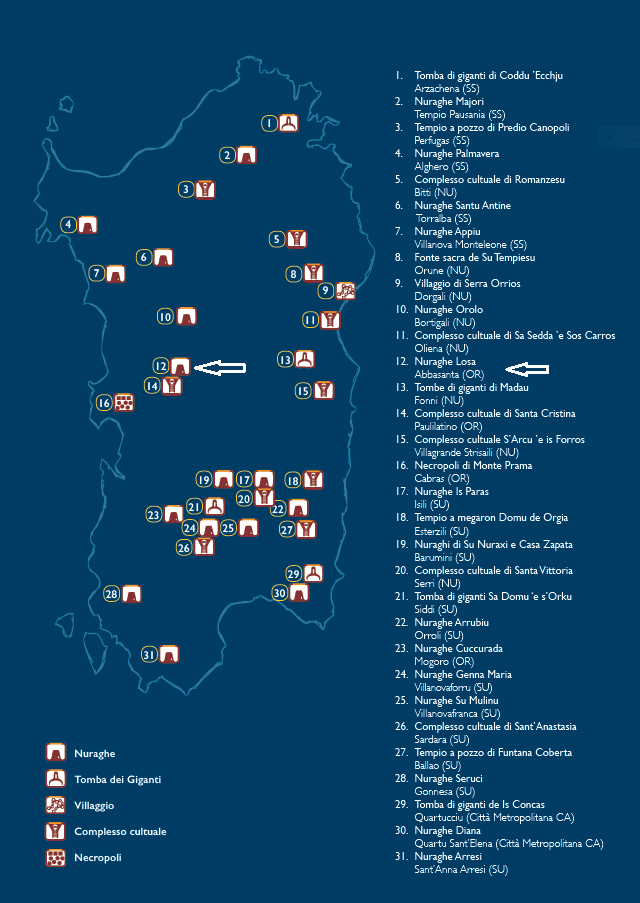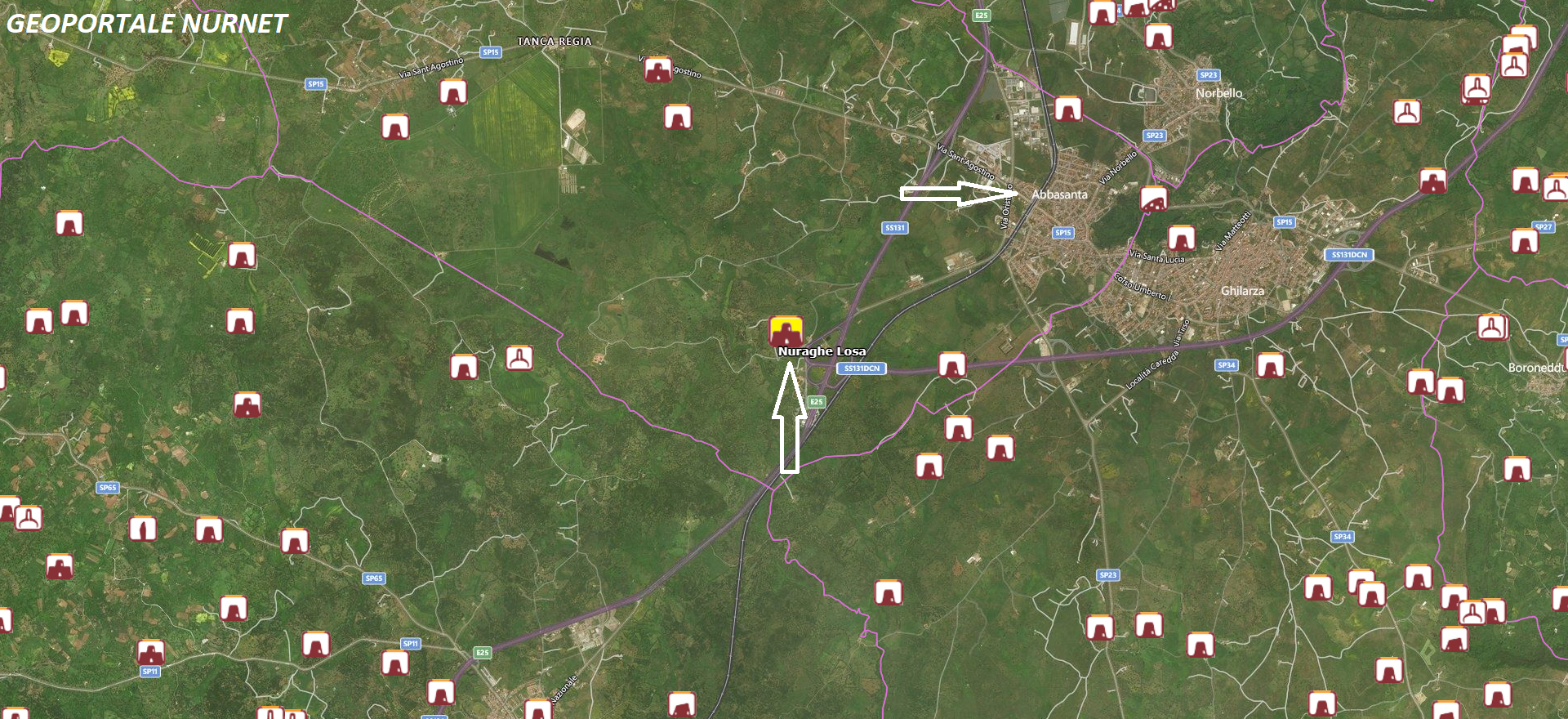
The Nuraghe Losa, in Abbasanta, is one of the 32 monuments proposed to Unesco as banners of the grandiose Nuragic civilisation, its history and its immense material evidence.
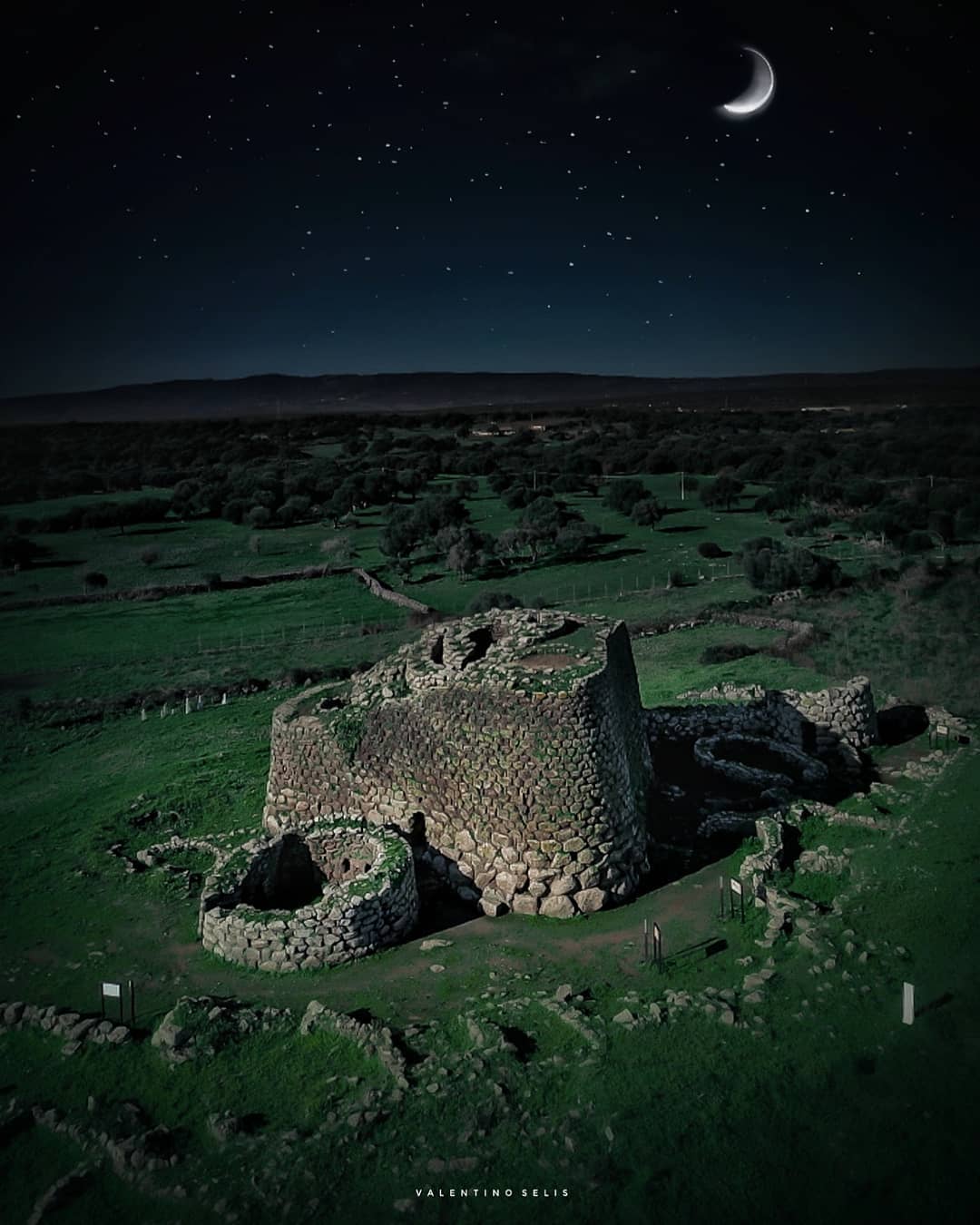
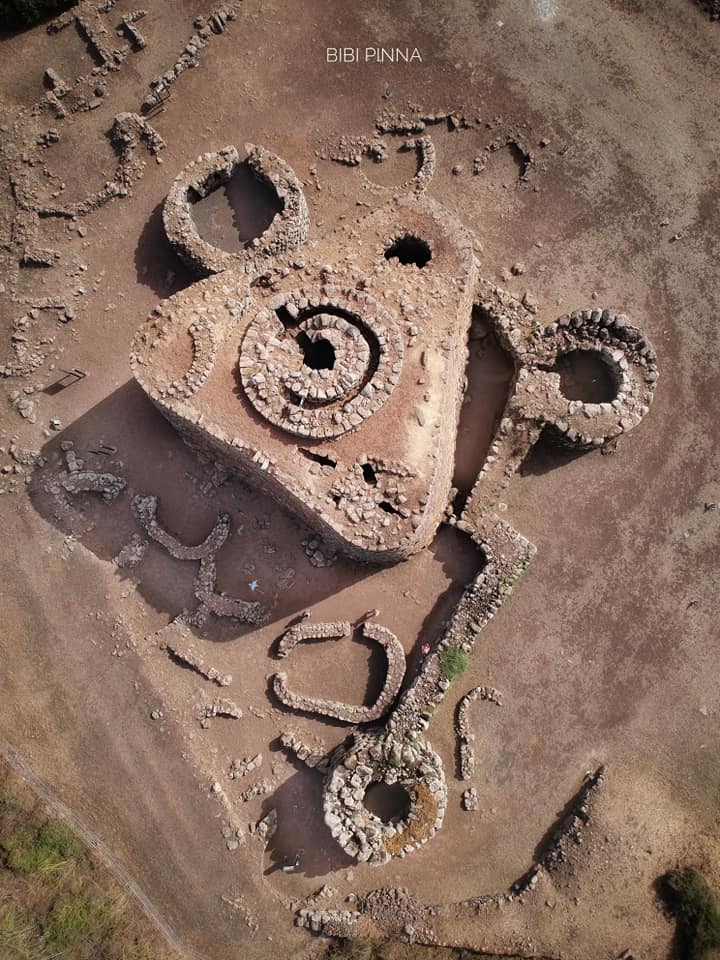
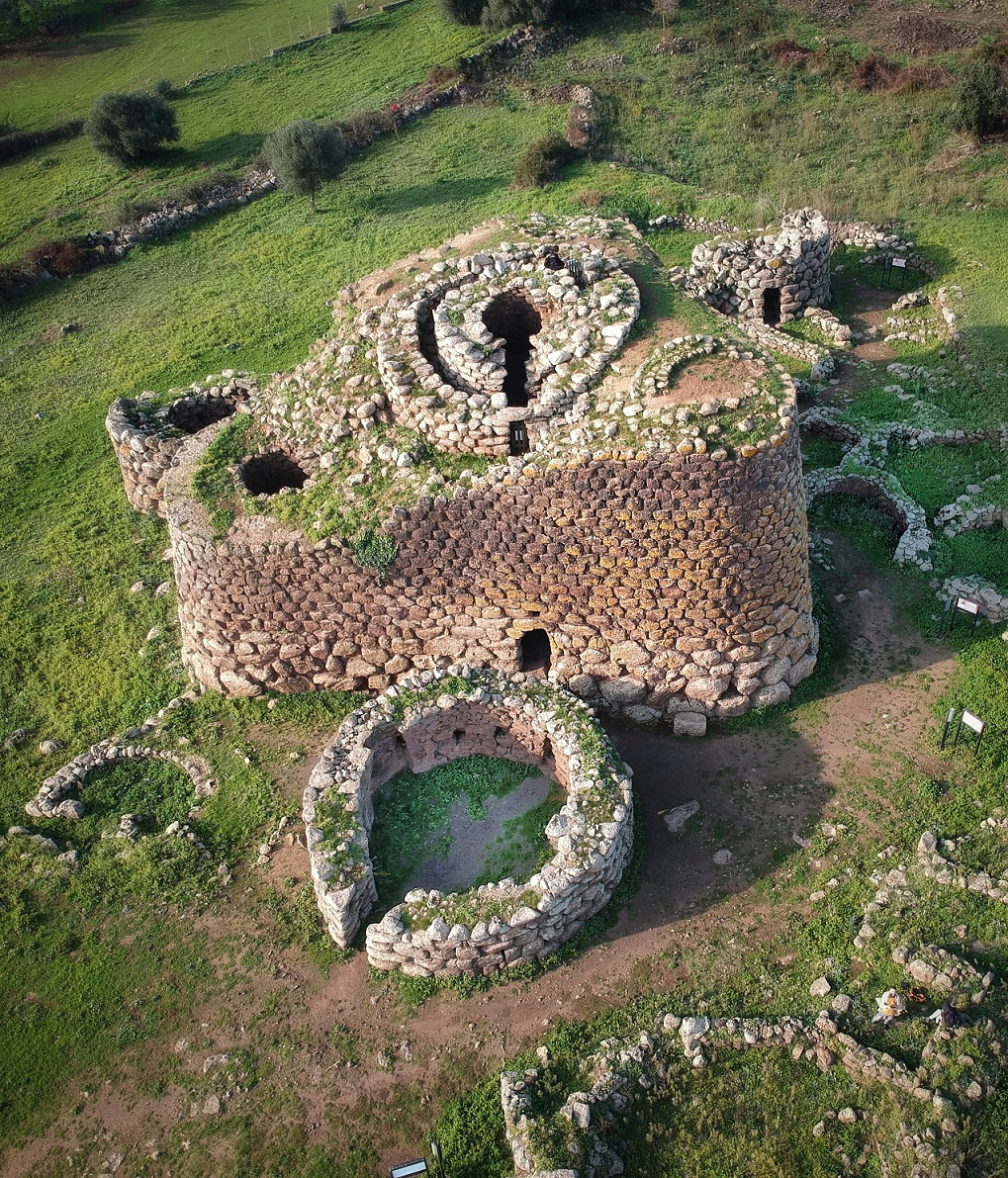
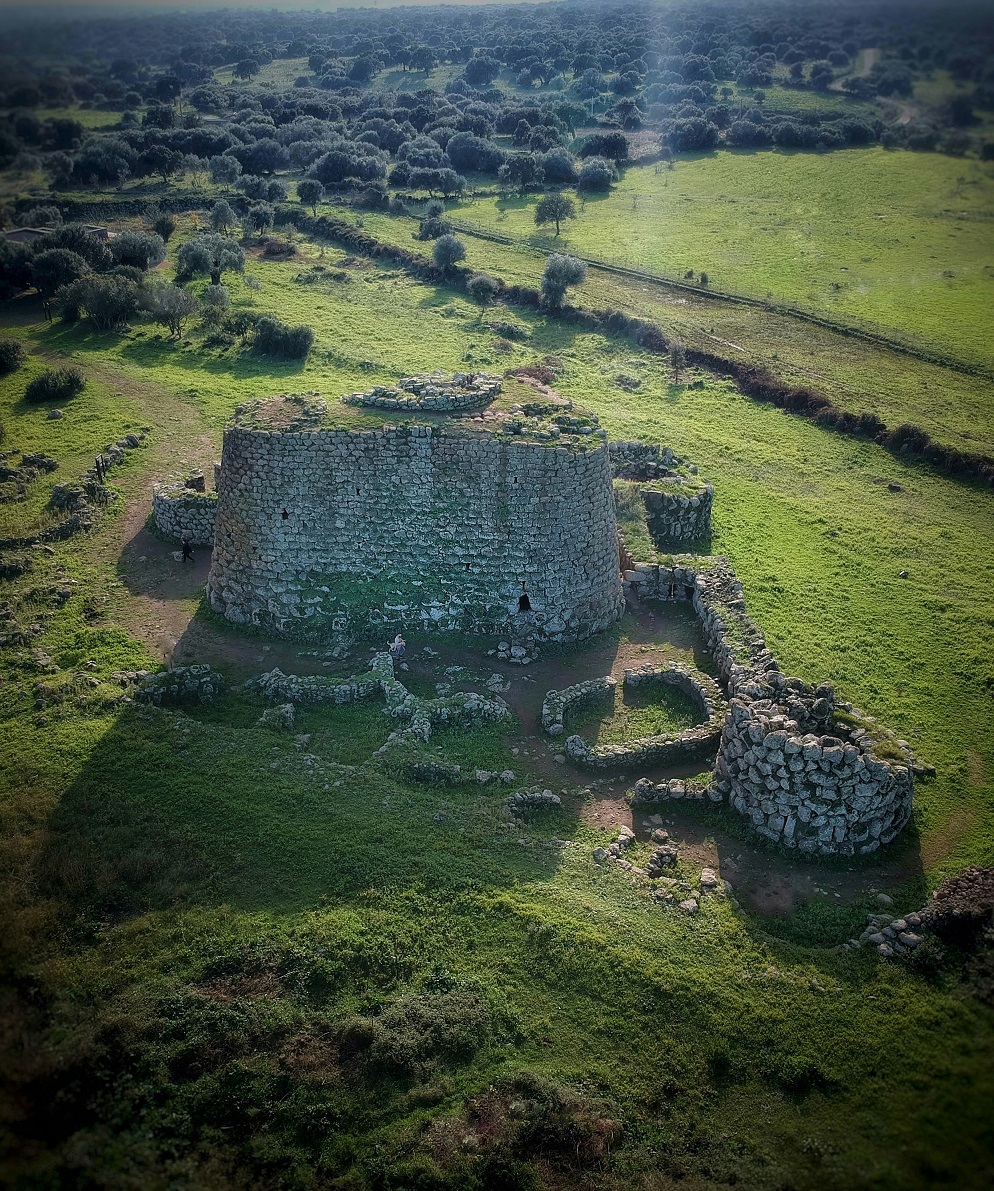
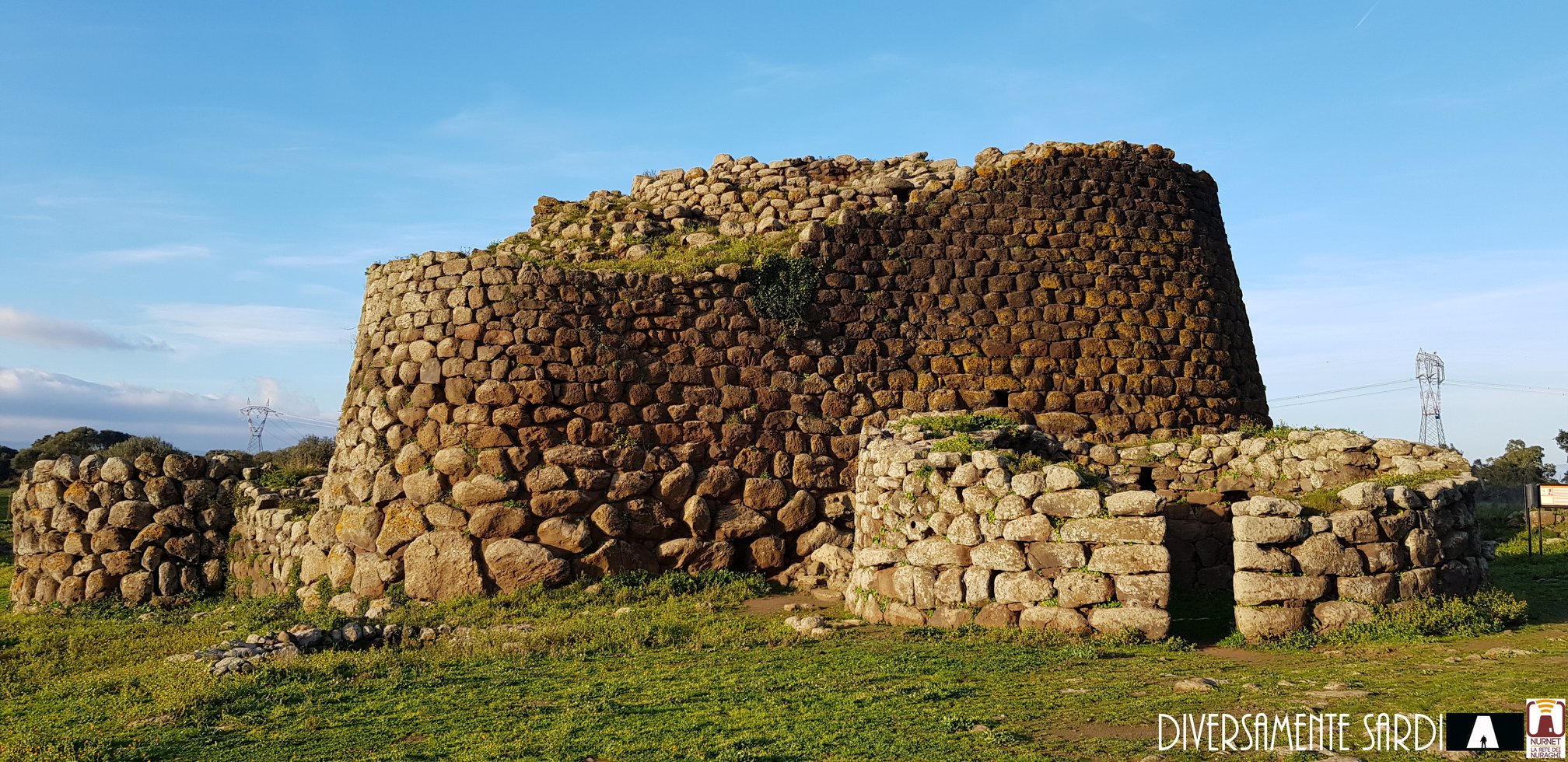
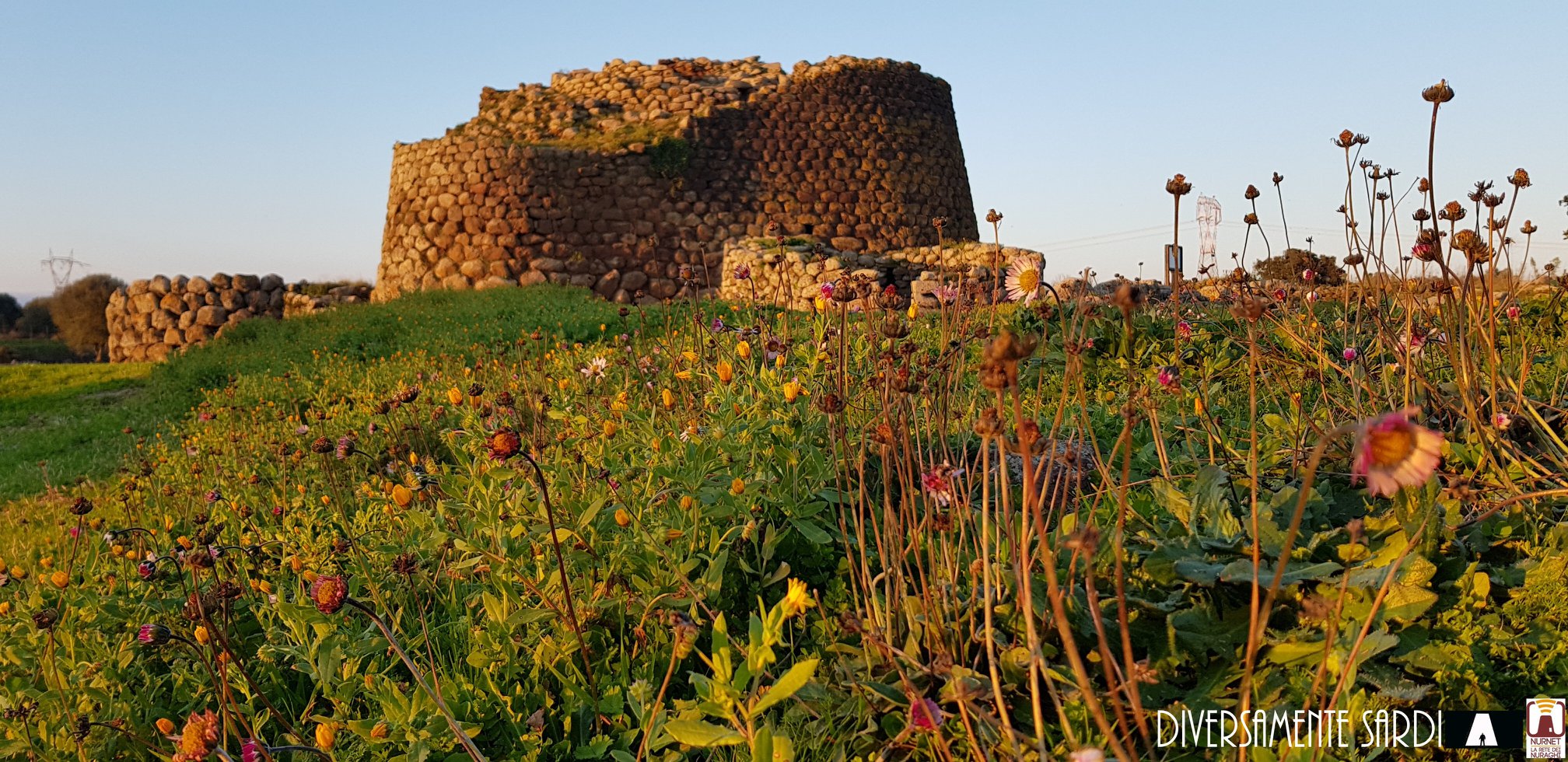
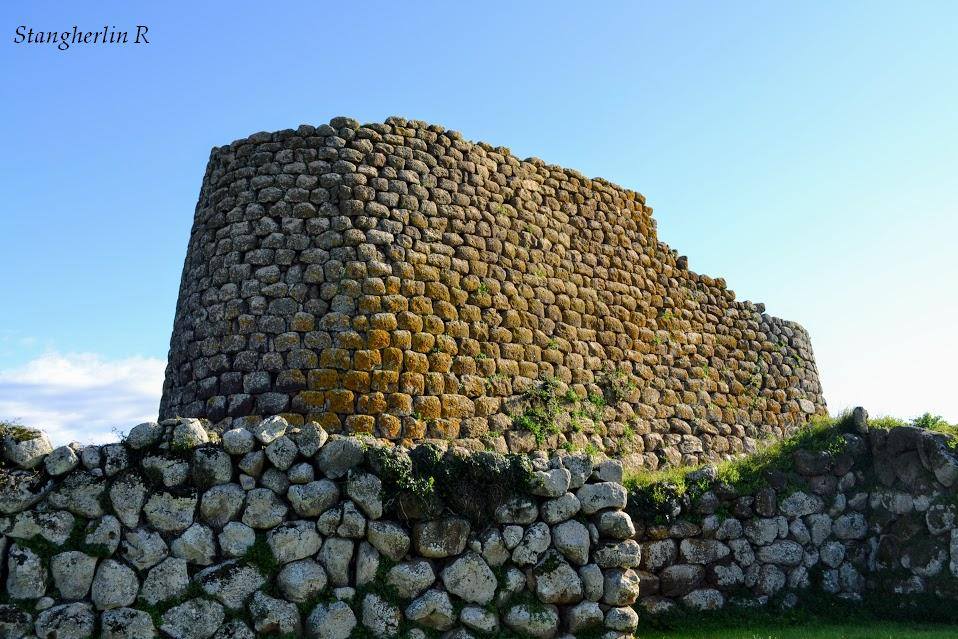
“The original name, nurache ‘e losas, means ‘nuraghe of the tombs’, and refers to the Roman cinerary urns dug into the rock outcropping at the edge of the area in which it stands. The unmistakable silhouette of the nuraghe Losa stands on the basalt plateau of Abbasanta, five kilometres from the small town of Oristano. Walking around its mighty structure, solid and flat – with a plan in the shape of an equilateral triangle – you will notice perspectives reminiscent of the tall prow of a ship. It is one of the most remarkable and characteristic expressions of Nuragic architecture, the site of archaeological excavations since the 19th century, and is distinguished by its organic design, compactness of volumes and refinement of masonry techniques. Surrounding it are the remains of an extensive settlement immersed in the greenery of the Mediterranean maquis, witness to the site’s thousand-year history, from the Nuragic age to Roman times, when it was used for funerary purposes, and then up to the early Middle Ages (7th-8th centuries).
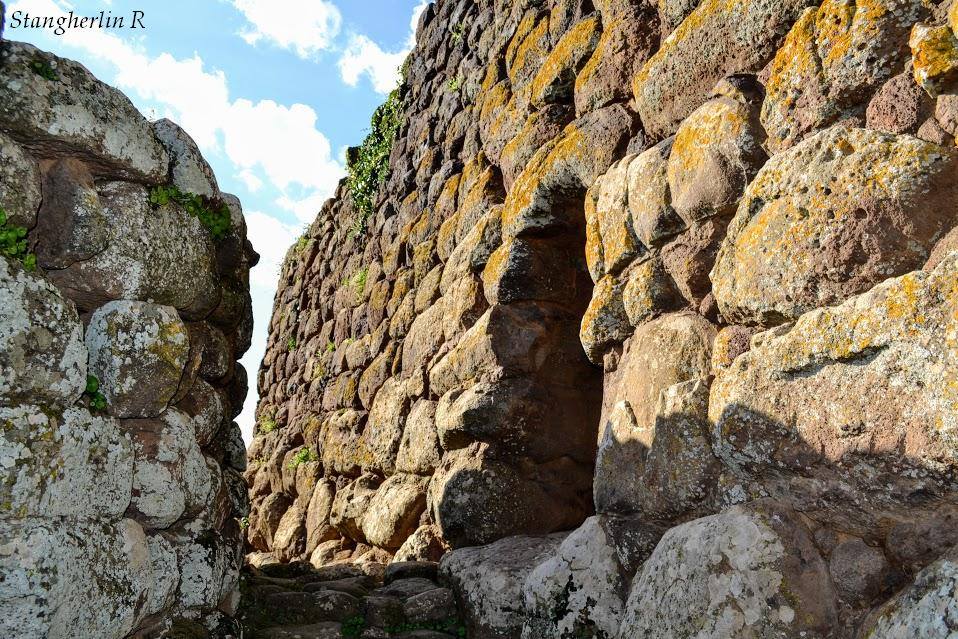
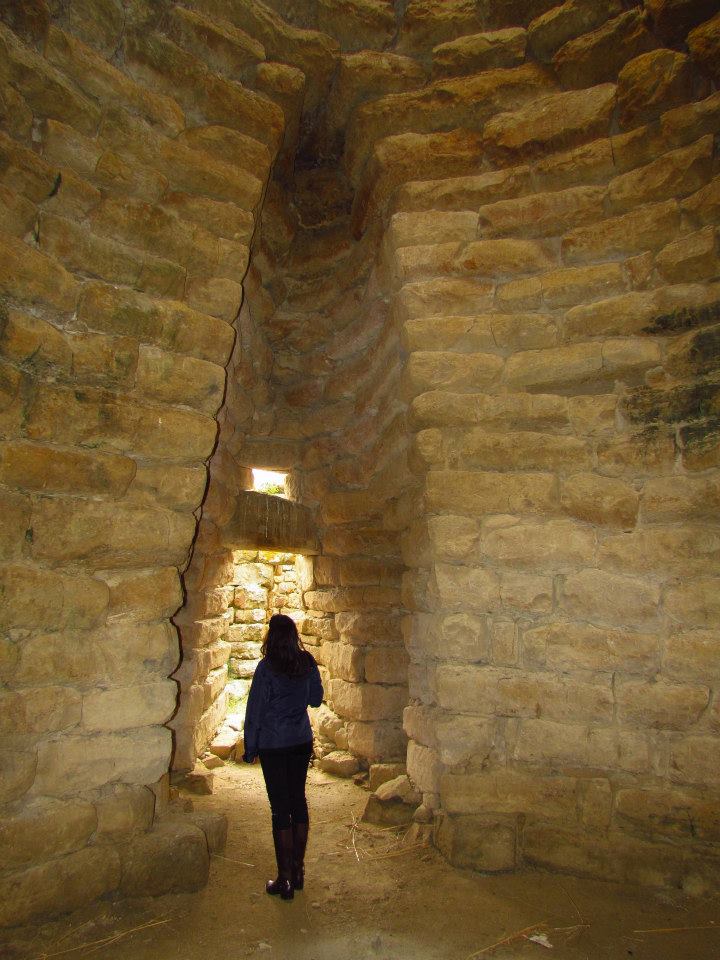
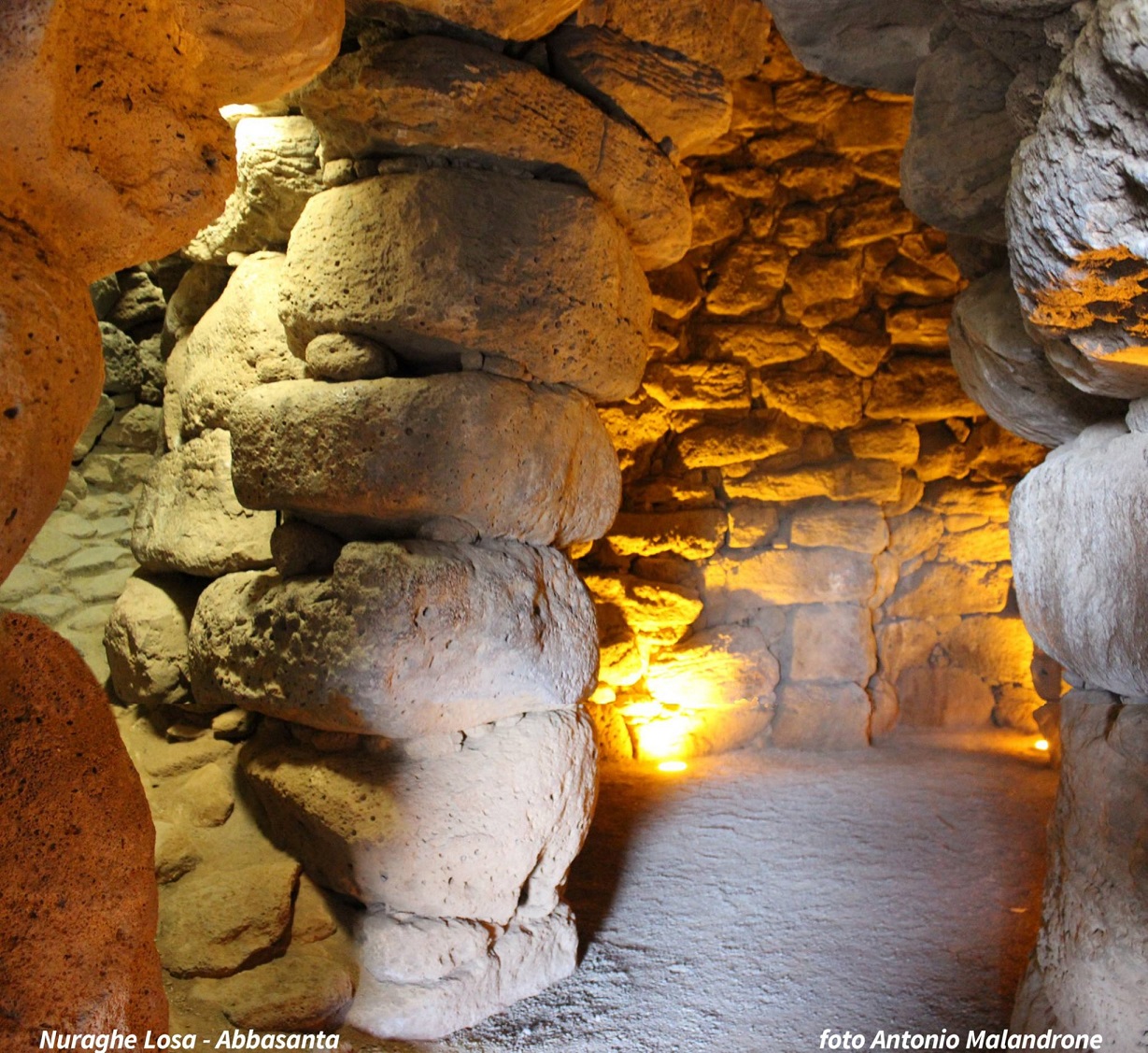
The complex, built entirely of large basalt blocks, consists of a three-lobed nuraghe, dating from the Middle Bronze Age (15th-14th century B.C.), an ante-mural and the remains of a village of circular huts, built between the Recent Bronze and Iron Age (13th-9th centuries B.C.). Upon entering, you will discover that the huge compact mass – the secret of its extraordinary state of preservation – also contains spacious rooms. Not the uncovered courtyard, however, characteristic of most complex nuraghi, perhaps replaced in functionality by uncovered outdoor spaces. You enter through a main entrance, raised above the countryside, and from a straight corridor you reach the original central truncated cone tower (keep) and the two side towers. While the rear one is accessible through a secondary entrance. You will advance through the chiaroscuro of the corridor, breathe in the smell of the moss-covered stones, relive the sensations of the mythical Nuragic age‘ (Sardegna Turismo).
The photos of the nuraghe Losa, in Abbasanta, are by Valentino Selis, Bibi Pinna , Diversamente Sardi, Romano Stangherlin, Cinzia Olias and Antonio Malandrone.