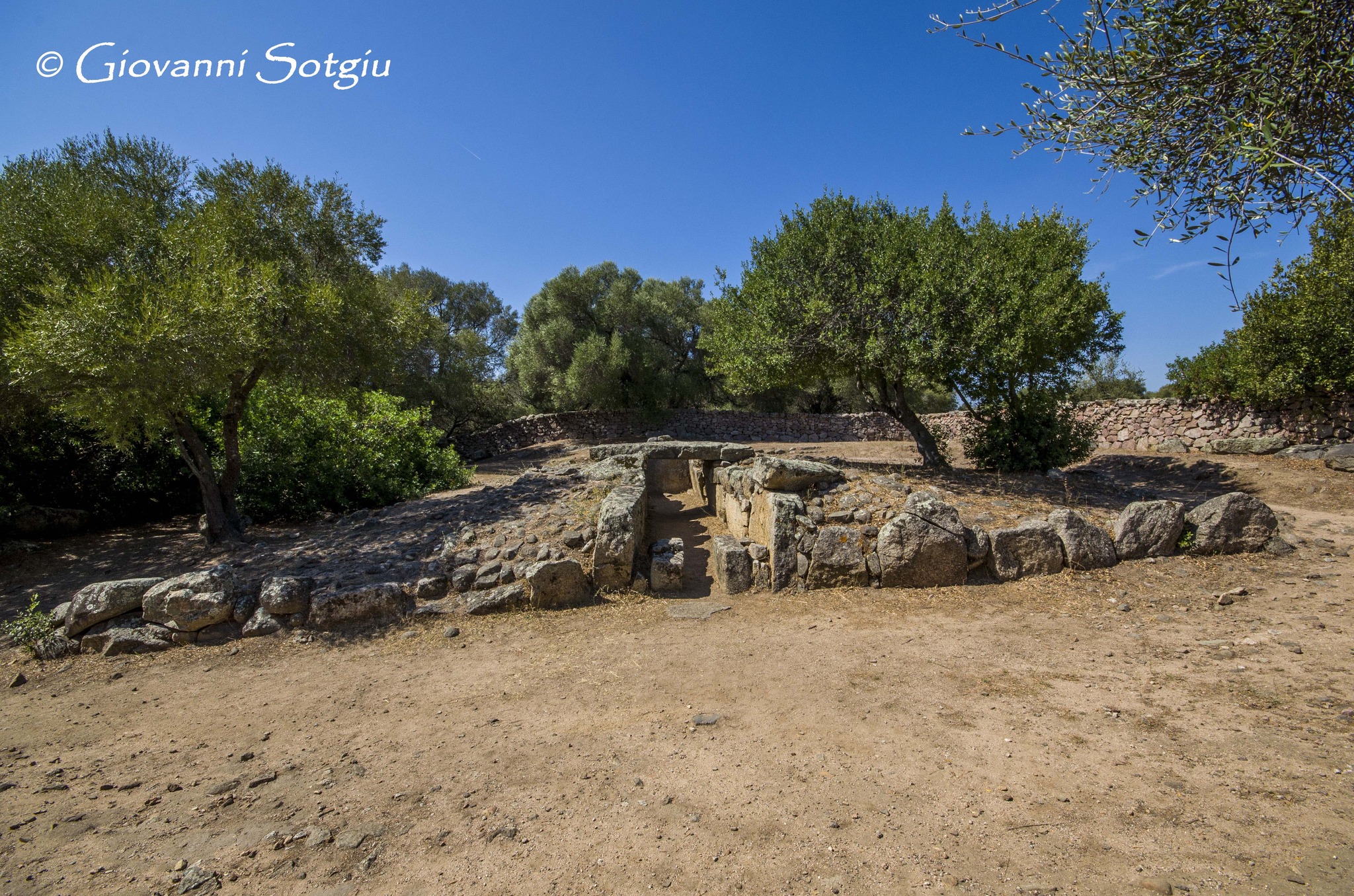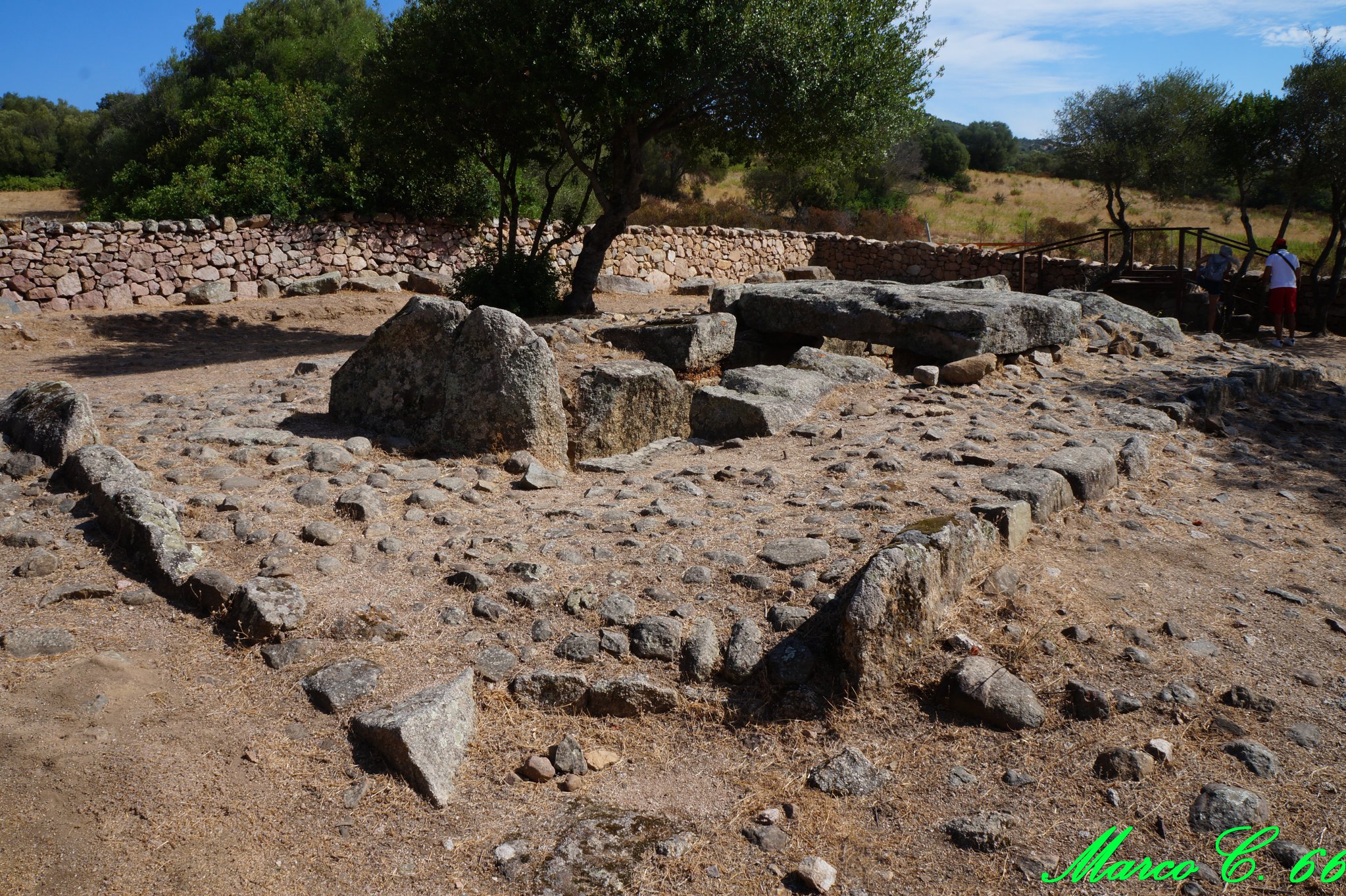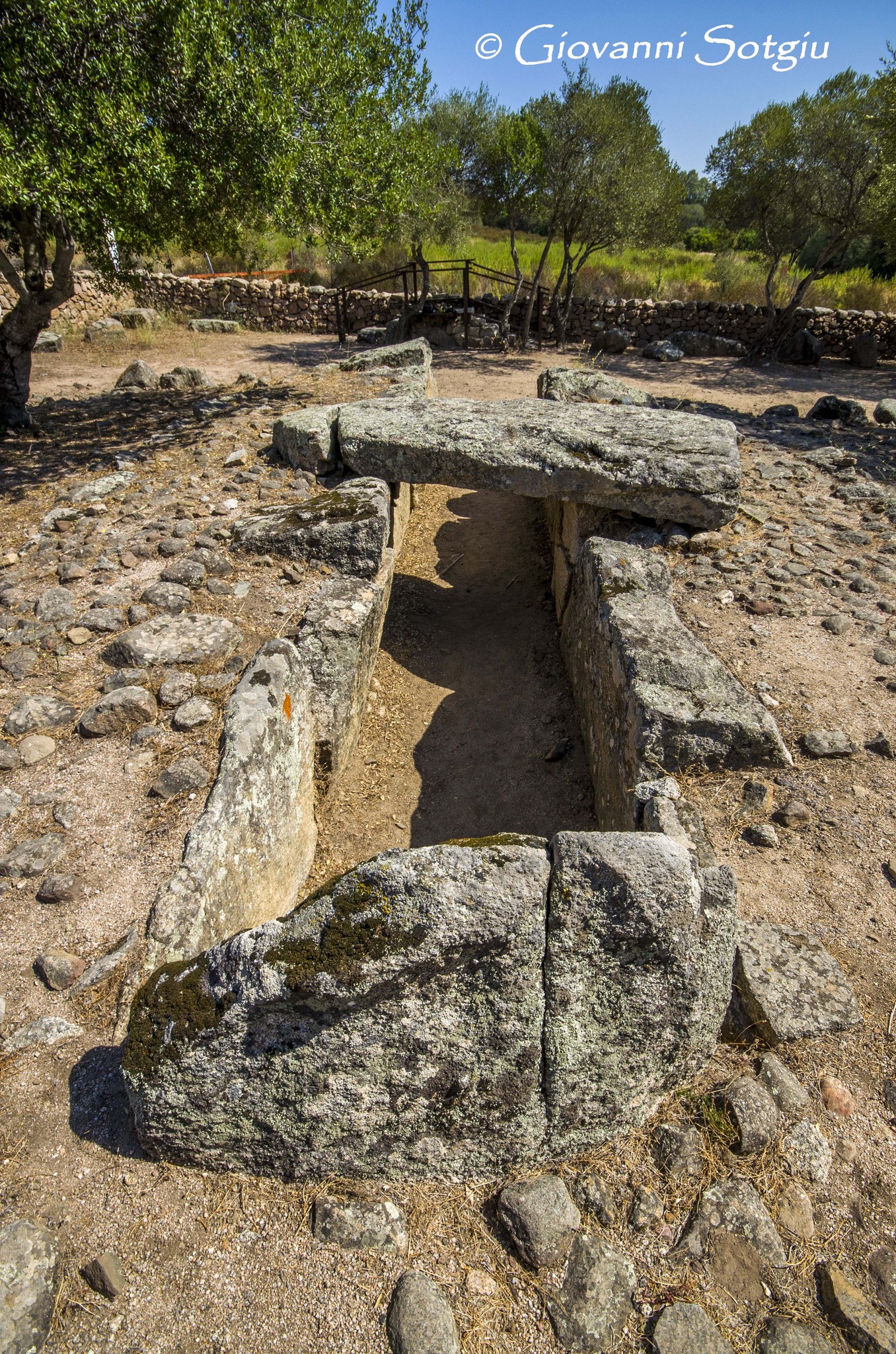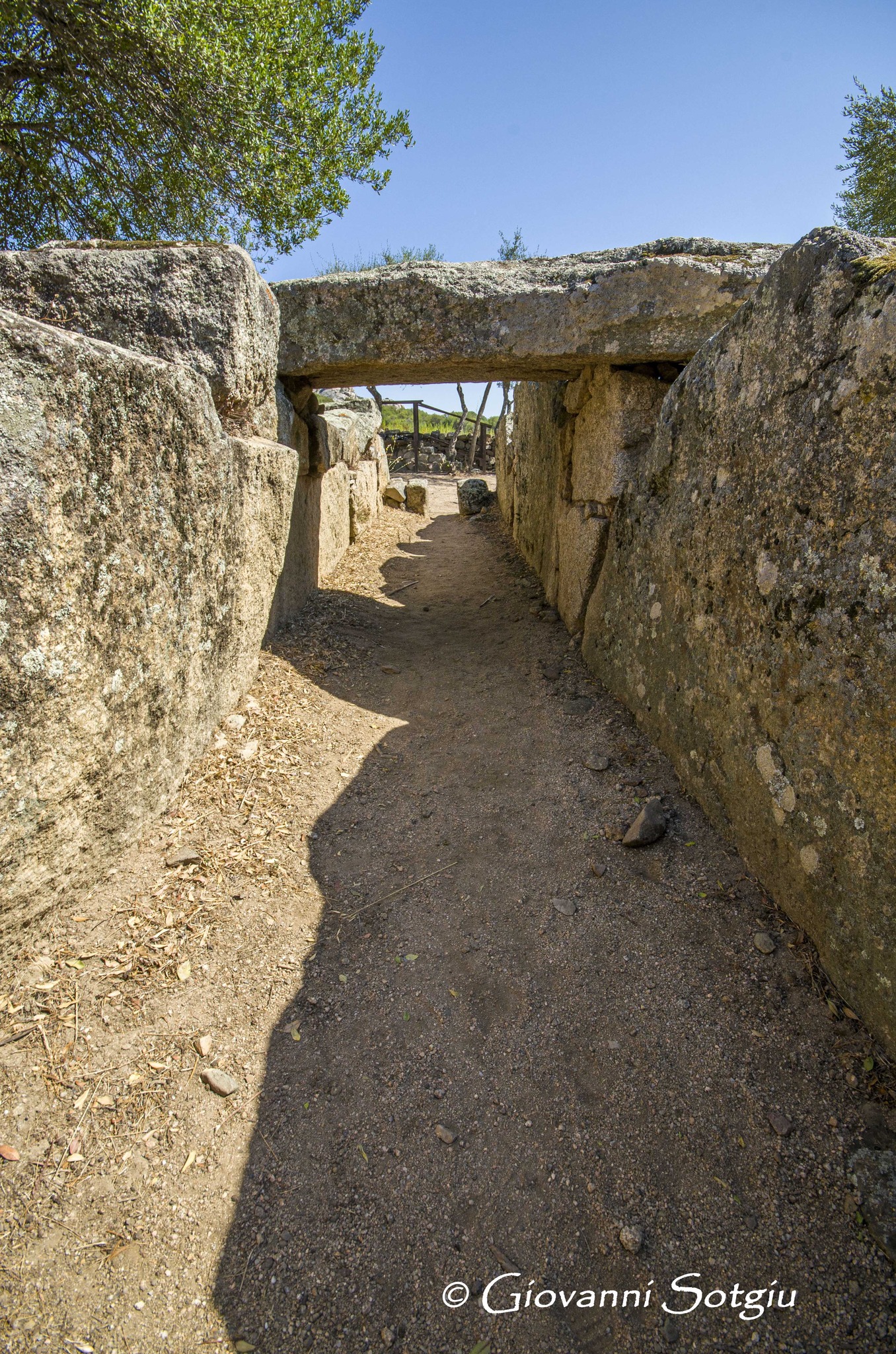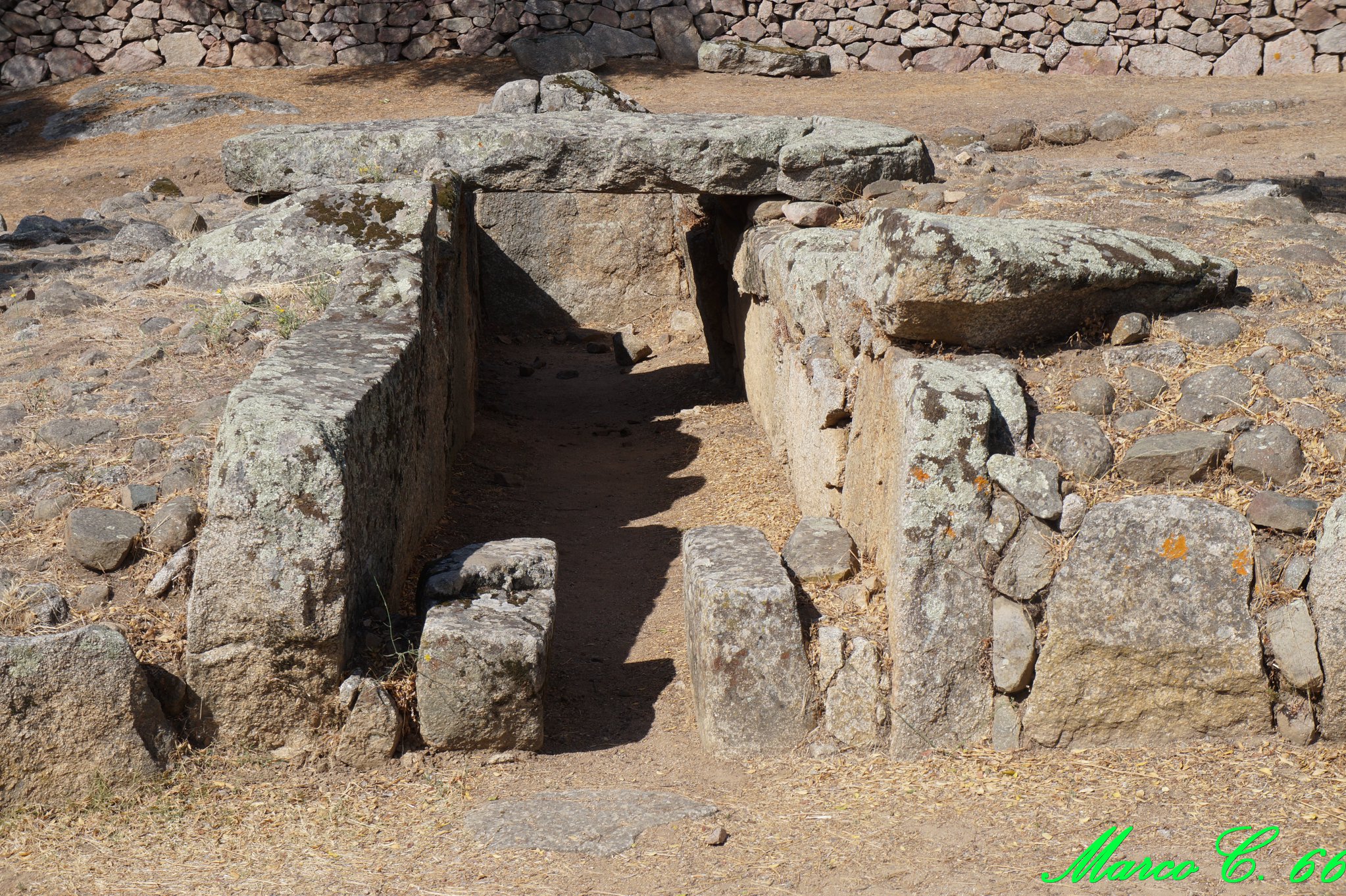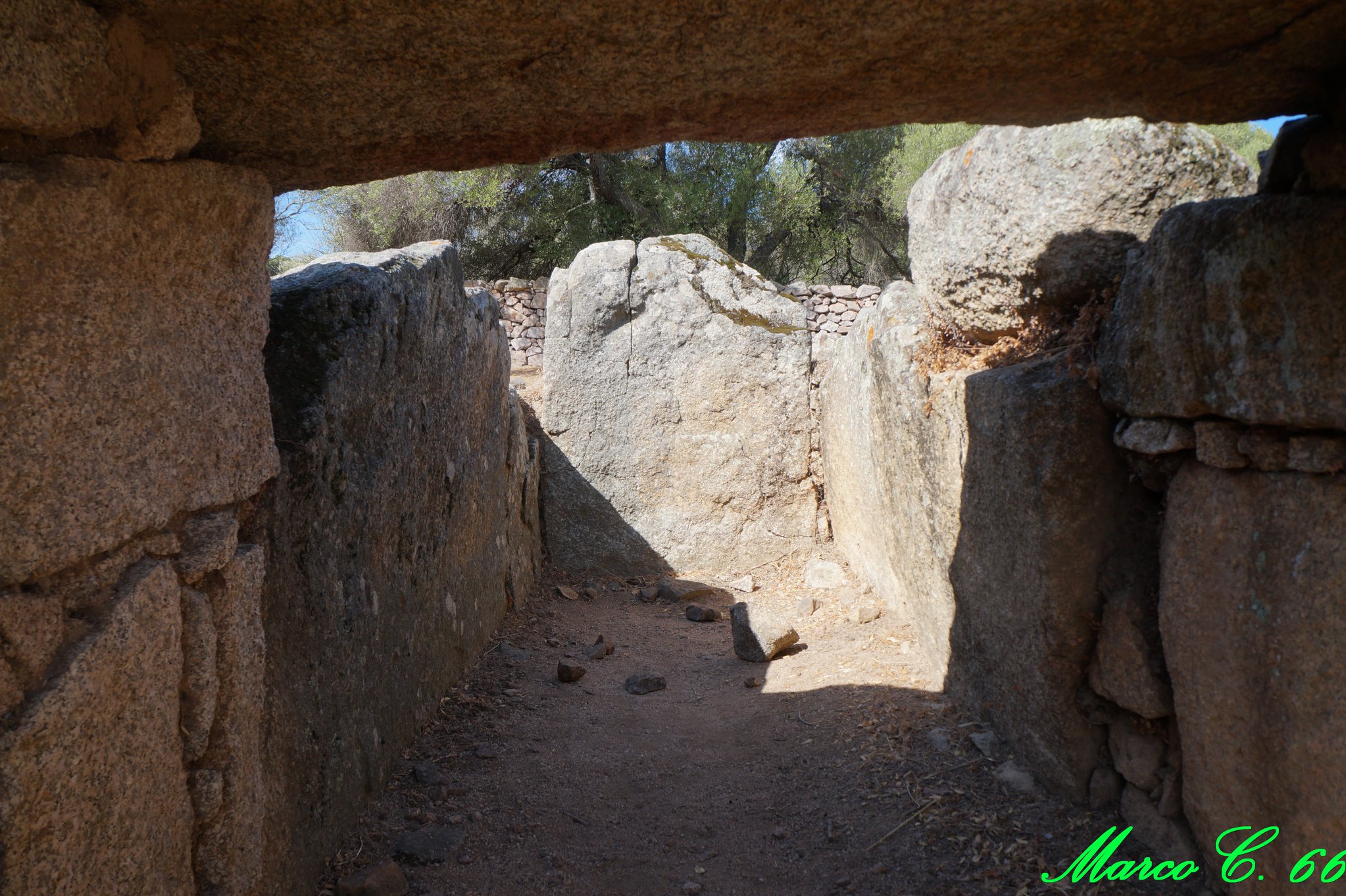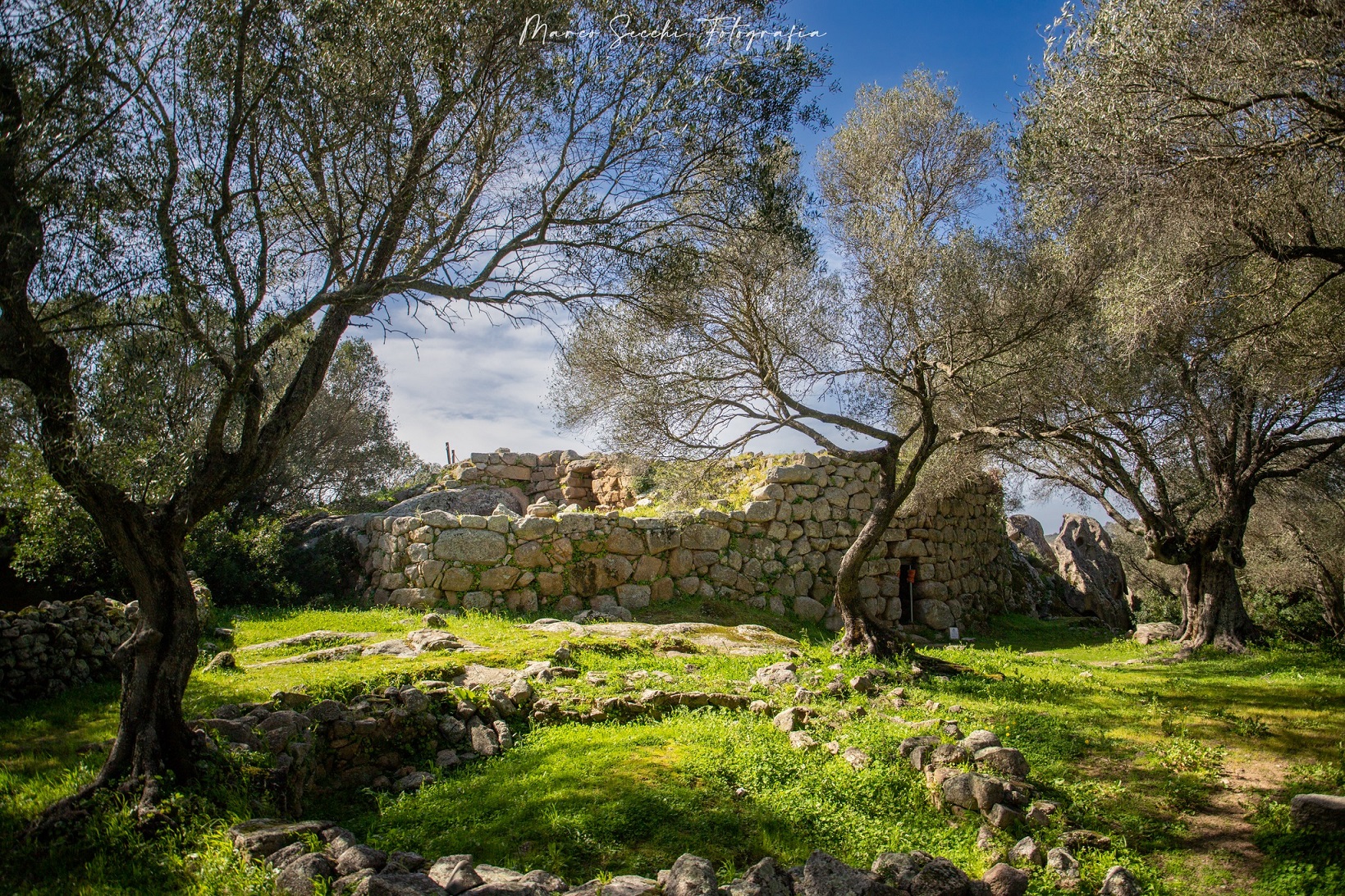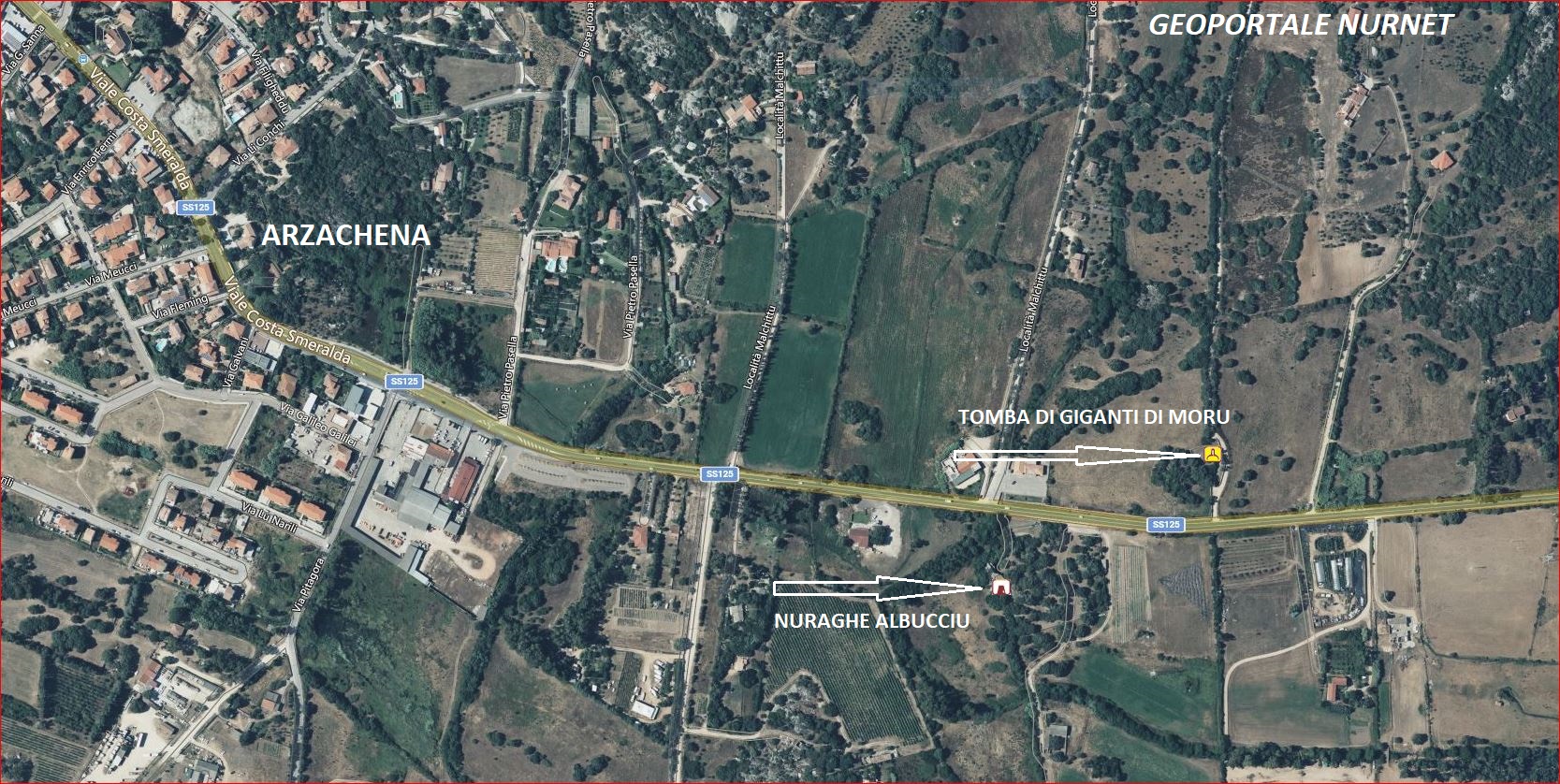
At a distance of 100 metres from the Nuraghe Albucciu, on the SP 125, the Tomba Moru is the only example of a stone row tomb visible in the Arzachena area.
The Tomba di giganti Moru, represents the funerary area pertaining to the Nuraghe Albucciu, from which it is only 100 metres away.
Like the other Tombs of Giants in the municipality of Arzachena, this collective burial is the result of two different construction phases, in fact in addition to an older burial (alleé couverte) fromtheMiddle Bronze Age (1600-1300 B.C.). Later, in the Recent Bronze Age (1300-1000 B.C.), the exedra, i.e. the ceremonial area, was built and the mound of earth and stones surrounding the long burial corridor, of which only a single slab of the original flat roof remains.
Peculiar to the Tomba Moru is the almost rectilinear, row-like façade, the only example in the Municipality. Here, however, a technical expedient could suggest the presence in ancient times of a stele at its centre, as for the other imposing tombs of Arzachena, which present an exedra made of vertically fixed slabs.
The artefacts found both in the exedra and in the funerary corridor of the Moru tomb reflect a broad chronological span of use of the site, but also a later period of only frequentation in the Punic Age (300-264 BC). To the first phase belong a series of small bowls, small pans and miniature vases, while the second phase includes a cup on a truncated cone foot, a dagger and an amber vase. The discovery of the latter represents further confirmation of the inhabitants’ involvement in extra-insular exchanges. (from Arzachena Turismo)
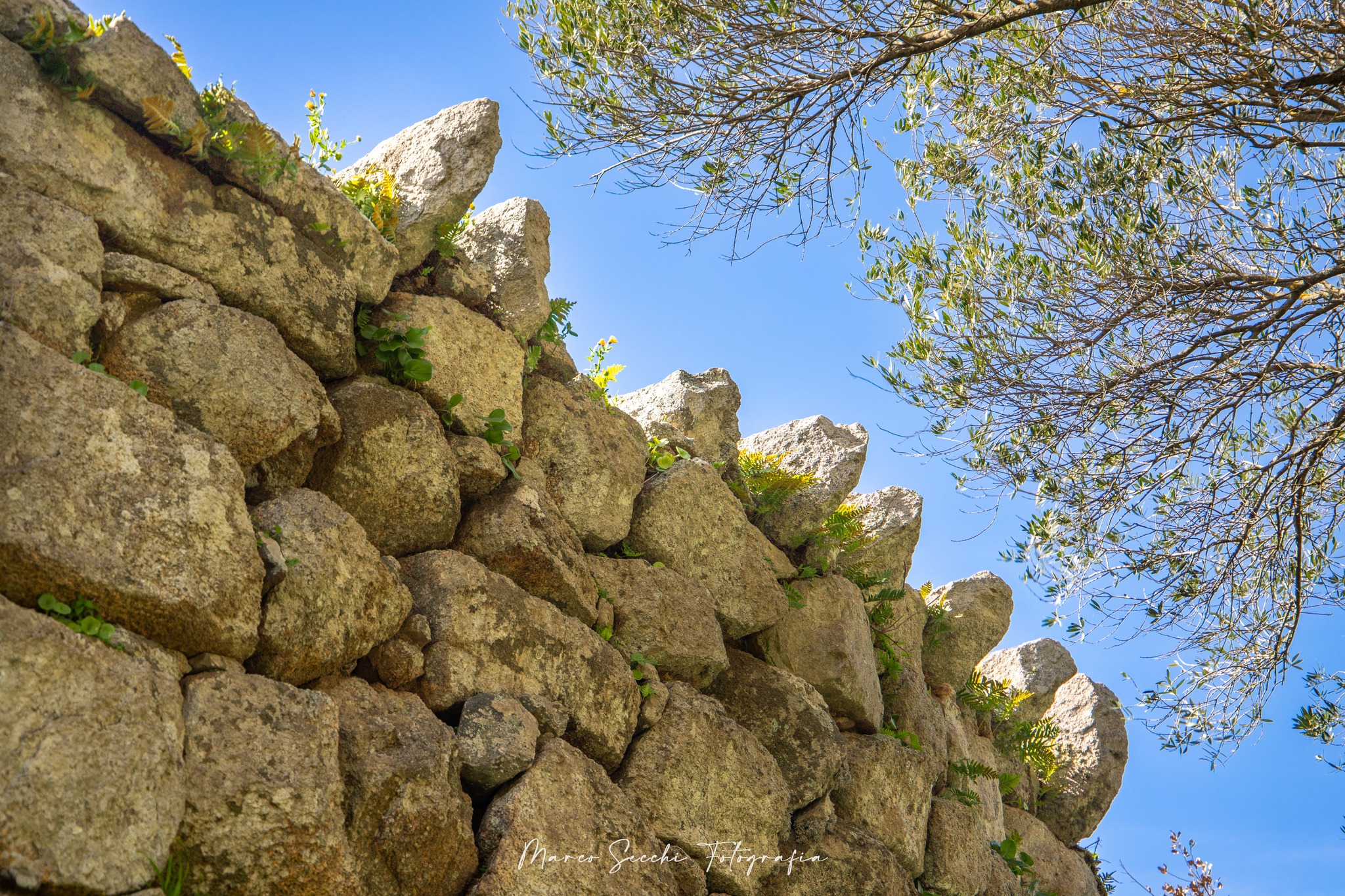
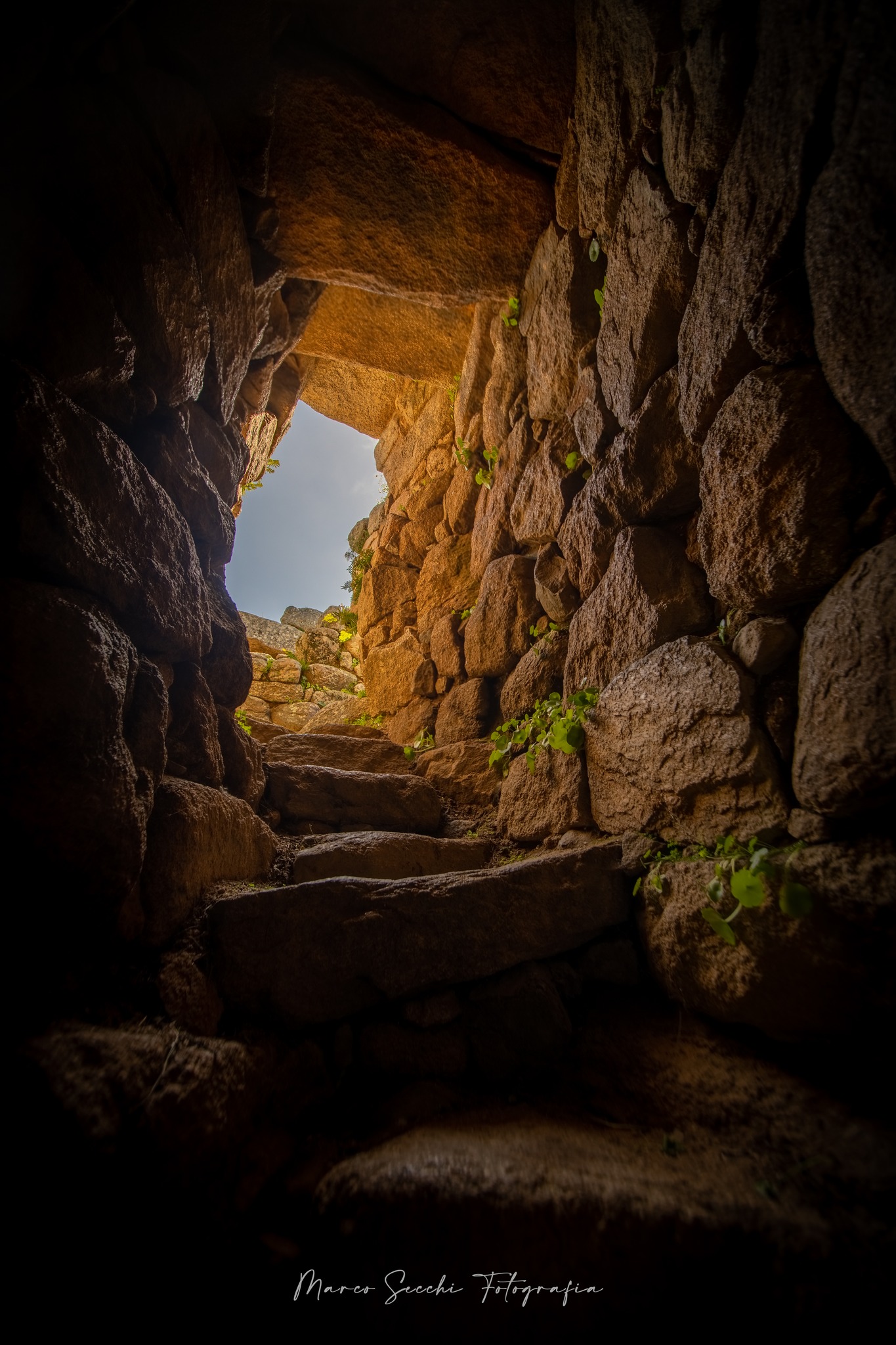
The photos of the tomb of giants of Moru are by: Giovanni Sotgiu and Marco Cocco. Those of the Albucciu nuraghe, mentioned in the post, are by Marco Secchi Fotografia.