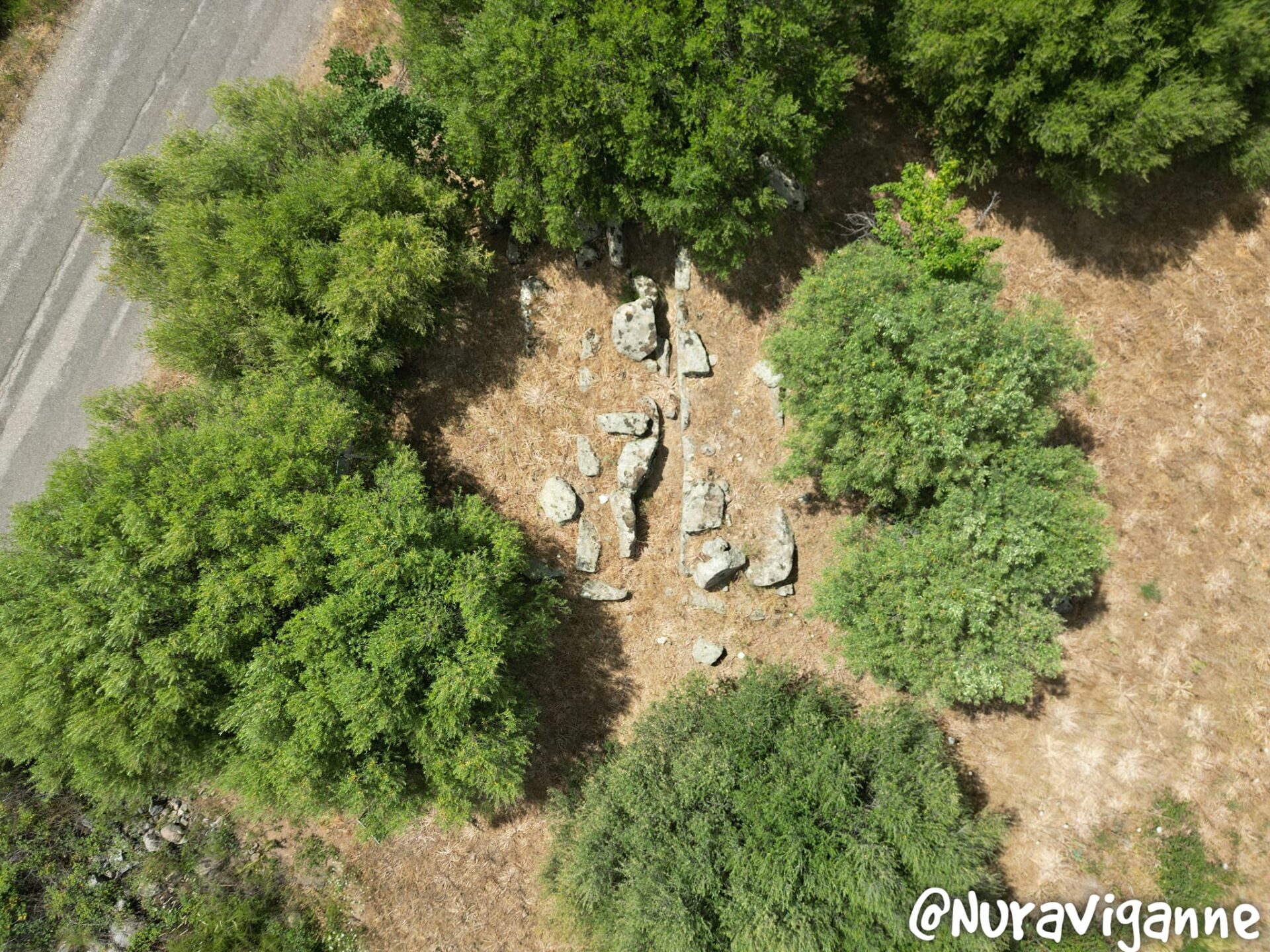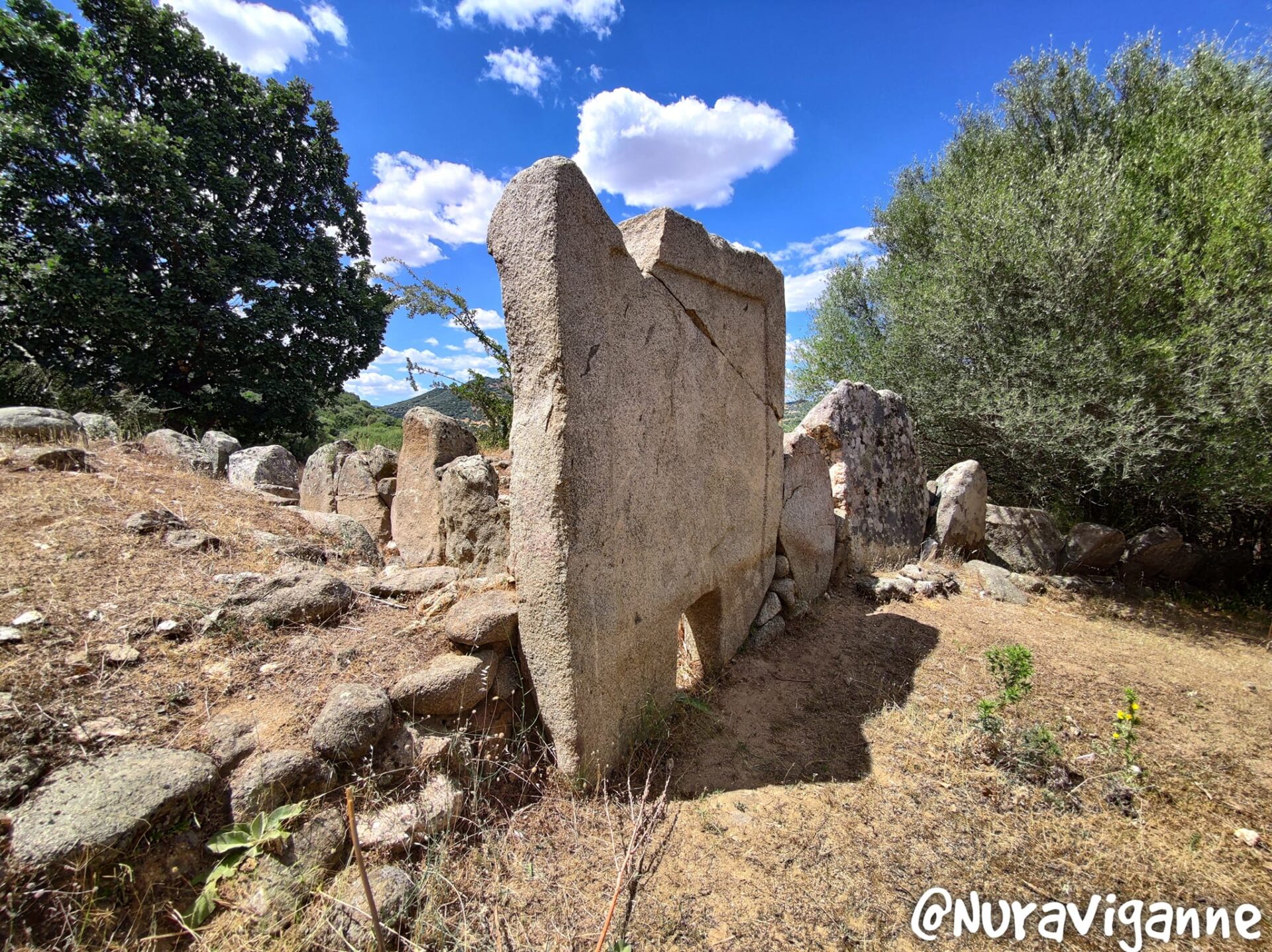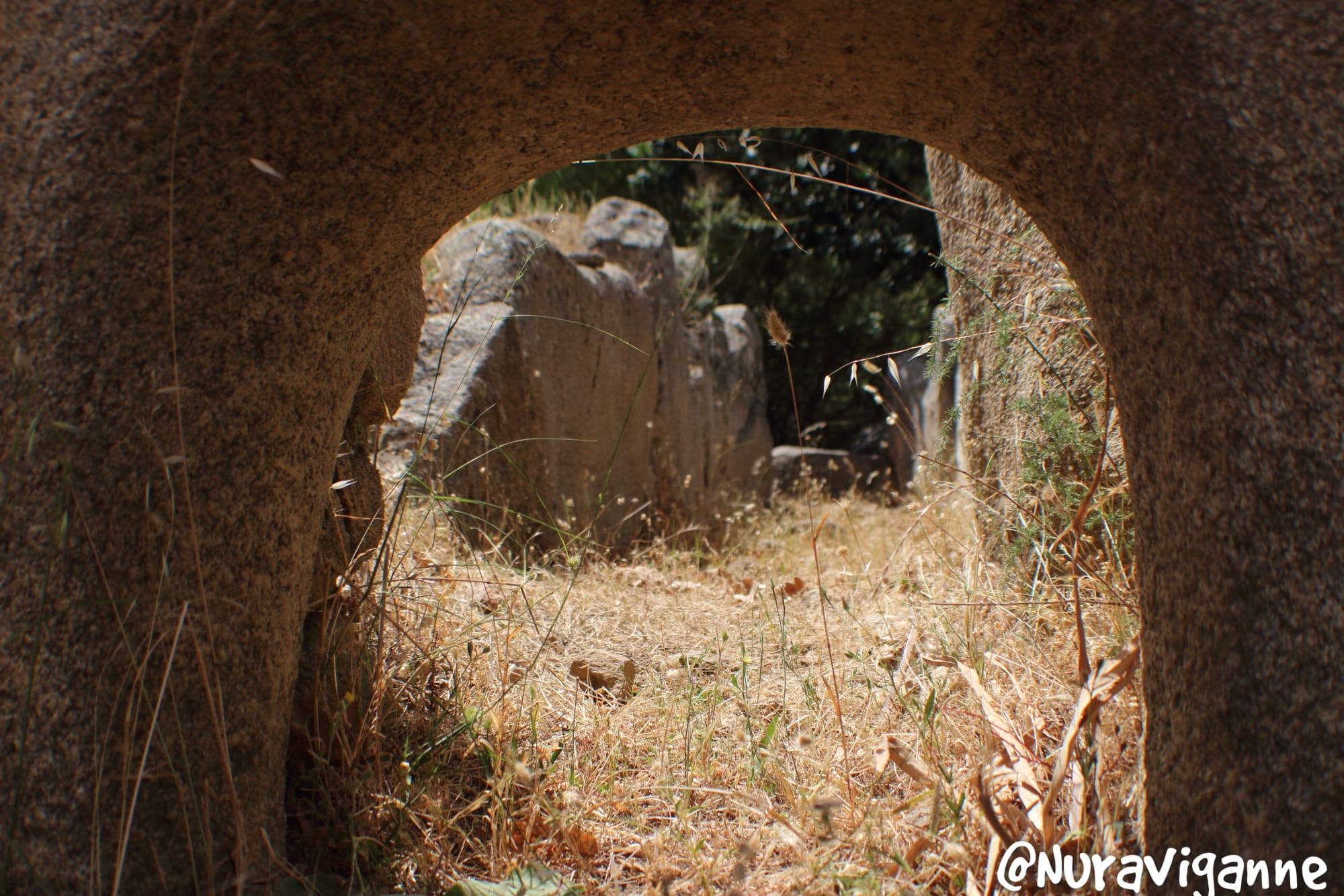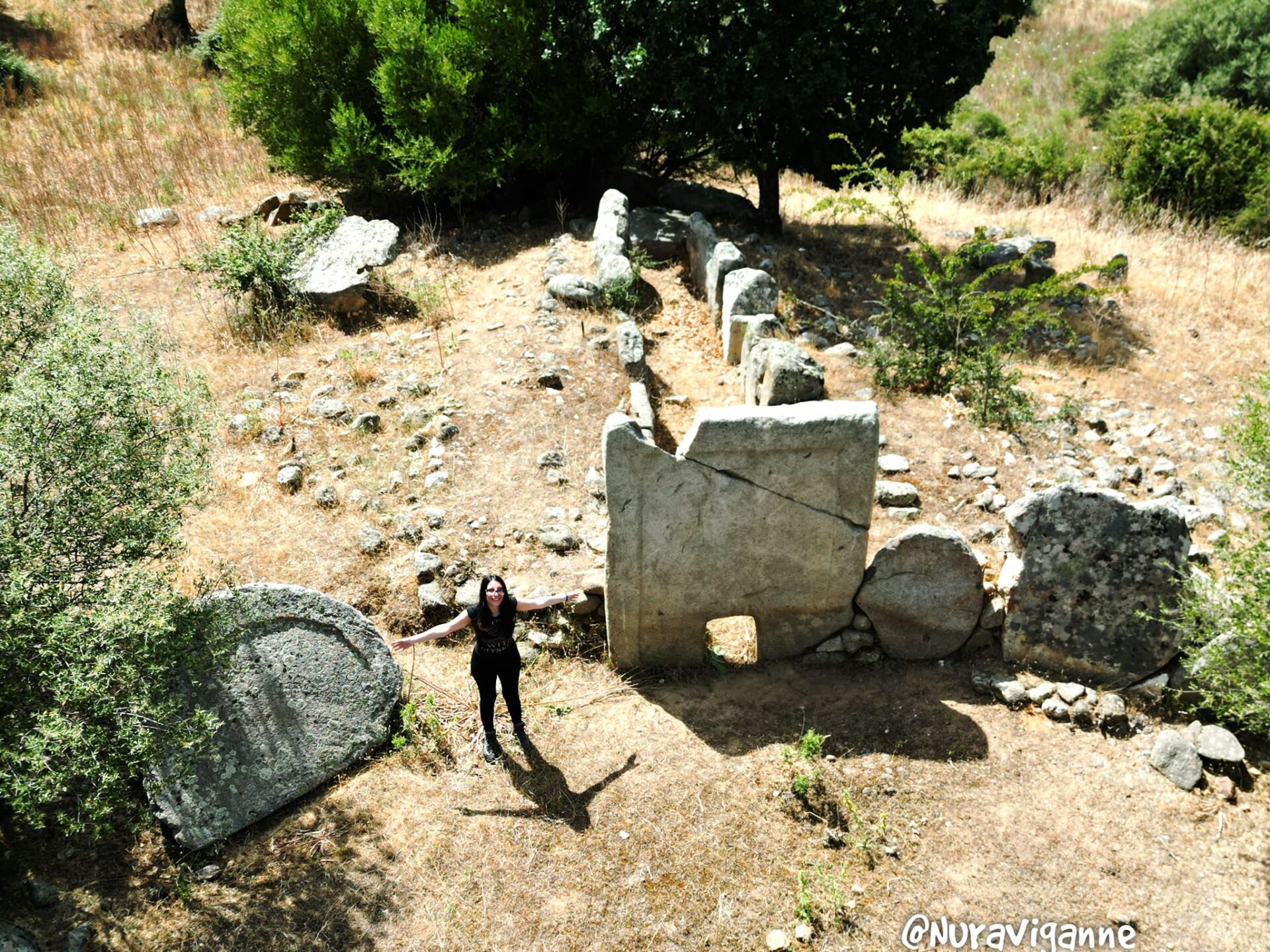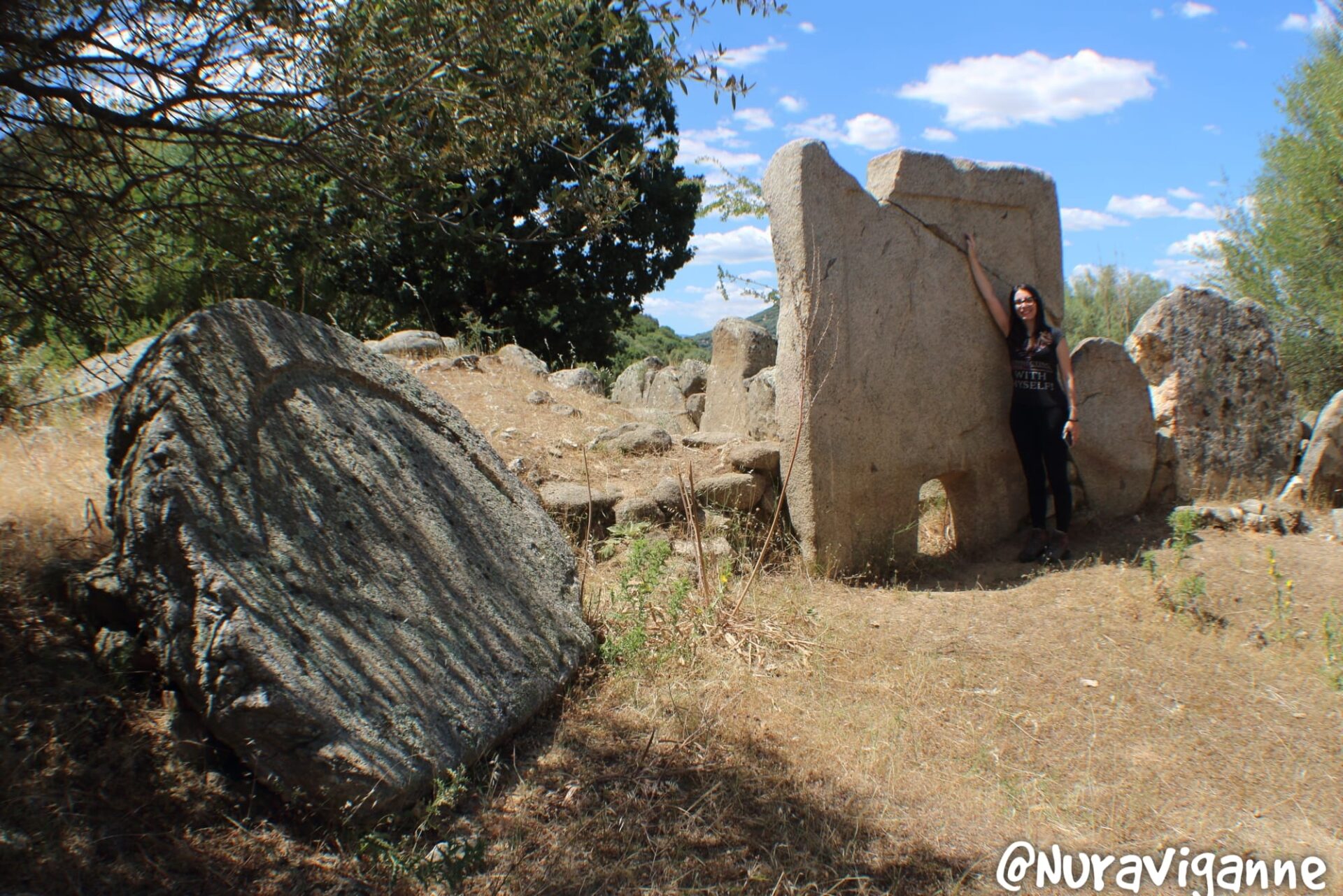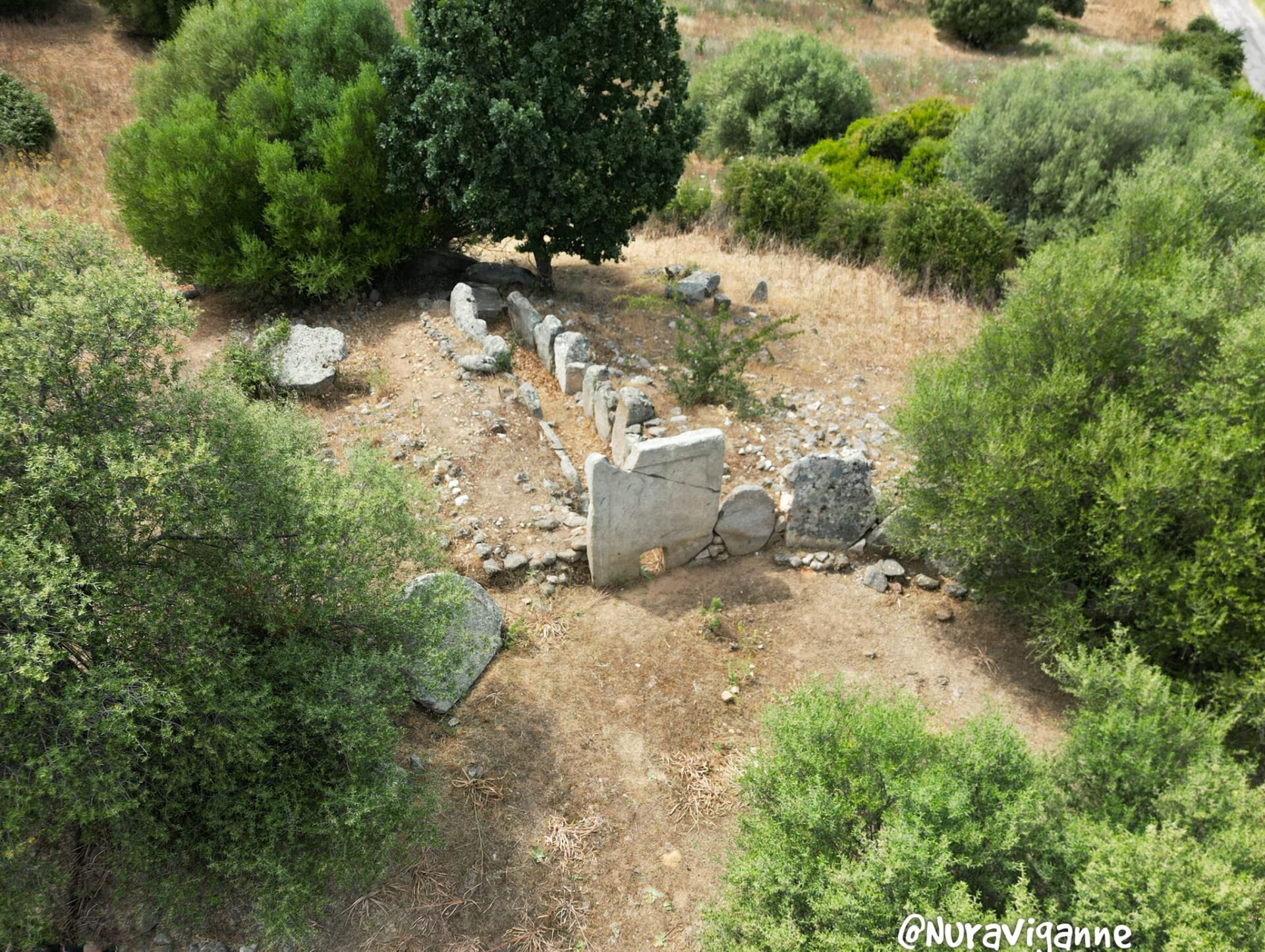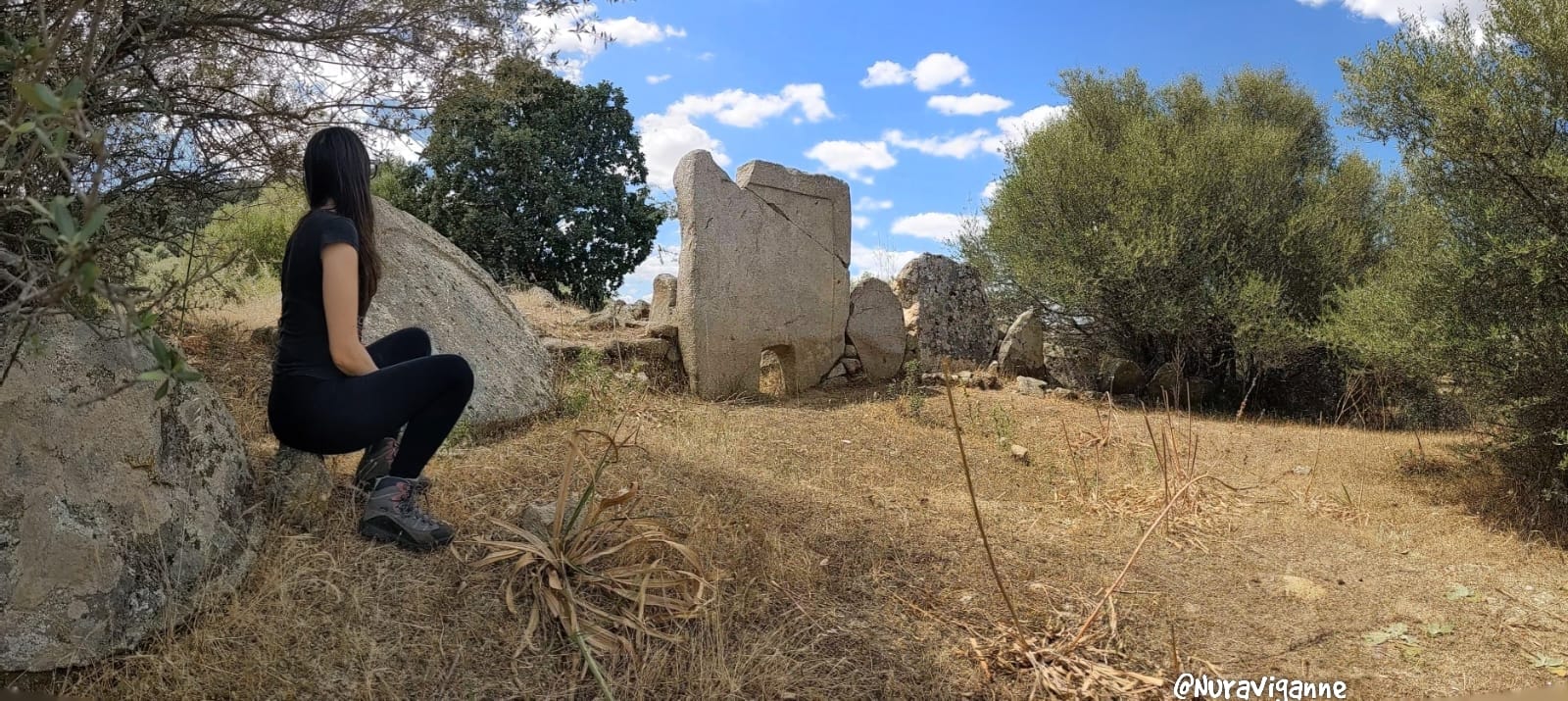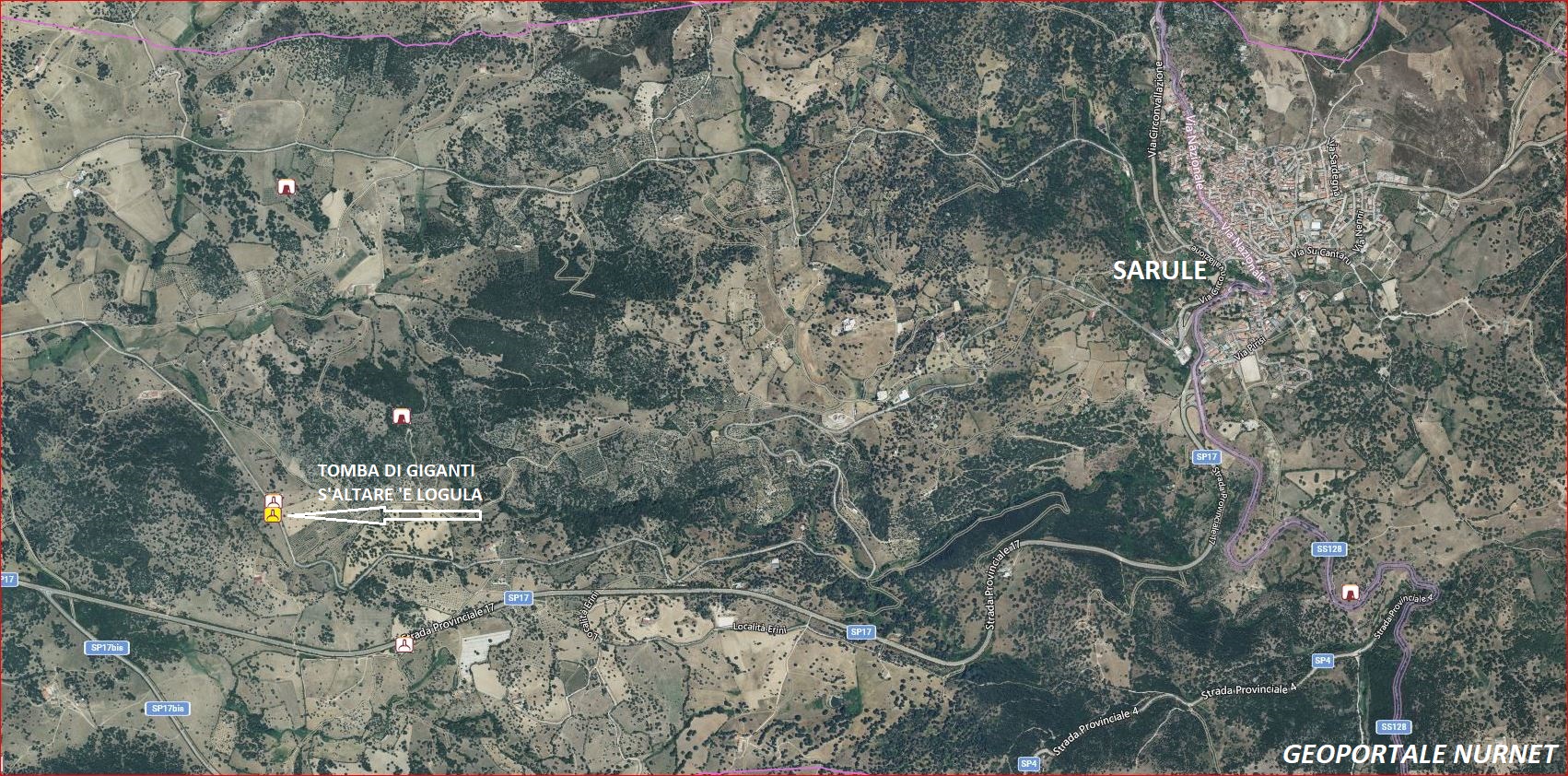
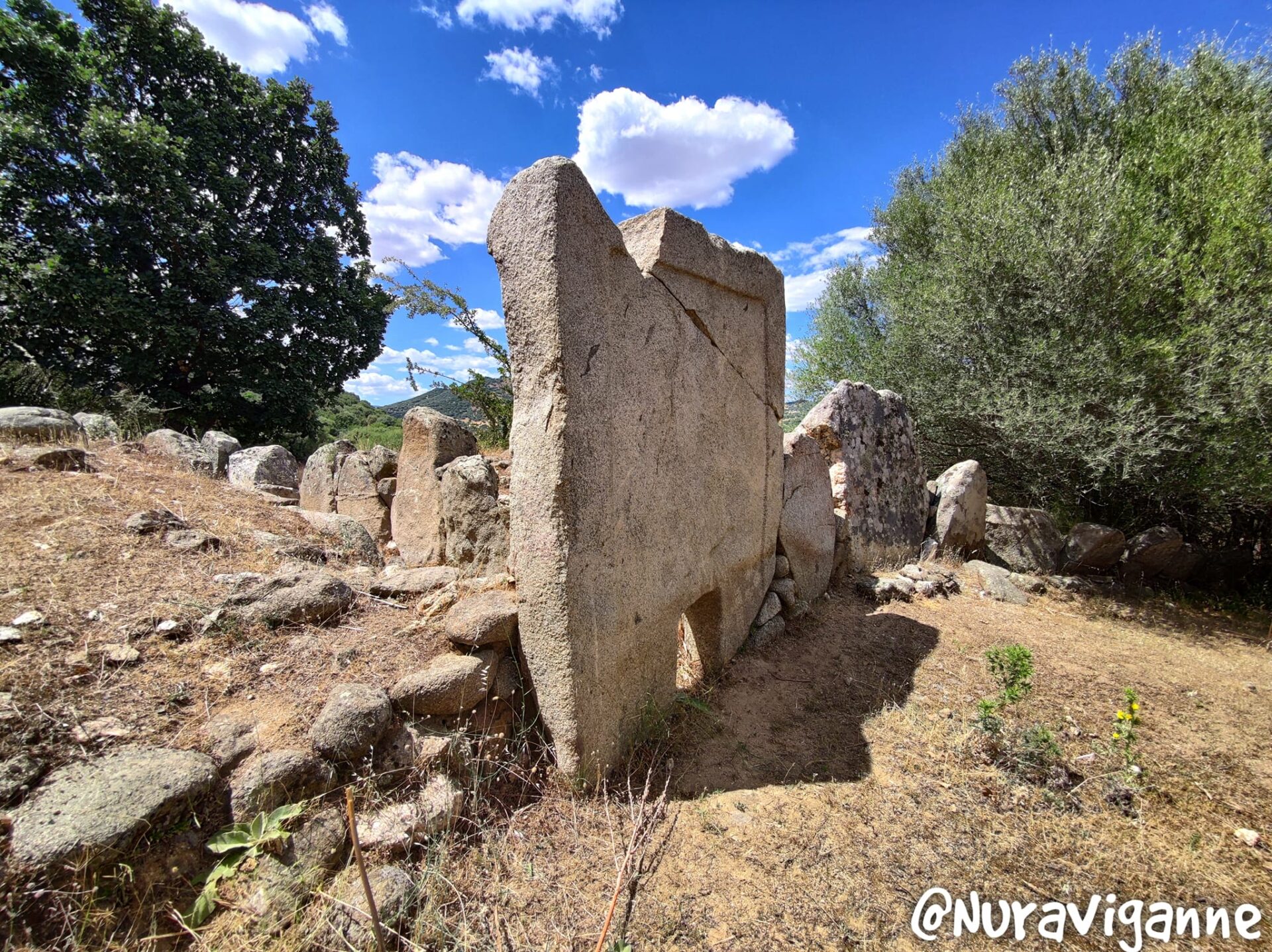
Next to the Baleri region is an ancient monument known as the ‘altar of Logula’, of the kind commonly known as the tombs of giants. It was the first to be observed by Professor Angius during his travels for statistical studies of the island, and inaugurated the reconnaissance of many other similar antiquities and those others known as ‘pietre fitte’ (thick stones). In Alberto La Marmora’s archaeological atlas, this monument is referred to as it was observed. Also observed at various points in the Sarulese area are the ‘pietre fitte’ (dense stones), which are said to be certain monoliths of crude conical or pyramid shape, 3 to 7 metres long. I repeat that this symbol of religion was composed of three stones, two minor and one major among them. Similar stones, symbolic of some religious belief of the ancient Sardinian tribes, can still be found standing in very few places. In other parts, they were overturned after the religion of Christ was introduced among the Barbaric people. The first of these monuments observed by the aforementioned Prof. Angius was that of Mamojada, which still had the minor stones standing upright at that time. The colossal middle monolith had been landed a few months earlier.
Text taken from ‘Città e Villaggi della Sardegna dell’Ottocento’ by Vittorio Angius. Re-edition of the work by G. Casalis “Dizionario geografico-statistico-commerciale degli Stati di S.M. il Re di Sardegna” (1833-56). Ilisso publisher – 2006.
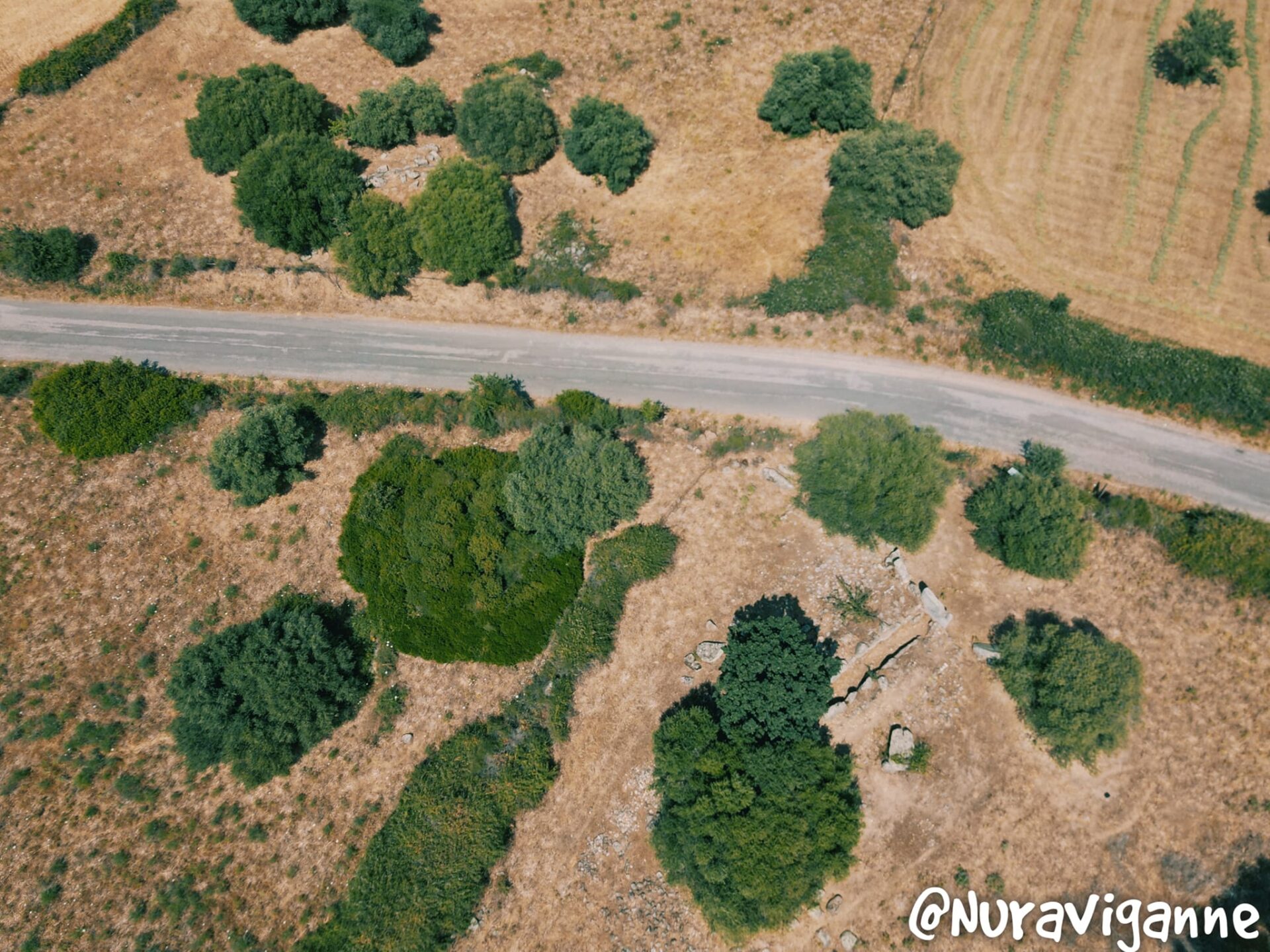
The tomb was part of a funerary complex originally composed of four megalithic tombs placed at a short distance from each other. The photos of the giants’ tomb ‘S’Altare ‘e Logula’ are by Nuraviganne.