The megalithic complex of Monte Baranta (Olmedo), the subject of studies and research since the 1950s, constitutes one of the most extraordinary examples of pre-Nuragic fortified settlements, attributable to the Copper Age and more precisely to the ‘Monte Claro’ culture (2500-2200 BC).
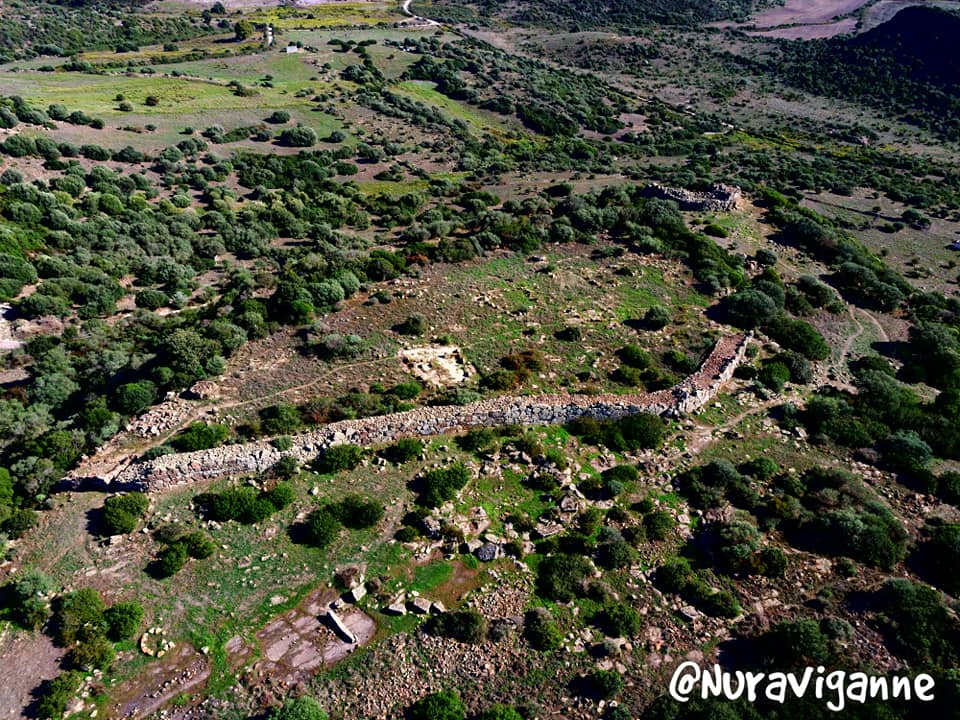
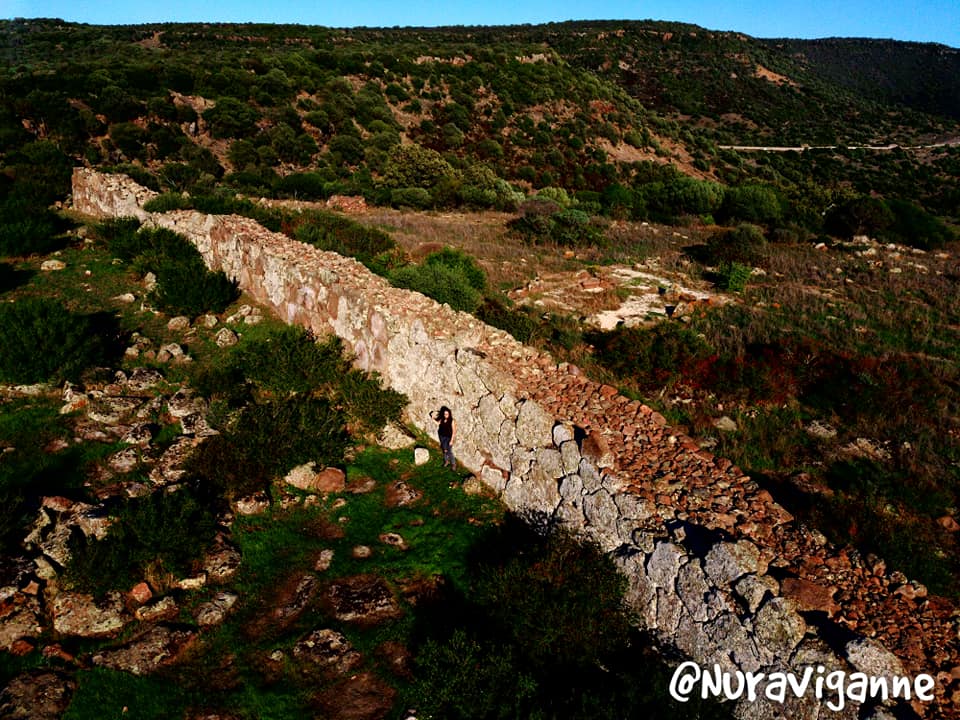
Situated on a trachytic plateau at an altitude of 152 metres above sea level, from which a vast territory is controlled, Monte Baranta consists of a pre-Nuragic settlement characterised and protected by a tower-fence, a long and mighty wall that encloses a group of rectangular huts, separating them from a sacred area with menhirs and a megalithic circle.
The complex of Monte Baranta, so perfectly characterised in its civil, military and religious aspects (the funerary one is missing, for the moment) seems to show, more than any other, the sense of insecurity that drove people to settle on high ground and to supplement their natural defences with mighty megalithic structures, encompassing vast areas and linked to dynamic defence criteria.
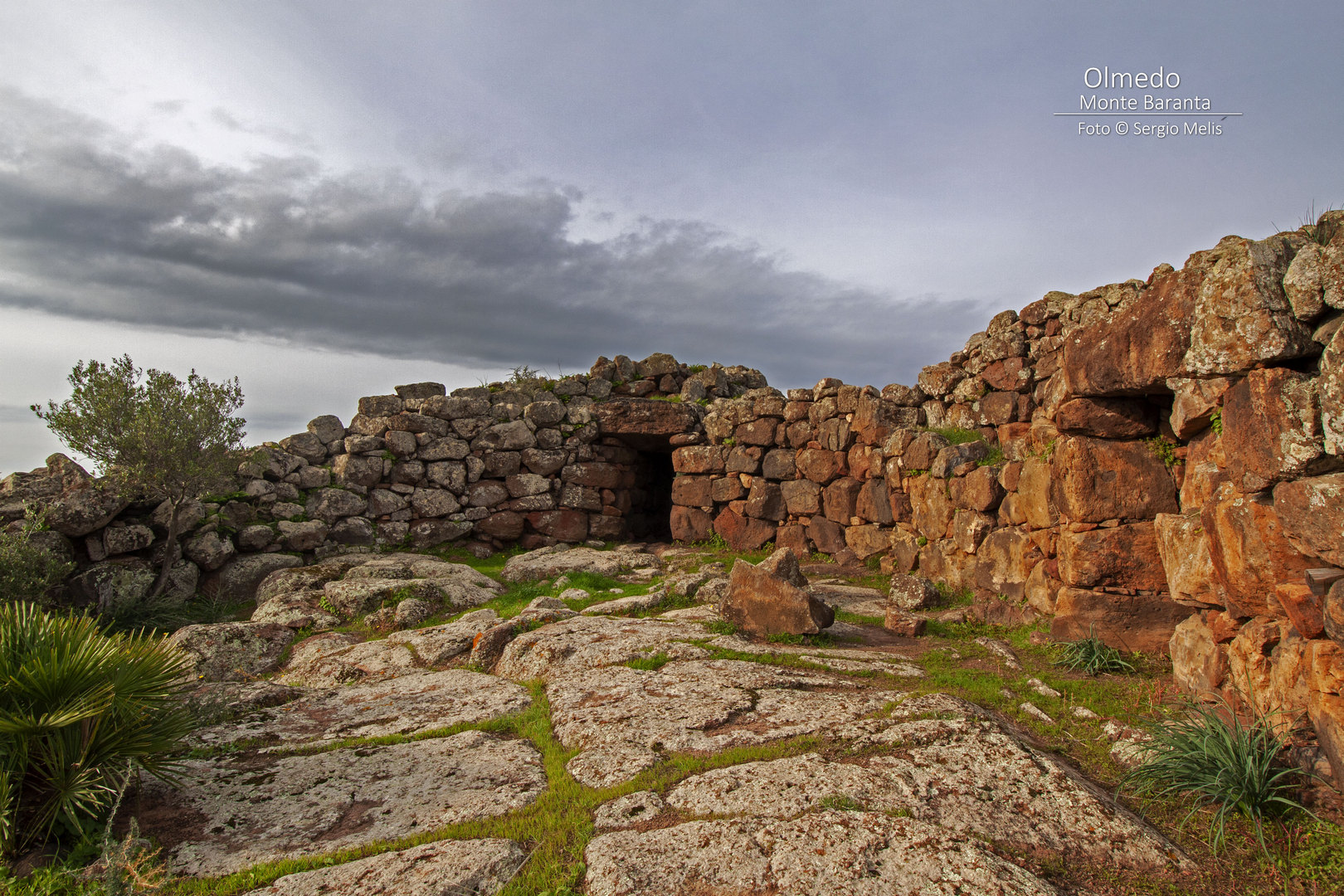
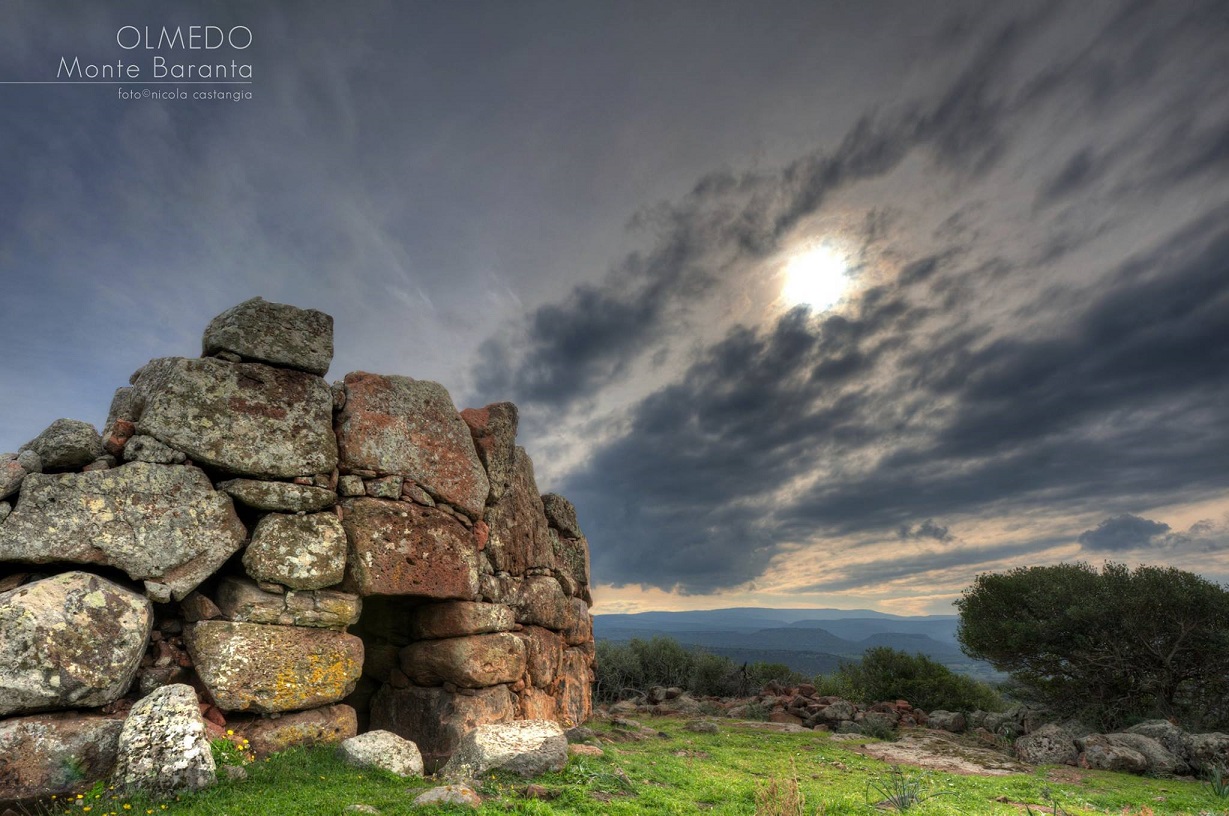
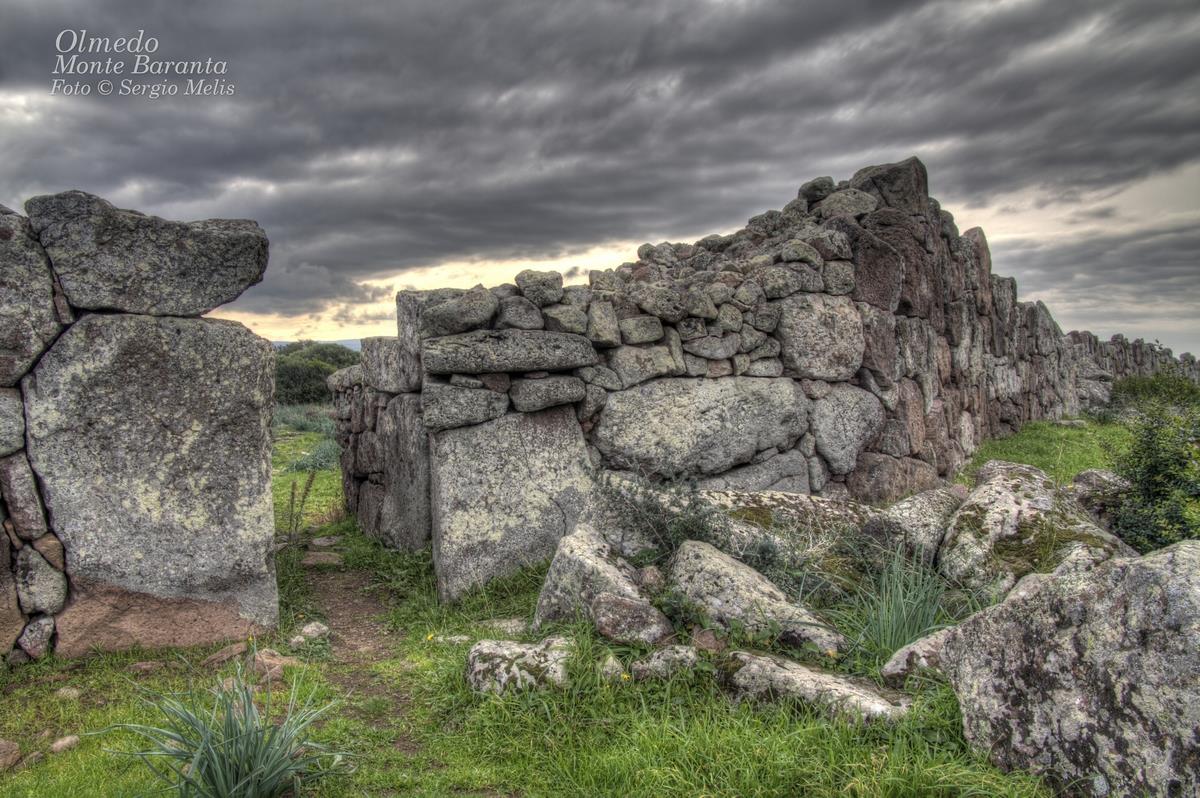
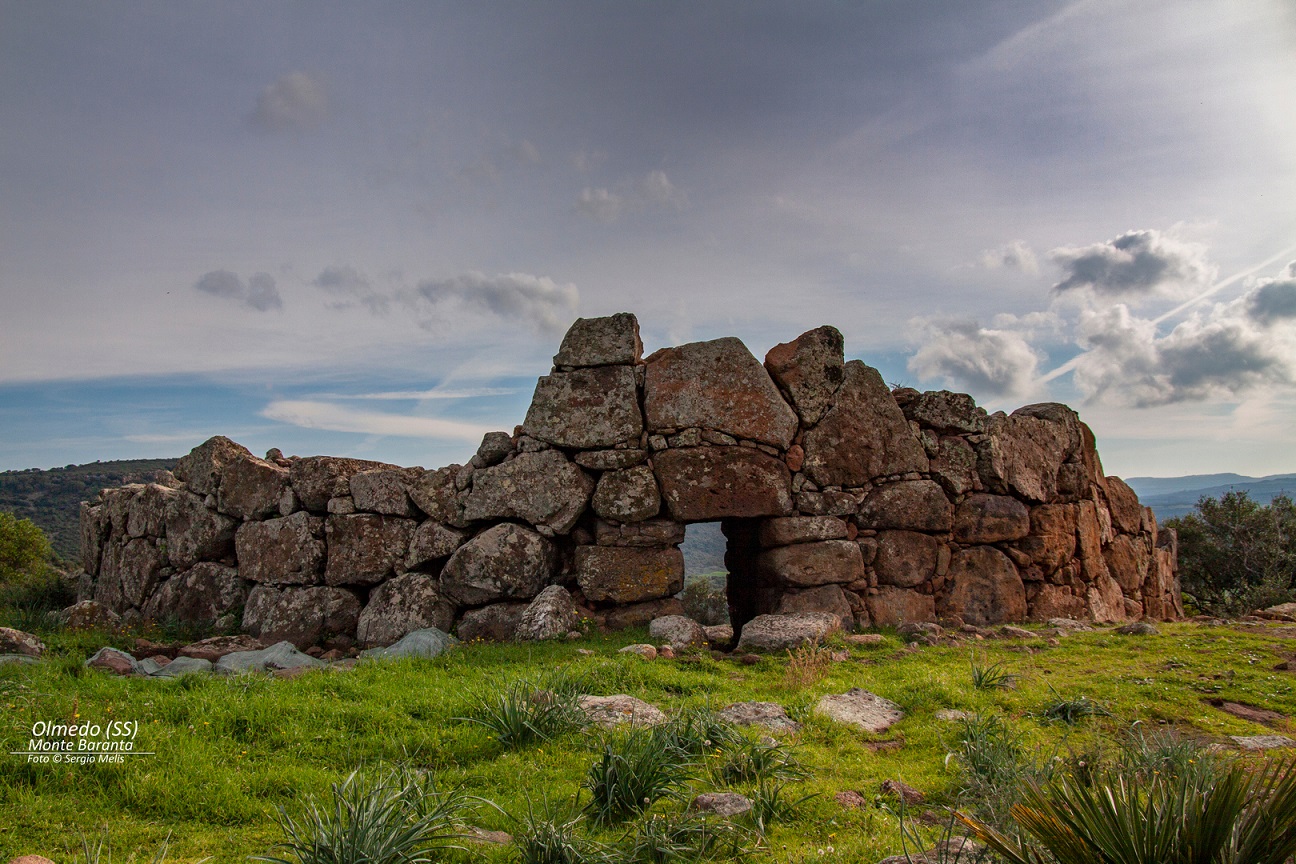
The enclosure-tower, located in a dominant position on the edge of the escarpment, has a horseshoe-shaped plan with two corridor entrances leading into a large courtyard with an opening towards the cliff. Initially mistaken for an atypical nuraghe, it is distinguished by architectural features such as the absence of any roofing, the considerable wall thickness reaching 6.50 metres (about 3.5 metres high), the impressive lintels, and the presence of a rudimentary staircase that, unfolding in the wall profile of the courtyard, leads to a sort of patrol path.
The defensive device is then completed, in a more elevated position, by a mighty wall, 97.00 metres long (5 metres wide and 2.5 metres high on average) barring access to the only section of open and therefore vulnerable plateau. It has a single off-centre entrance that leads inside the wall.
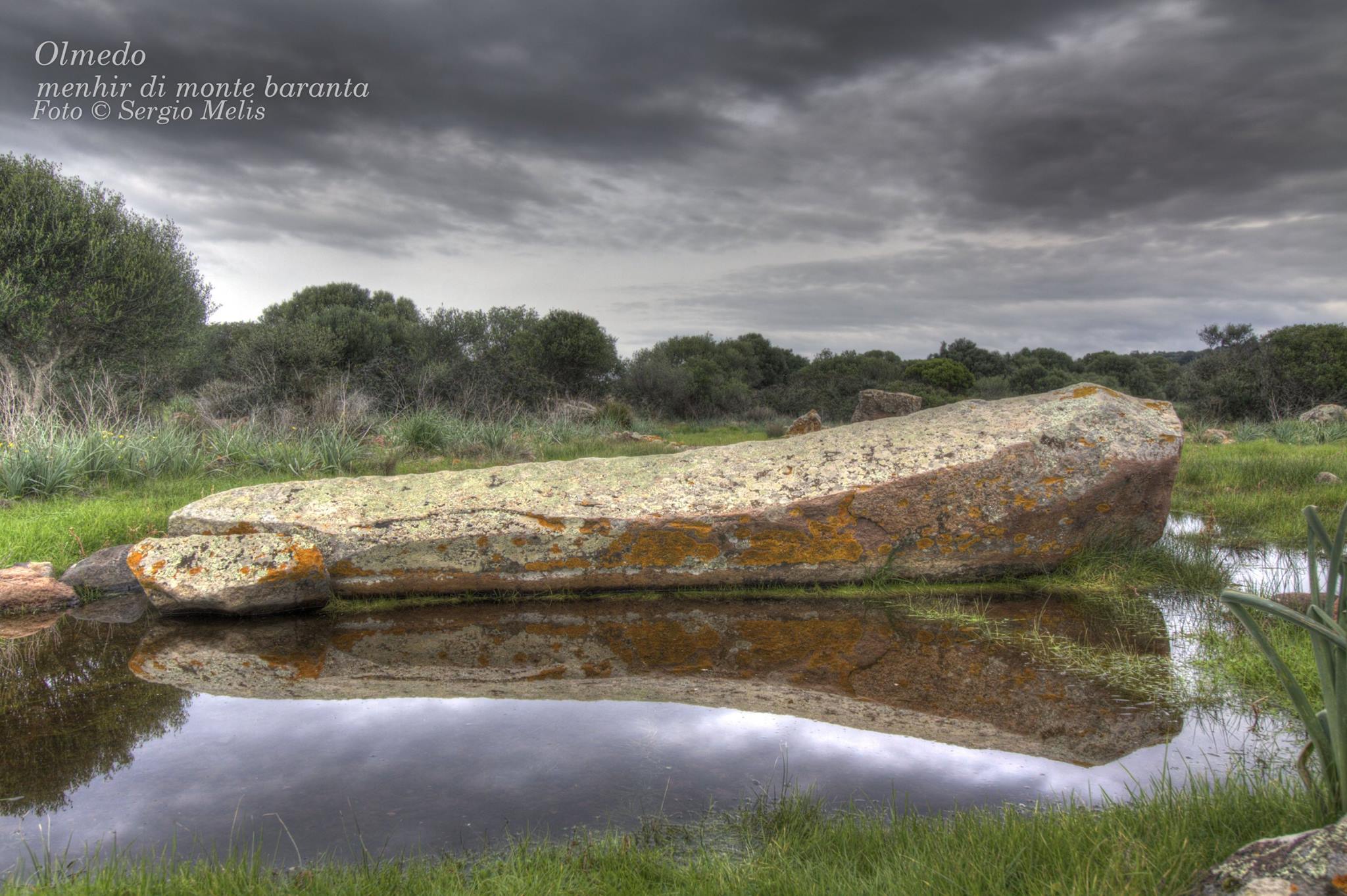
In the area delimited by the wall, the rectilinear walls of numerous huts of the settlement can be distinguished. During excavations in two of these huts, pottery exclusively from the Monte Claro culture was found.On the outside of the wall is a megalithic circle formed by some eighty slabs of various sizes that mark a circular space with a diameter of approximately 10 metres; some of these, largely broken and currently all toppled, clearly show that they were menhirs. About ten metres away, we find the large 3.95 metre long menhir, which has also landed, on a perfectly levelled rocky area near the freshly carved hollow that should have housed it.
This last detail together with the fact that the menhir appears unfinished leads one to believe that it was never erected.
Source: Il compleso prenuragico di Monte Baranta by A. Moravetti, from the website of the municipality of Olmedo.
The photos of the megalithic complex of Monte Baranta are by Sergio Melis, Nicola Castangia and Nuraviganne.