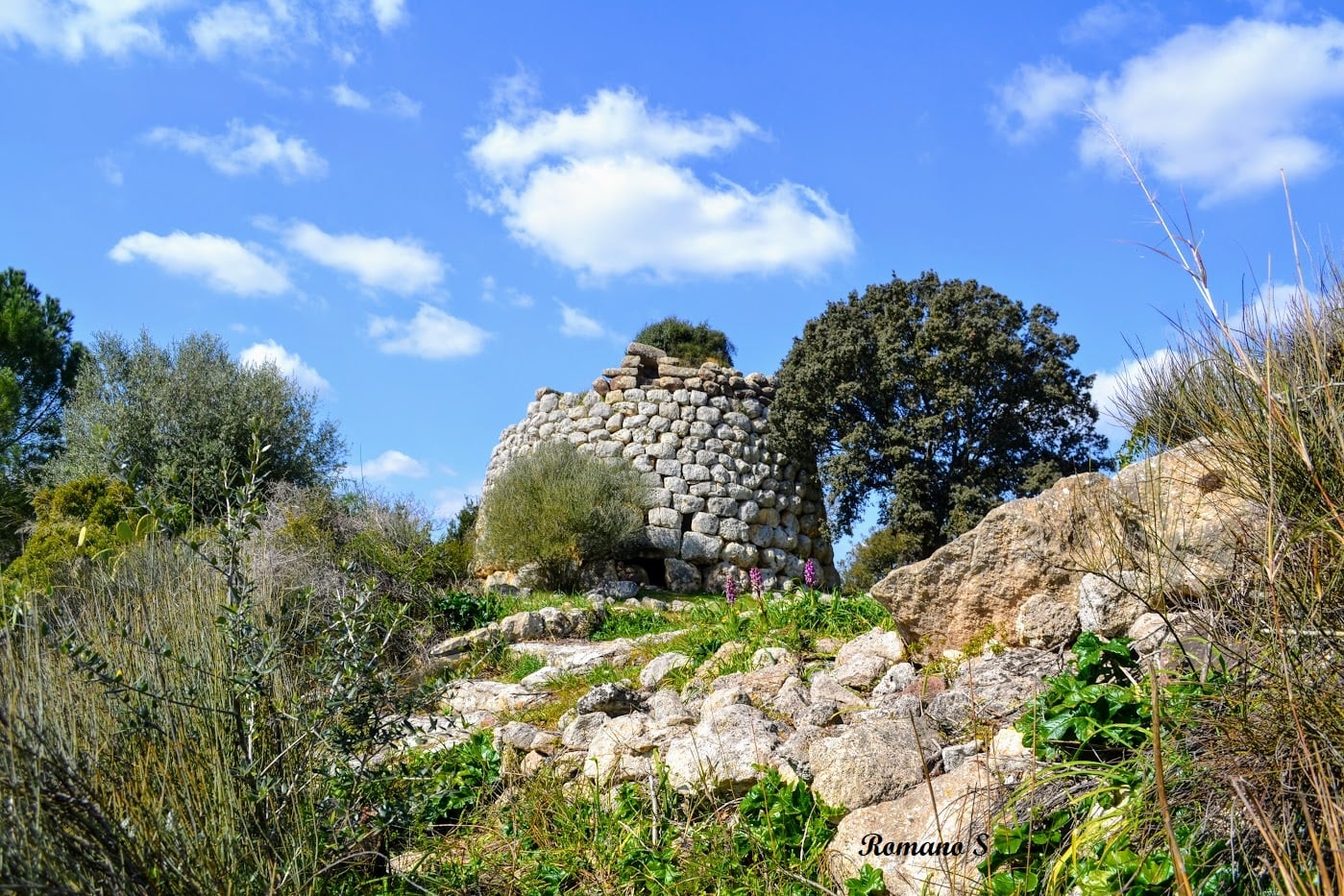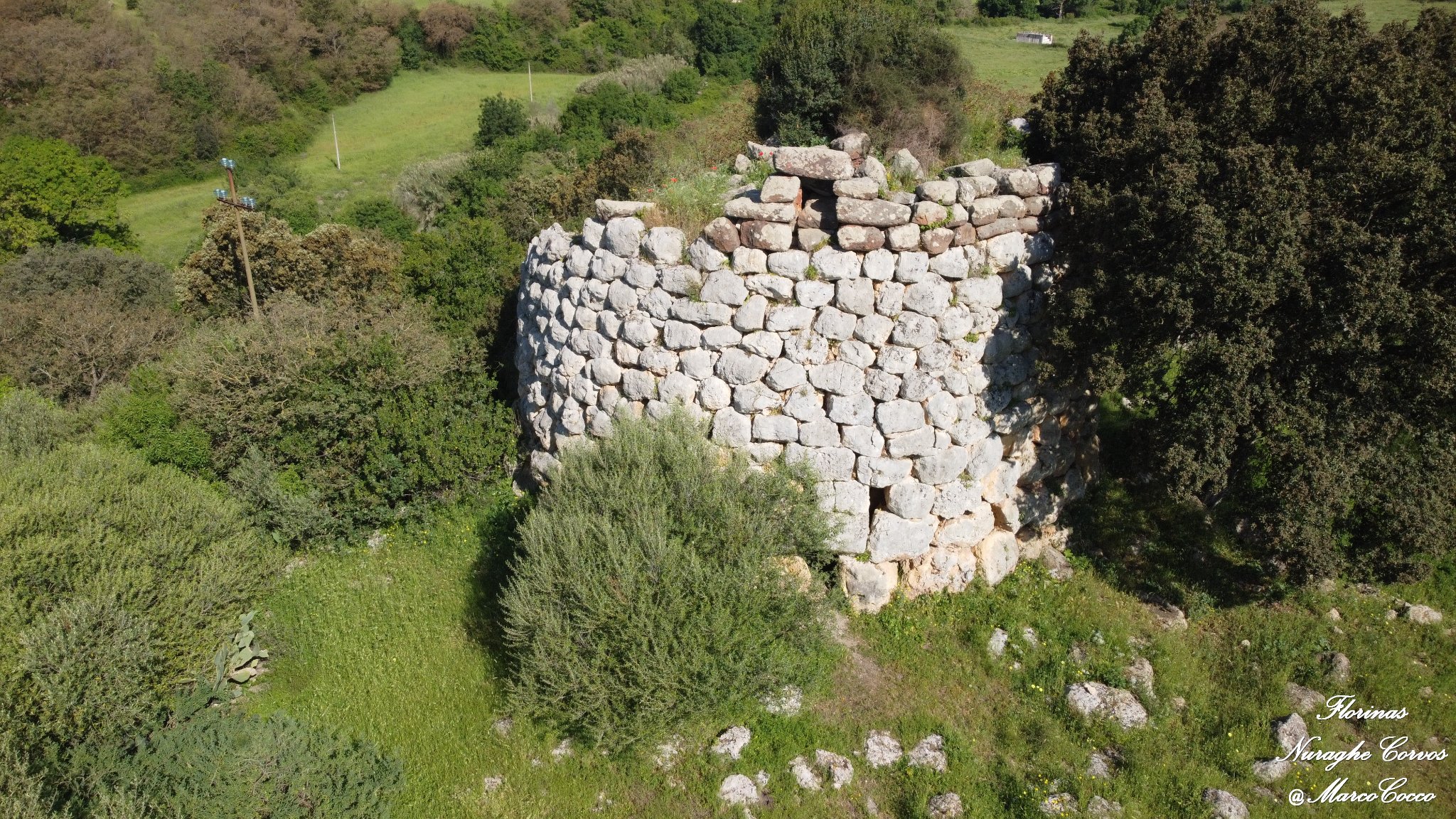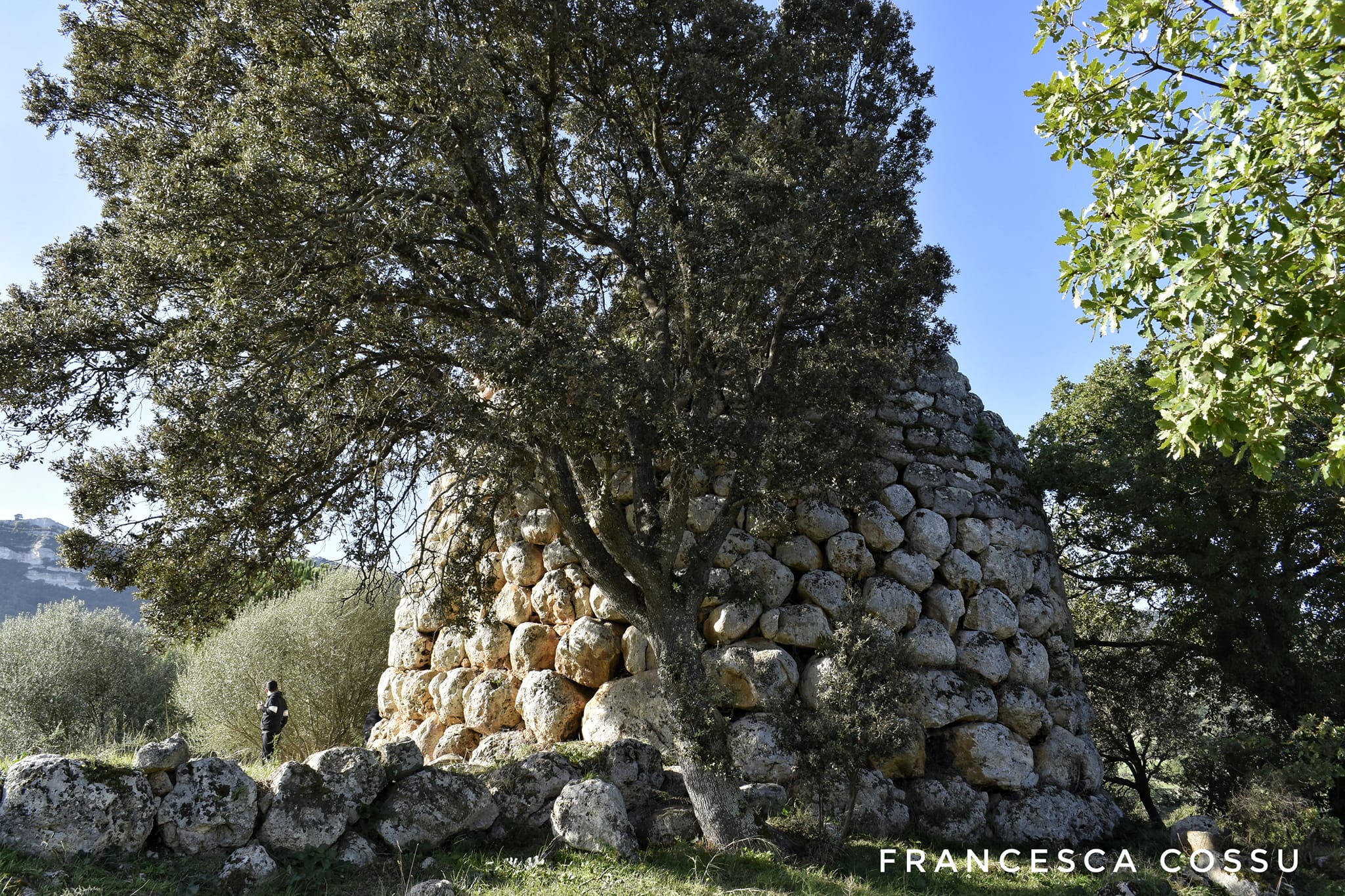
In the north-west of Sardinia, not only Romanesque churches are ‘two-coloured’, in Florinas even a nuraghe boasts a double colour, as well as revealing constructive singularities.
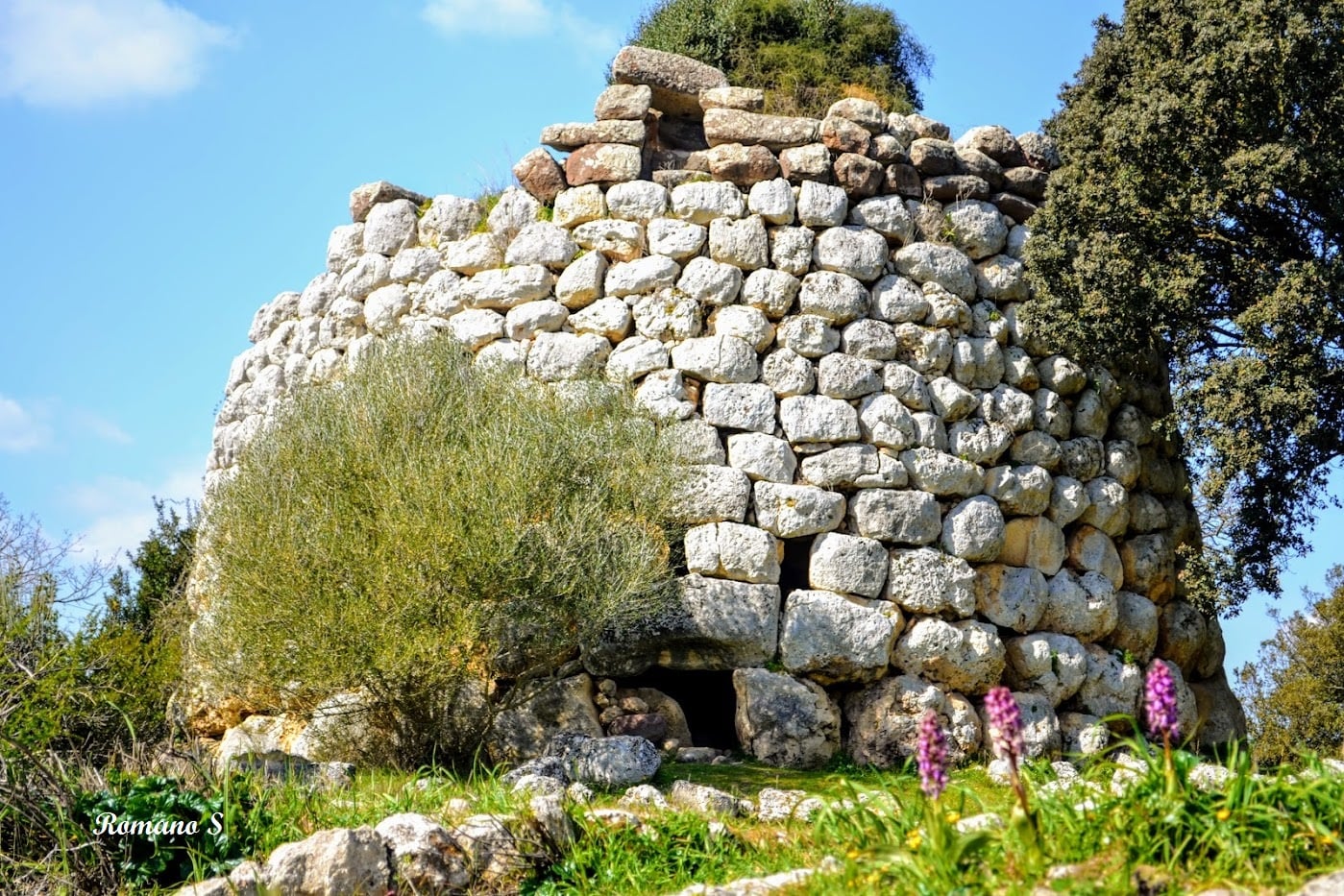
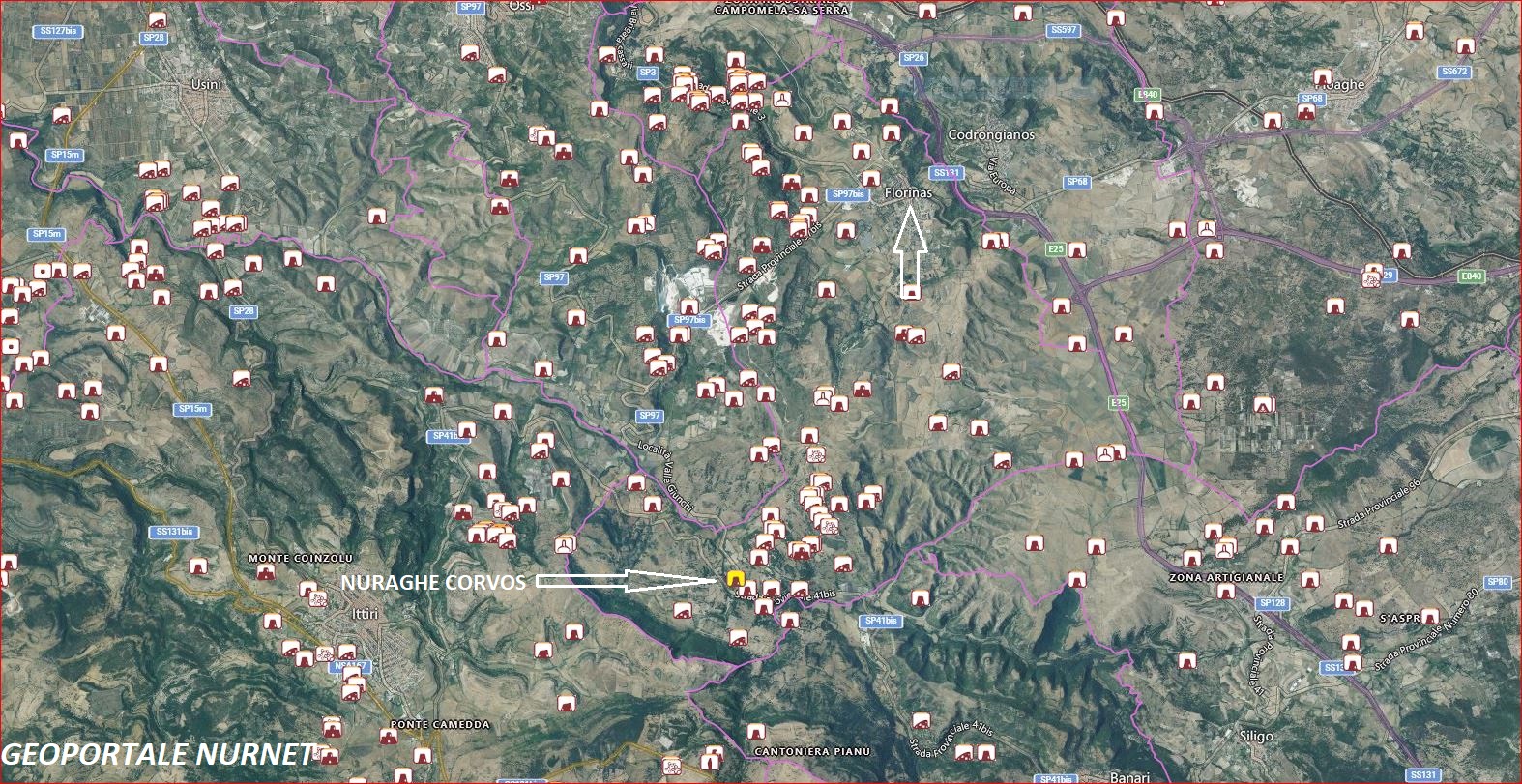
At first glance it looks like a single tower, in reality its complex structure is barely visible, moreover it was ‘restructured’ already in the protohistoric age, using a different material. The Corvos nuraghe stands alone in the countryside southwest of Florinas, about ten kilometres from the town. The central tower, eight metres high and 13 and a half metres in diameter, is preserved in good condition.At the base, it has large blocks of freshly hewn limestone, while well-worked dark trachyte ashlars were used during the restoration. It is not clear whether the intervention was a consequence of a collapse of the upper level or the decision to build it from scratch at a later date. The first hypothesis would seem to be supported by the fact that on the north-eastern side there are also traces of repairs in the limestone masonry, so the eventual collapse probably occurred on this side.
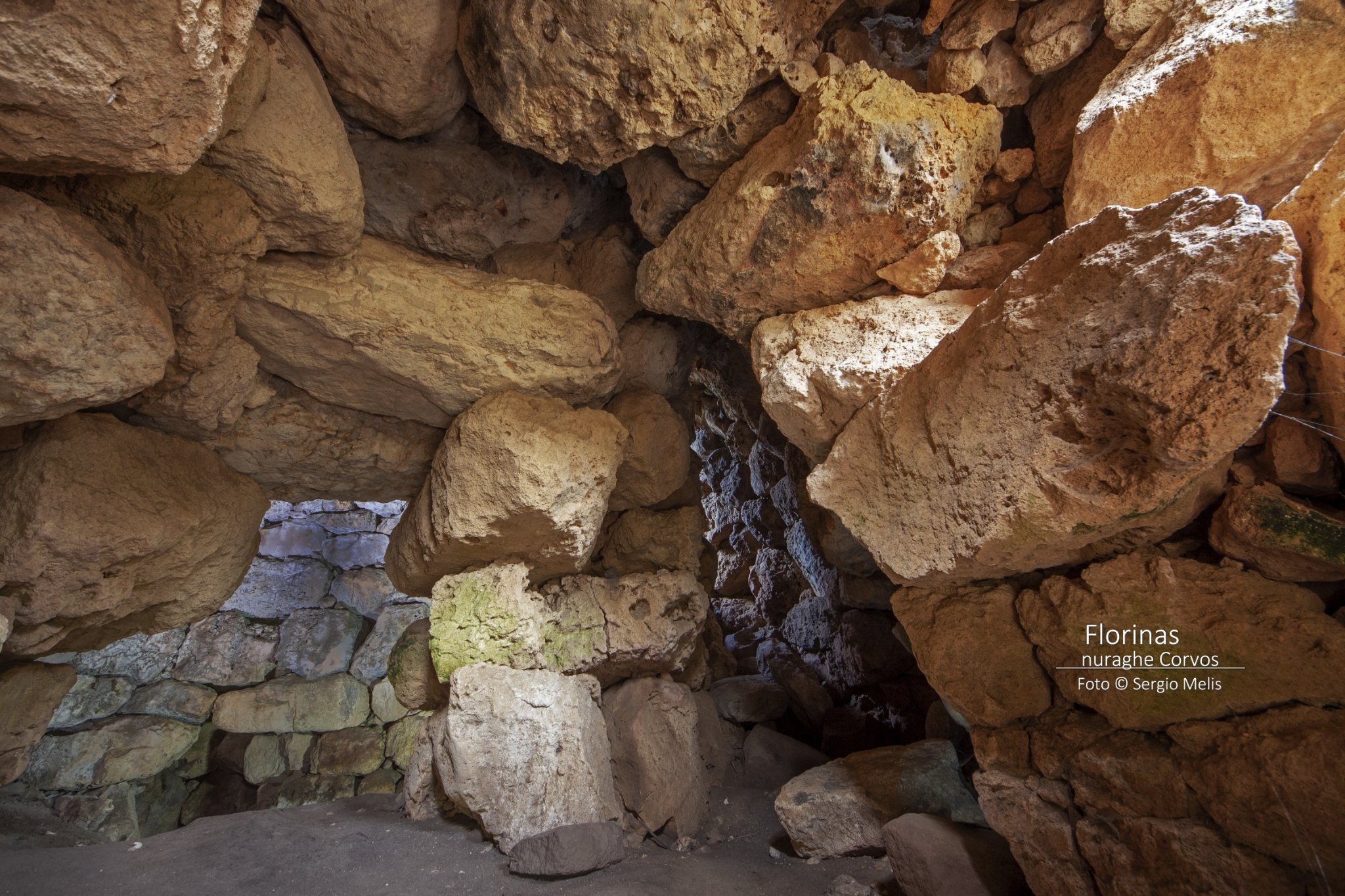
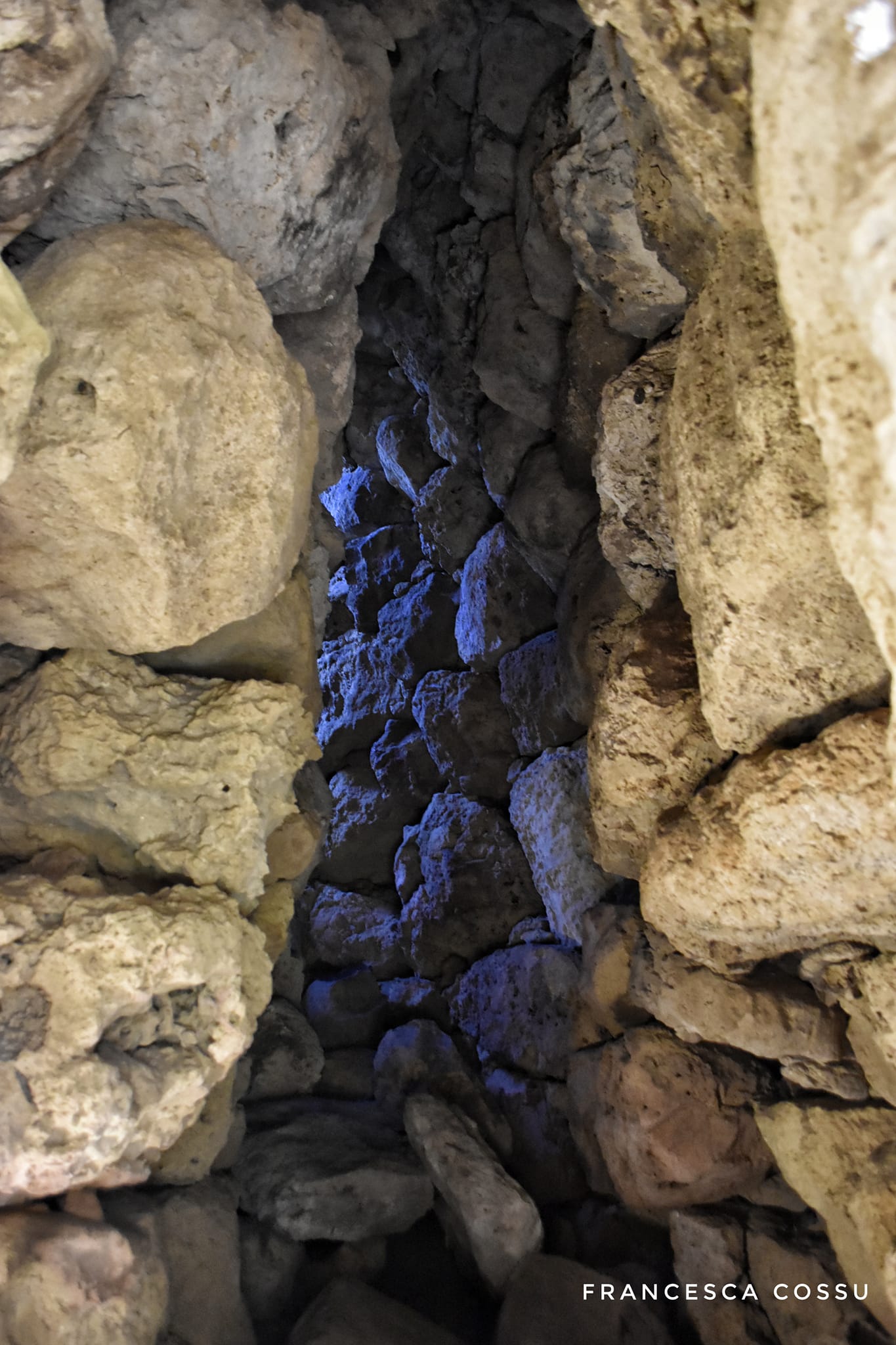
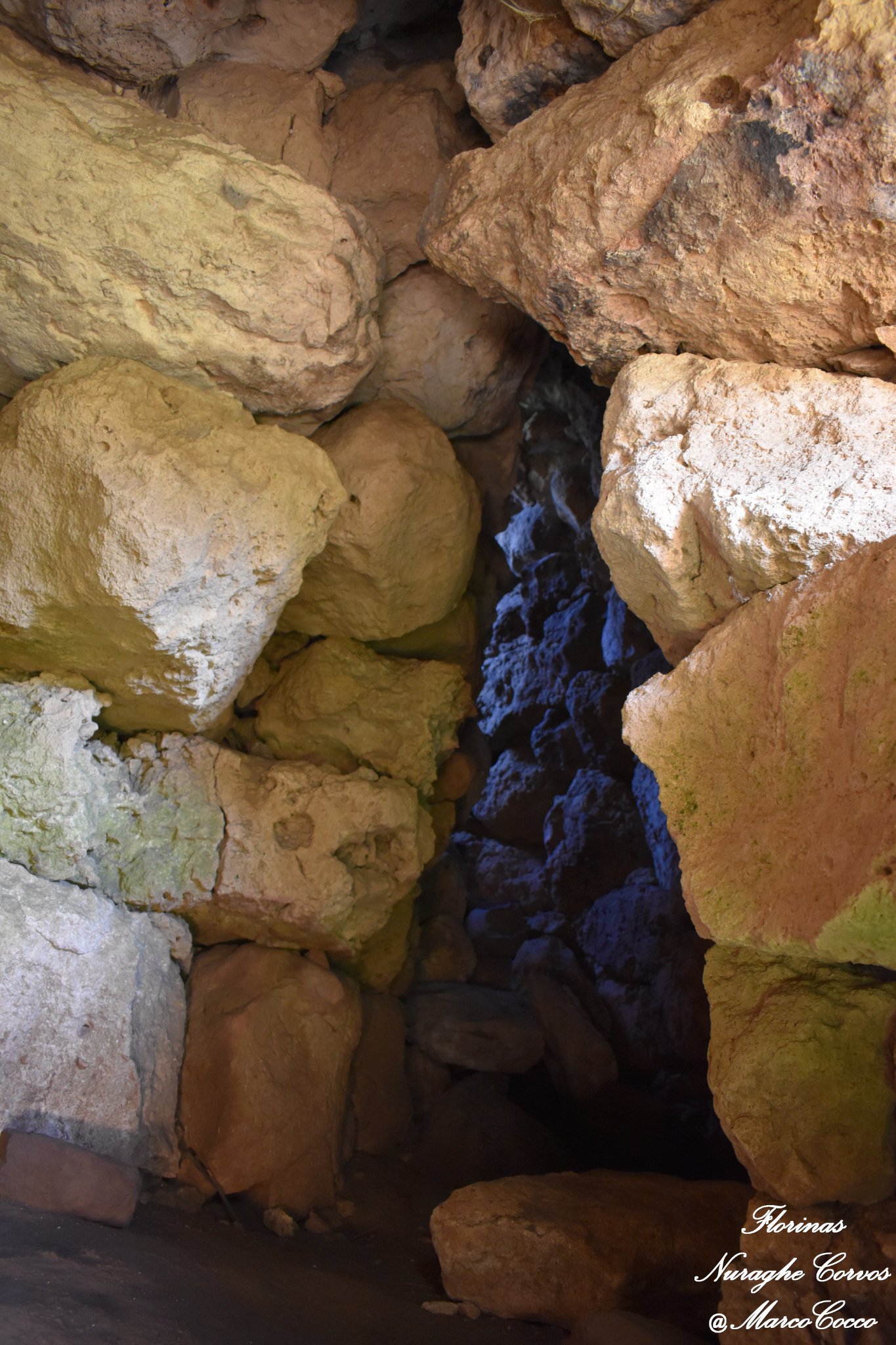
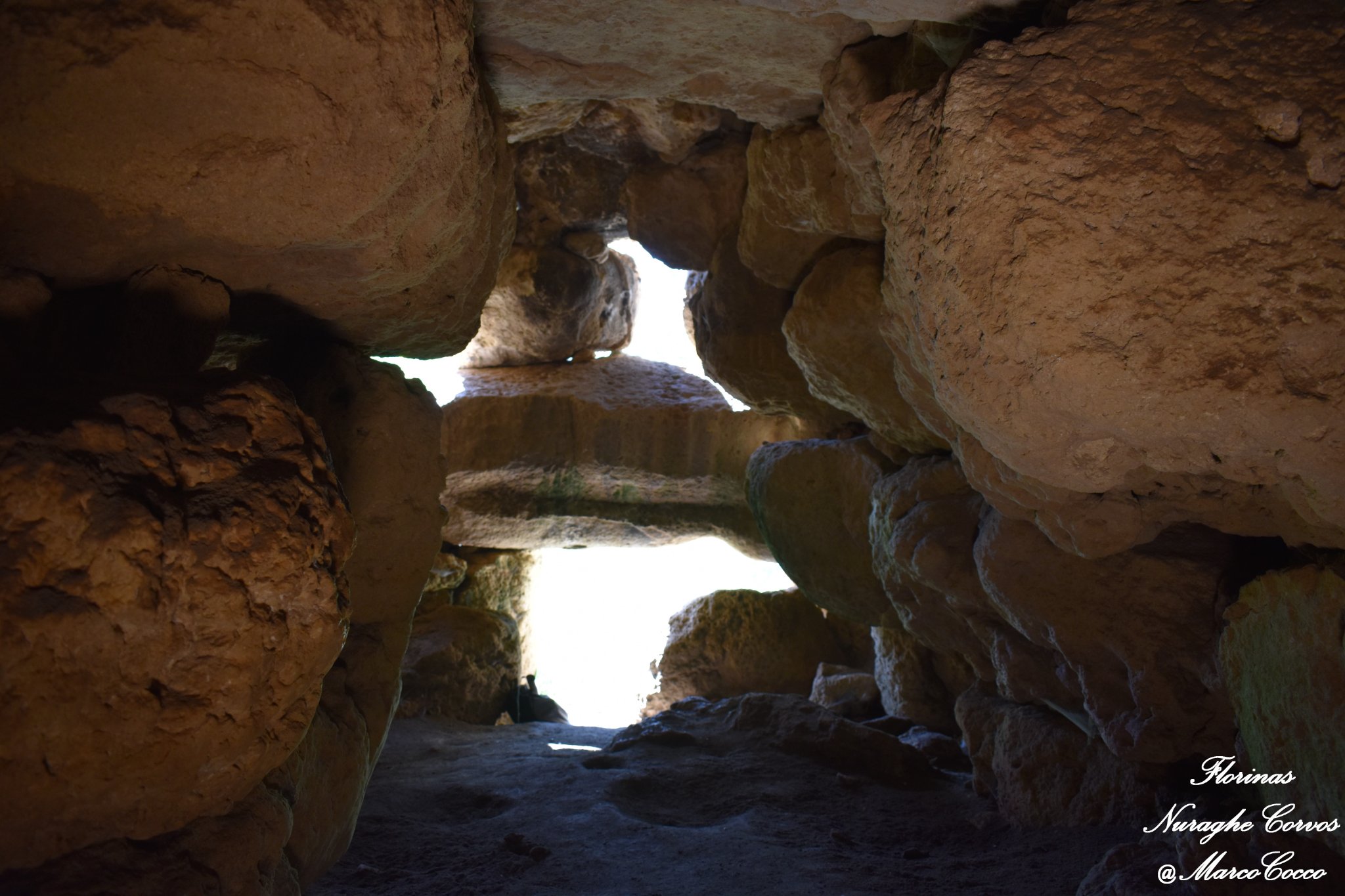
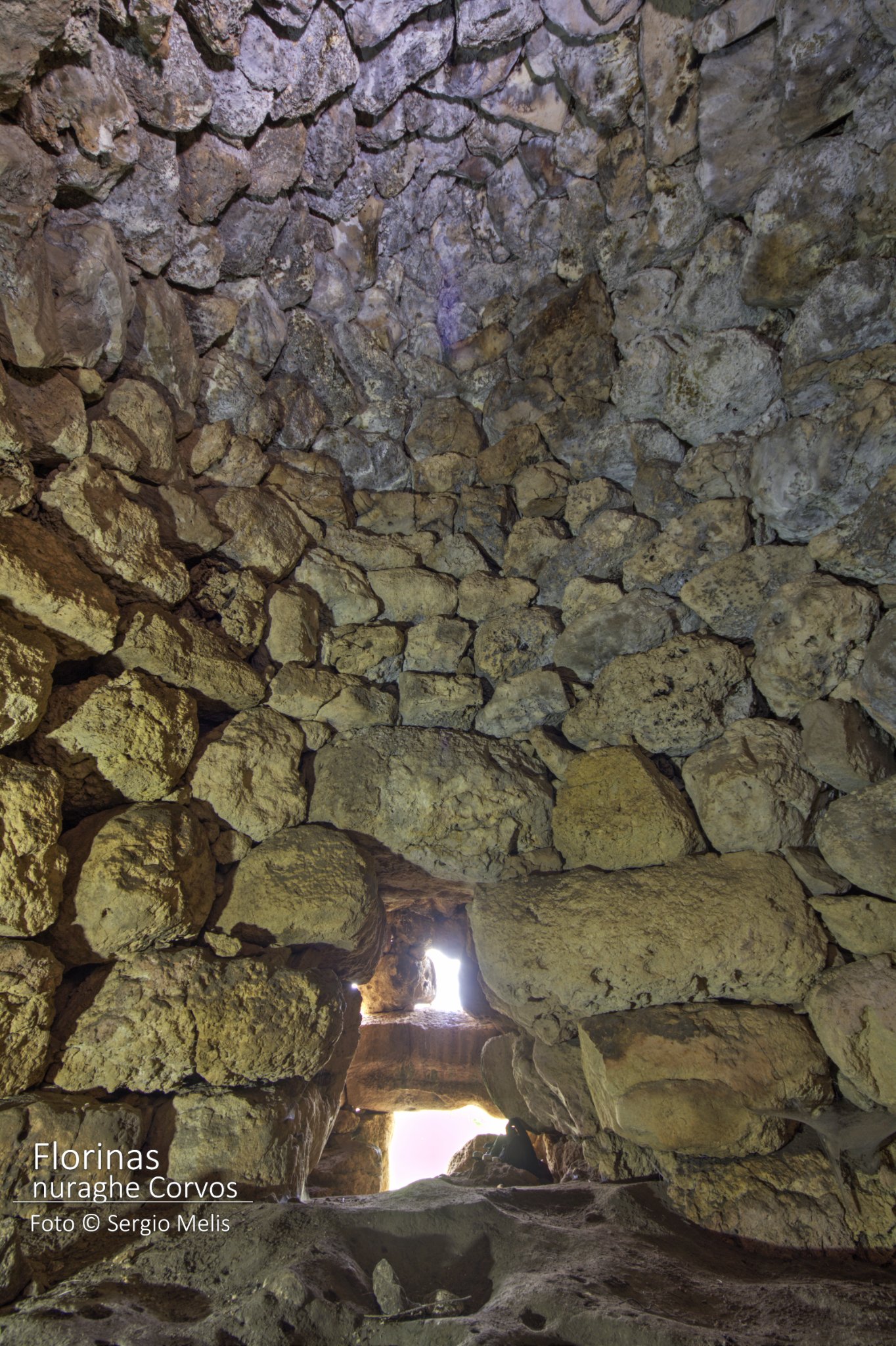
The entrance is architraved, as well as partly obstructed by the insertion of a supporting boulder on the left side, placed there to remedy the damage to the doorpost. The hallway has an alcove on the left and access to the staircase on the opposite side; walking along it leads to the upper chamber. The andito will lead you to the main room covered with tholos and with three niches arranged in a cross. The niche on the right is developed with a curious ‘L’ plan.
Around the tower stretched the bastion, with two secondary towers, whose profile is barely discernible on the ground. The most visible remains of the curtain walls are on the south-west side, where a section about two metres high with three rows of stones is preserved.
Source: Sardinia Tourism.
The photos of the Corvos nuraghe are by: Marco Cocco, Francesca Cossu, Sergio Melis and Romano Stangherlin.