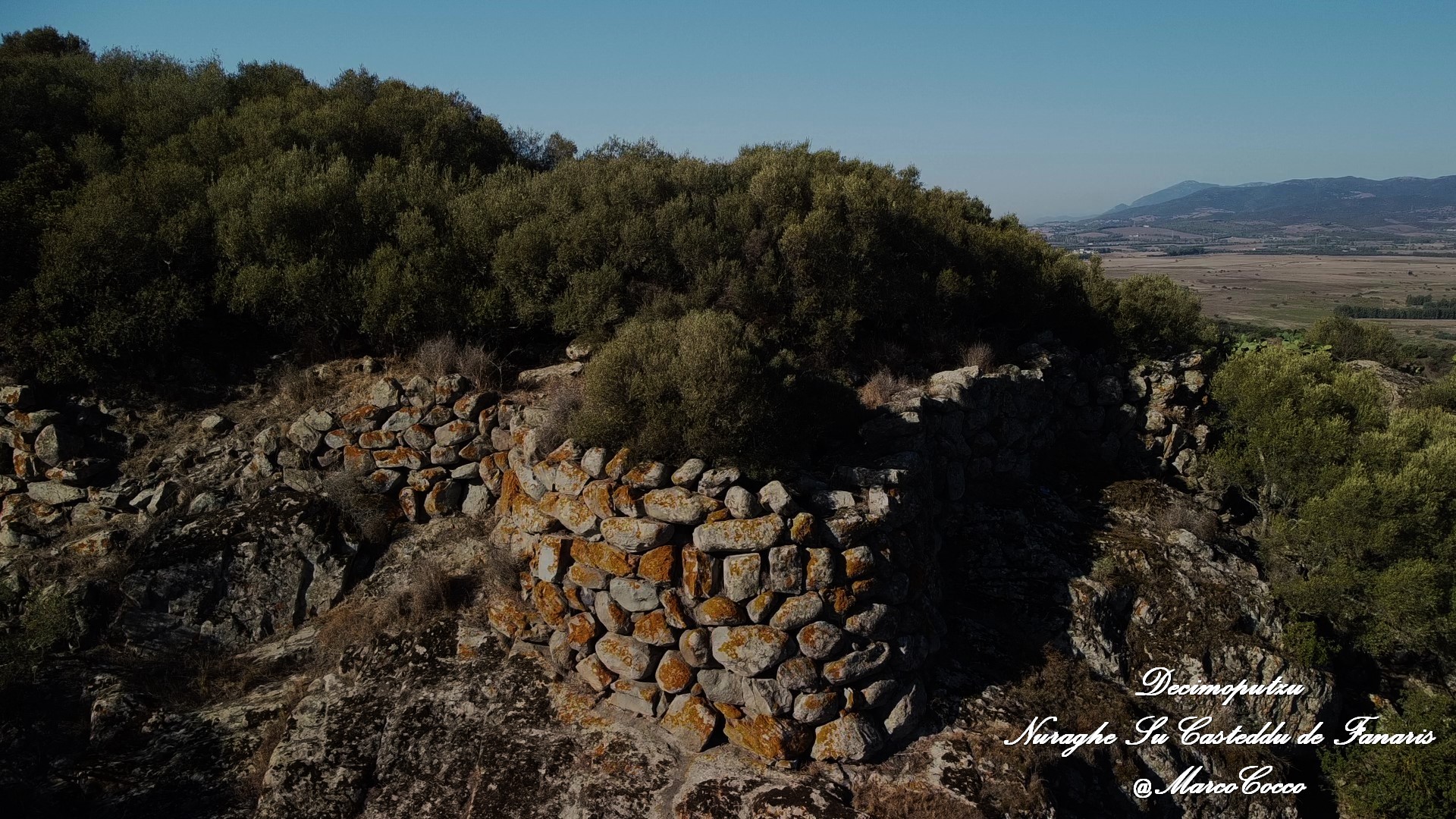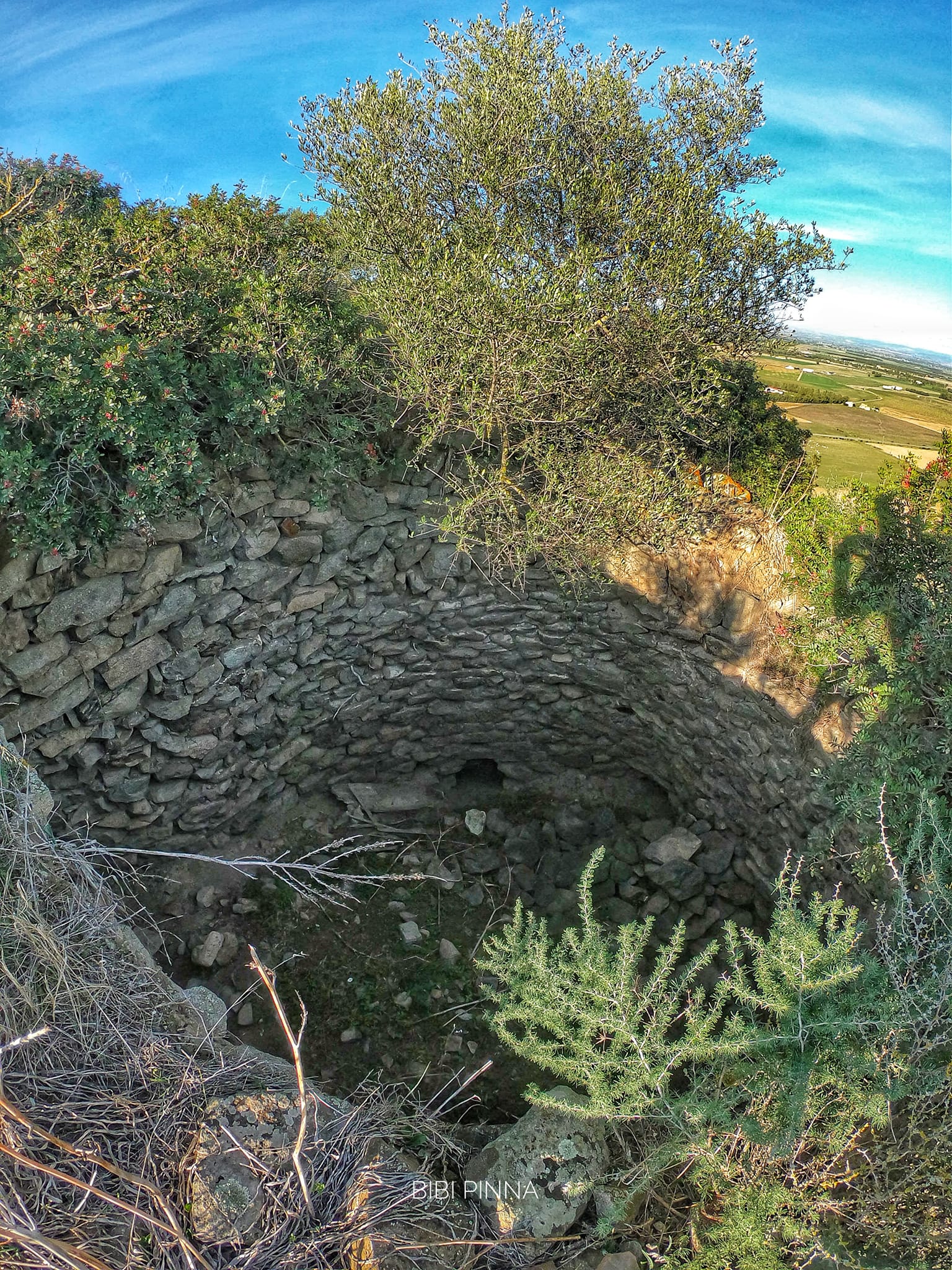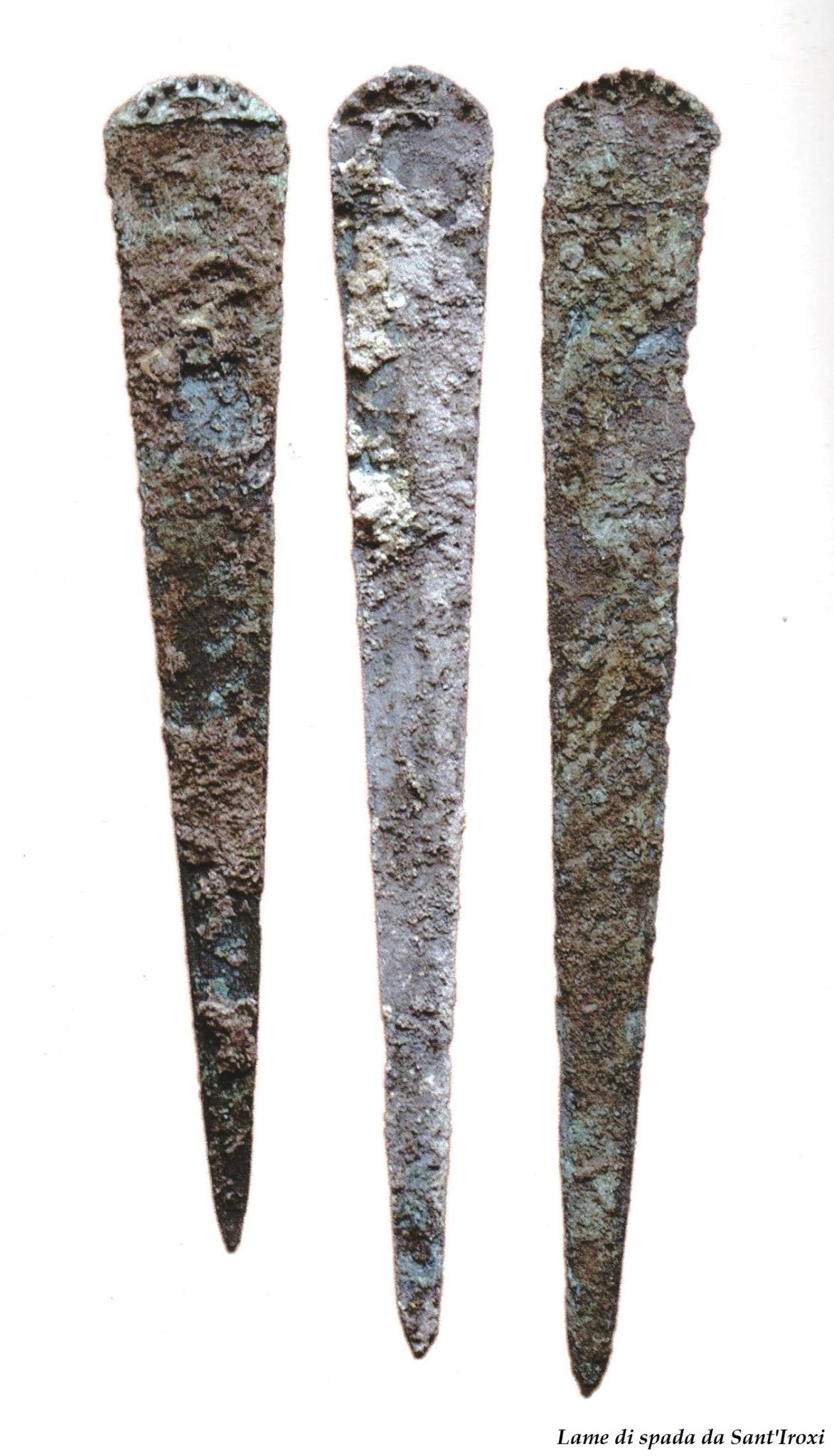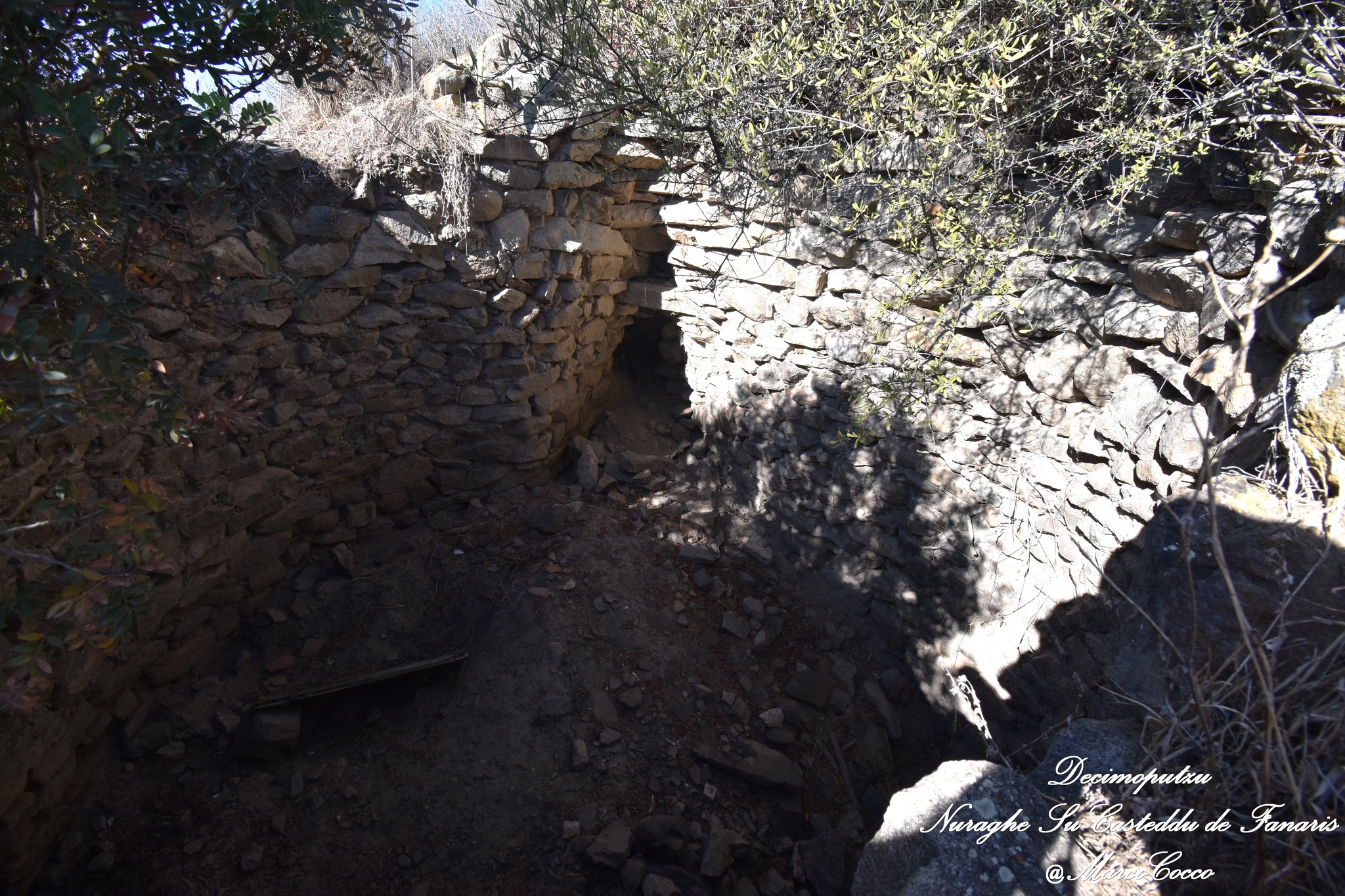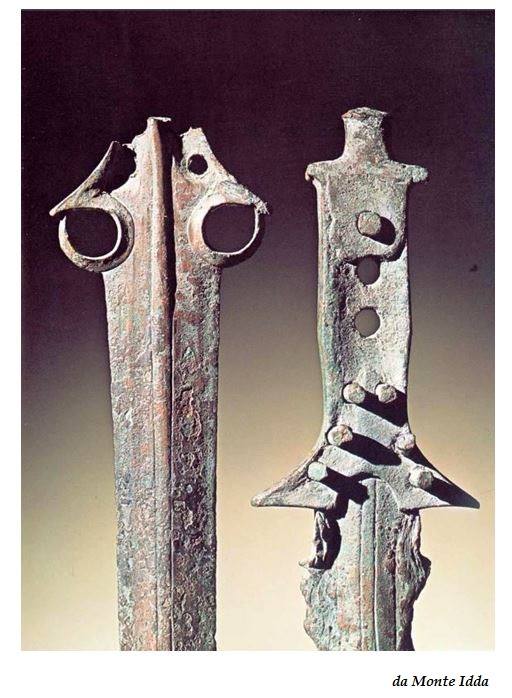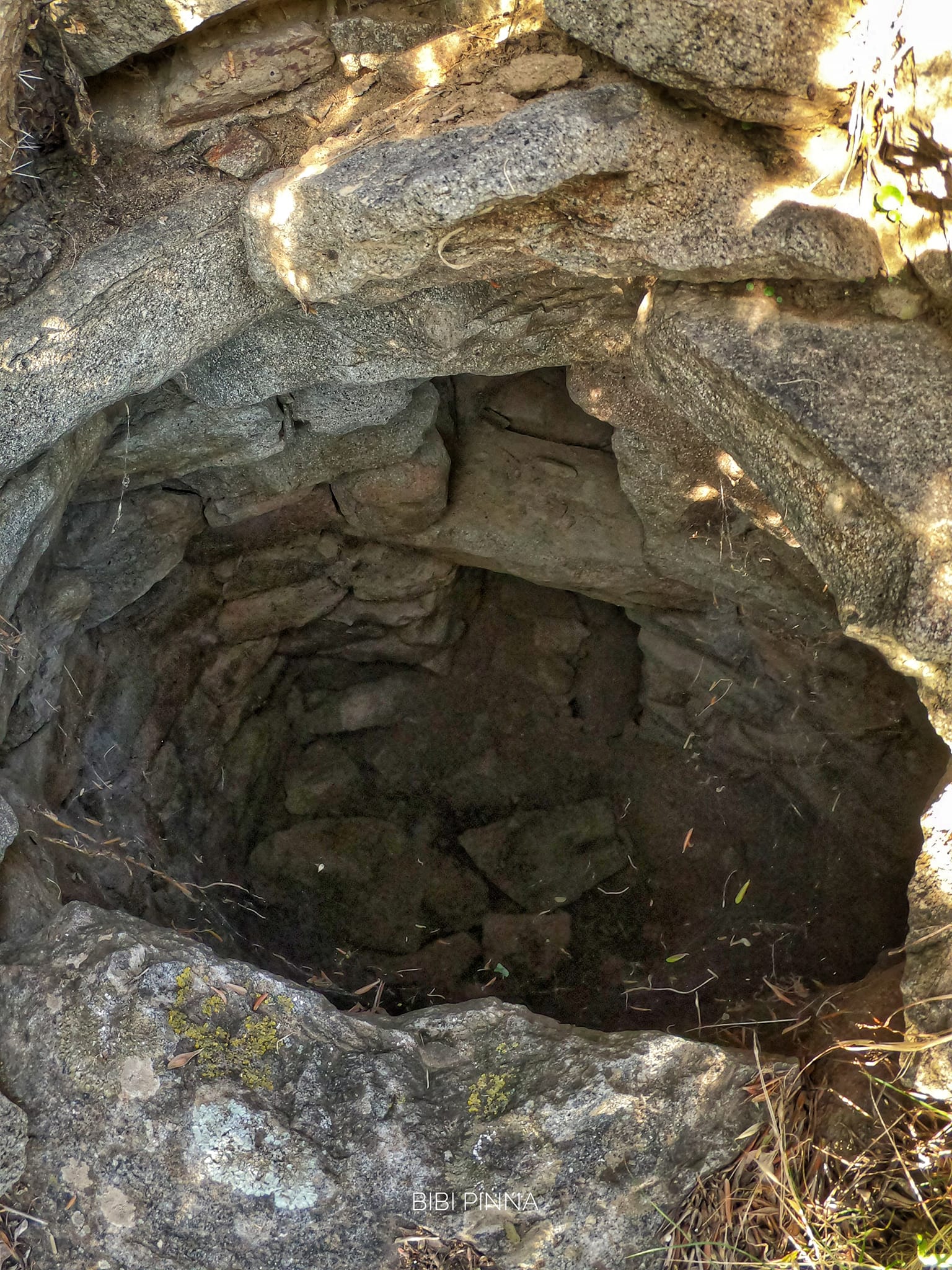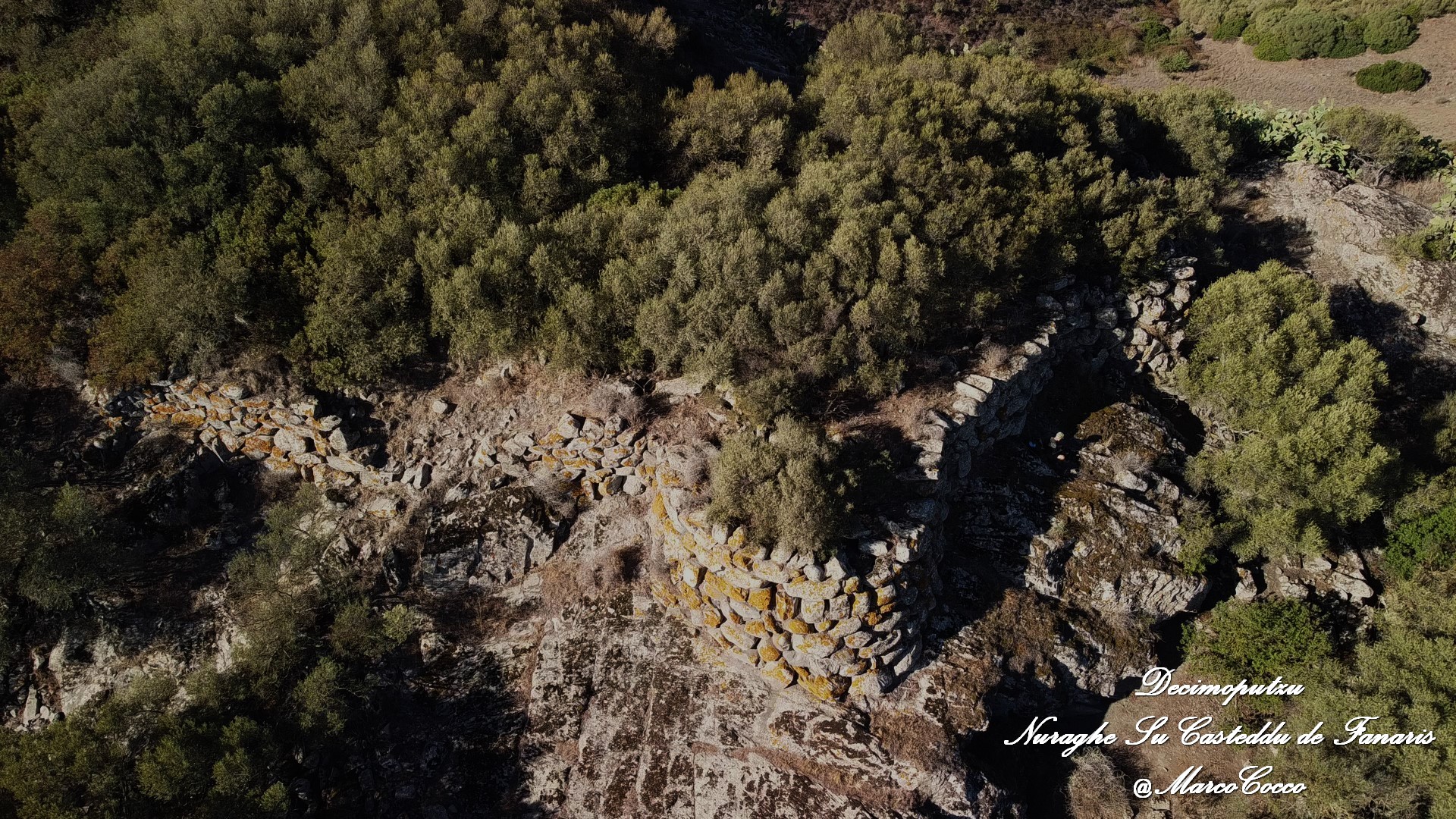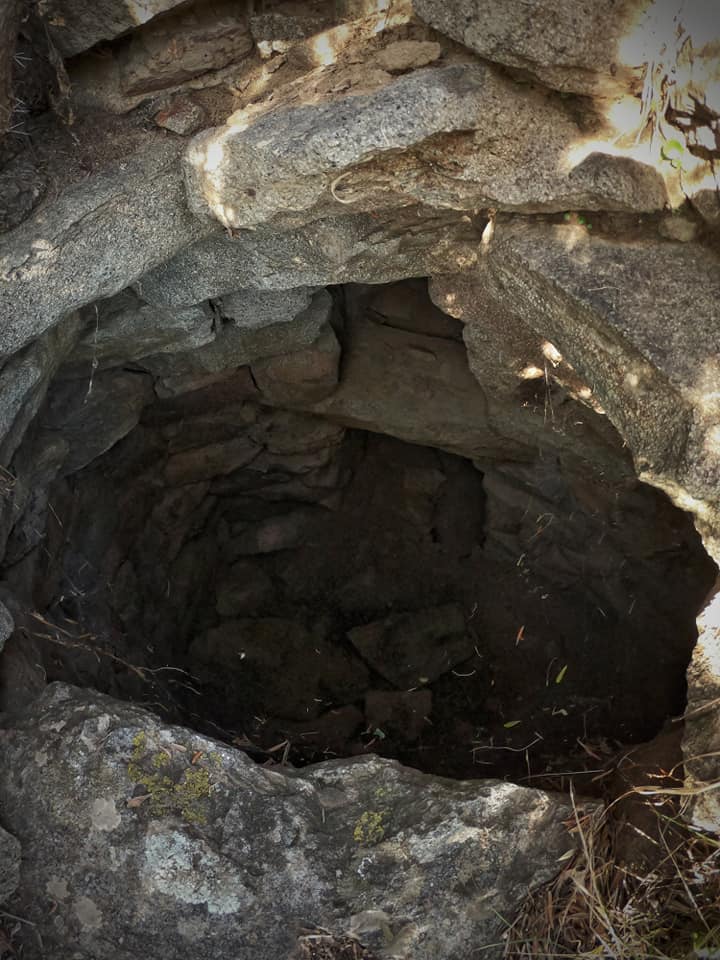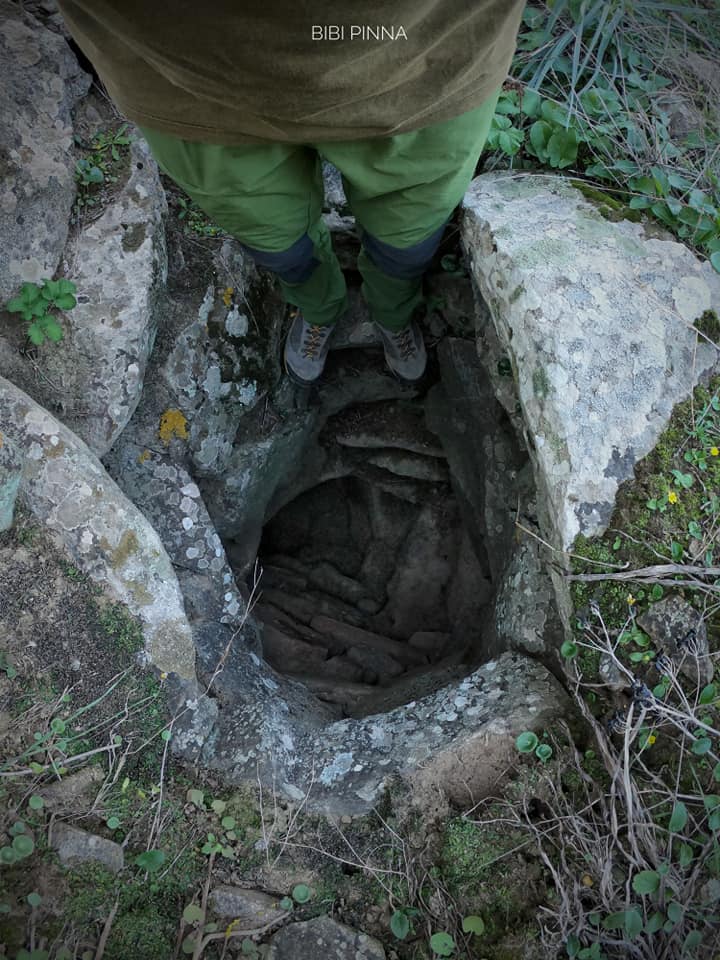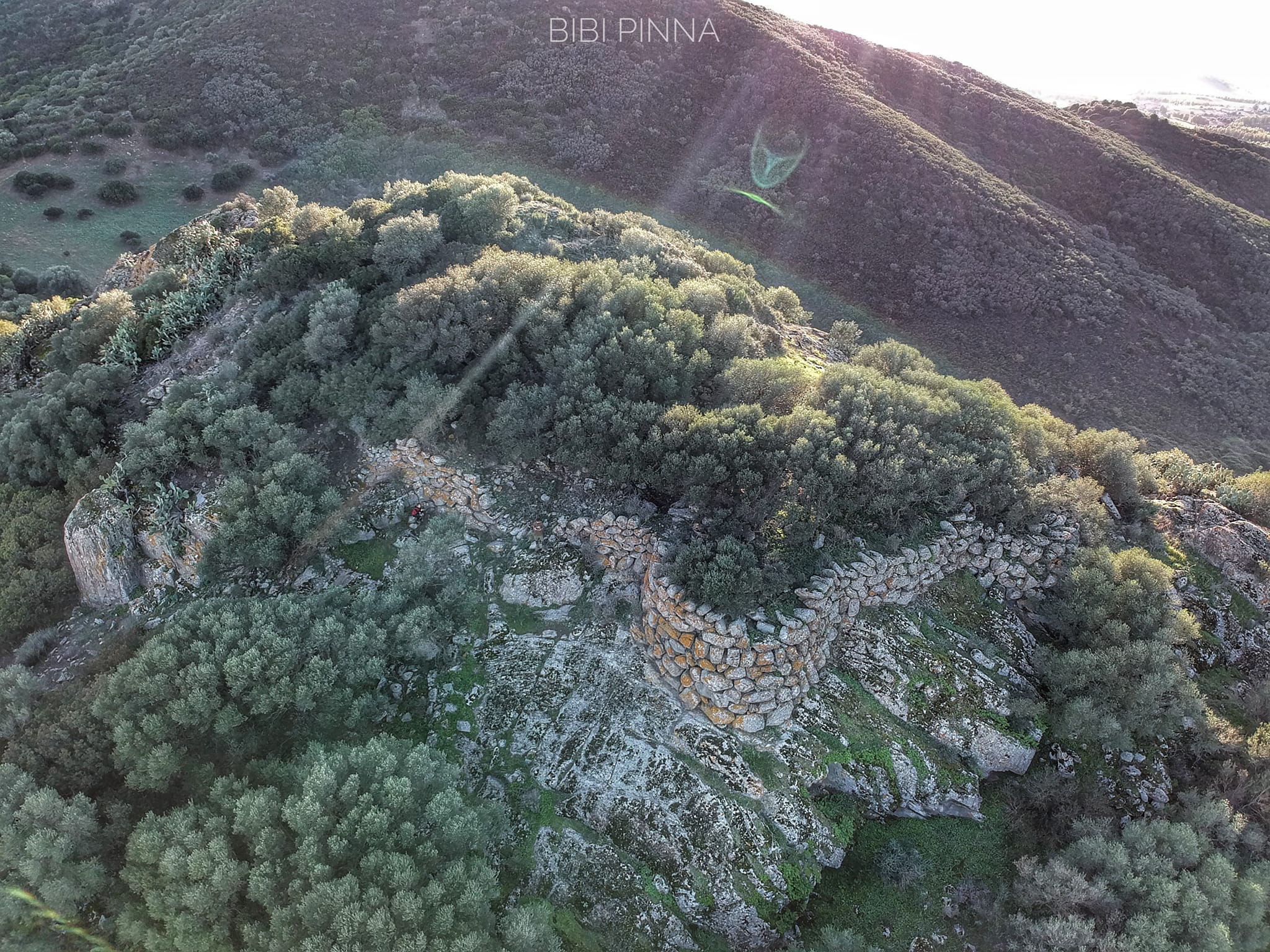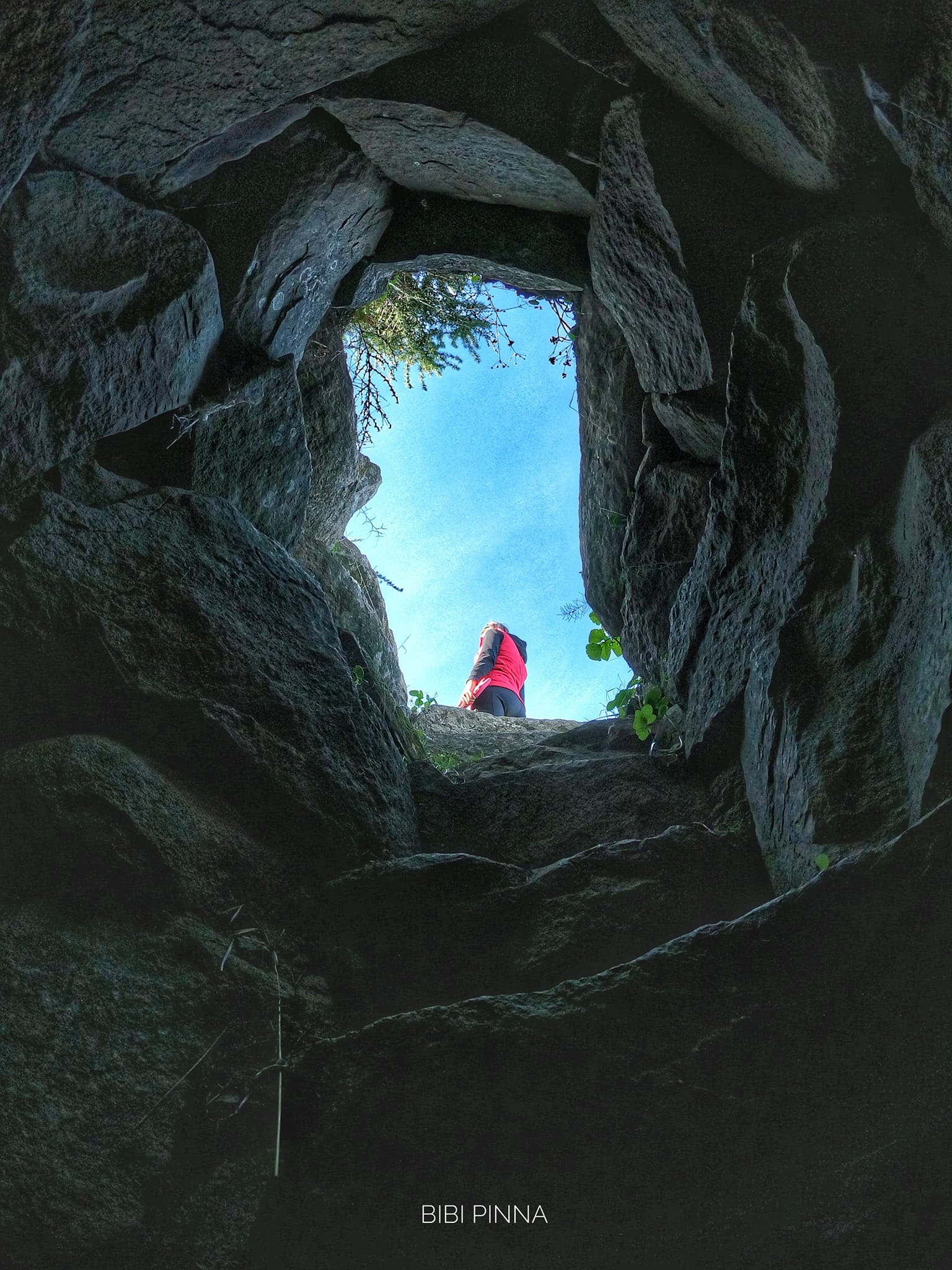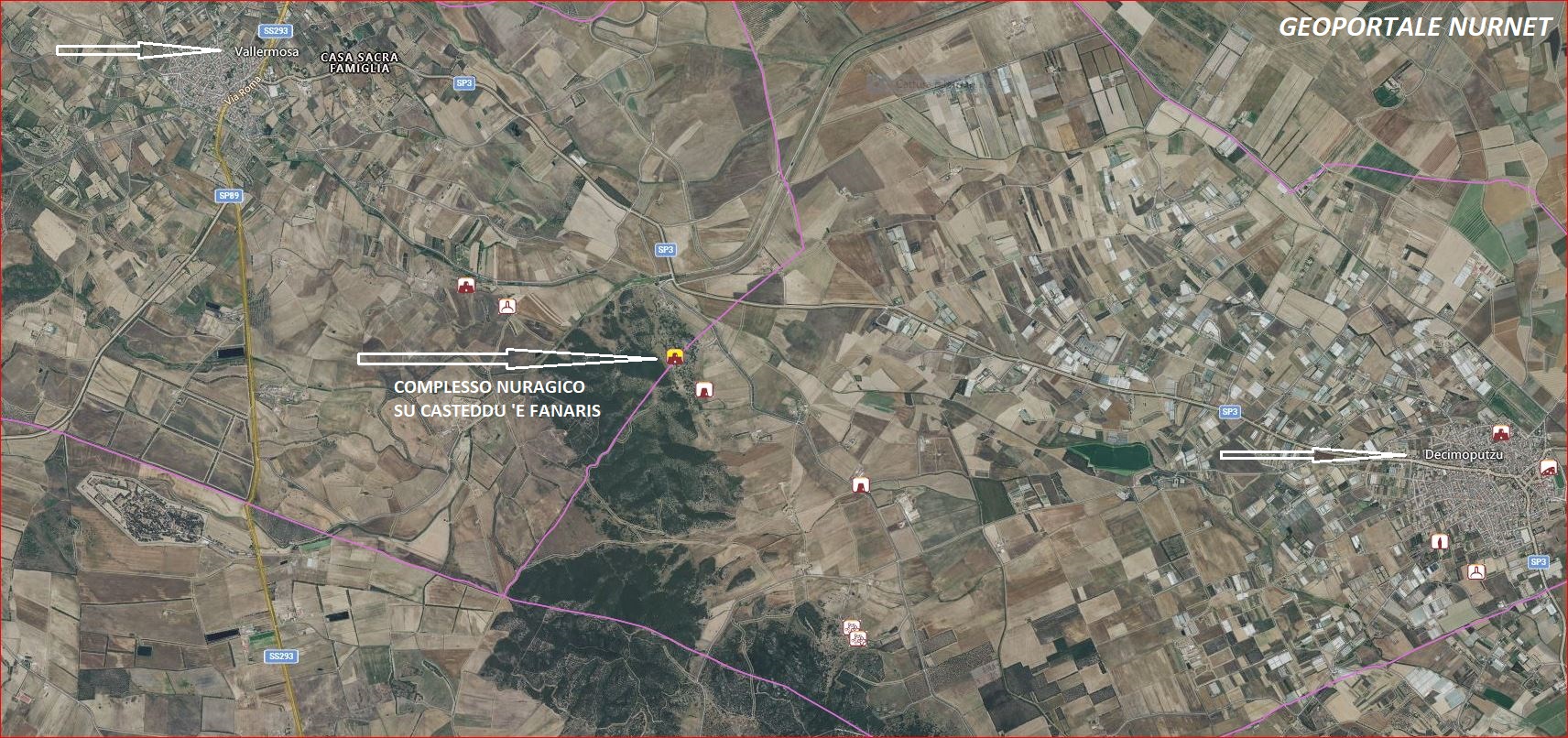
‘Su Casteddu ‘e Fanaris’ stands on the hill of the same name, straddling the territories of Decimoputzu and Vallermosa. It is a Nuragic complex dating back to the late Bronze Age, composed of a mighty central donjon surrounded by eight towers and an ante-mural comprising in turn five towers connected by a megalithic wall. The surrounding area and the megalithic complex would certainly need thorough cleaning and an excavation campaign commensurate with the importance of the site. However, the entire territory of Decimoputzu would deserve a thorough investigation, for the undoubted importance it had, especially in the Nuragic period, as witnessed in particular by the weapons found in the hoard of Monte Idda, a hill located just south of the Fanaris relief, and in the hypogeum of Sant’Iroxi. Of the bronzes from Monte Idda, it is worth mentioning the report by Taramelli who discovered them a century ago (1915).
Of the findings from Sant’Iroxi and Sardinian swords in general, Professor Giovanni Ugas reported in particular in his book ‘The Dawn of the Nuraghi’, from which we have taken this excerpt:
“We know 13 arsenic-copper swords from the Sant’Iroxi facies, thanks to the findings of the hypogeum located in the eponymous site of Decimoputzu. These swords are characterised by a perfectly triangular blade, a slight median swelling (…) and a double edge, so that they could be used for pointing and cutting. On the simple arched base one observes the rivets for fixing the hilt, varying in number from five to seven. A similar artefact from Maracalagonis indicates that this type of sword also circulated in other parts of the island…’.
The photos of the nuragic complex Su Casteddu ‘e Fanaris are by Marco Cocco and Bibi Pinna.