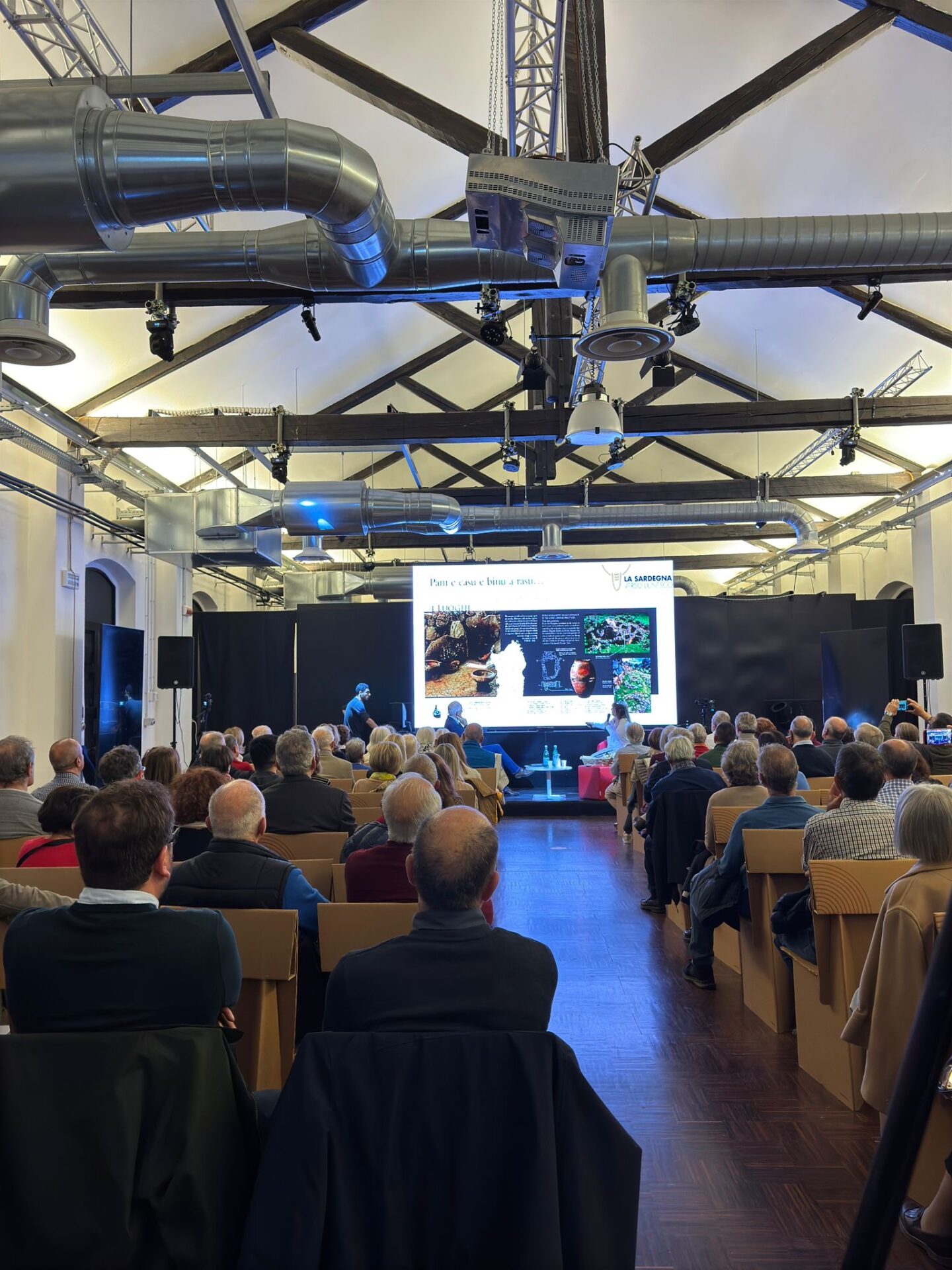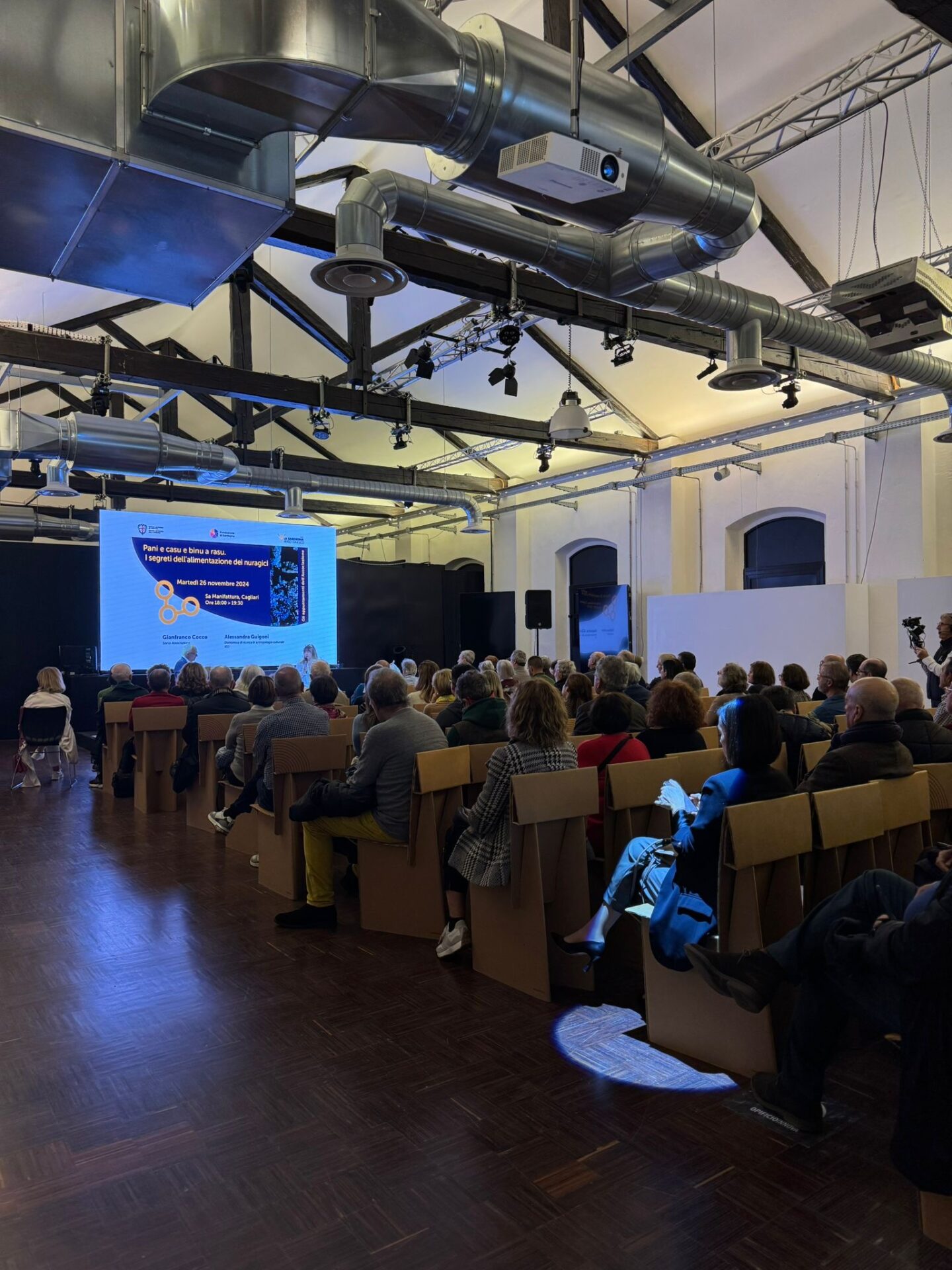
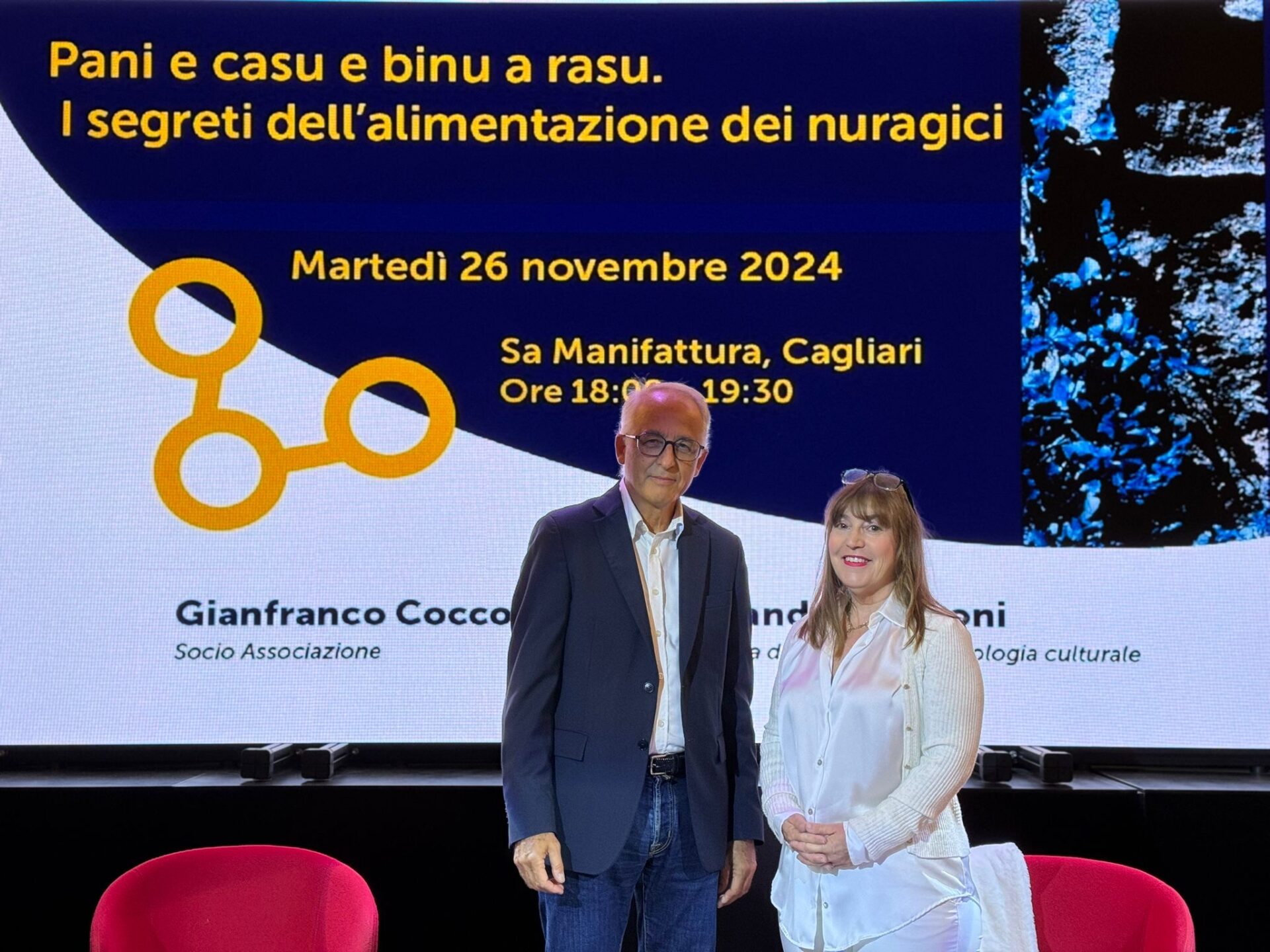
Pani e casu e binu a rasu: the secrets of the Nuragic people’s diet were the focus of a meeting at Sa Manifattura, for the fourth event in the series of popular conferences promoted by ‘Sardinia towards UNESCO’. The proceedings were opened by Gianfranco Cocco, a member of the Association, who before giving the floor to Alessandra Guigoni, PhD in Cultural Anthropology at the IED, highlighted the fascination linked to the discovery of the food consumed by the Nuragic people.
The diet of young warriors was certainly different from that of women and children. Food preservation techniques were certainly refined because the need was to preserve food well (drying, smoking, salting, dipping in honey, fermentation). The Nuragics made bread, but it was not leavened (interest in all things breadmaking predates the Neolithic revolution by thousands of years).
They certainly made cheese, wine and some alcoholic beverages from cereals. They probably loved pulses including peas and broad beans, which were present in their diet. Again: the Nuragic Sardinians travelled a lot and crossed the sea, they certainly brought foodstuffs out of the island as well as bringing them back from distant places. All these topics were discussed by anthropologist Guigoni during the course of the evening.
Any other suggestions? Already in the Nuragic period, oxen were used as motive power in the cultivation of fields (as the archaeologist Franco Campus, quoted by the anthropologist, pointed out, at the same time as the construction of the Nuraghi, there was a systematic reduction of tall plants, almost always progressively replaced by grass crops) and from the discovery of large bones we have evidence that many oxen were killed for food.
The recording of yesterday’s conference, with all the details and secrets of the Nuragic diet revealed by anthropologist Guigoni, can be viewed on our facebook page: https://fb.watch/w6FP3NhIua/