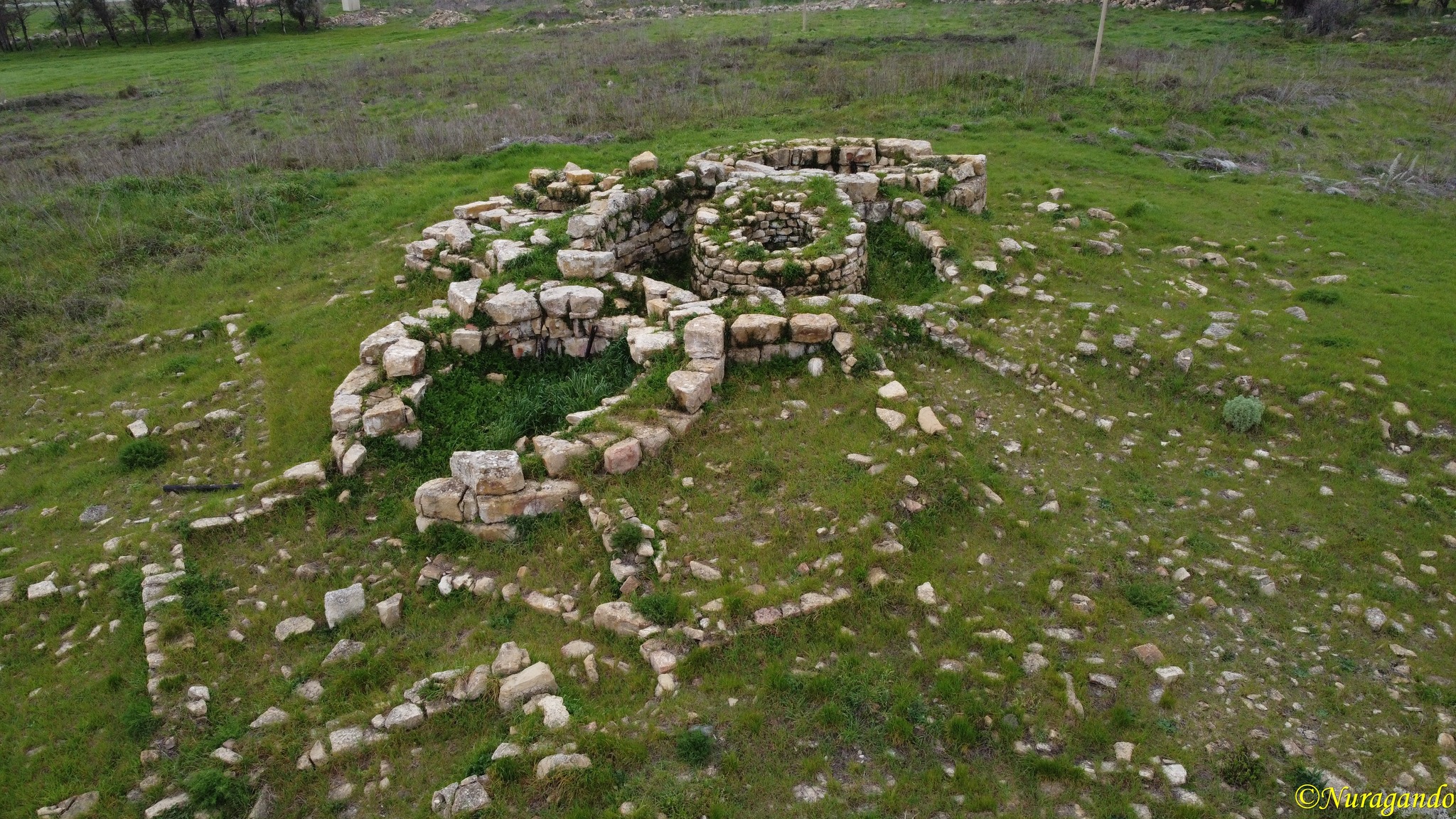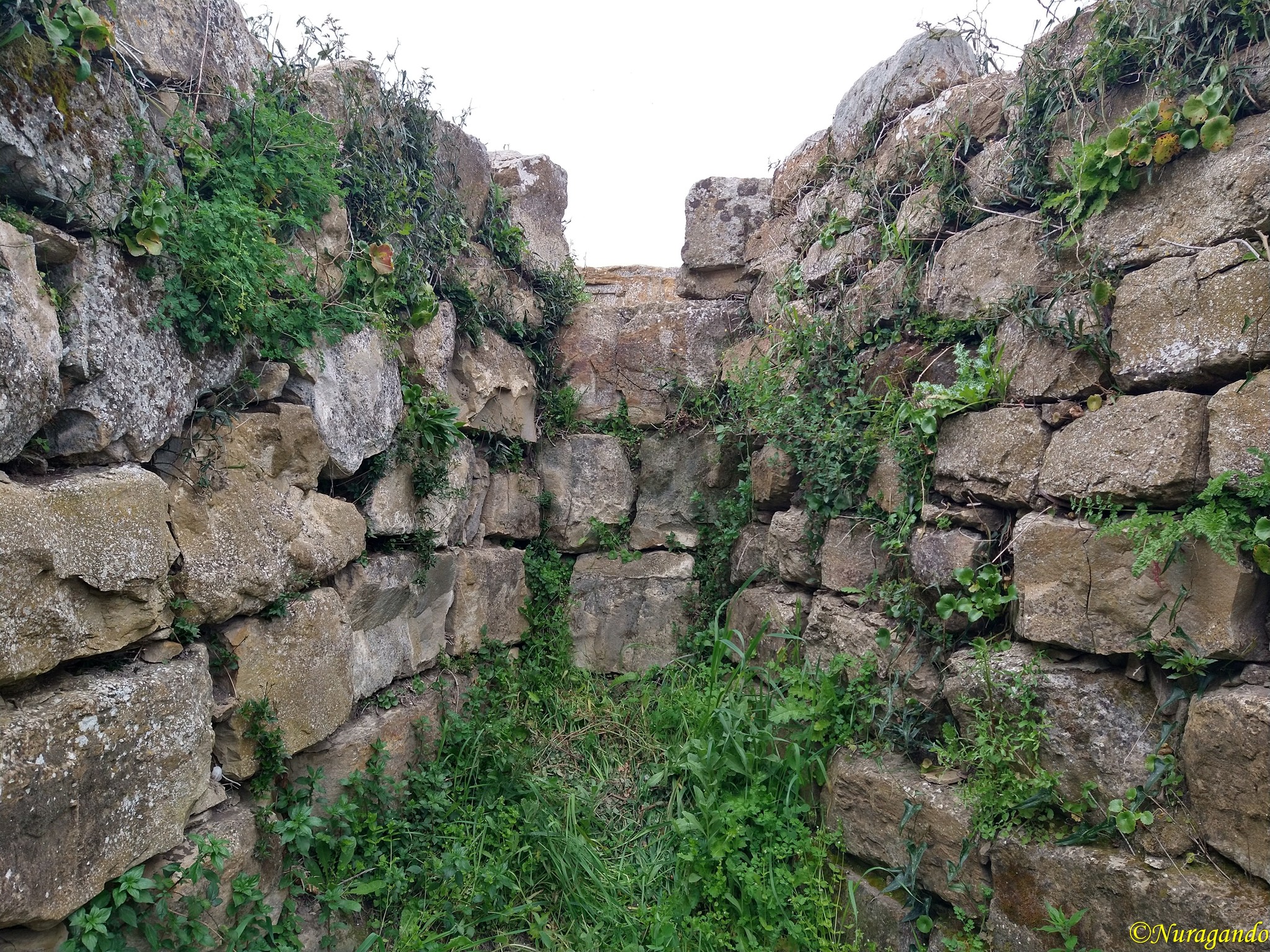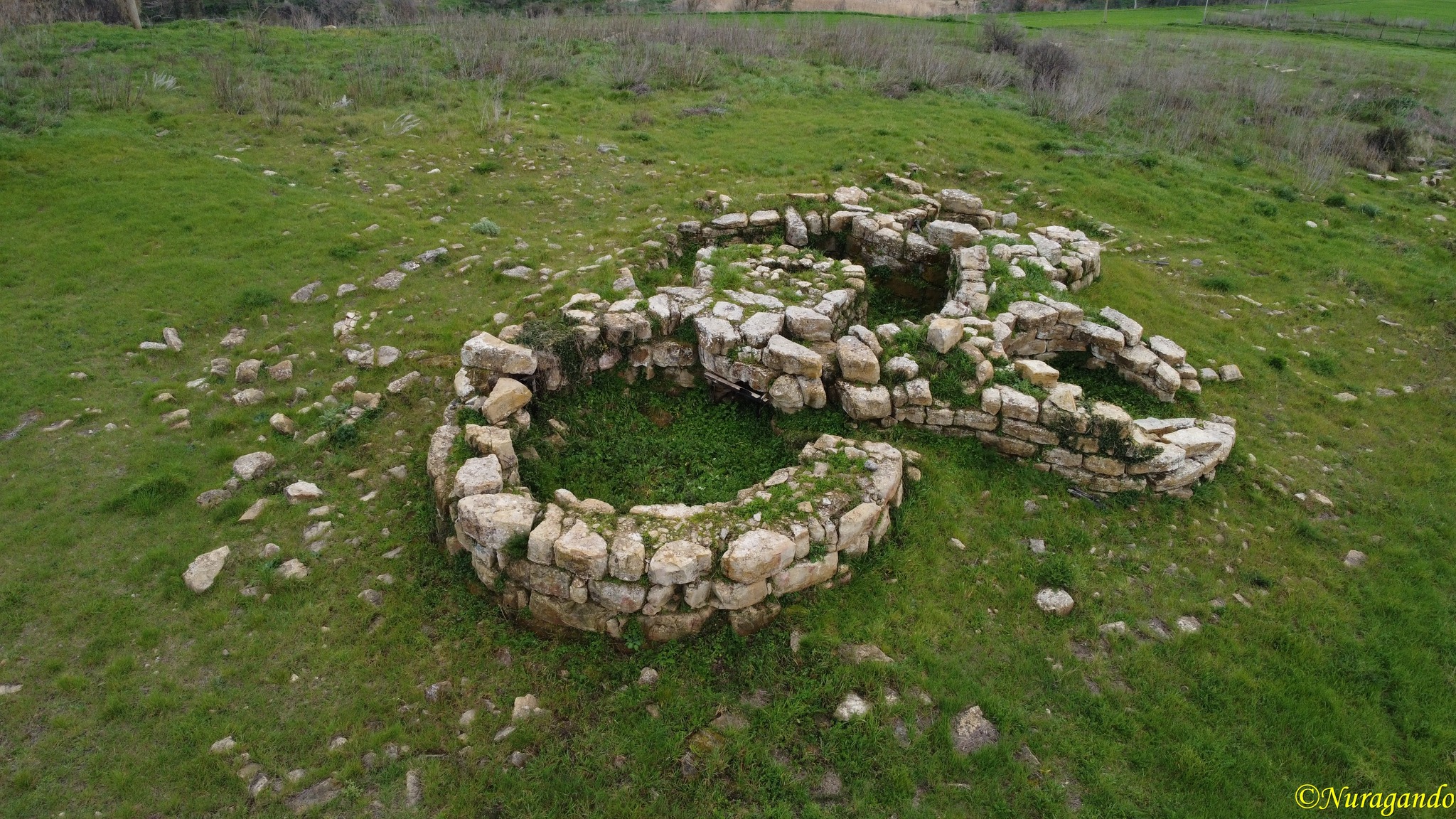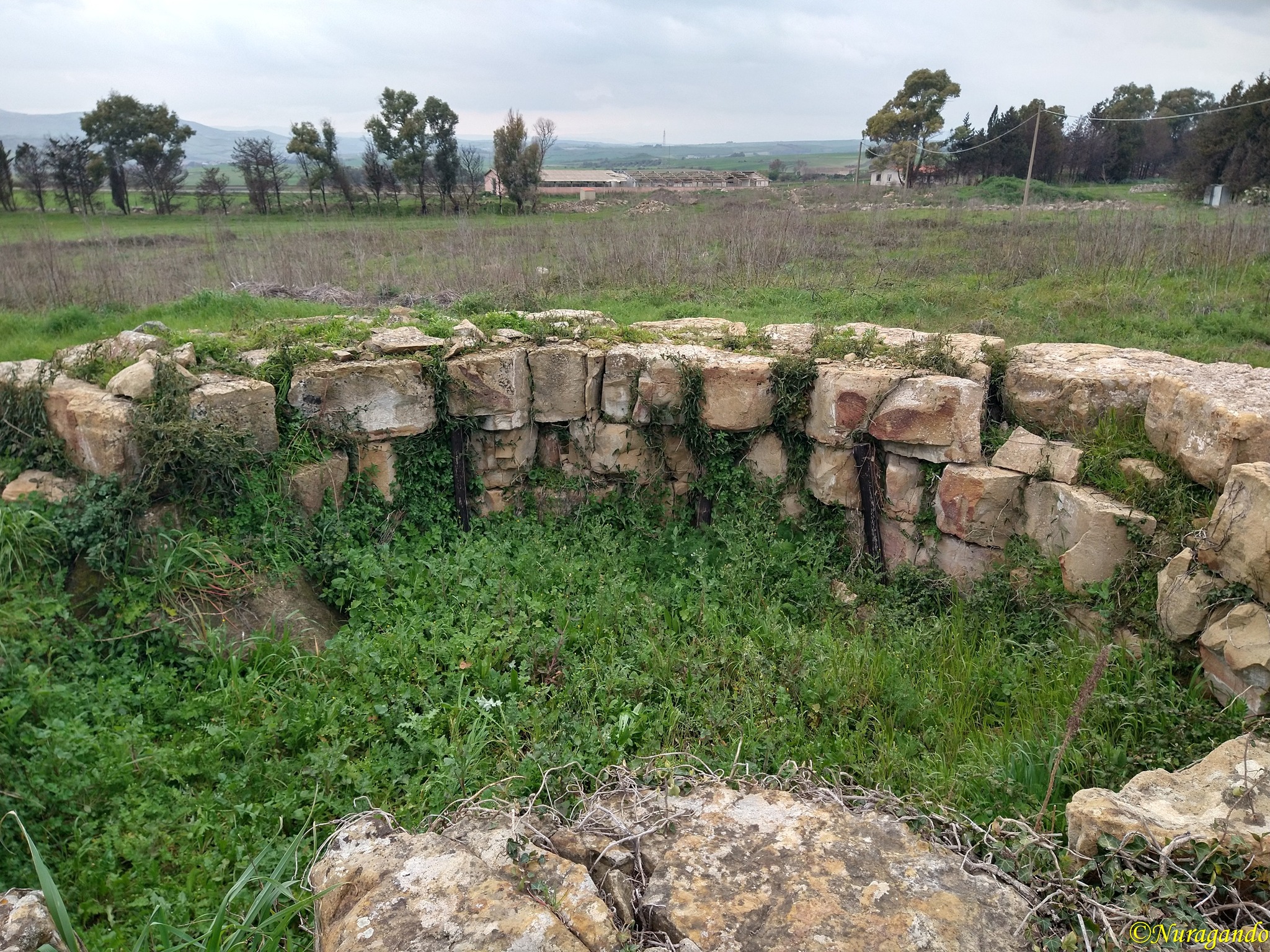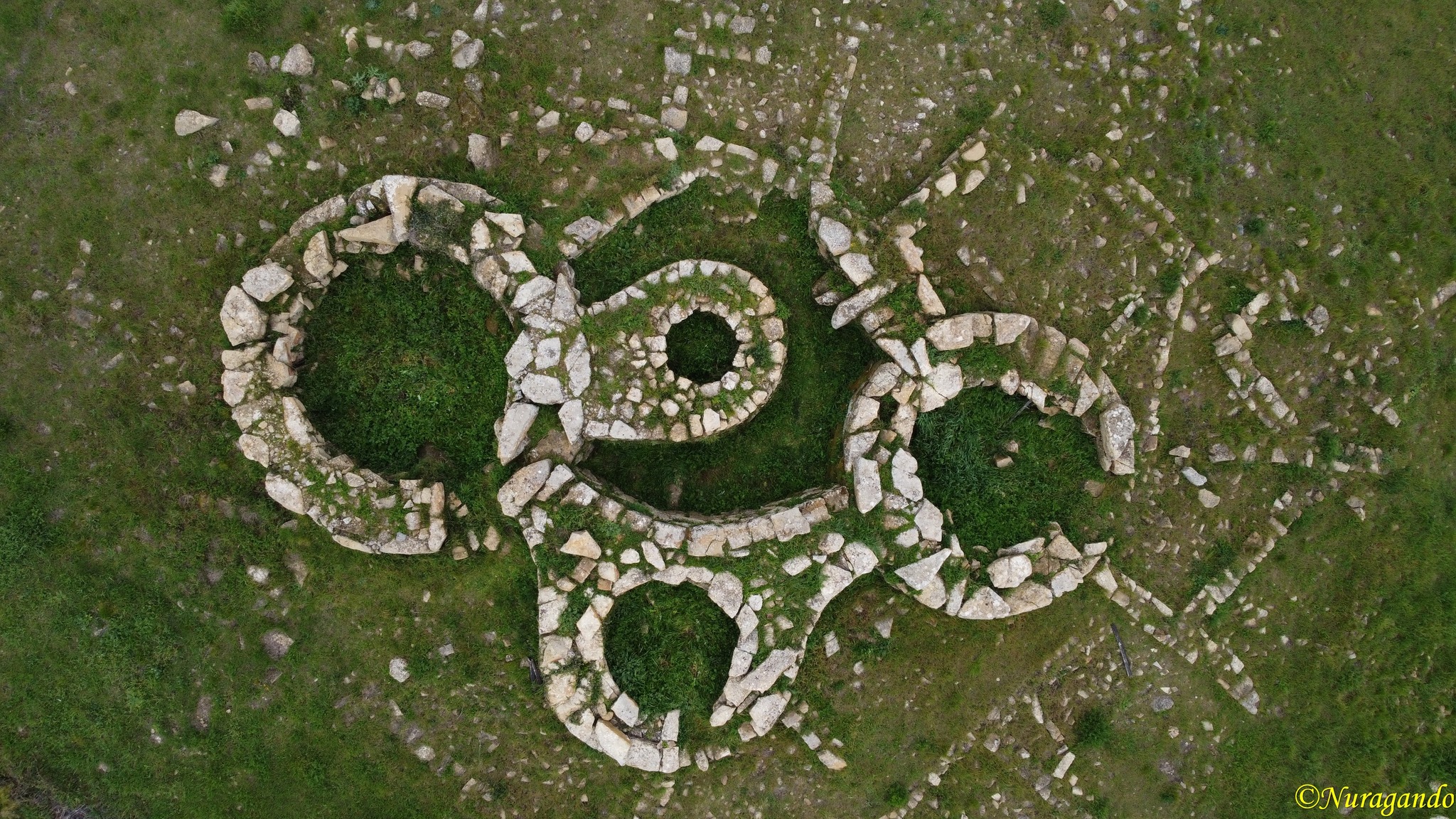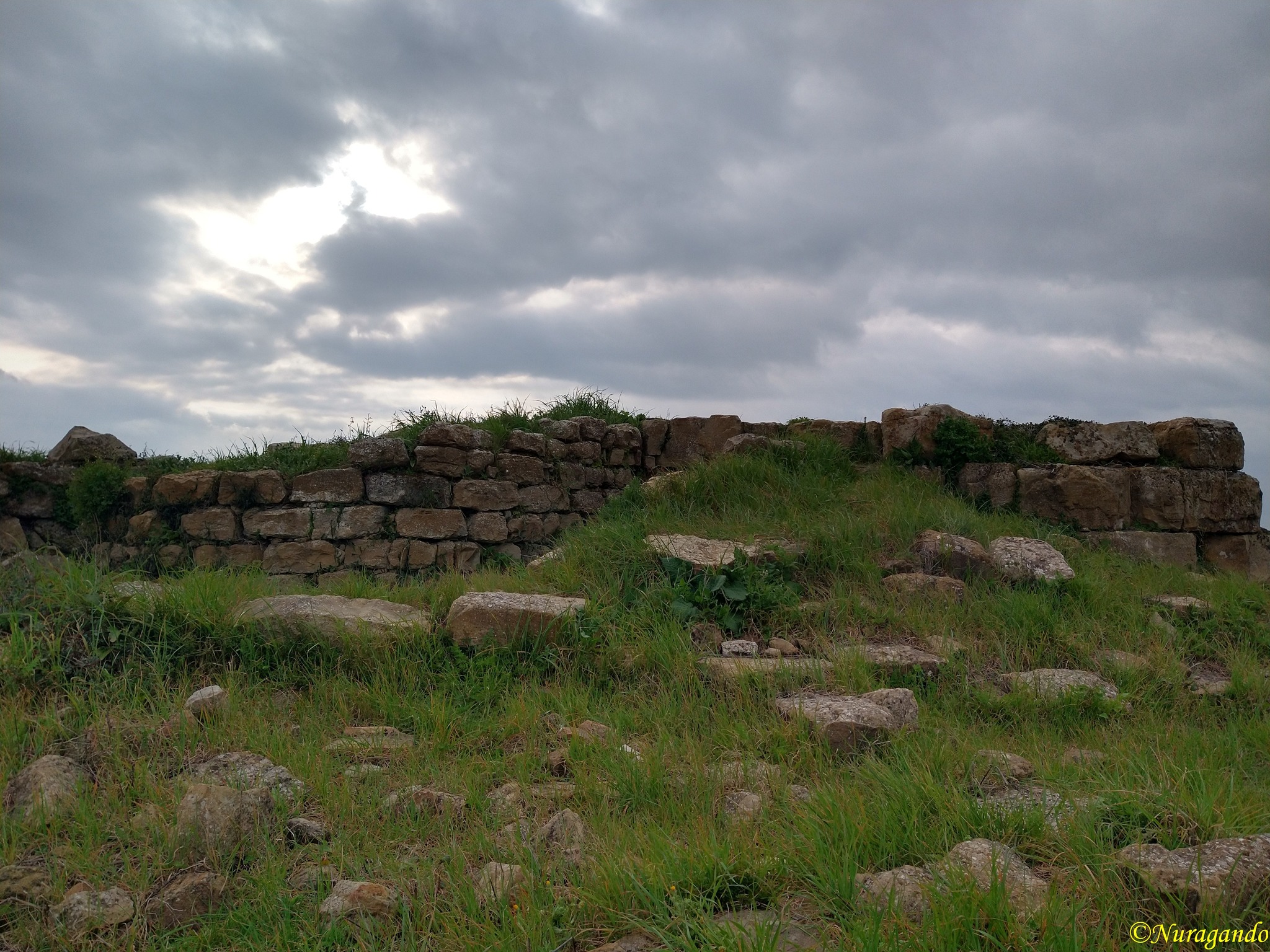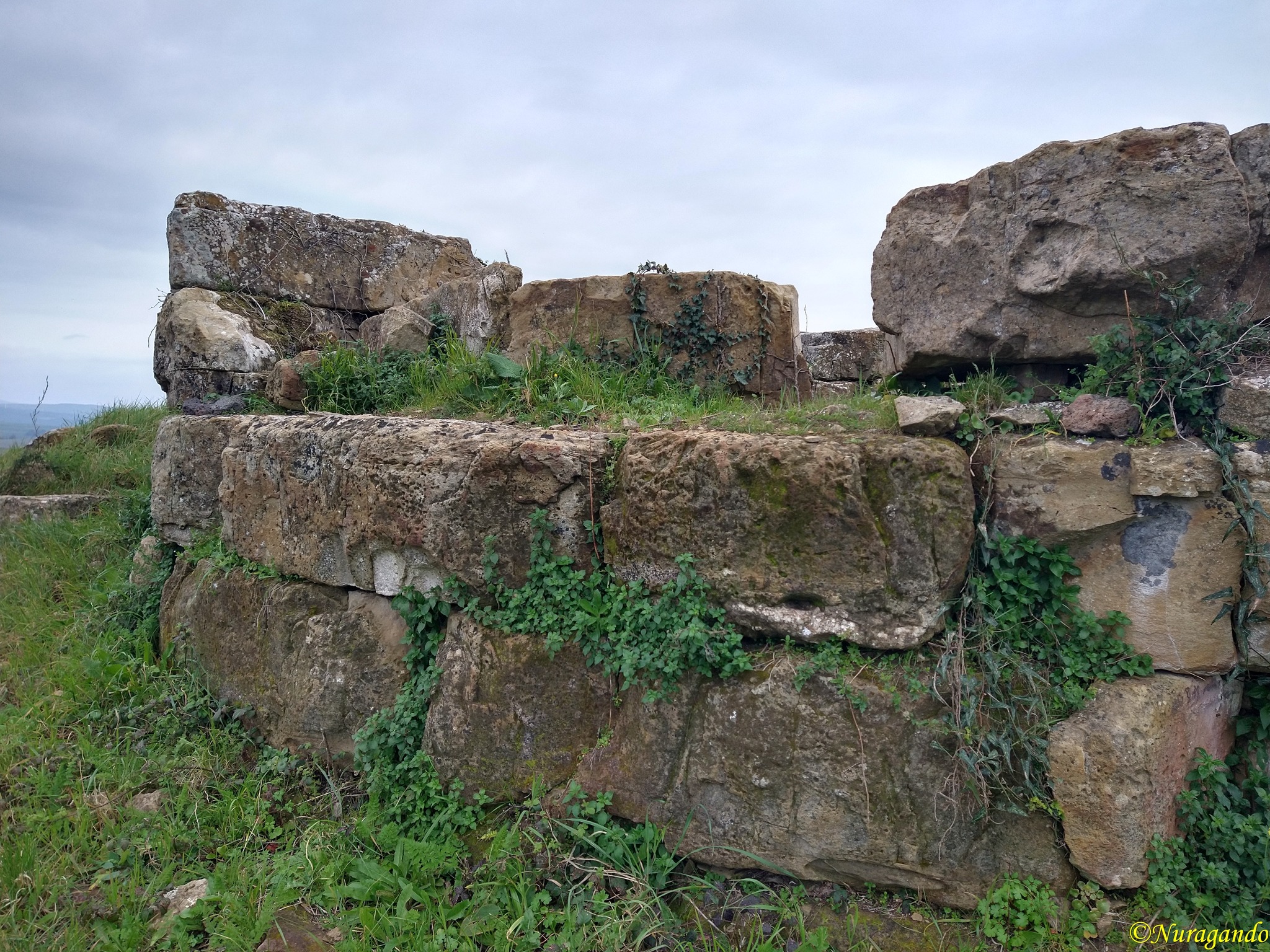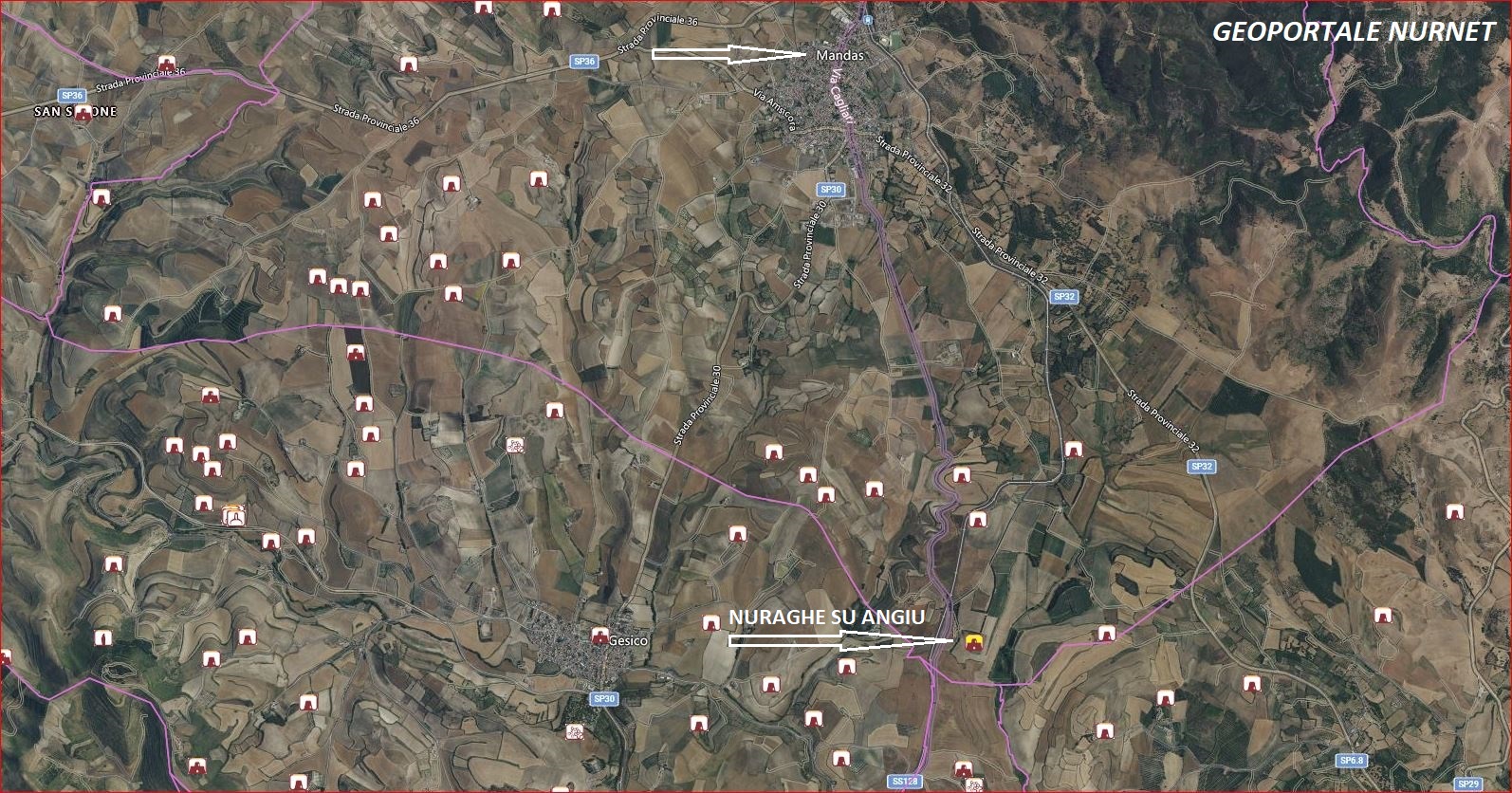
A four-lobed nuraghe with antemurale: this is the nuraghe Su Angiu di Mandas, also known as Bangiu. Punic and Roman artefacts have also been documented in the area, a sign of the site’s long and complex occupation.
“The Nuragic occupation, connected with the phases of implantation and then of use of the monument, is attested by forms such as ollae with a thickened lip, keeled bowls with tunnel handles and spindle moulds, datable to the Recent and Final Bronze Age”.
“More evident is a subsequent frequentation of the Punic period, indicated by a massive presence of ceramic artefacts out of context, which continued, without any caesura, into the subsequent Roman-Republican period”.
The elevated structures identified only in the northern part of the area, which in all likelihood were implanted on previous levels of frequentation, probably date back to the Imperial Roman period. This is evident in the case of the well, of possible Nuragic implantation, which seems to have been obliterated by the monumental Roman structures’.
The archaeological research has so far been divided into three phases, with the excavation of a sector located to the south of the nuraghe:
– The first campaign took place between 20 August and 12 October 2007.
– The second campaign from 14 July to 19 September 2008.
– Finally, the third campaign ran from 14 November 2008 to 24 April 2009.
Source: Nuragando.
Source information: G. Tanda, R. Cicilloni, C. Del Vais, V. Chergia, ‘Le indagini nell’area protostorica e storica di Su Angiu – Mandas’, in E. Trudu, G. Paglietti, M. Muresu (eds.), Daedaleia. Torri nuragiche oltre l’età del bronzo, Atti del Convegno di Studi (Cagliari, Cittadella dei Musei, 19-21 April 2012).
The photos of the nuraghe Su Angiu are by Andrea Mura – Nuragando Sardegna.