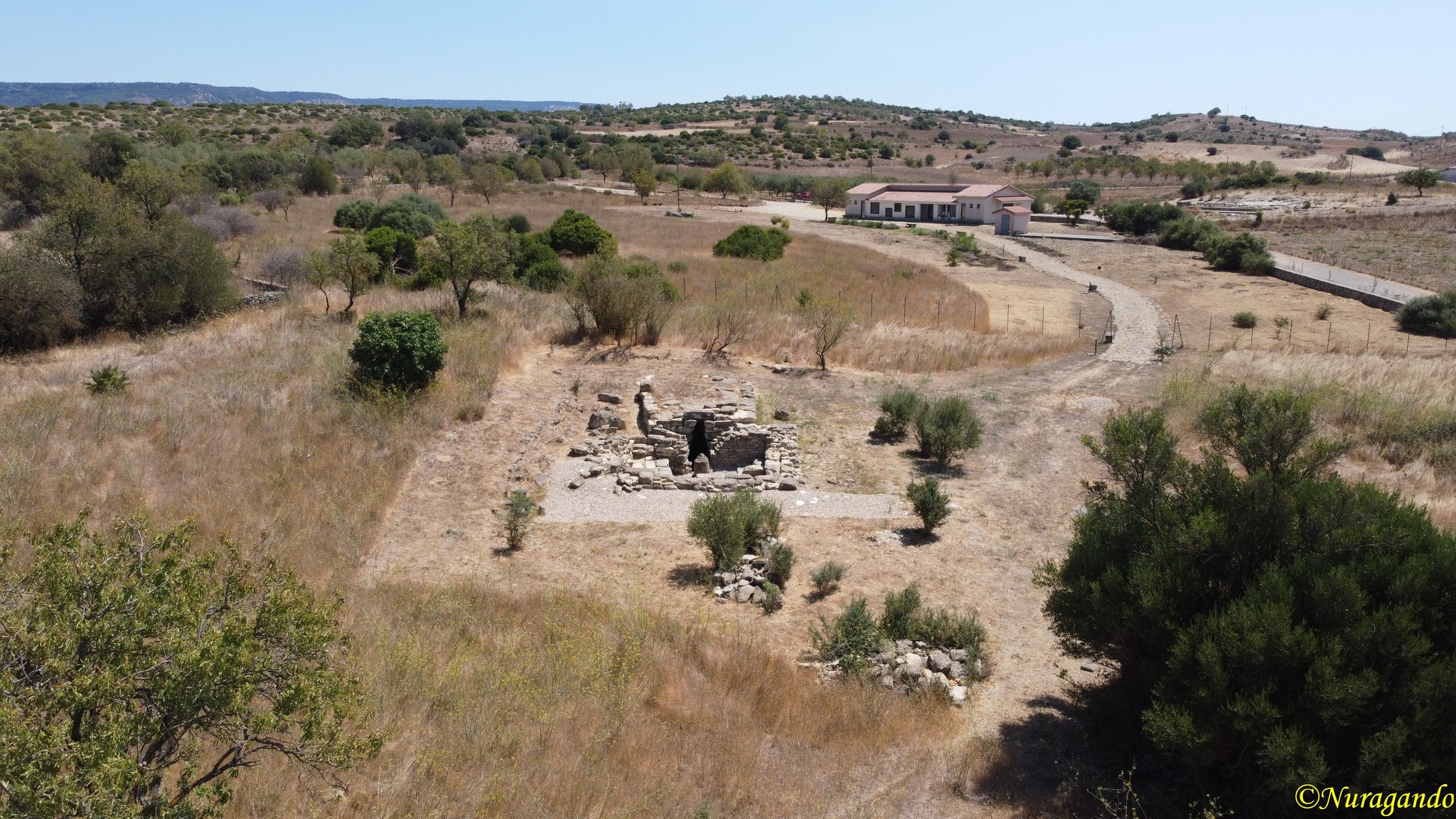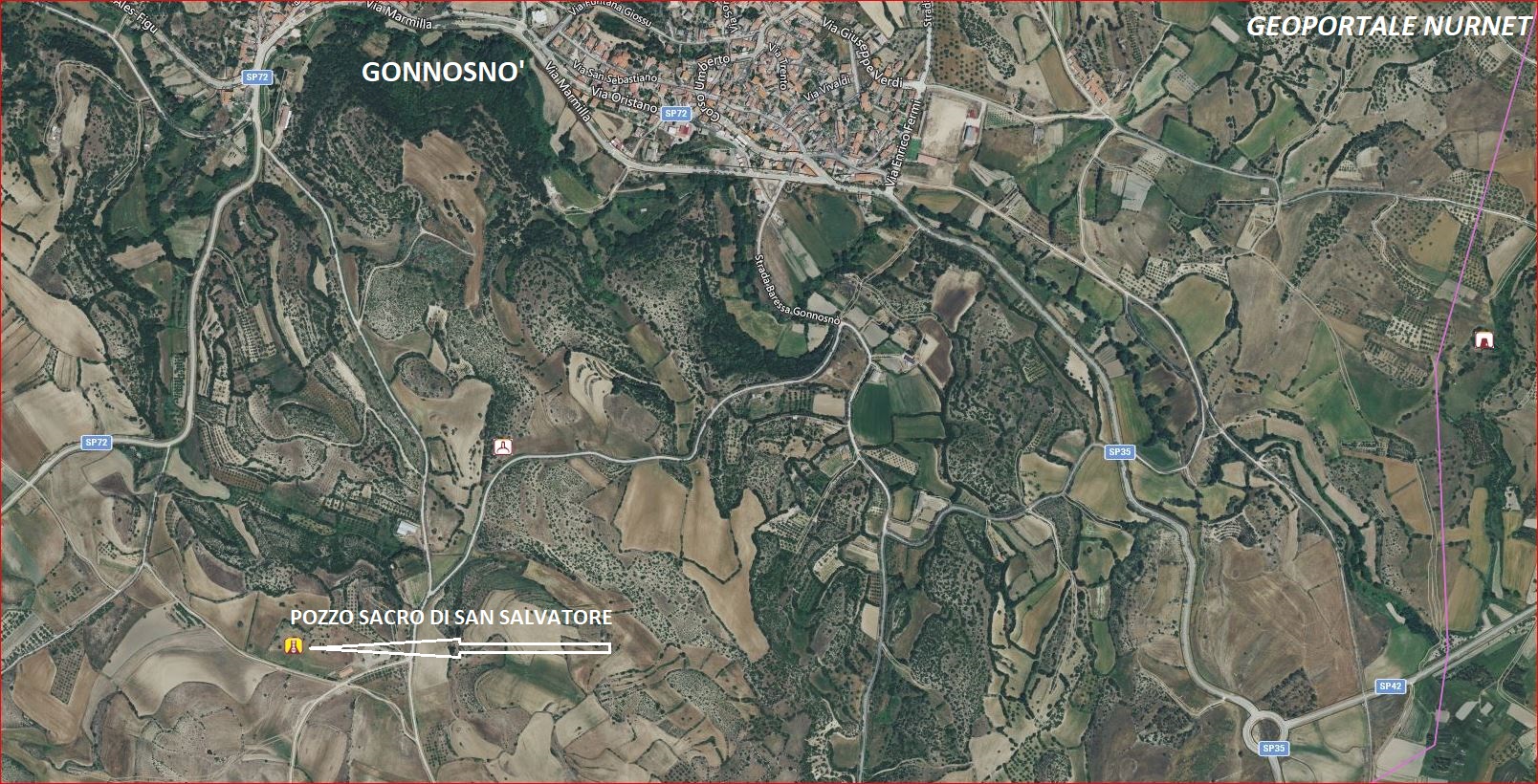
For millennia, an aura of spirituality surrounded it, from the Nuragic period through the Punic period to the Middle Ages. Its name derives, in fact, from a church, now disappeared, that probably stood next to it. The sacred well of San Salvatore is located on a hilltop south of Figu, a hamlet of Gonnosnò.
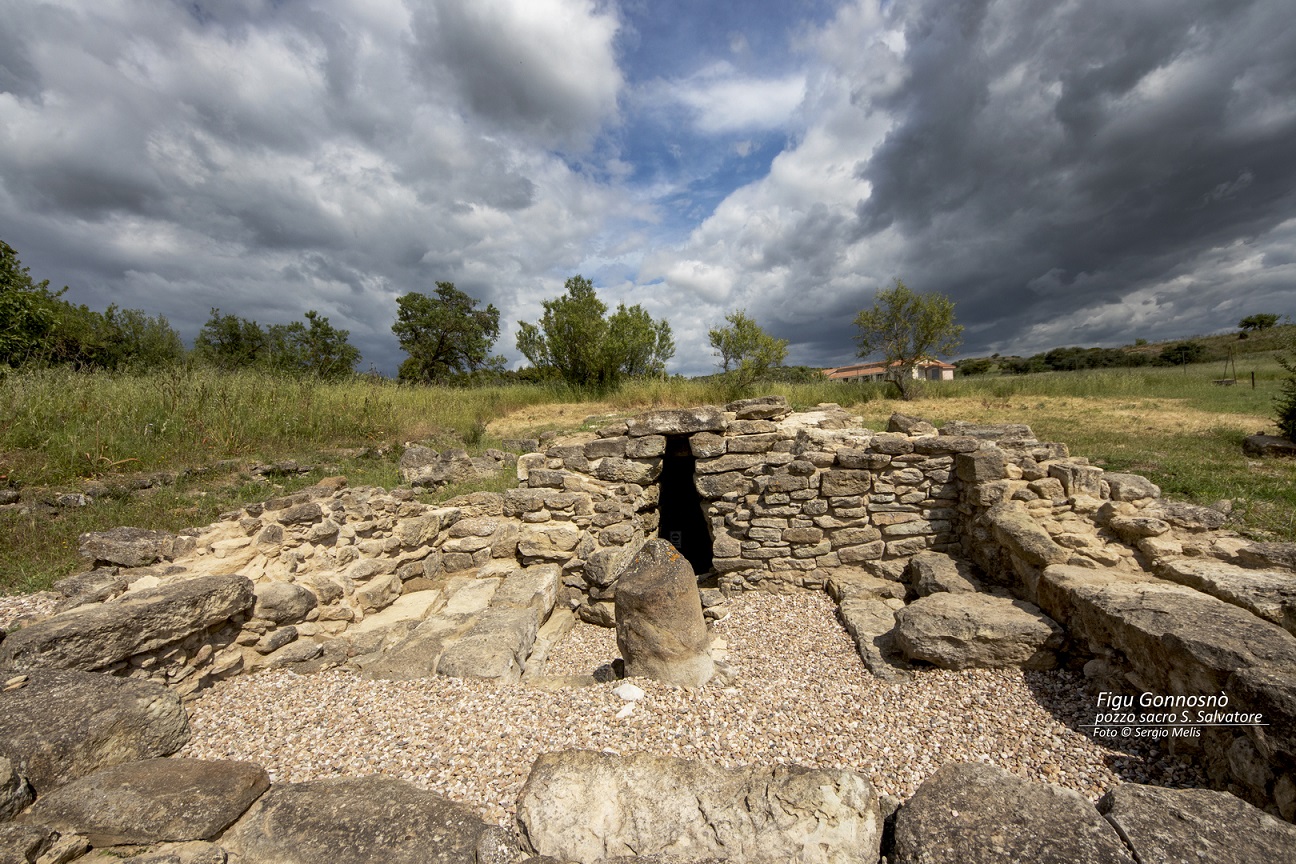
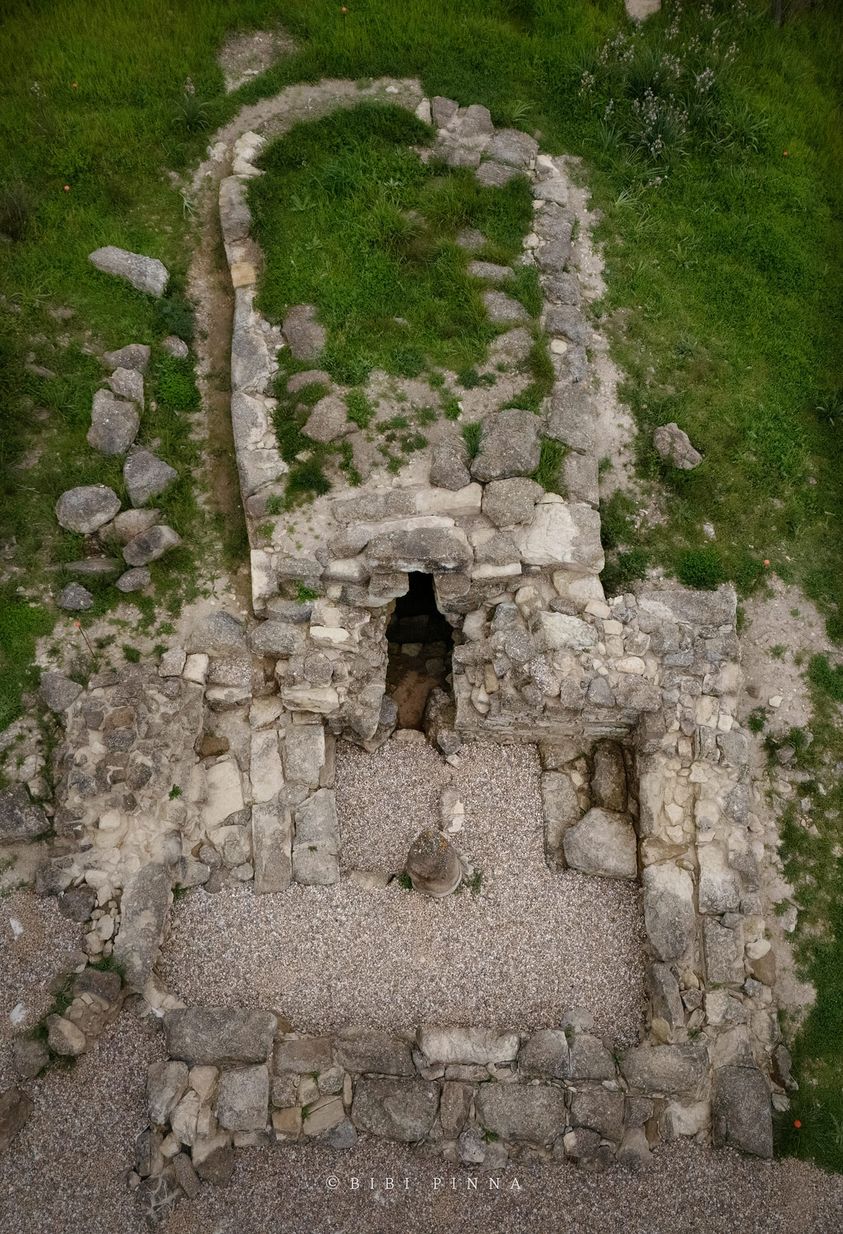
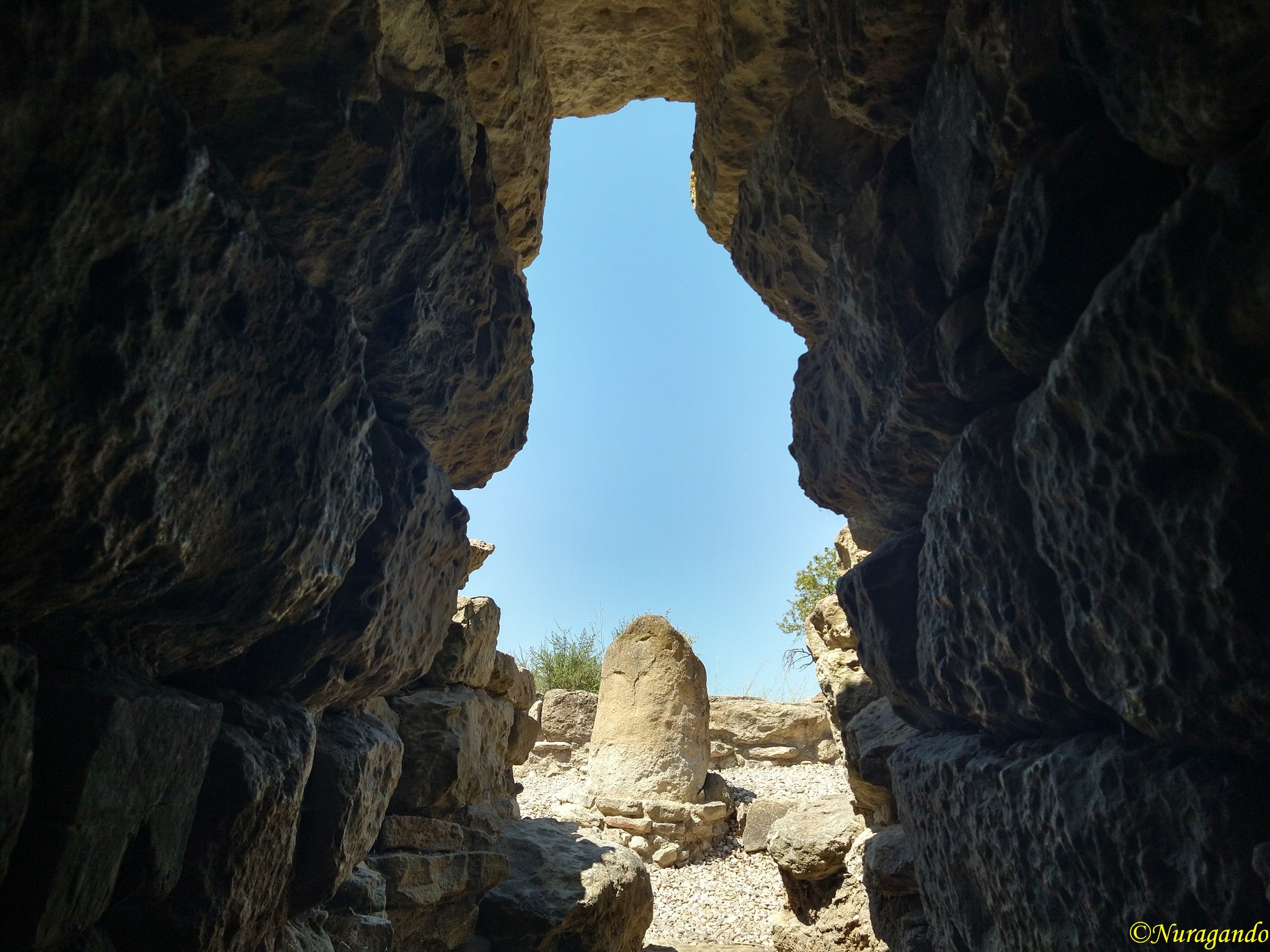
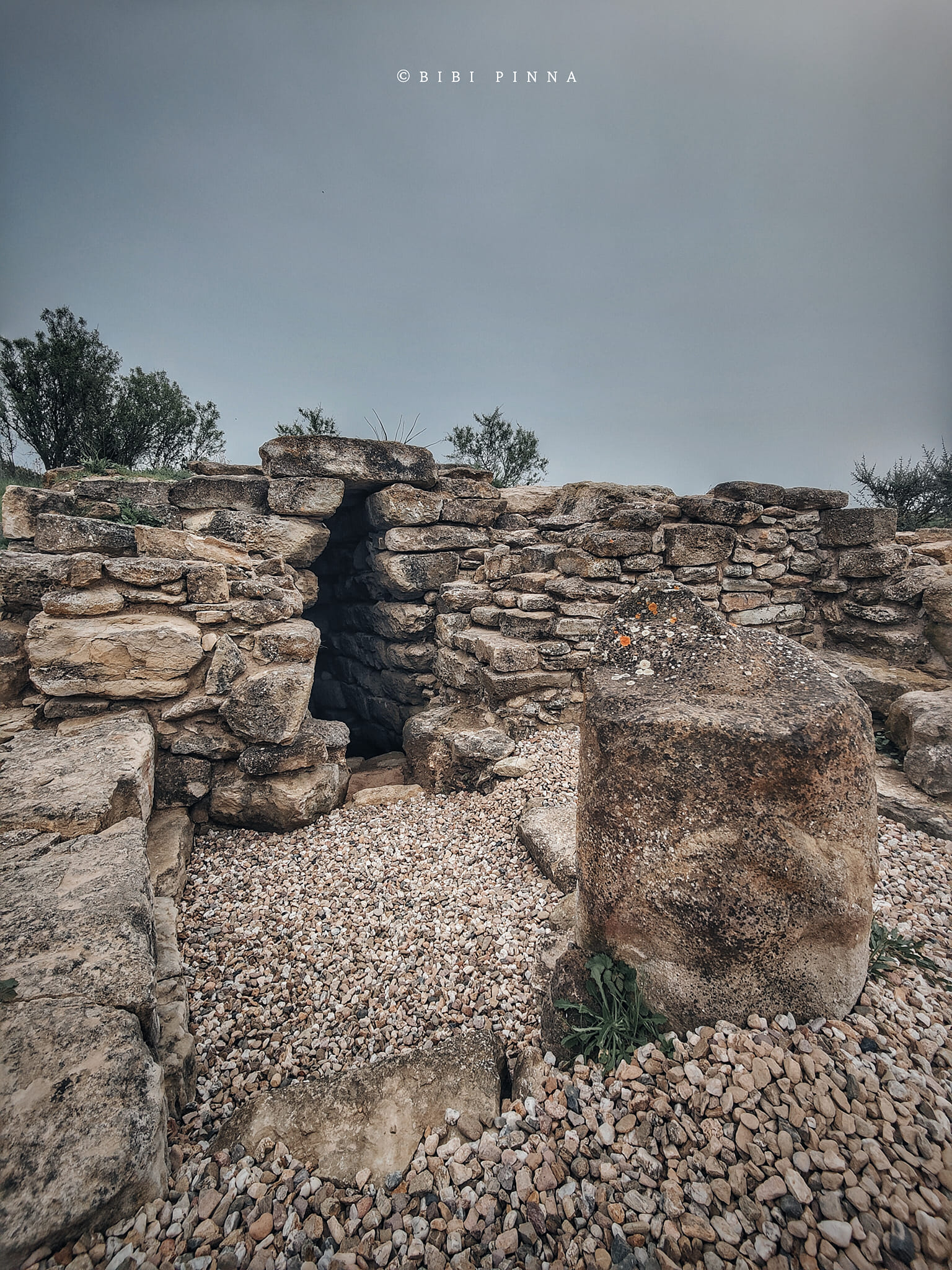
Excavations have shown that the area was frequented long and intensively, for cultic and funerary purposes. The earliest settlement dates back to the Recent and Final Bronze Age, between the 13th and 11th centuries B.C., and is composed of a rectangular, paved atrium, from which, through a trapezoidal-shaped entrance, one enters the stairwell. From here, a flight of steps of about 4 metres takes you to the chamber, partially hewn out of the rock, with a sub-circular plan and a tholos roof.
The material with which the shaft was built is marl, easily found in the surrounding area. The blocks are regularly squared, hammered and arranged in staggered rows. In the atrium you will notice some special elements: the tufa pebble paving, a betyle and a lithic cyst. This is what remains of the cultural ‘renovation’ carried out in the Punic period, perhaps around the 3rd century BC.
In the northern part of the excavated area, traces of masonry have emerged: these are thought to be pertinent to the church of San Salvatore, of which only the name of the locality remained until now. The profile of the parts of masonry that have surfaced would seem to suggest the existence of an apsidal building in the past. In the vicinity of the structure, a large necropolis has emerged, of which about ten graves have been investigated, belonging to people who died at a young age. The objects found in the necropolis date back to between the 12th and 15th century AD.
Source: Sardinia Tourism.
The photos of the sacred well of San Salvatore or Santu Sarbadoi are by Sergio Melis, Giovanni Sotgiu, Bibi Pinna and Andrea Mura-Nuragando Sardegna.