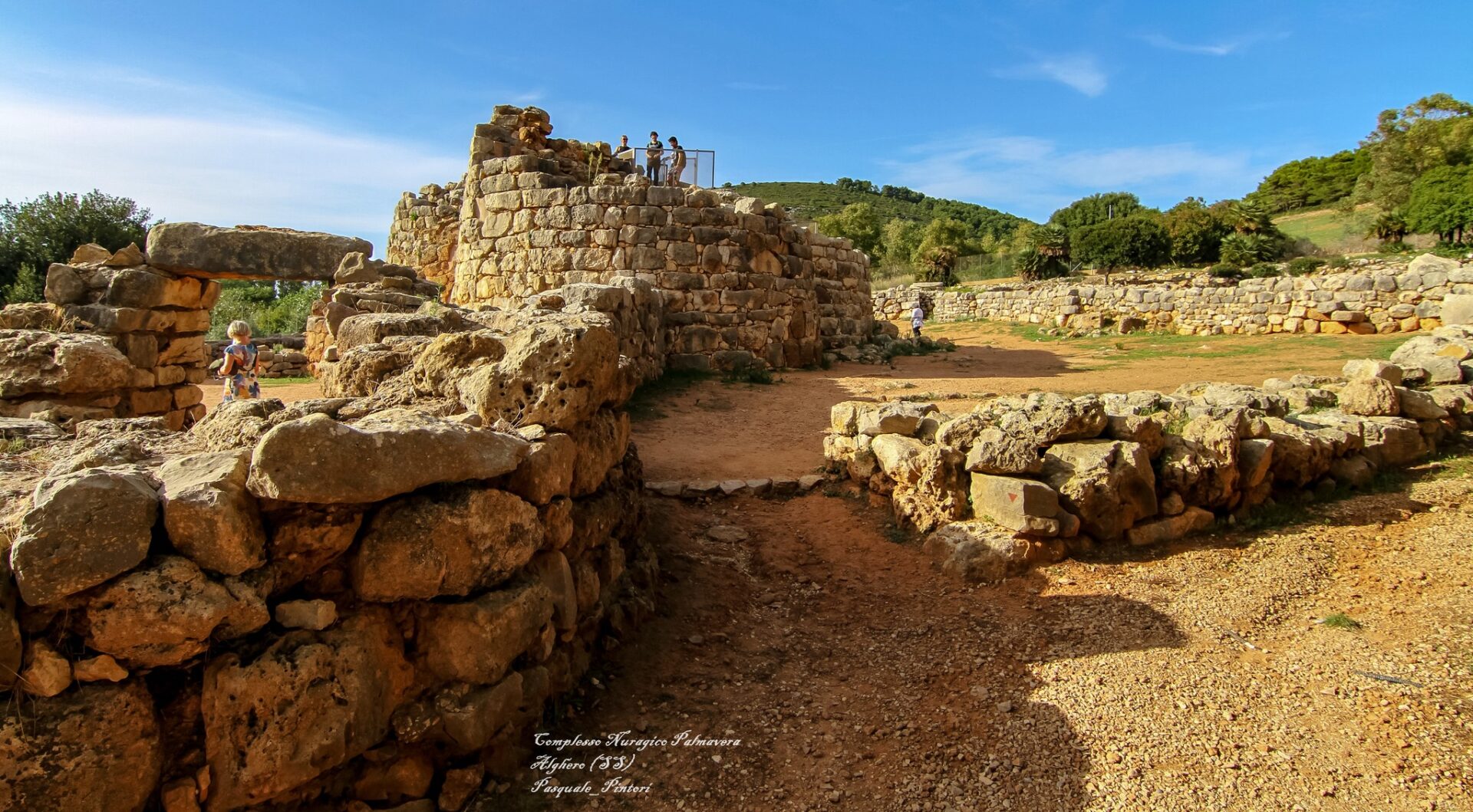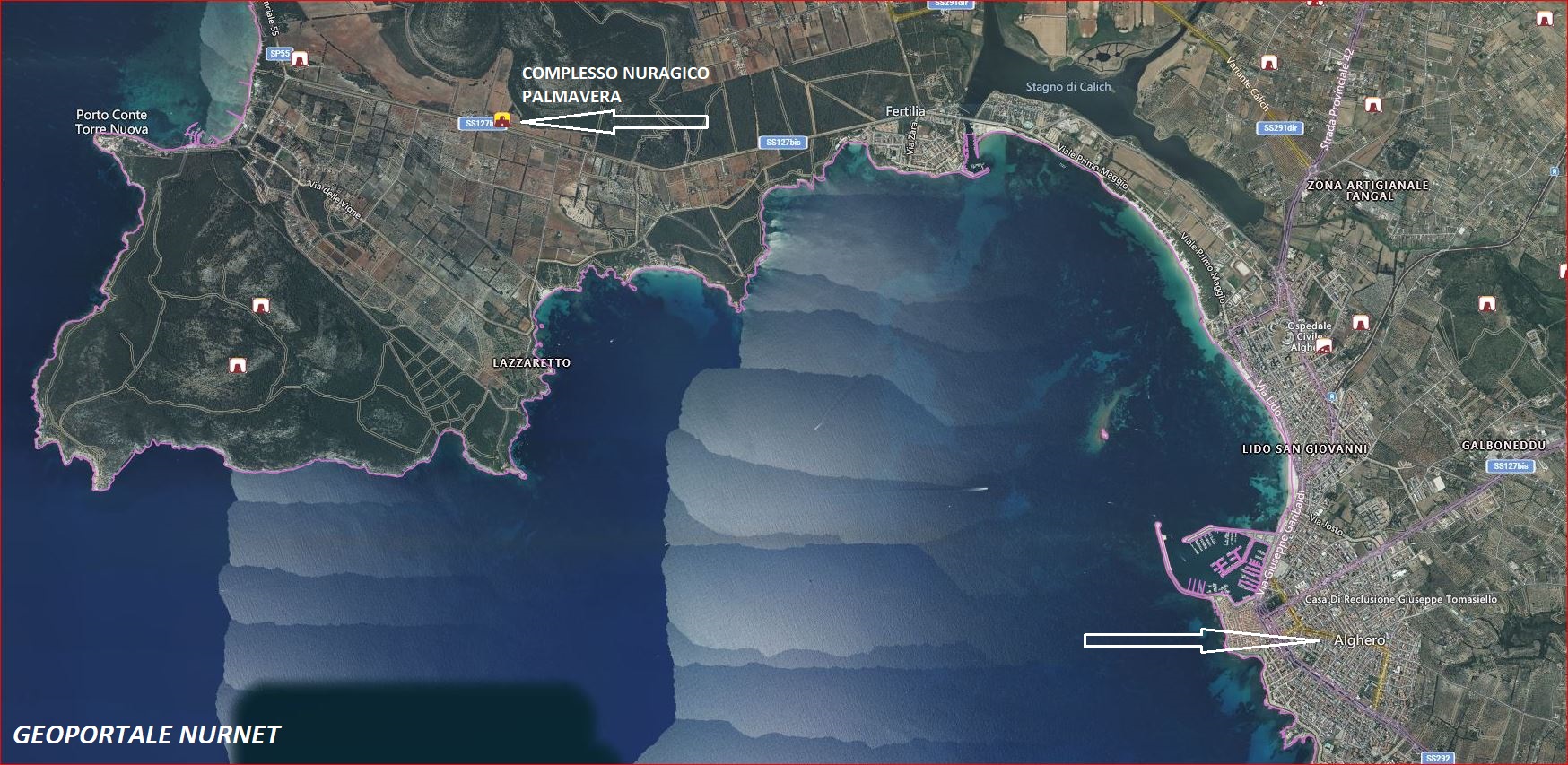
The Palmavera, in the territory of Alghero, is a
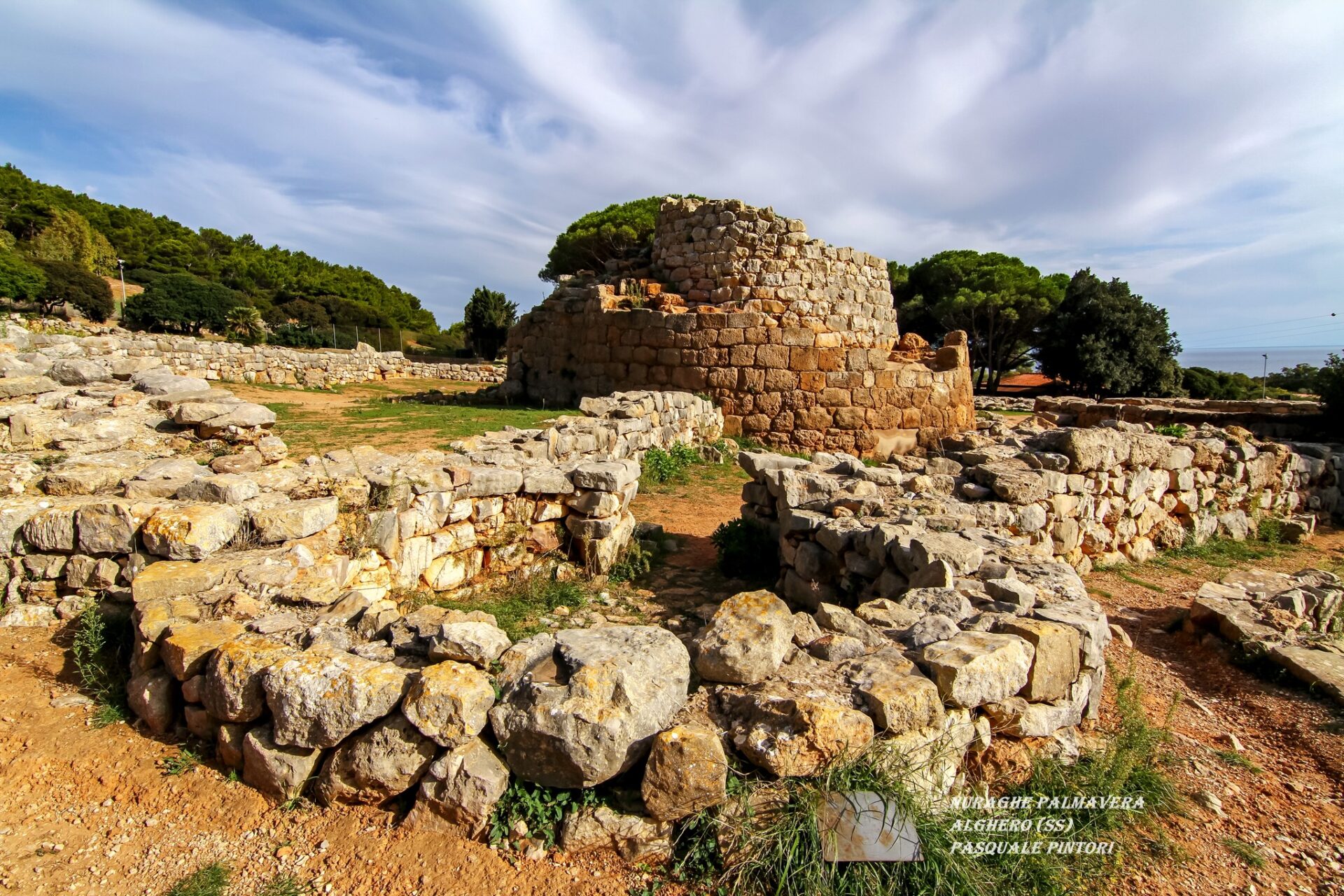
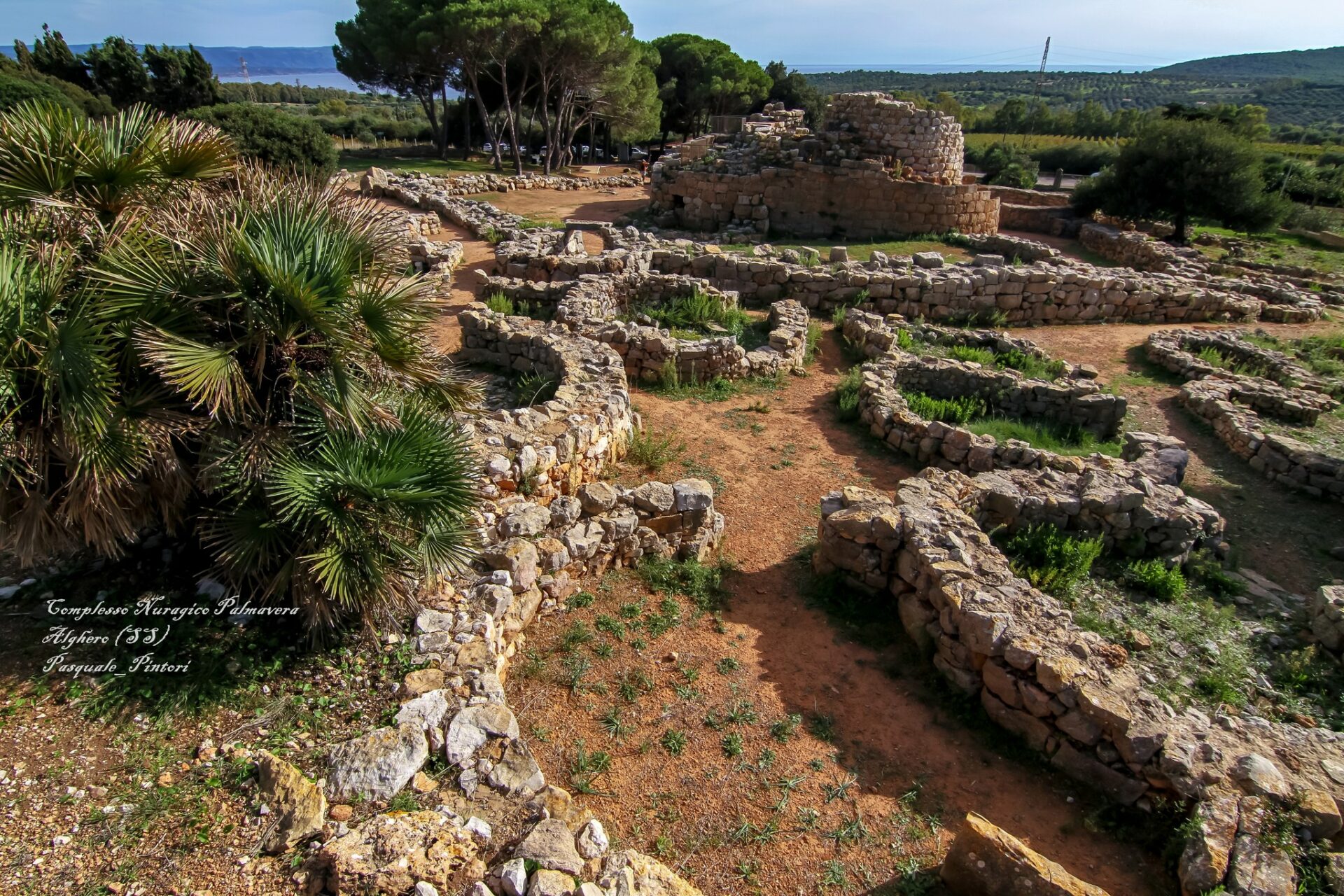
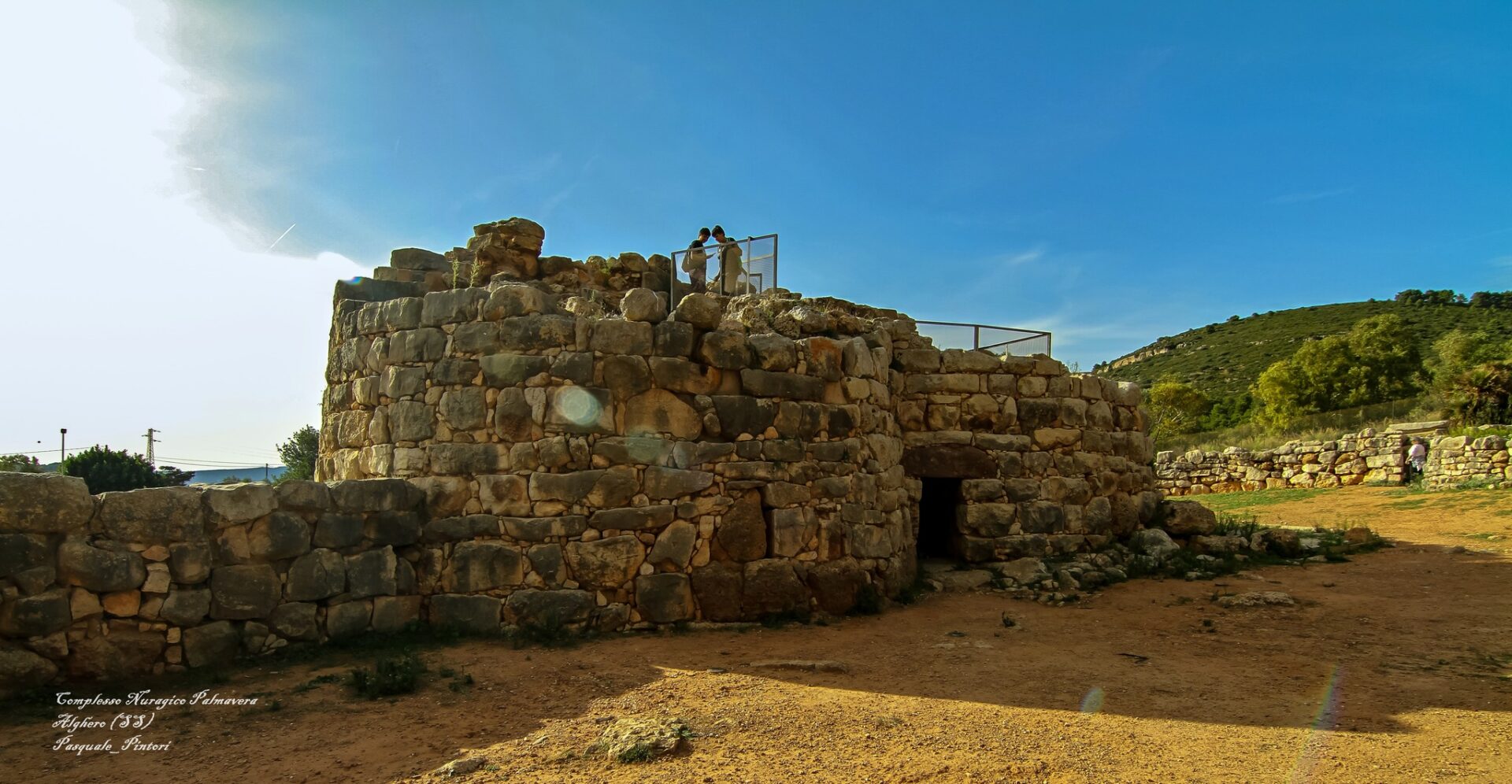
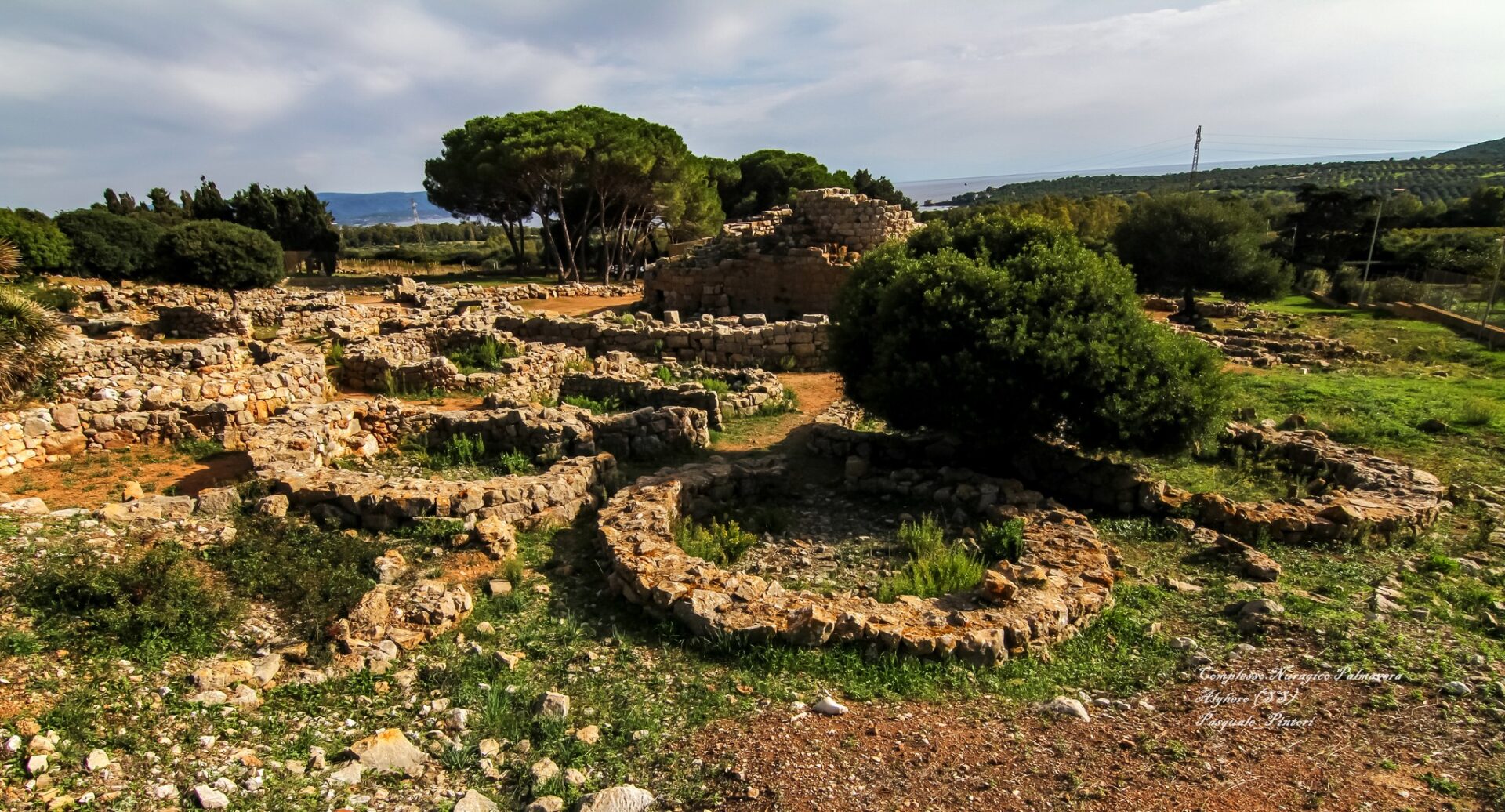
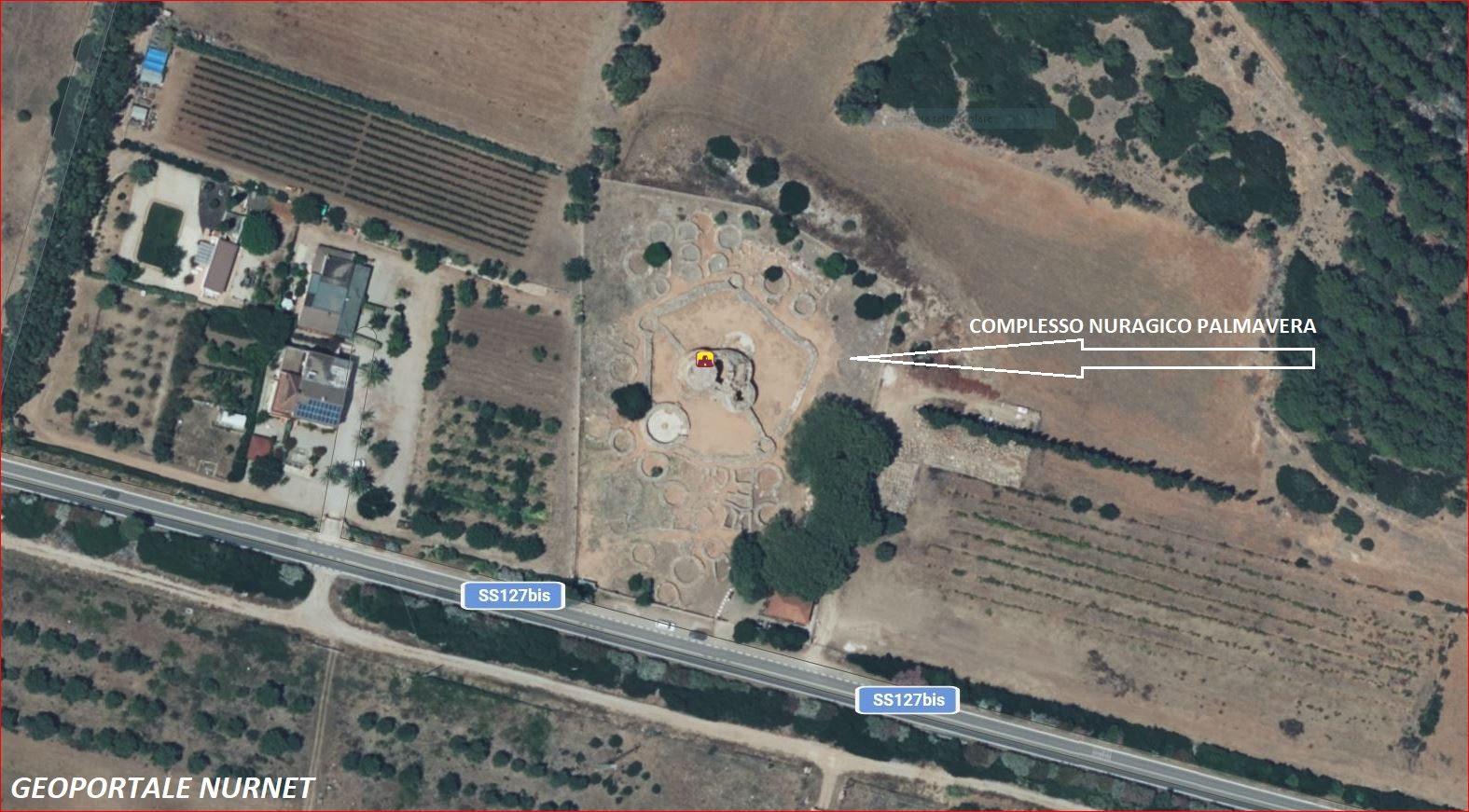
complex nuraghe consisting of two communicating central towers, an antemurale and a village of 50 huts, as opposed to the original 150 to 200.
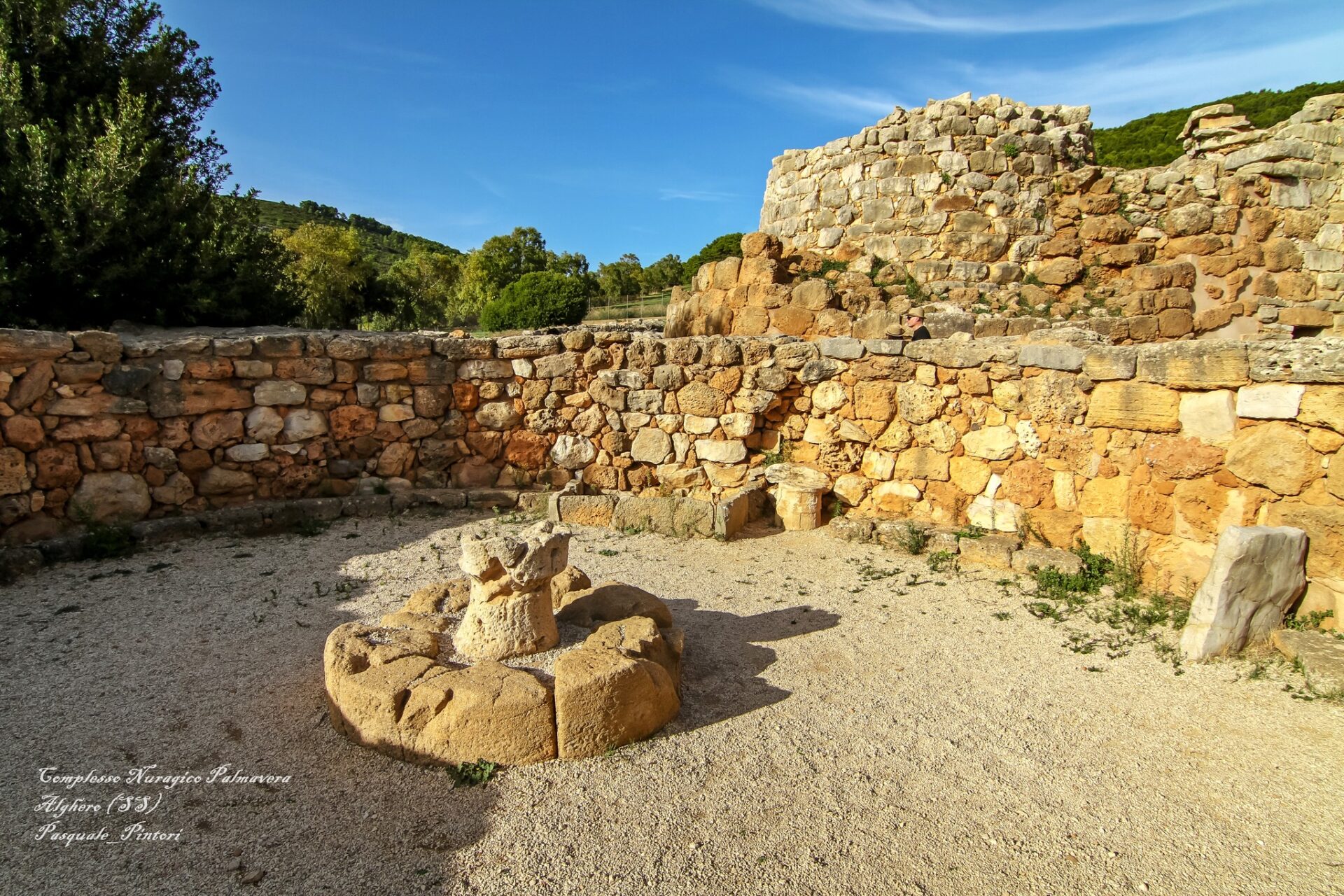
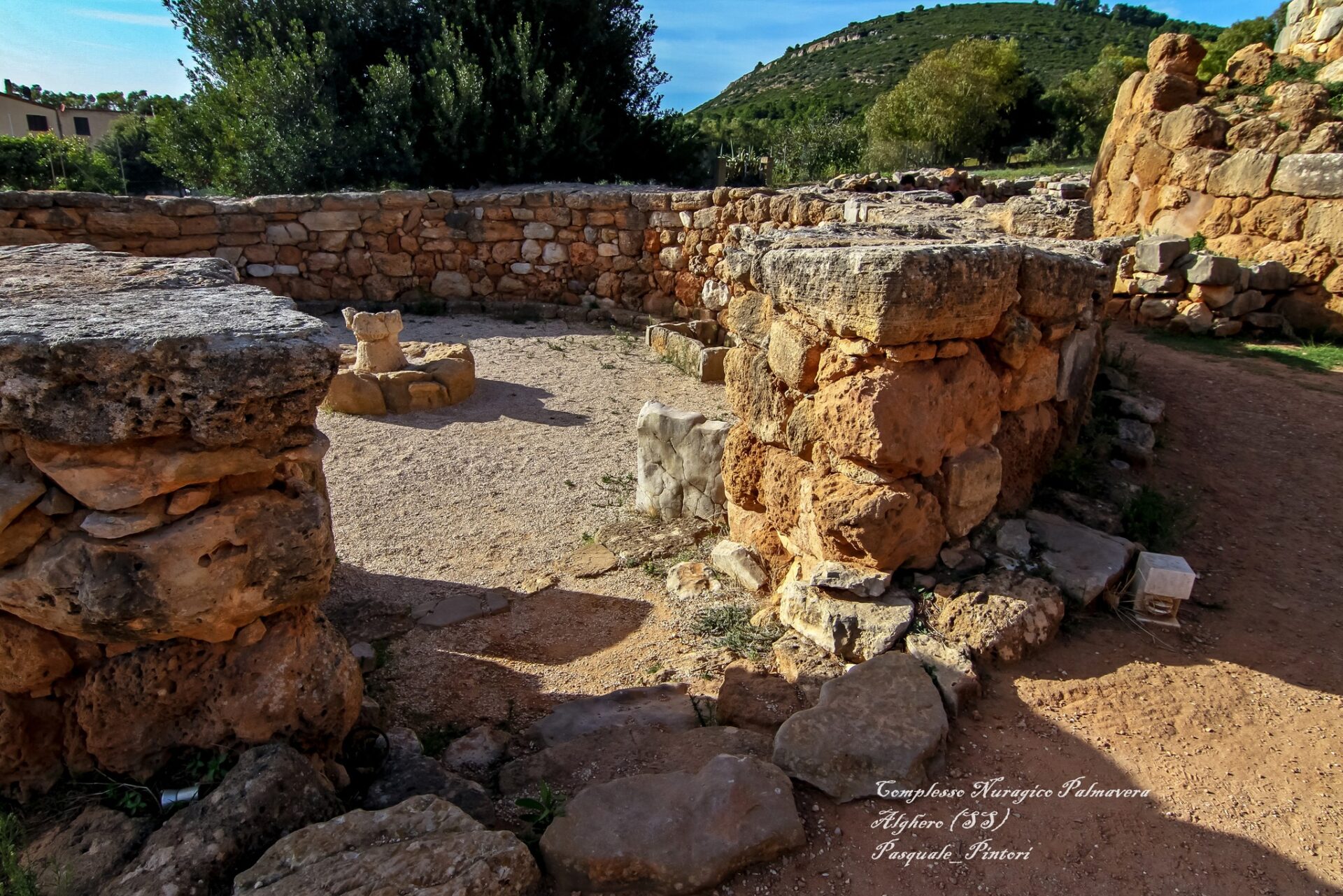
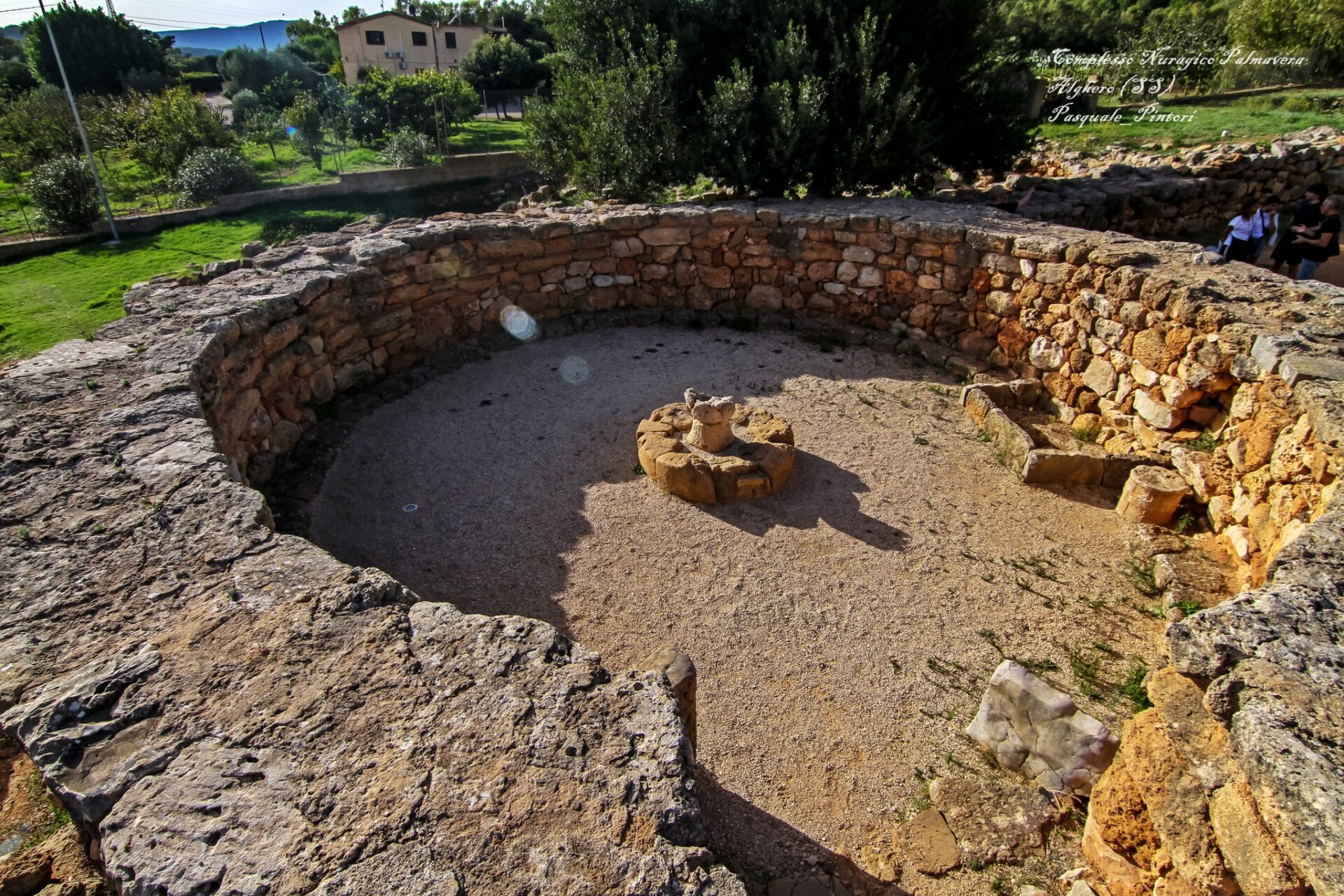
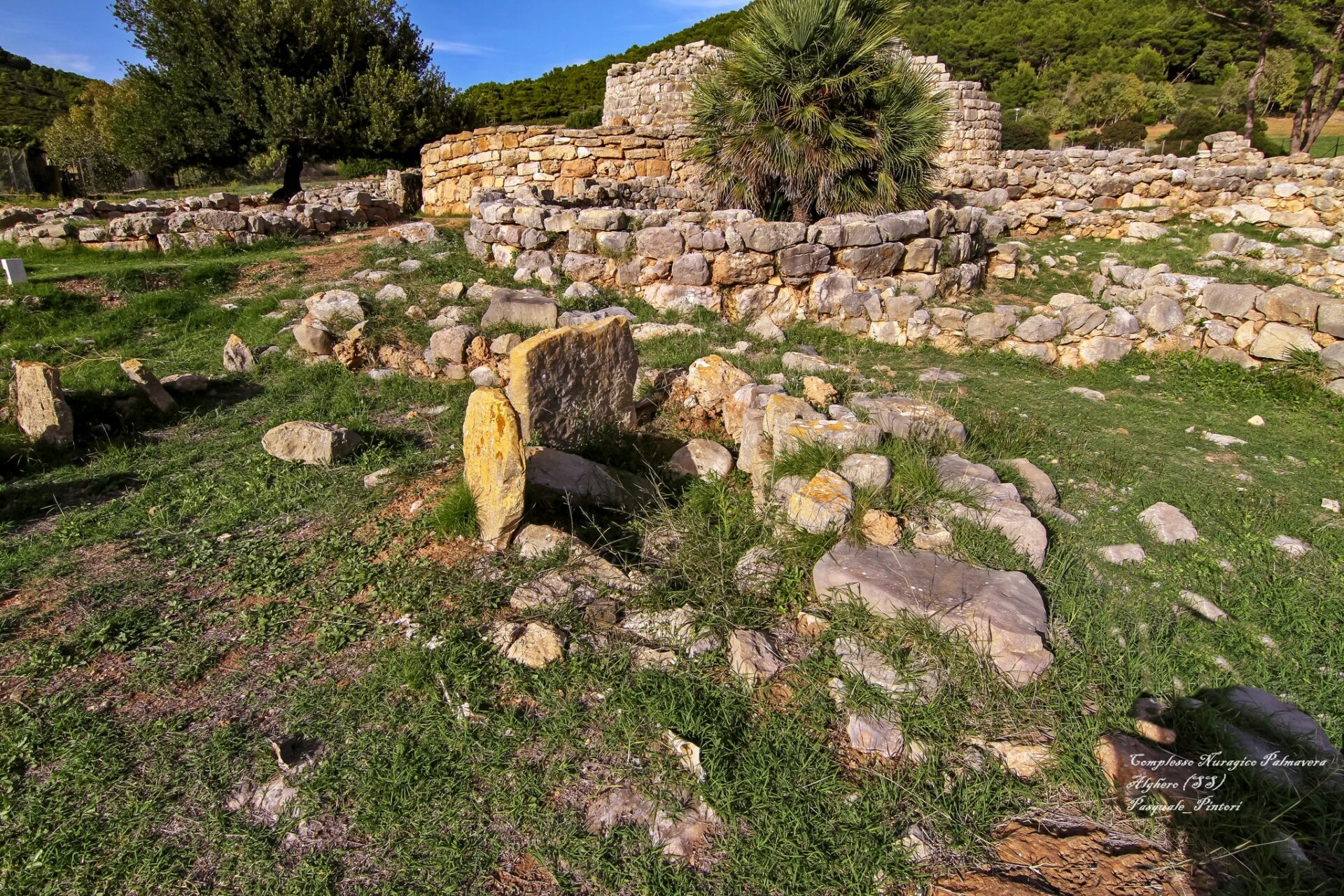
The two towers are not coeval: the older one, in limestone, with a central chamber and a tholos roof, is dated between the 15th and 14th centuries BC. B.C., together with an initial nucleus of huts; the other, in sandstone, with a collapsed vault, is said to date from the 9th century B.C.. Contemporary with the second tower is the Hut of Meetings, with a lithic seat (which runs around its perimeter), a basin, a round seat (perhaps for the chief) and a sandstone model of a Nuragic tower (the original of which is in the Sanna Museum in Sassari). Between the 9th and 8th centuries, walls were added with four hut-towers (one of which is the pre-existing C. delle Riunioni) and the complex was clad in limestone.
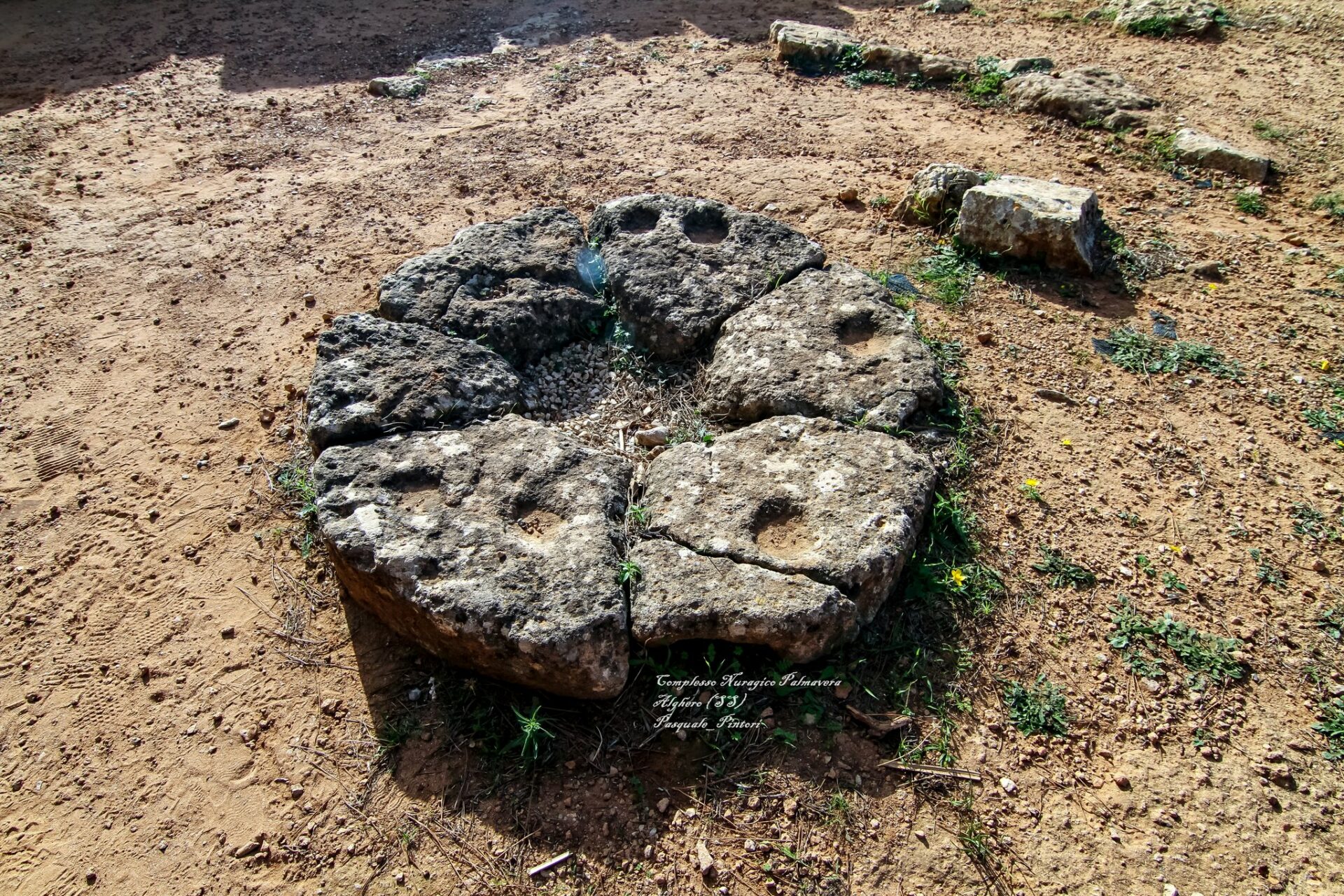
The huts, mostly circular in plan, are located outside the antemurale; they were probably houses but also animal pens or storerooms. Numerous finds: ceramic pottery, bronze weapons and ornaments (swords, daggers, rings, bracelets and brooches), working tools (chisels, hatchets and awls) and stone and bone artefacts (millstones and amulets).
The Nuragic village was allegedly destroyed by fire at the end of the 8th century, although archaeological evidence shows that it was still inhabited in Punic and Roman times.
Source: Ministry of Culture – Idese.
The photos of the Palmavera nuragic complex are by Pasquale Pintori.