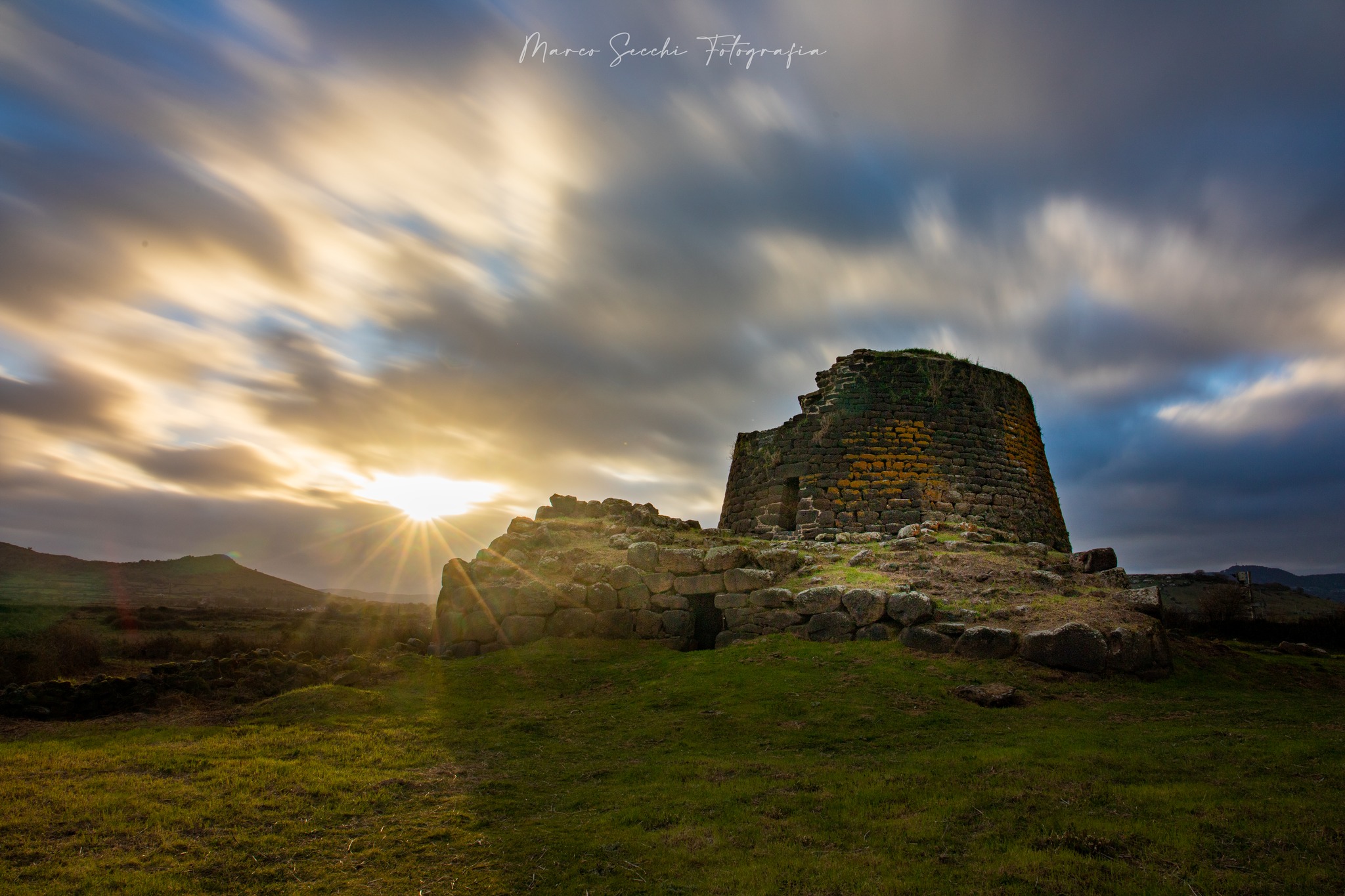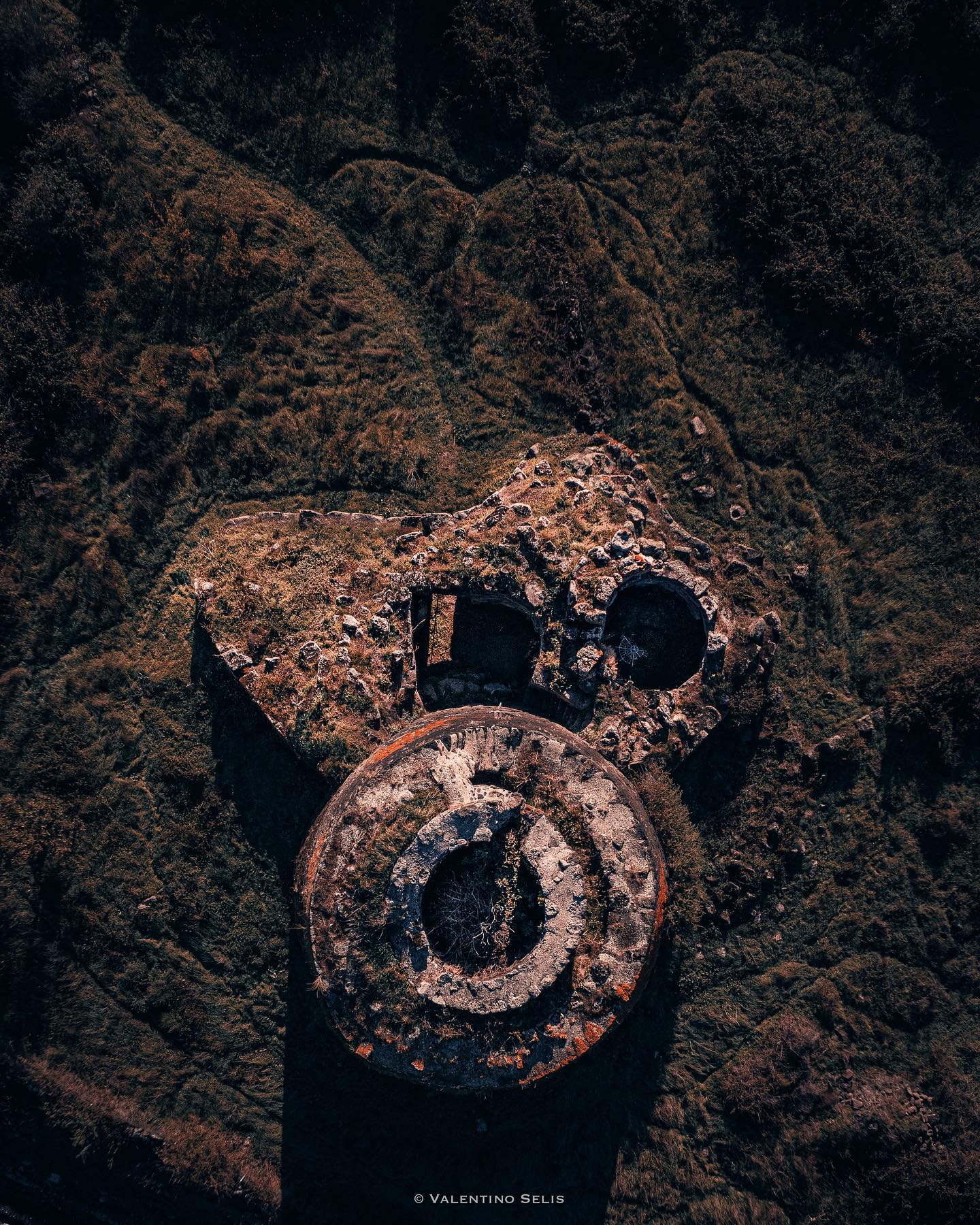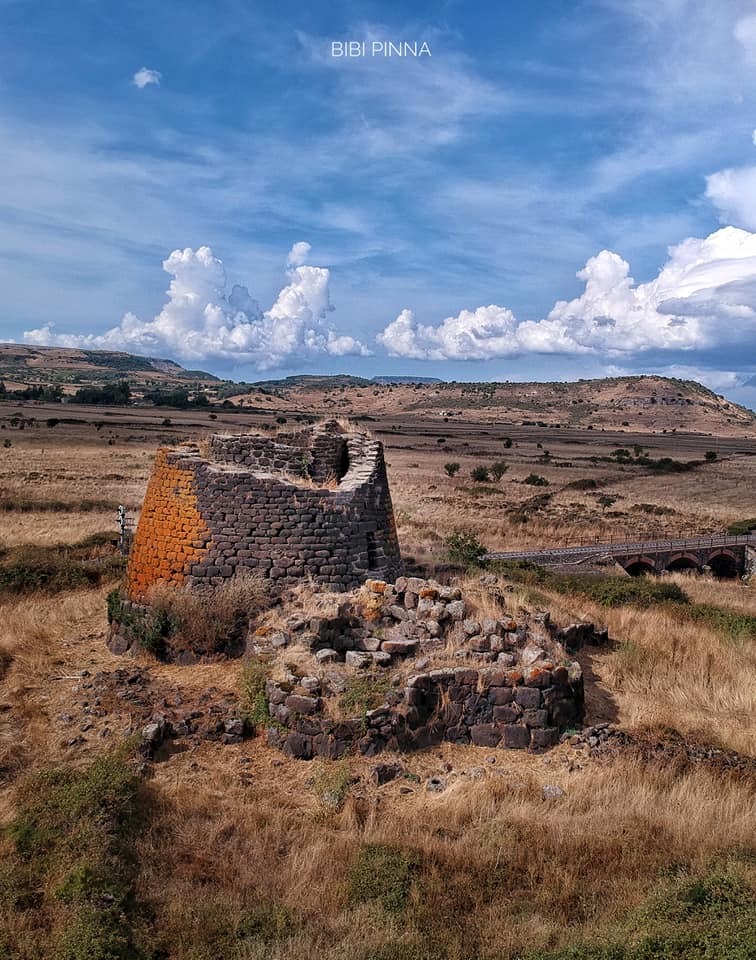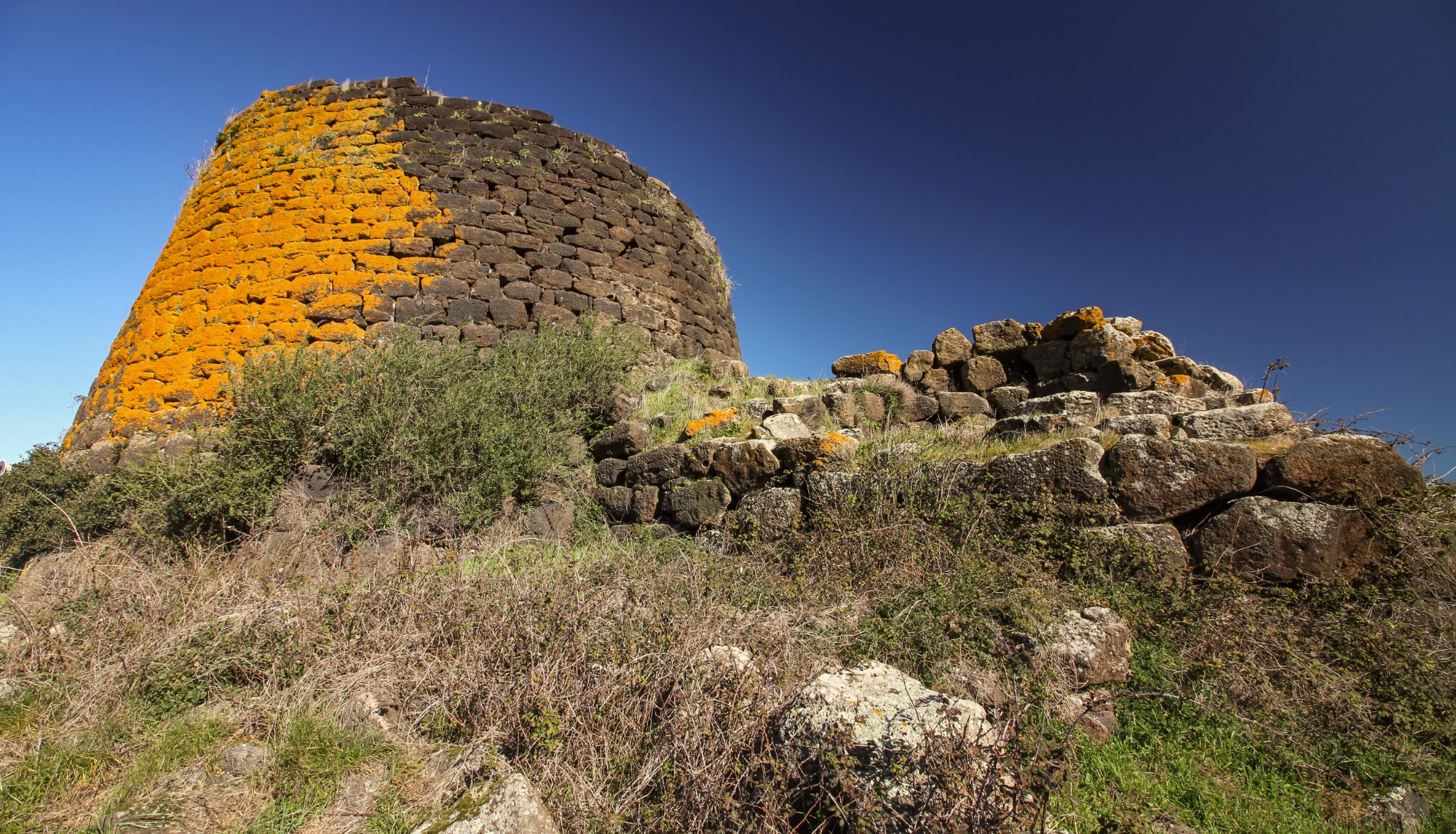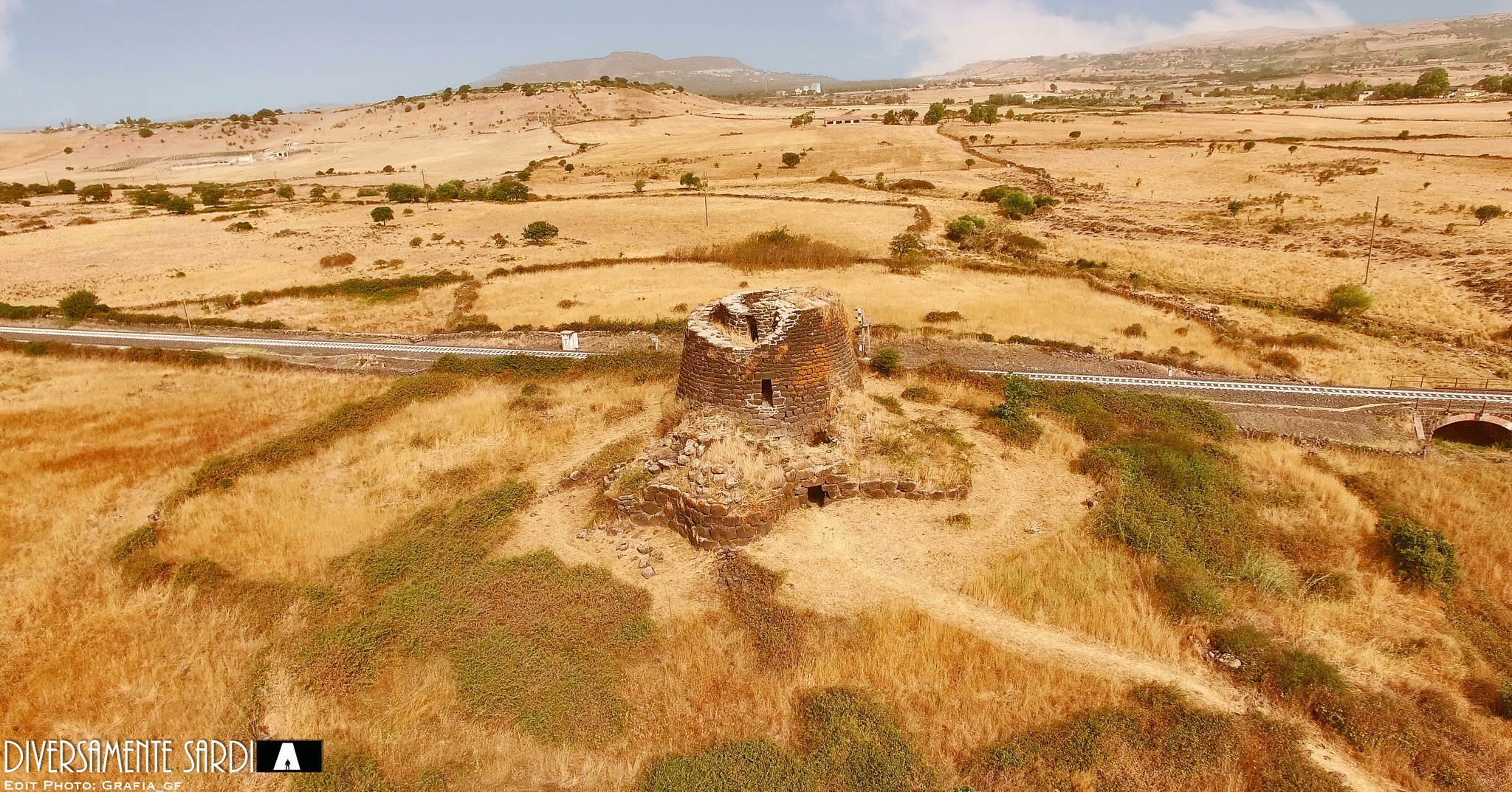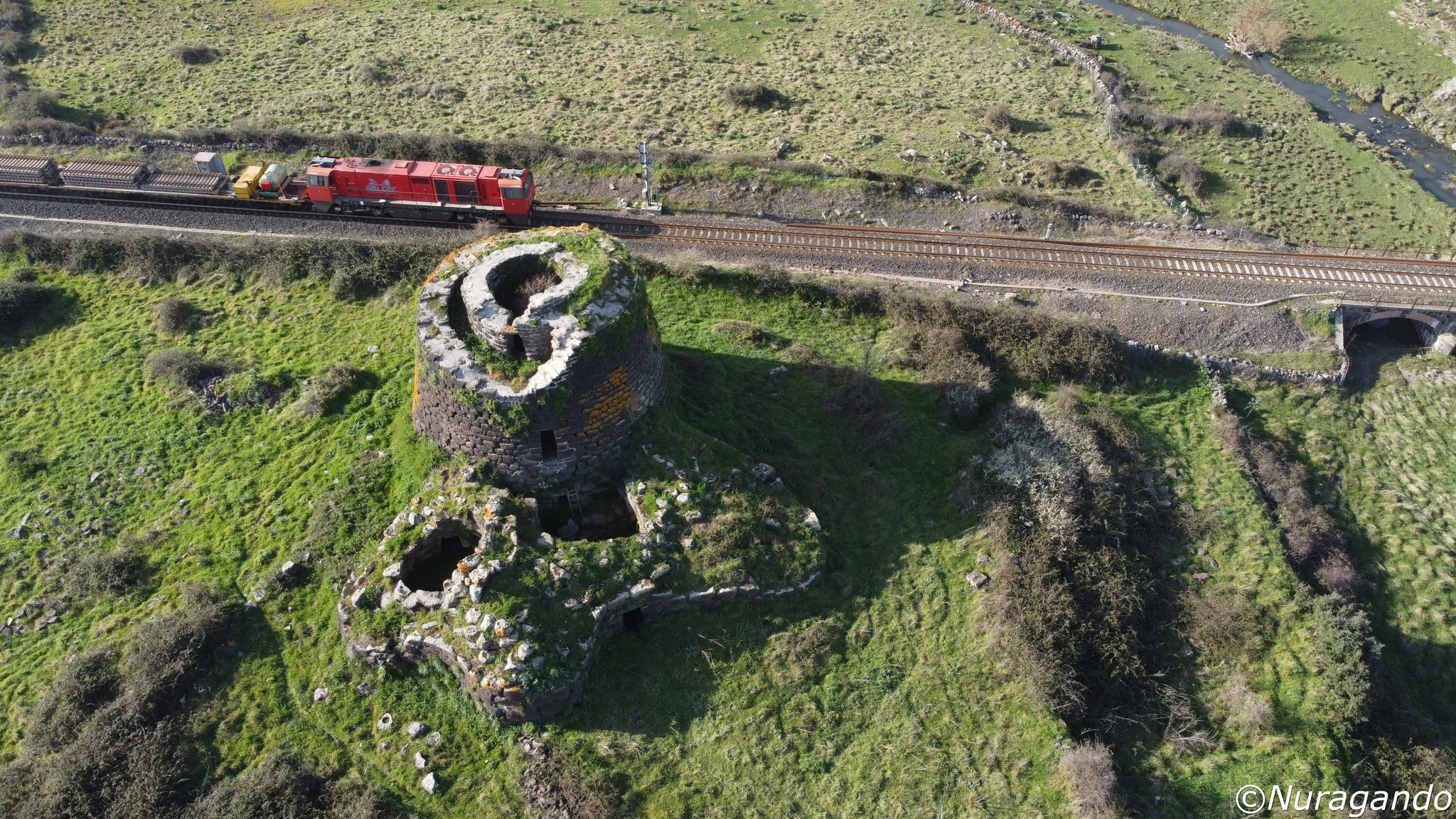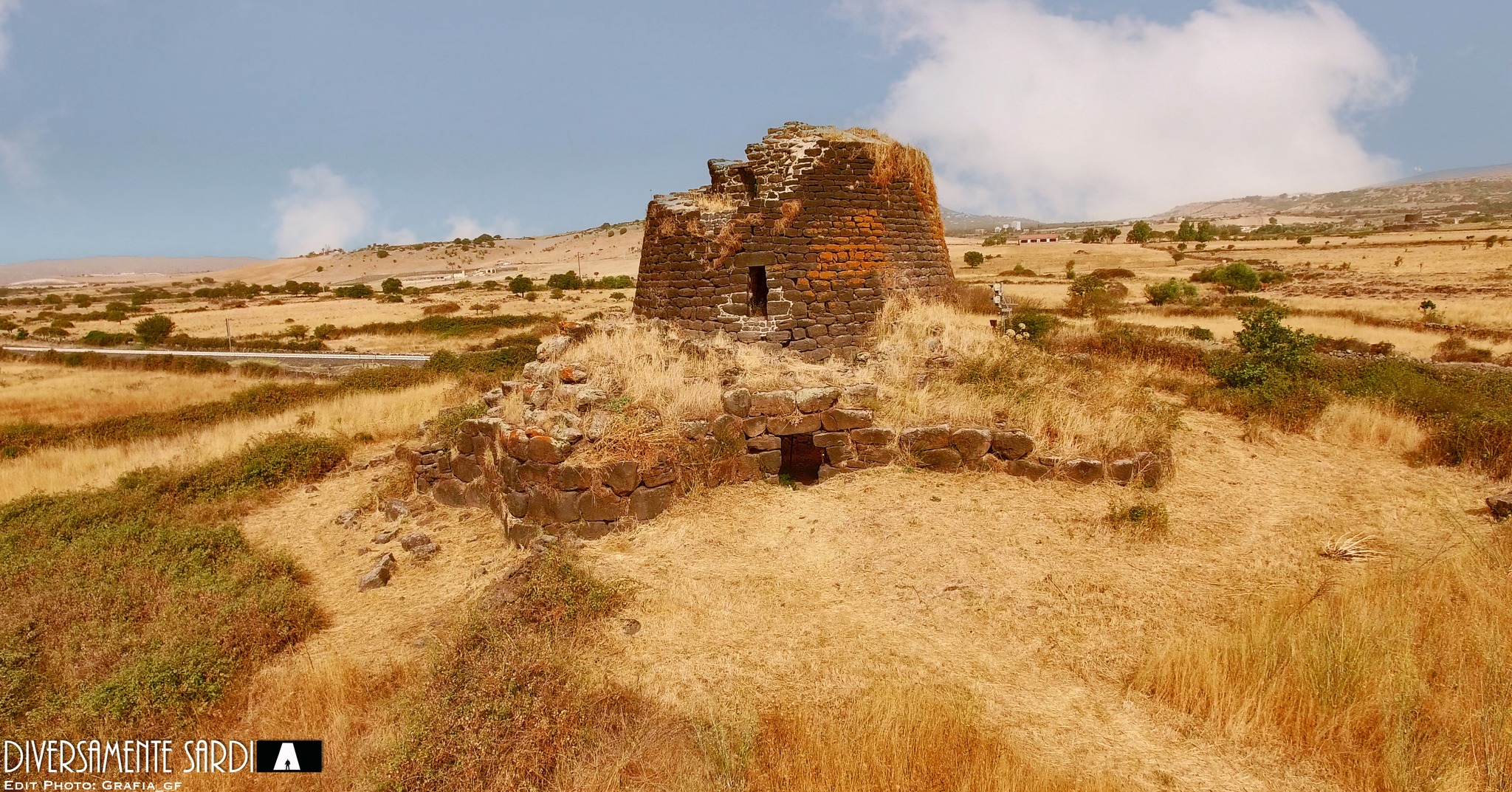
The Oes nuraghe at Giave, almost a unicum in the sphere of Nuragic architecture, stands majestically in the Meilogu-Logudoro, within the valley of the Nuraghi, in north-western Sardinia
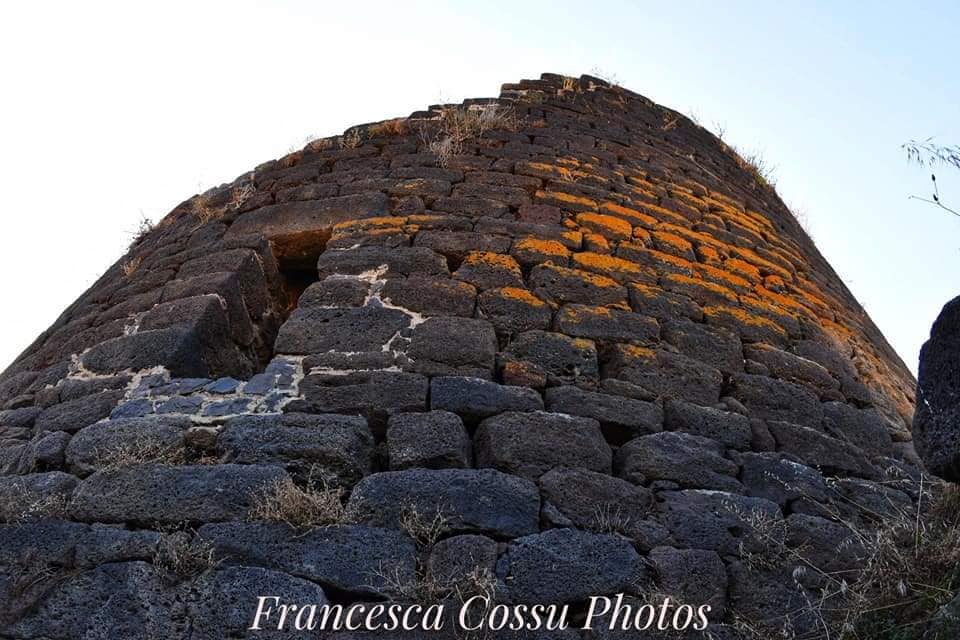
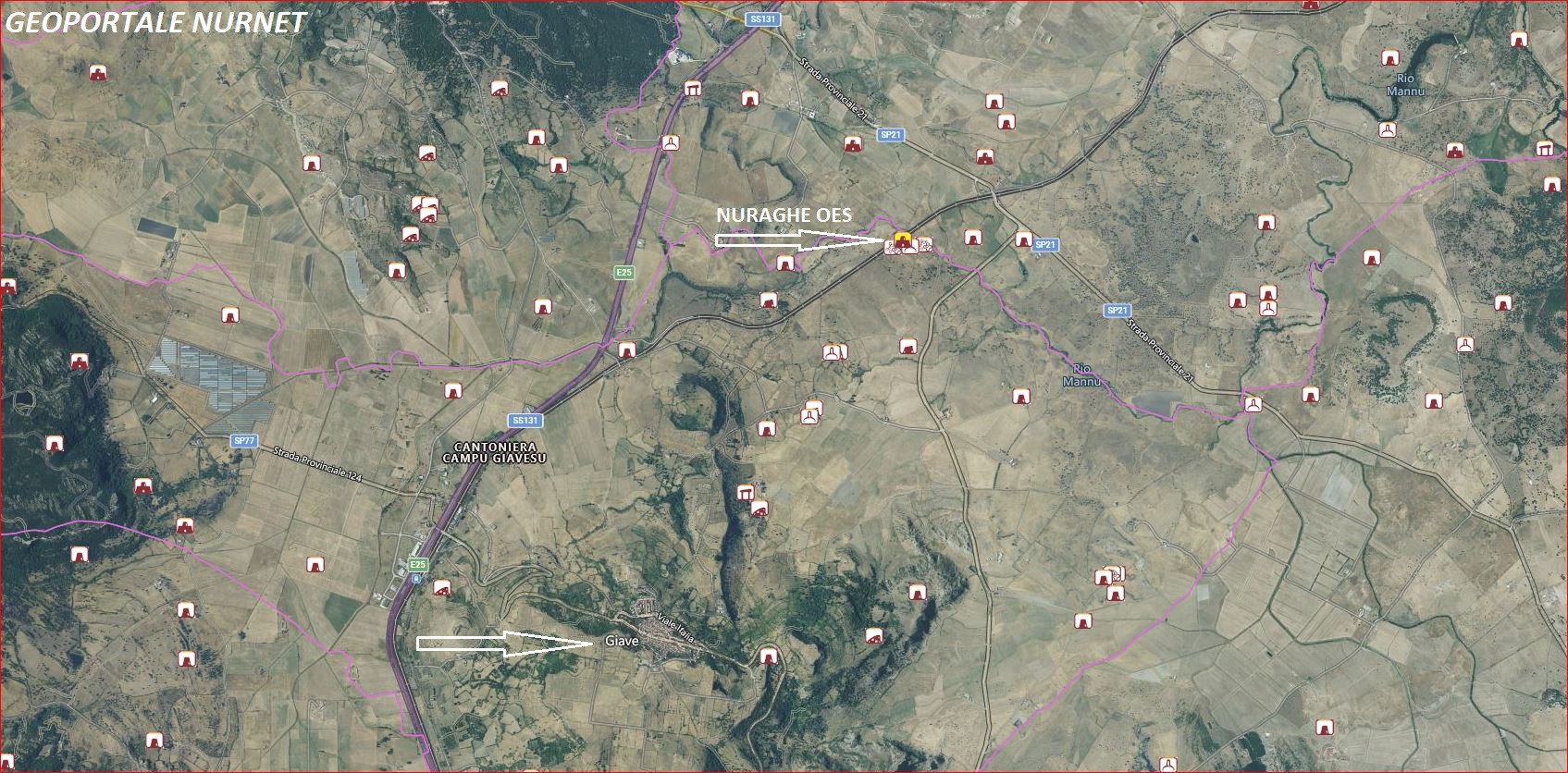
The main tower and a secondary tower contain a single chamber that was once subdivided into three rooms by wooden slabs supported by folds, fixed by holes cut in the wall structures. This unusual and rare architectural feature has made the Oes Nuraghe even more famous. The monument lies on the north-eastern slope of Campu giavesu in the territory of Giave, within the plain of Cabu Abbas, known as the Valley of the Nuraghi – one of the Sardinian areas with the highest density of nuraghi – 800 metres from the nuraghe Santu Antine. Dating back to a period between the end of the Bronze Age and the Iron Age (9th-6th century B.C.), theOes is a majestic work of Nuragic architecture, built from finished basalt boulders. The main building consists of a three-storey tower (keep), the truncated cone of which ‘falls’ on all sides at an even angle. It is composed of 29 rows of stones, 16 metres high and 11 and a half metres in diameter, the largest so far found in Nuragic constructions. It was once vaulted in the form of a tholos (false dome). Leaning against it is a bilobed bastion, with a perimeter of 50 metres, arranged on two levels and with two entrances, enclosing a courtyard and two secondary towers. One of them is well preserved. The complex in all measures 425 square metres and also includes a sacred area, with an enclosure(temenos) of a vaguely hexagonal shape and a small megaron temple , the remains of a Giants’ tomb, the stele of which is lying on the ground, a vast dwelling settlement of circular and elliptical huts and other structures of uncertain type (perhaps cisterns and a second small temple). Between the sacred area and the nuraghe, twenty boulders embedded in the ground resemble a megalithic circle.
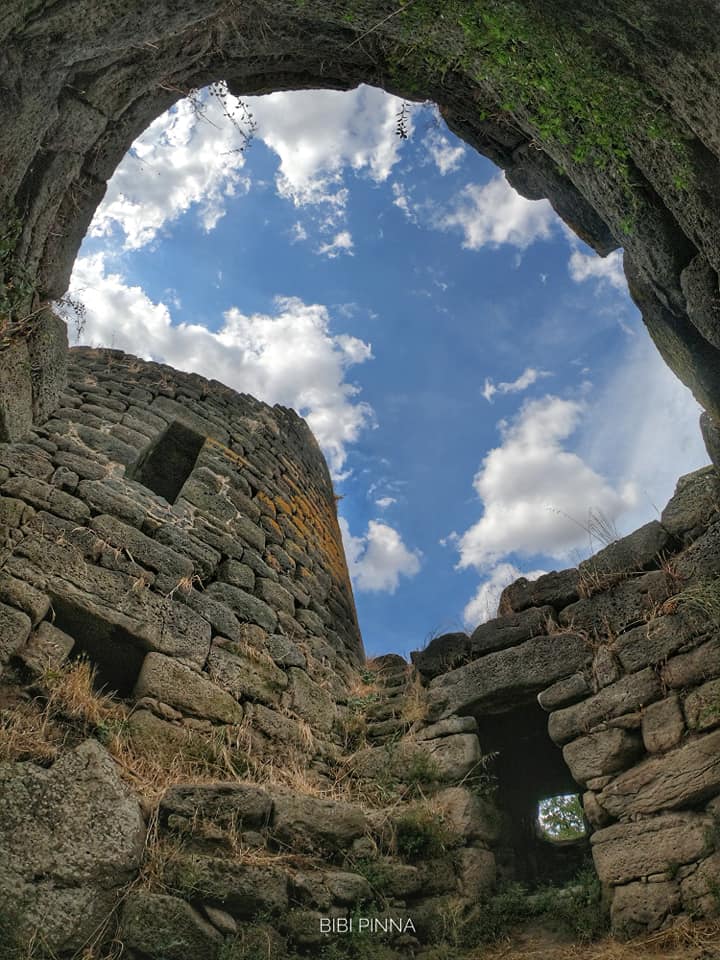
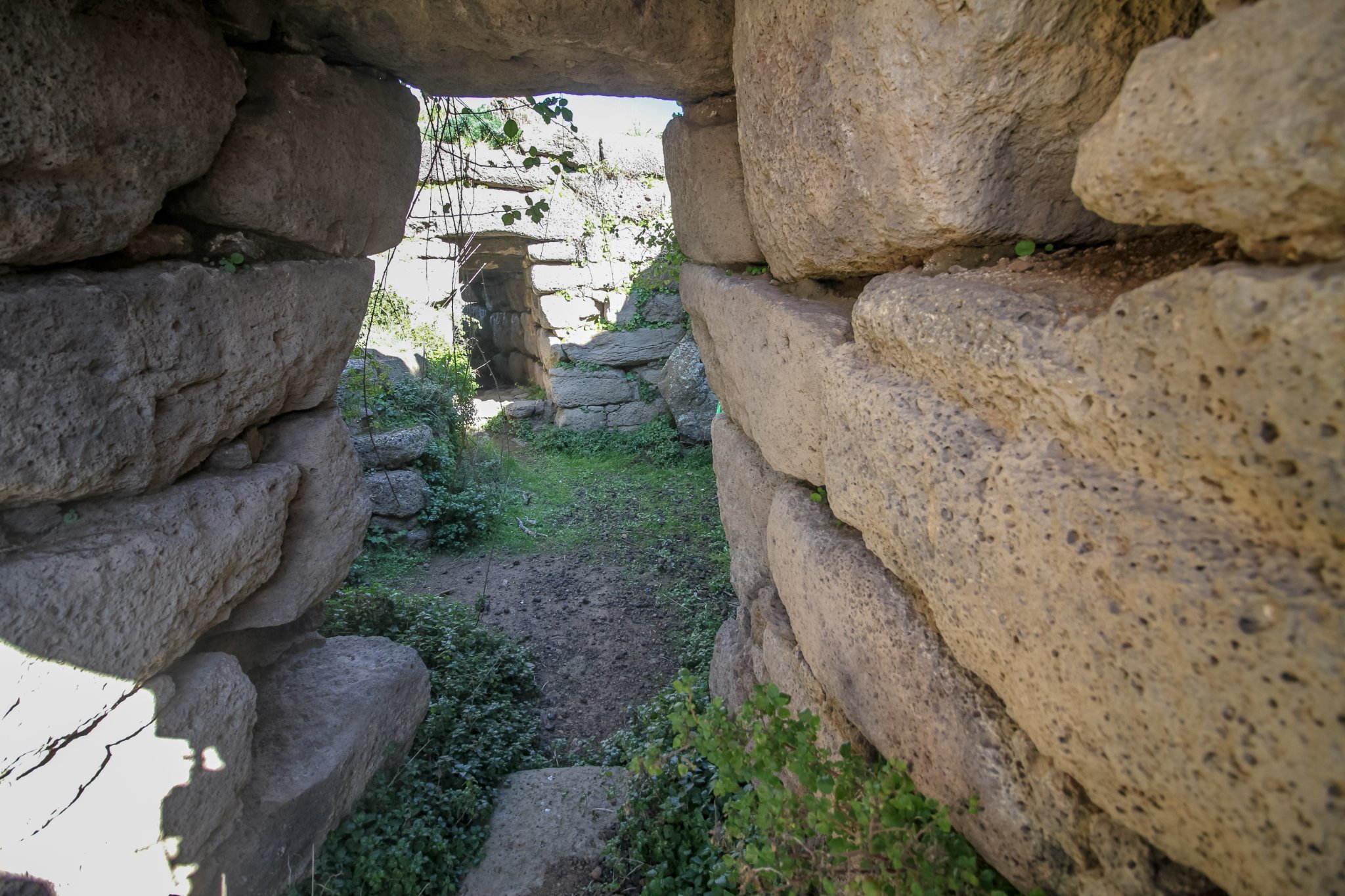
According to Giovanni Lilliu, the ‘father’ of Sardinian archaeologists, there are clear construction differences between the keep, from an older period, and the added body, built at a later date. The chamber on the ground floor of the donjon was originally accessed from the courtyard, currently from a large window on the first floor, after climbing up the curtain wall and filling in the courtyard. A spiral staircase leads to the upper floors, illuminated by slits and with small cupboards for oil lamps. There is also a storage niche. The system of covering and separating the rooms consisted of wooden ceilings resting on riseges (25-50 centimetres deep), fixed to the walls through holes. In the complex, you will also notice architraved doorways and openings, projecting walls and large slits arranged at regular intervals. Of the mighty walls that surrounded the complex, there are extensive remains, including watchtowers. You will see another line of walls along the south-north axis, while in a south-easterly direction, you will see more terracing: perhaps there were originally several defensive curtains.
(from: Sardegna Turismo)
The photos of the Oes nuraghe are by: Marco Secchi, Valentino Selis, Bibi Pinna, Diversamente Sardi, Andrea Mura-Nuragando Sardegna, Pasquale Pintori and Francesca Cossu
.