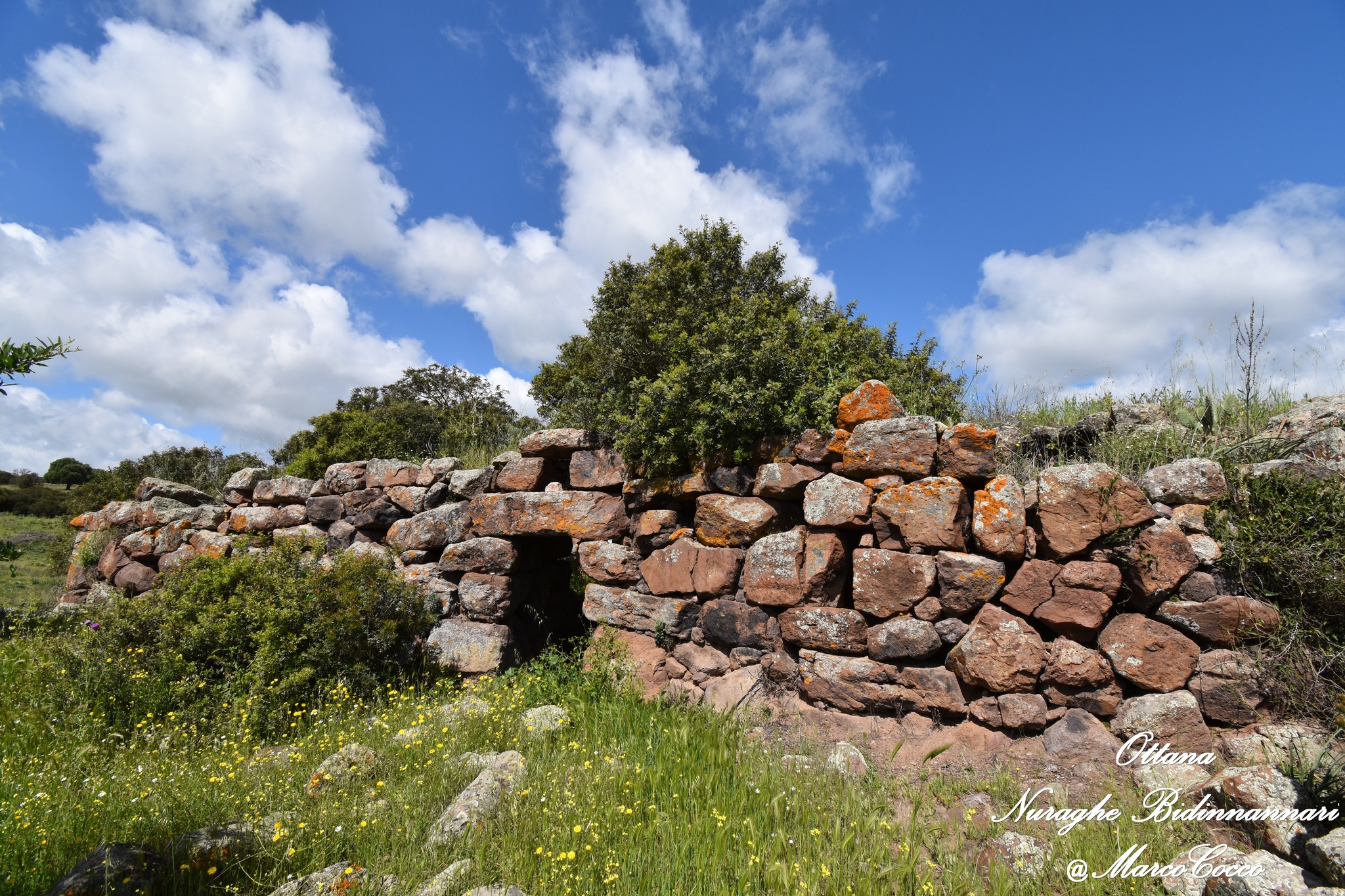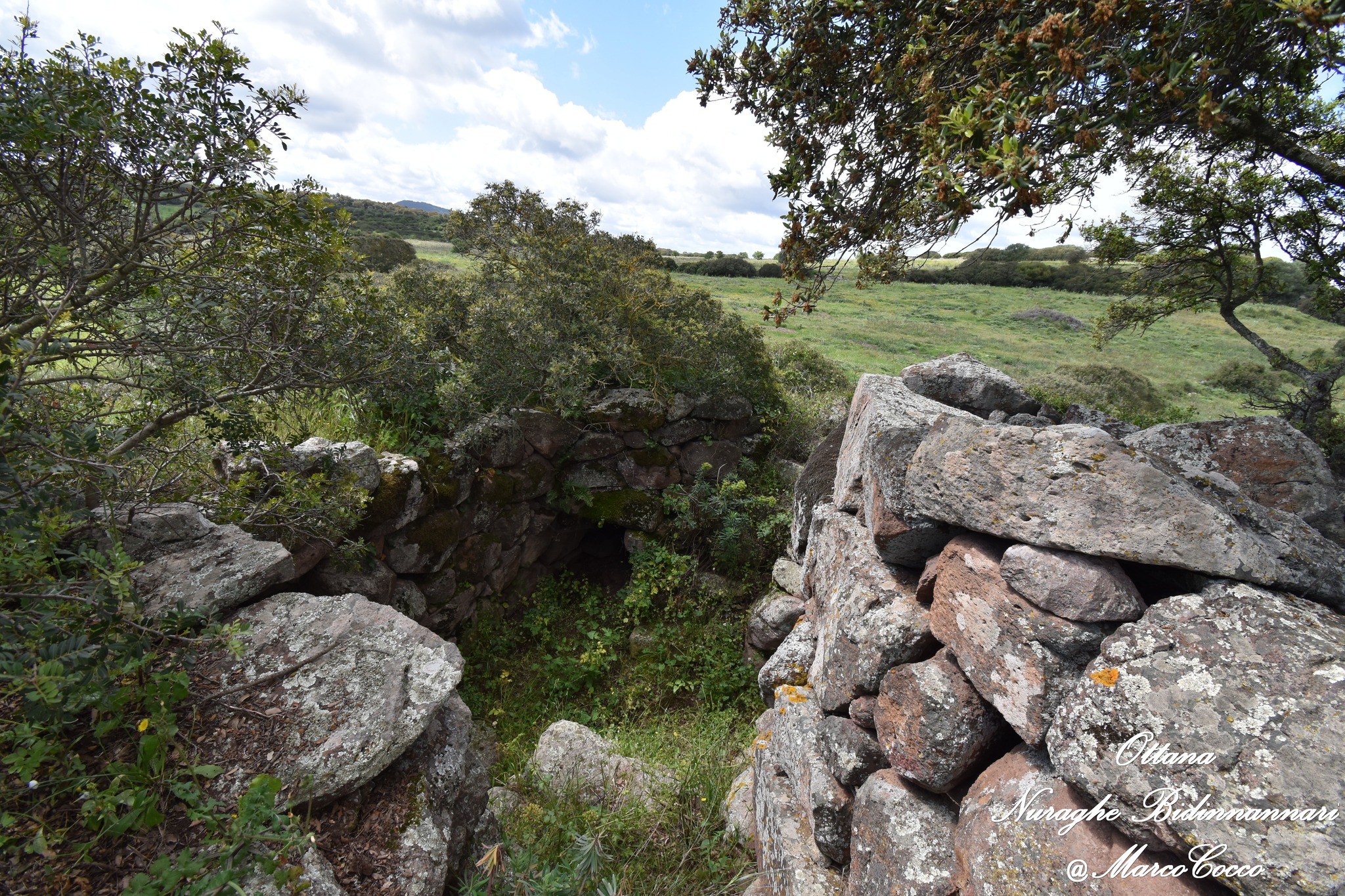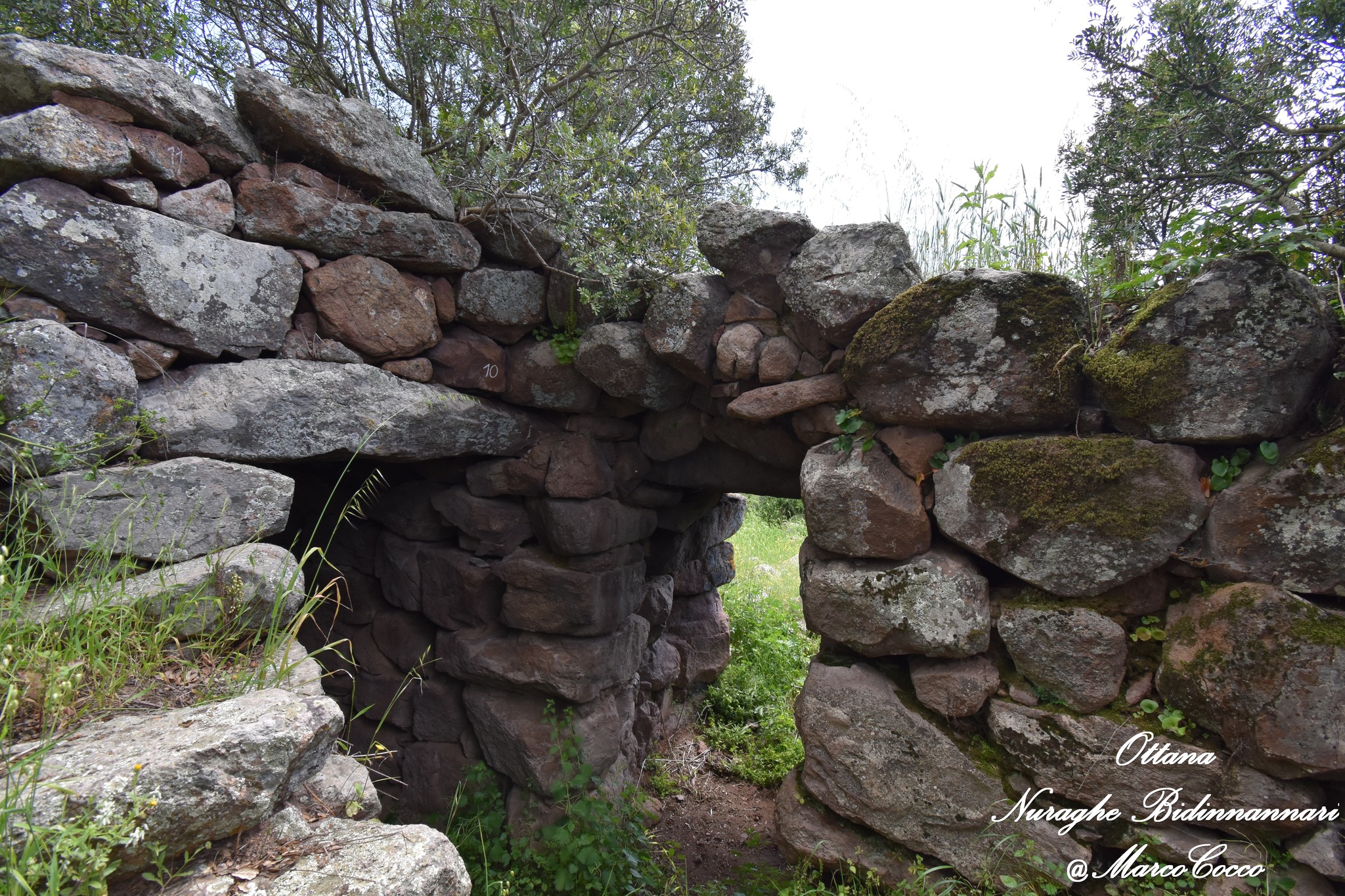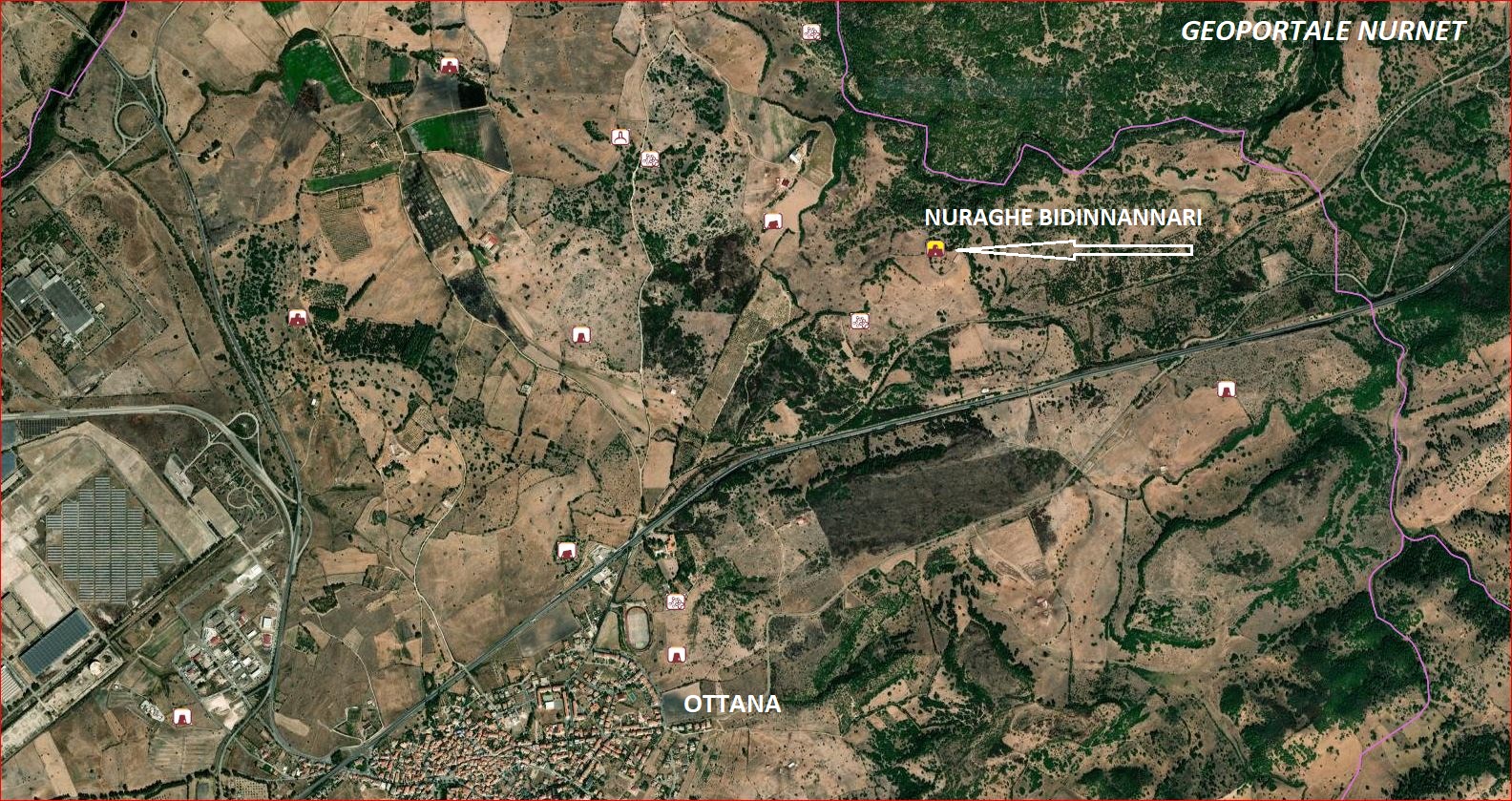
The nuraghe of Bidinnannari or Marasorighes (Ottana) is located on the edge of a trachytic plateau (246 m above sea level) overlooking the Riu Liscoi. Along this edge, in prehistoric times, a megalithic wall was built in polygonal work on which the monument partly rests; this, for about 10 m, follows the rocky profile of the relief with a concave trend.
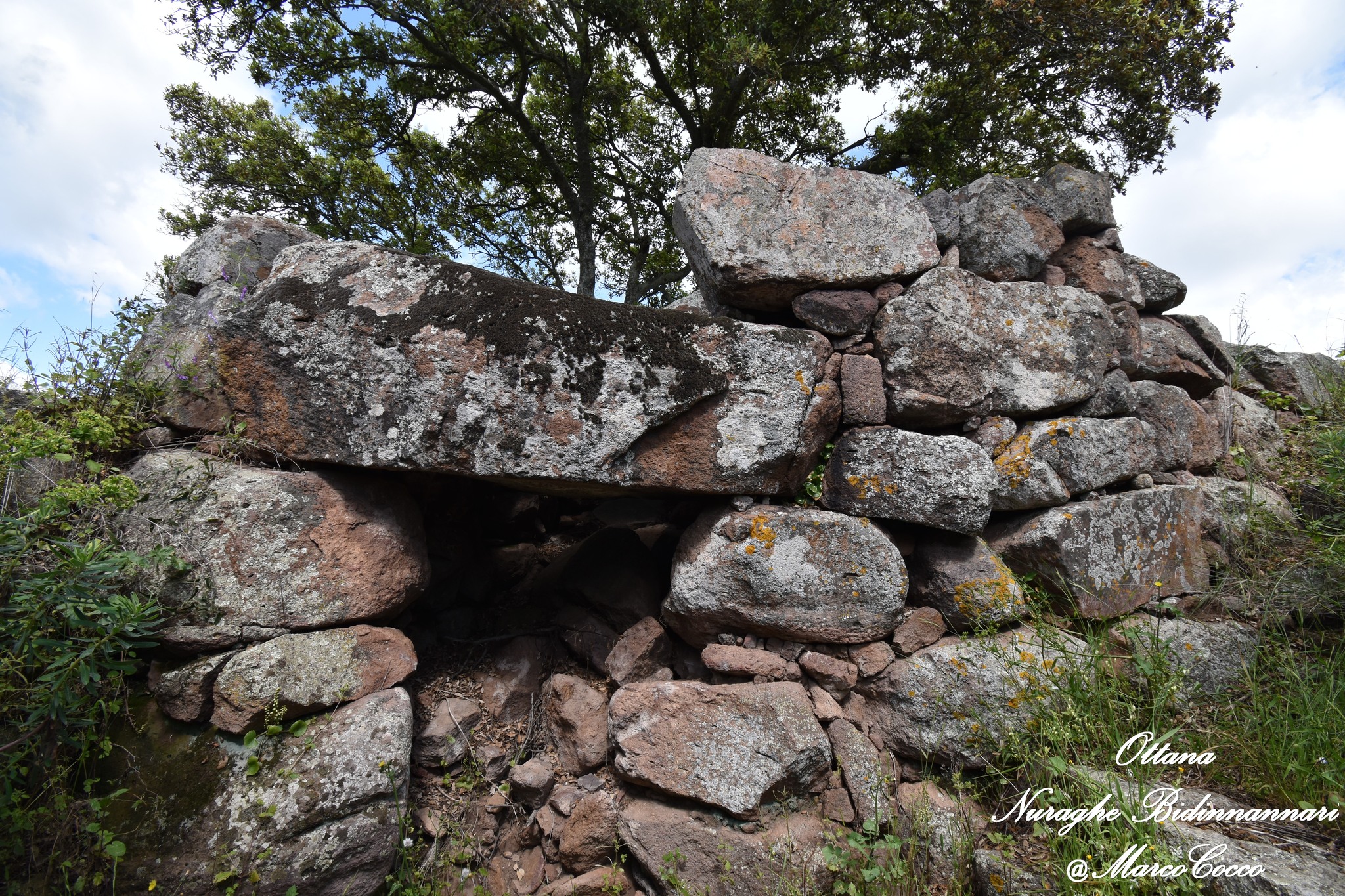
The construction, in pinkish trachyte made of rows of rough-hewn boulders, is surrounded by dense thickets of mastic and prickly pear trees. The central body consists of a corridor nuraghe to which two towers with a tancato frontal addition were later added, resulting in a subtriangular plan with rounded corners and a concave elevation.
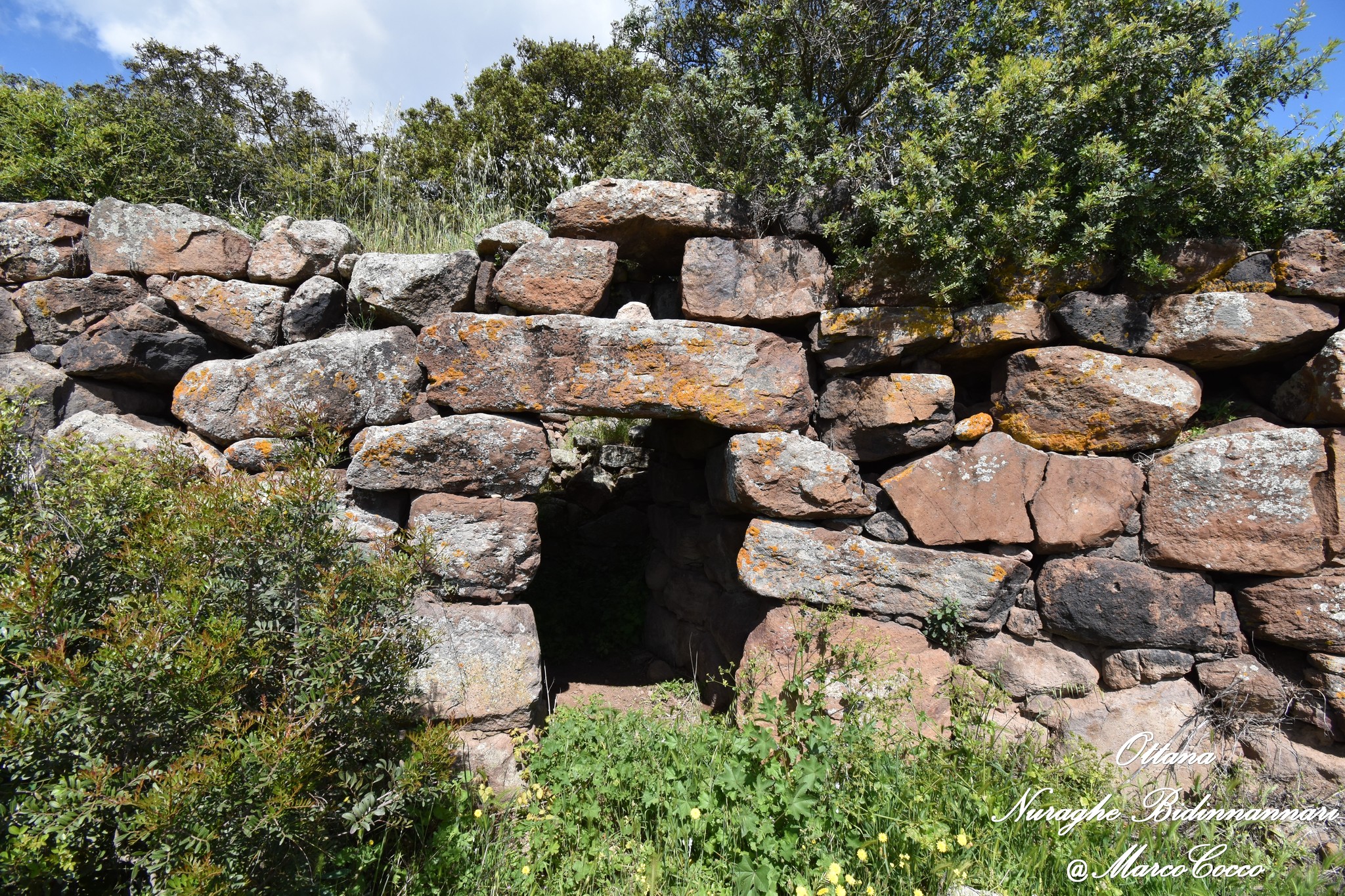
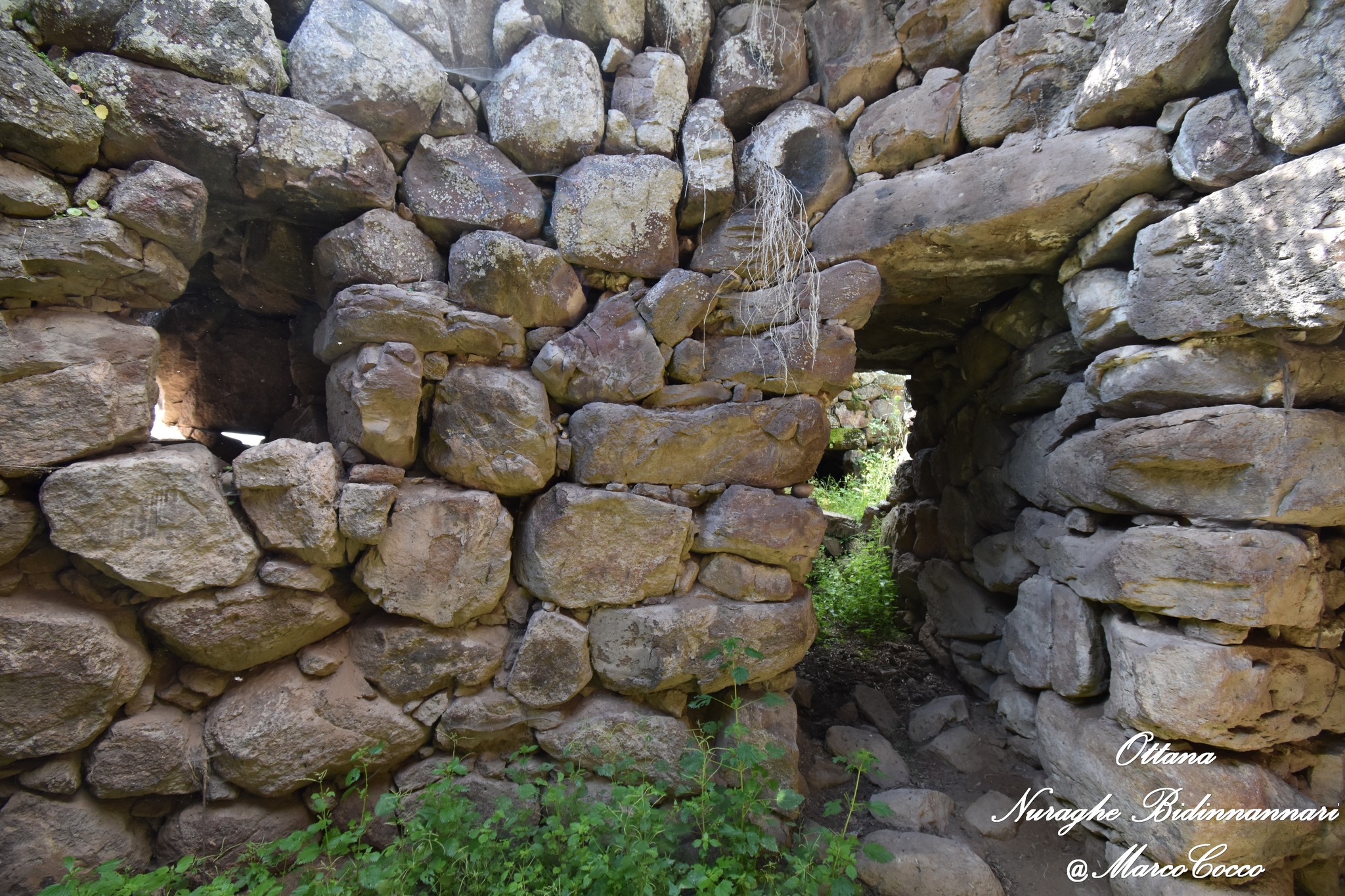
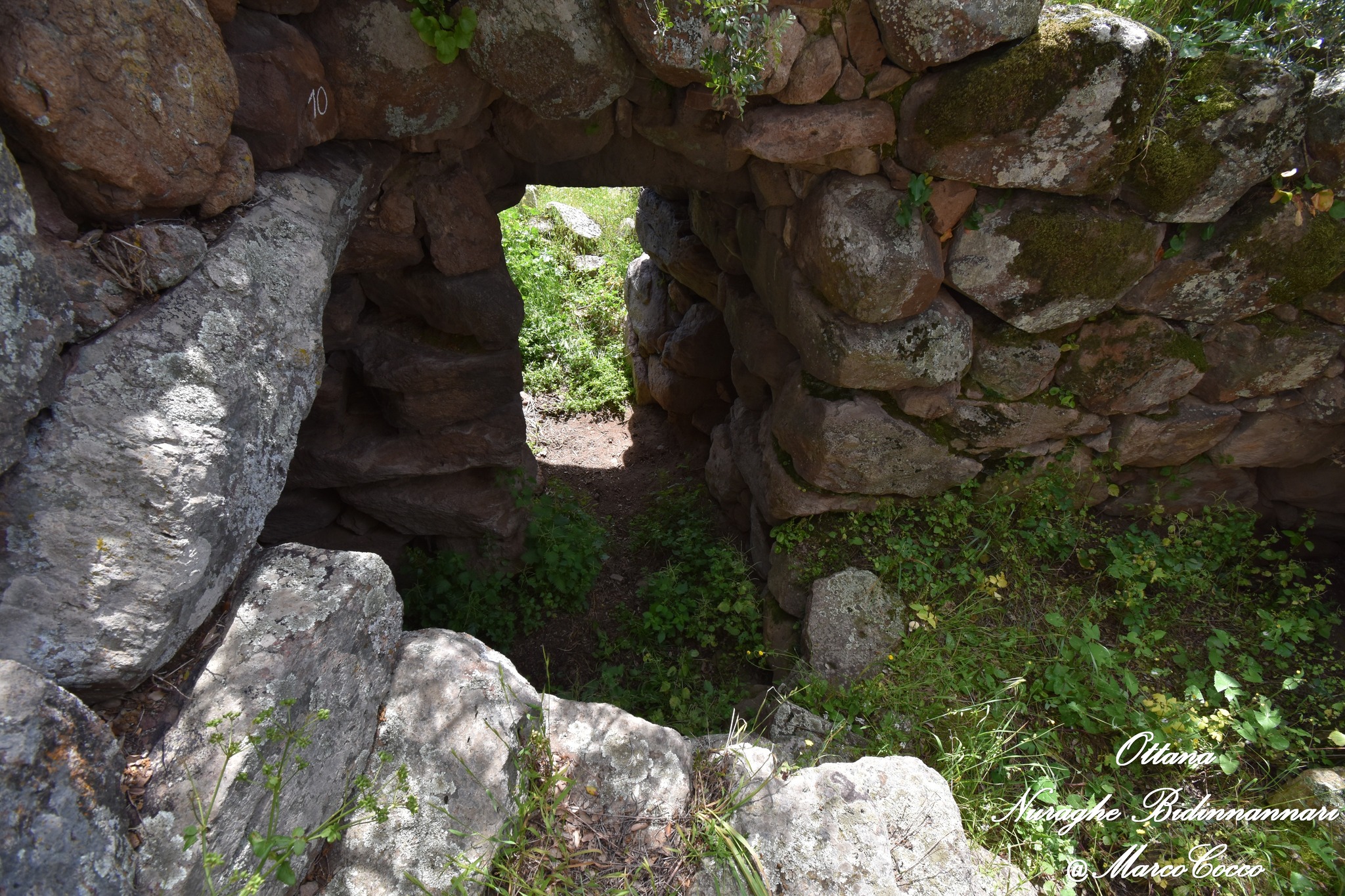
The entrance, partially underground and facing south, is architraved, with a trapezoidal opening, and leads into a short, flat banded entrance hall (length approximately 2.5 m). Over this opens a straight corridor that must have led to the side tower on the left, which is also accessible through a passageway open in a short side of the courtyard. From the entrance, in fact, through the flat-banded passageway, one enters a small rectangular, open-plan room (now cluttered with rubble), in which the entrances to the central body and the two side towers open.
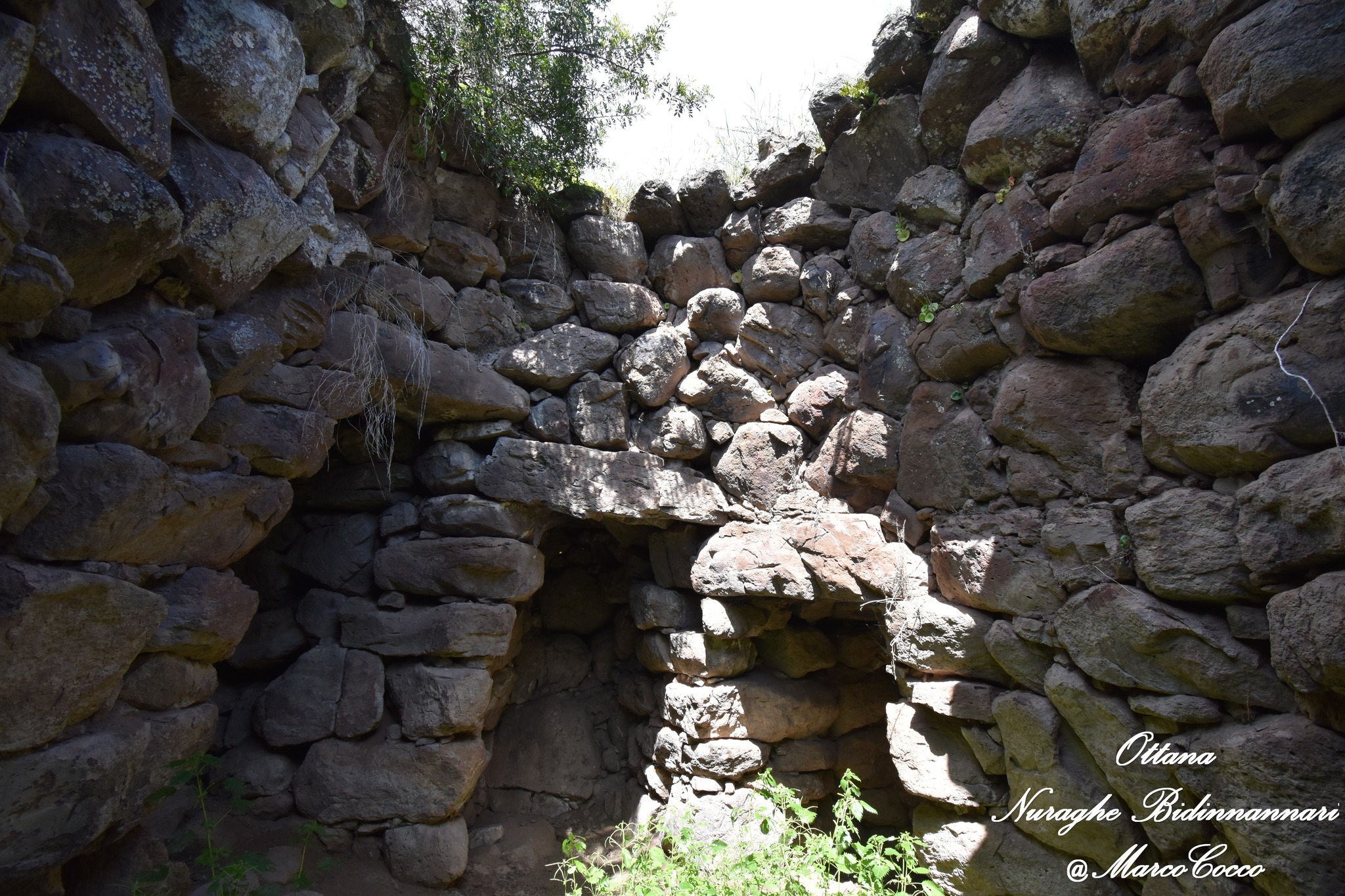
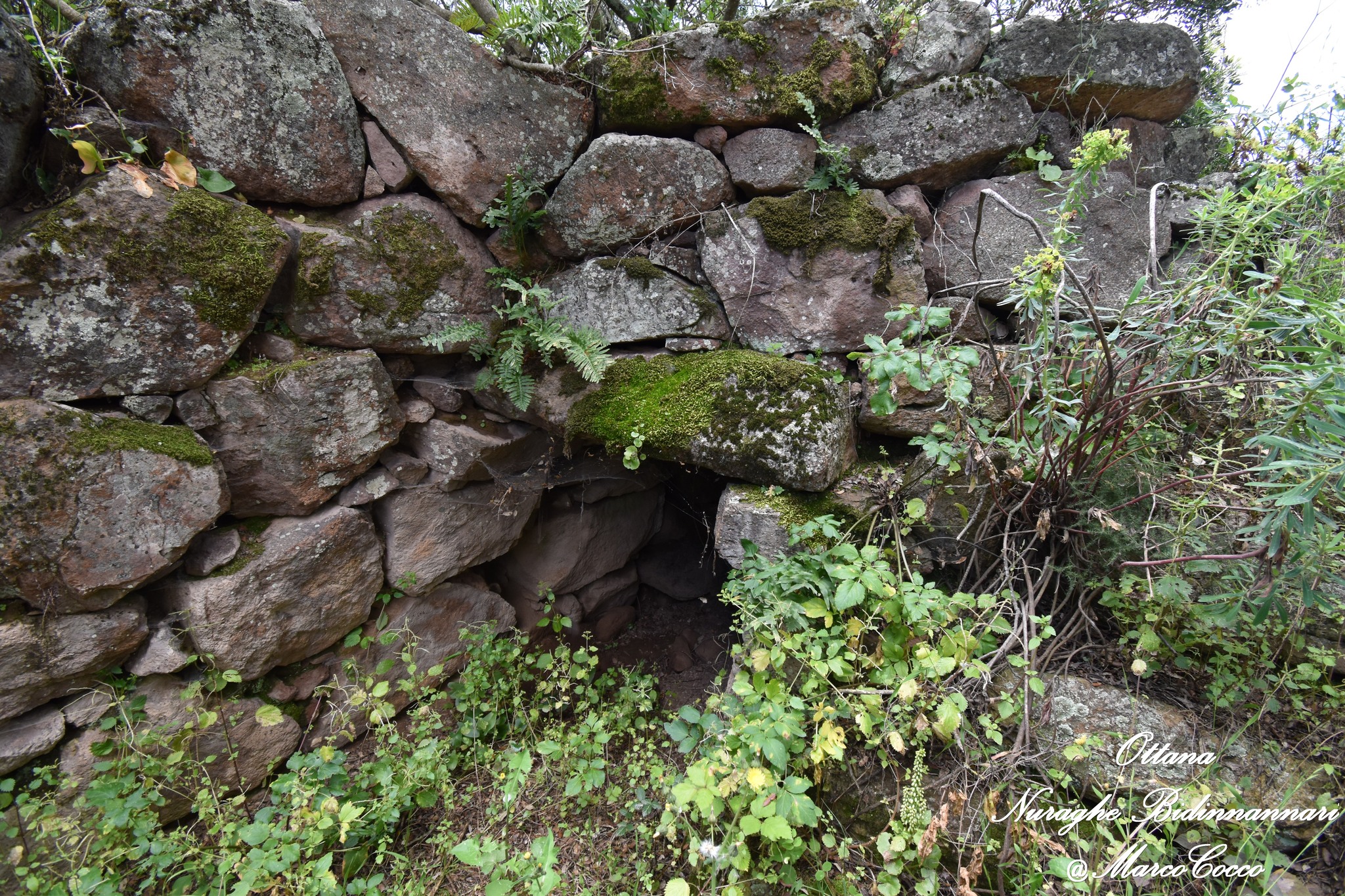
A corridor about 3.50 m long, with six slabs of flatwork, leads to the right side tower, elliptical in shape, now uncovered, presumably tholos-shaped. Inside, there are two deep niches; one of them, with an architraved opening, crosses the entire wall thickness of the added body to reach the structure of the original nuraghe.
The monument’s state of preservation is precarious due to the disintegration of the trachyte.
Source: ‘Ottana: archaeology and territory’ by Giuseppa Tanda.
Photo by Marco Cocco.