At the foot of a relief in Sulcis, in south-western Sardinia, there is a sacred spring, hidden among the trees, which differs from the others in certain characteristics
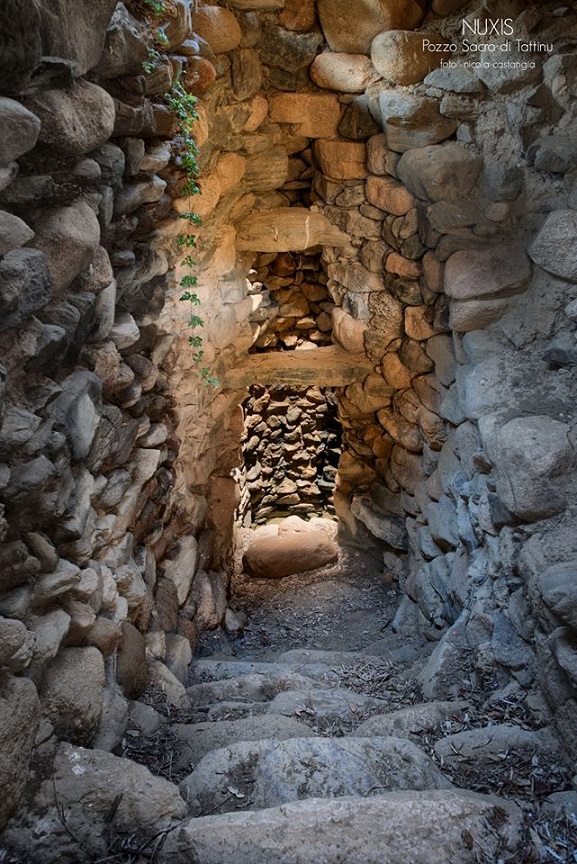
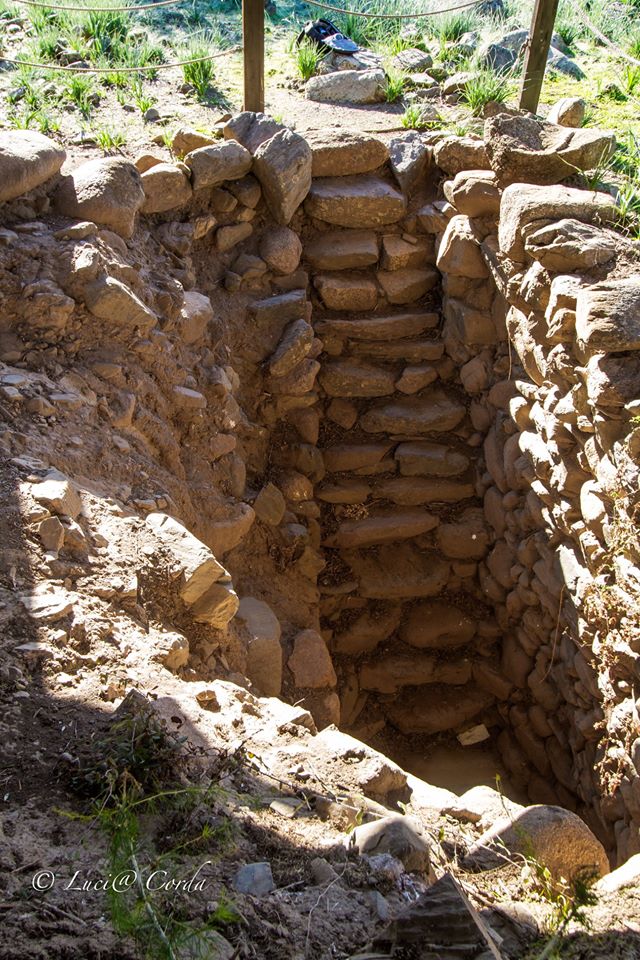
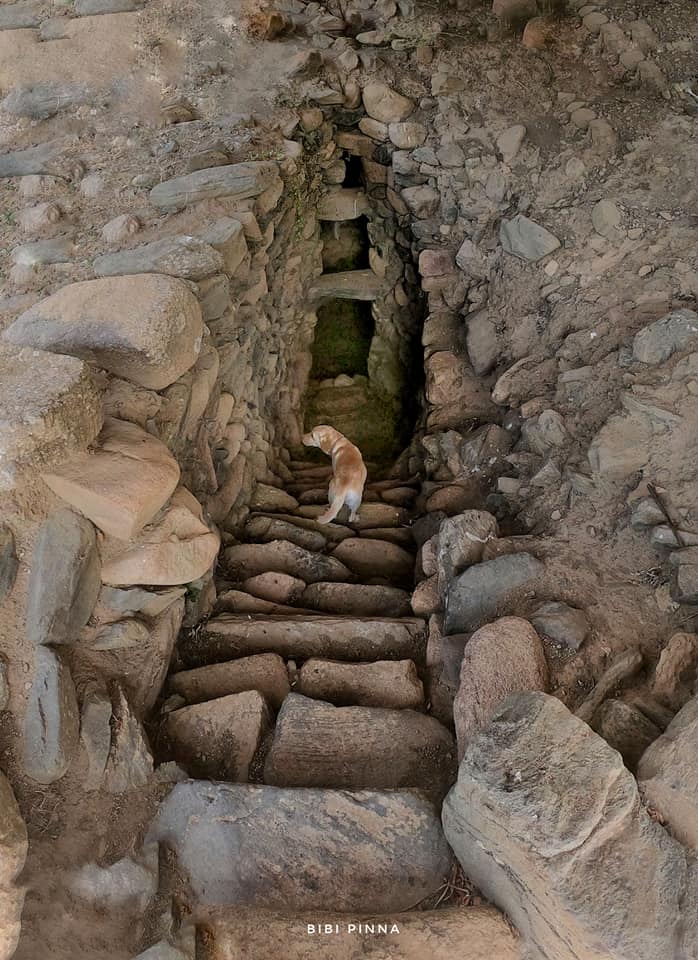
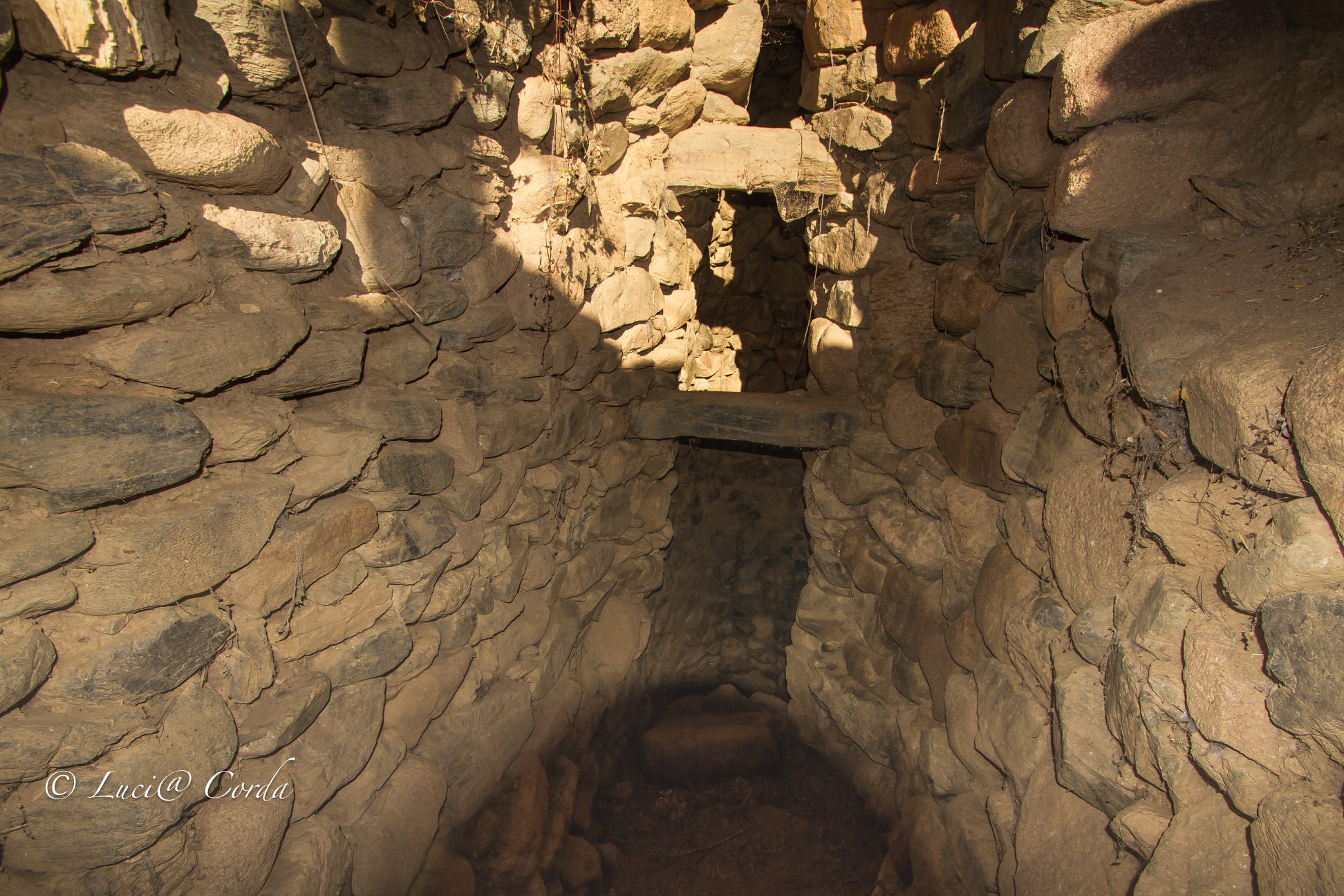
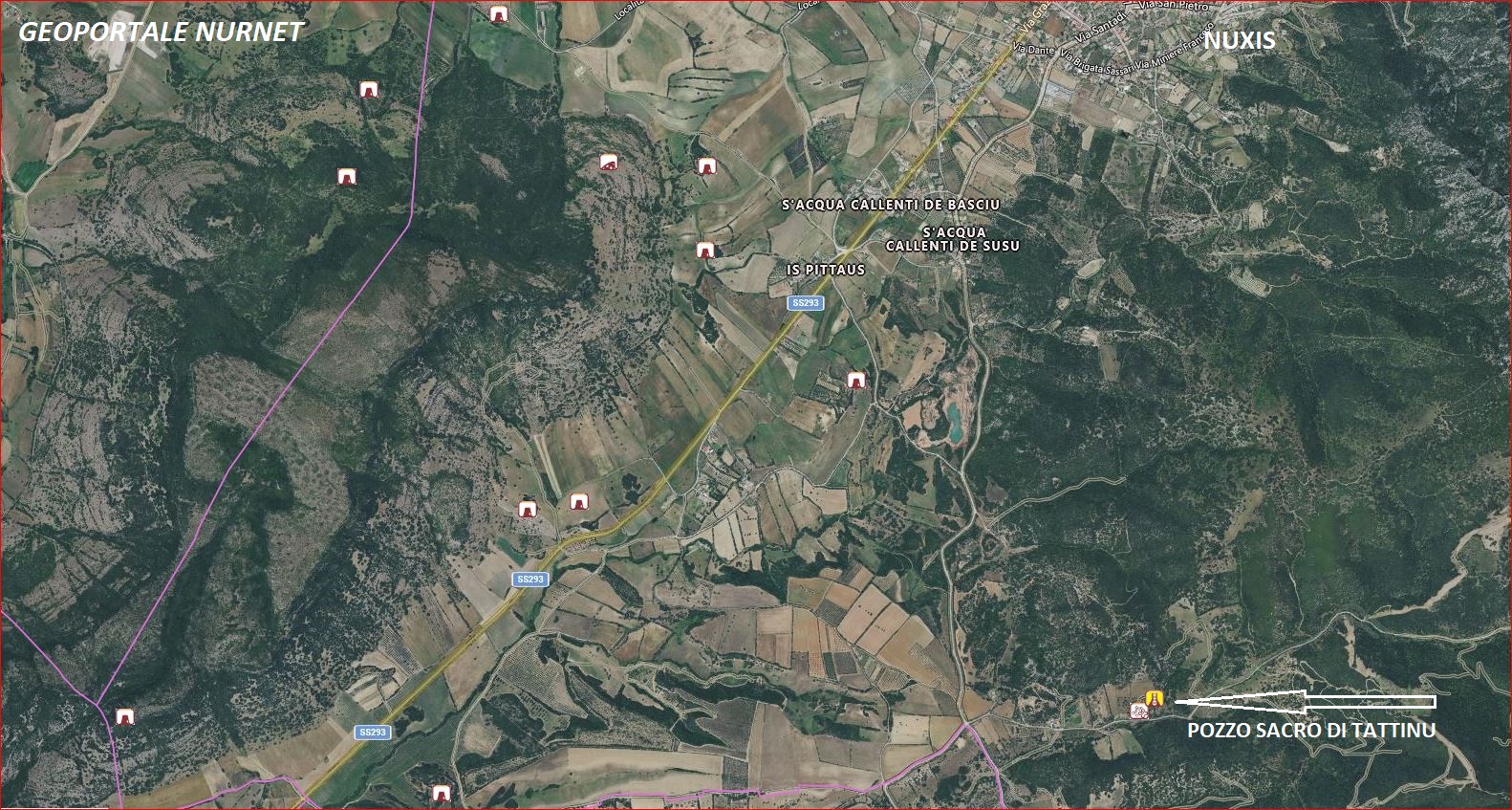
Its construction peculiarities are a mystery: it is not clear whether they were made deliberately or whether some secret is yet to be revealed by future excavation campaigns.The sacred well of Tattinu (Nuxis) stands amidst the woods and asphodel expanses of the locality of the same name on the slopes of Mount Tamara, in the territory of Nuxis, a small town in the Sulcis region, scattered with testimonies of the past. The first and most obvious singularity compared to the ‘canonical’ Nuragic sacred wells is the apparent absence of the vestibule and any other visible structure. The stairs, with 28 steps, form a rectangular void with the water chamber, just over eight metres long and a little over one metre wide.
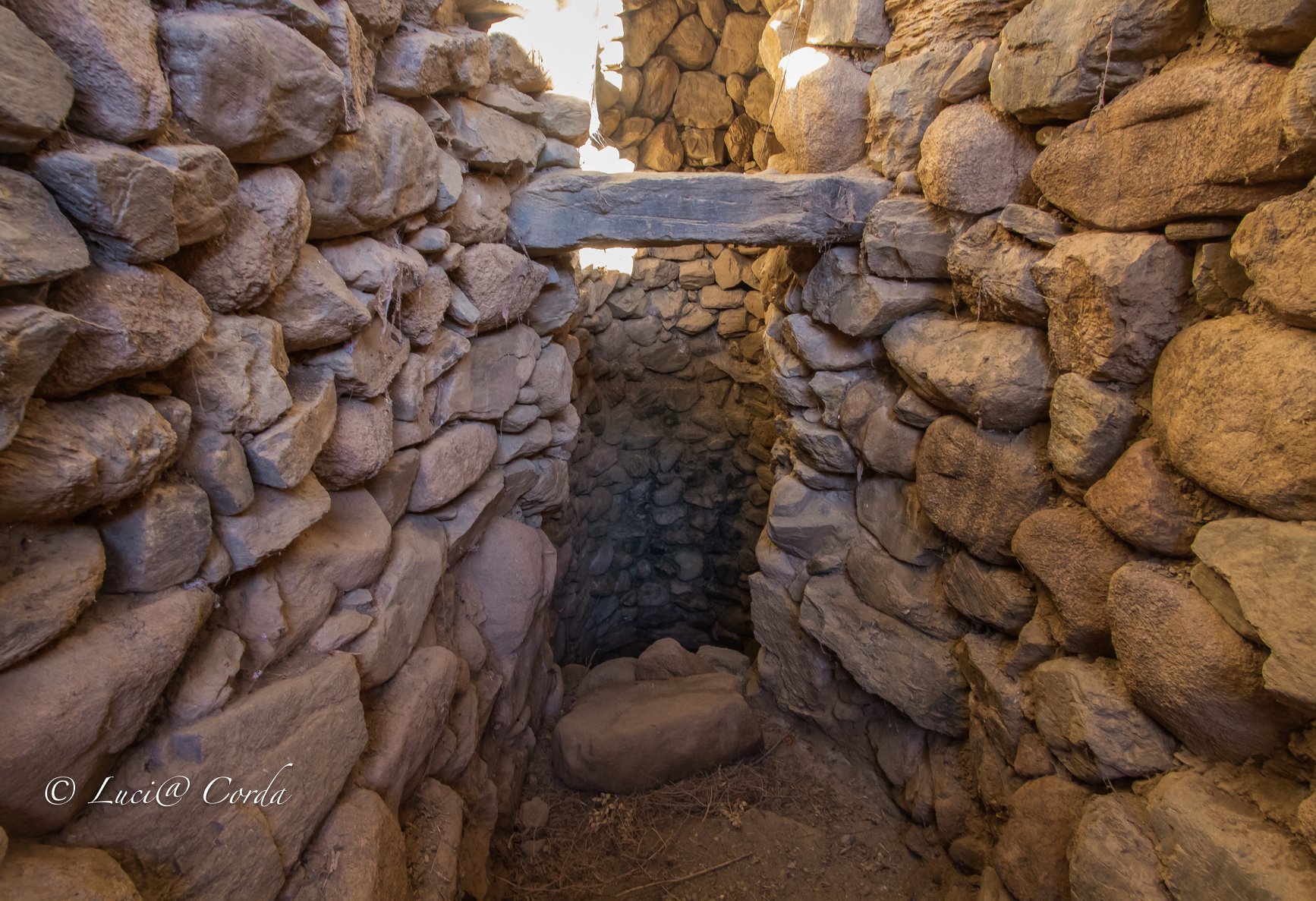
The actual well has a ‘bottle-shaped’ section with an elliptical plan, which is also unusual. It is about five metres high and is covered with a tholos roof. Limestone blocks with pebbles inserted were used to construct it. Perhaps due to subsidence, the structure was later reinforced with the addition of a double lintel.
The artefacts found, all in pottery – globoid and ovoid ollae, vases with inverted elbow handles, bowls and bowls – allowed the site to be dated to the Final Bronze Age (12th-10th century B.C.). Connected to the sacred area, a little further south, stood the village: there are traces of circular, oval and mixed structures, while a section of wall is preserved to the south-east of the core.
Source: Sardinia Tourism.
The photos of the sacred well of Tattinu are by Nicola Castangia, Lucia Corda and Bibi Pinna.