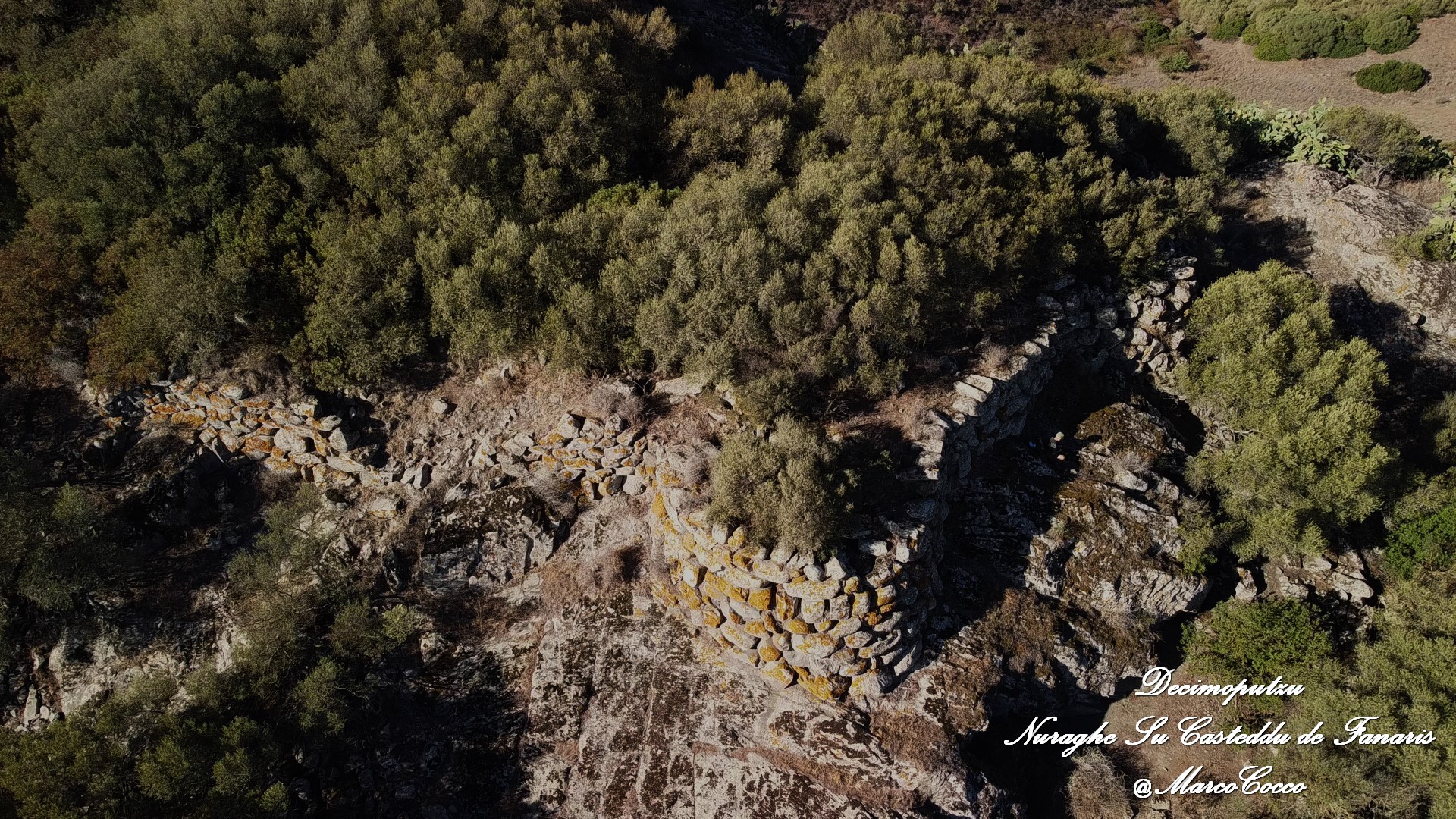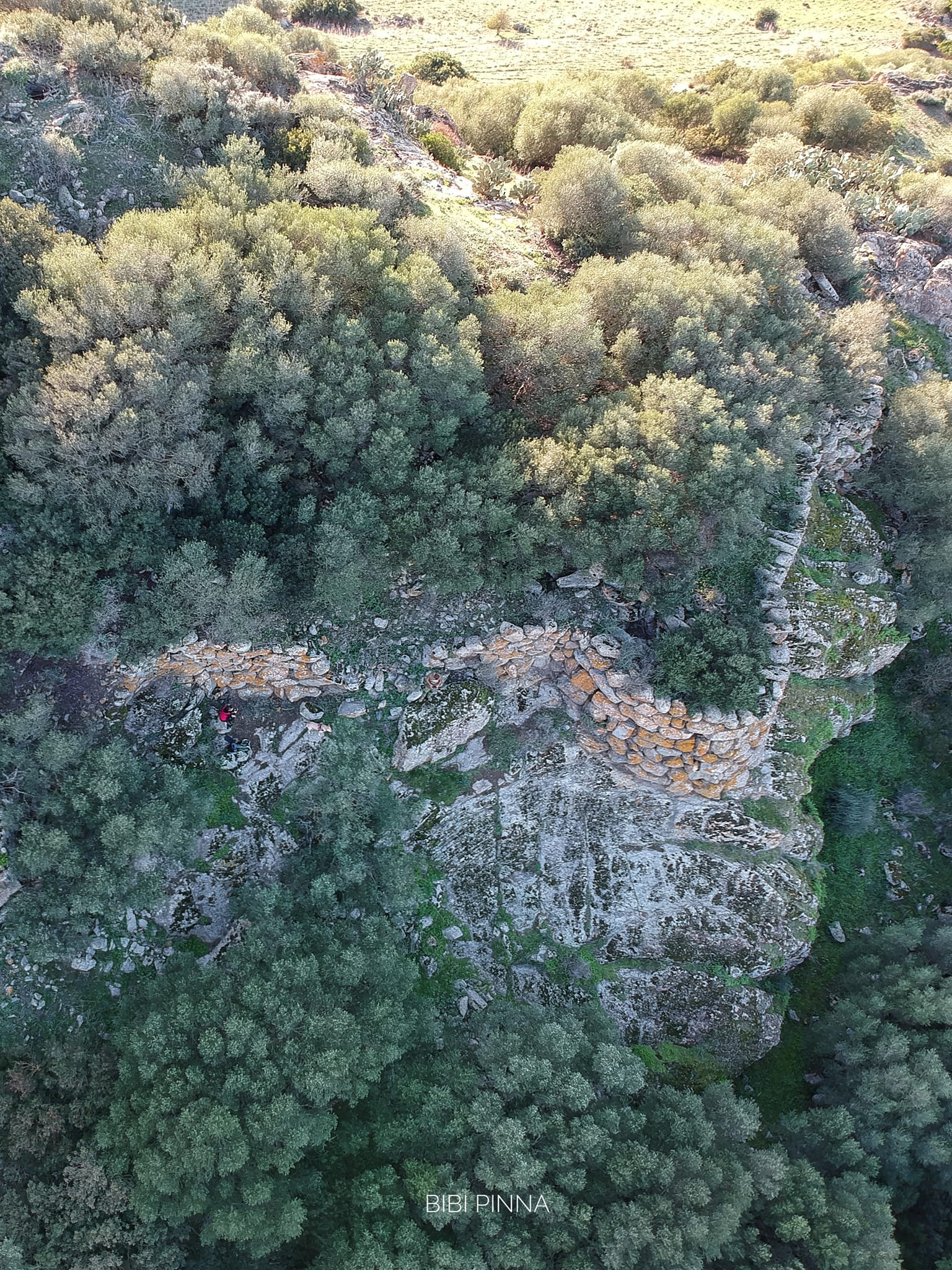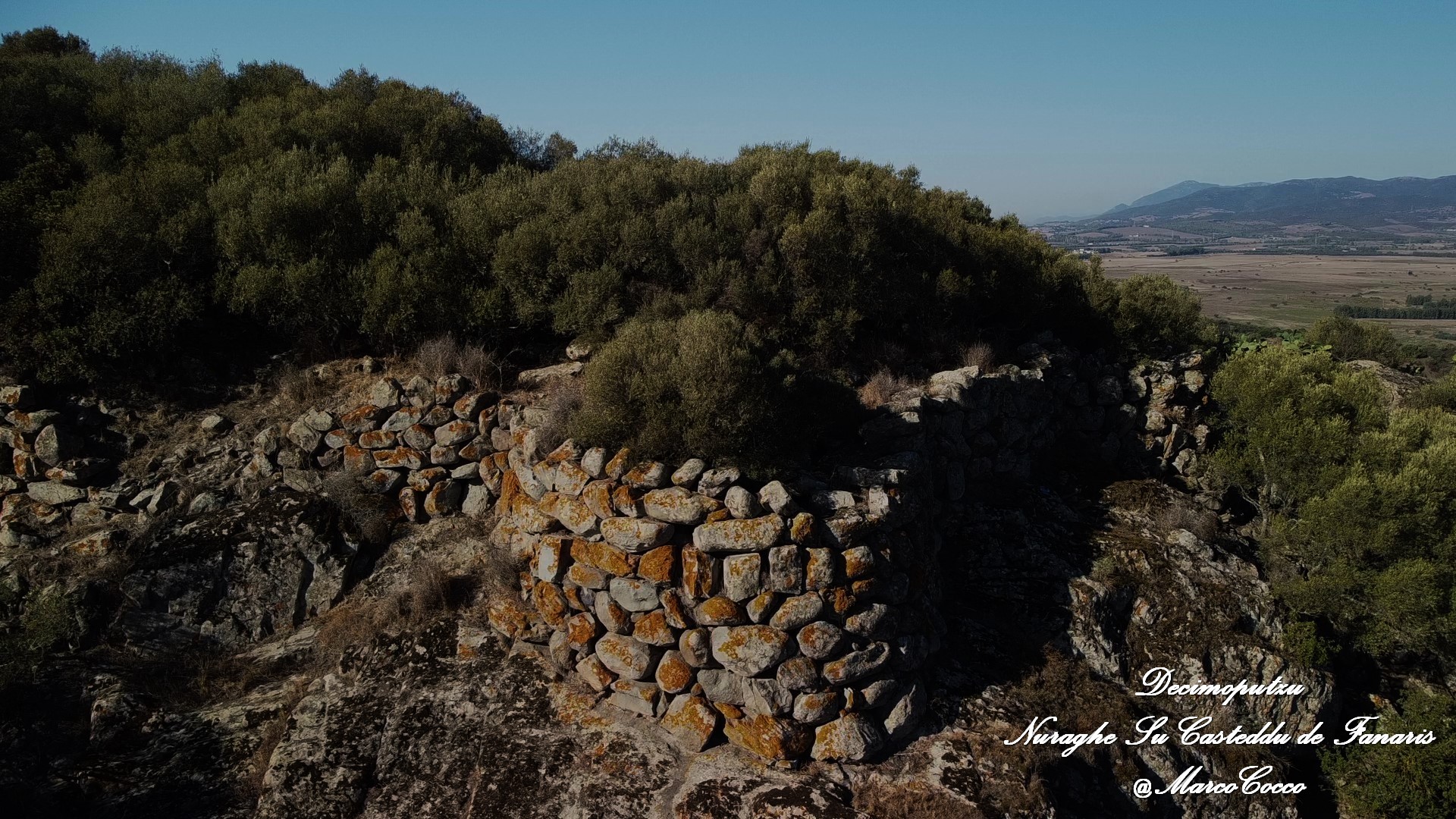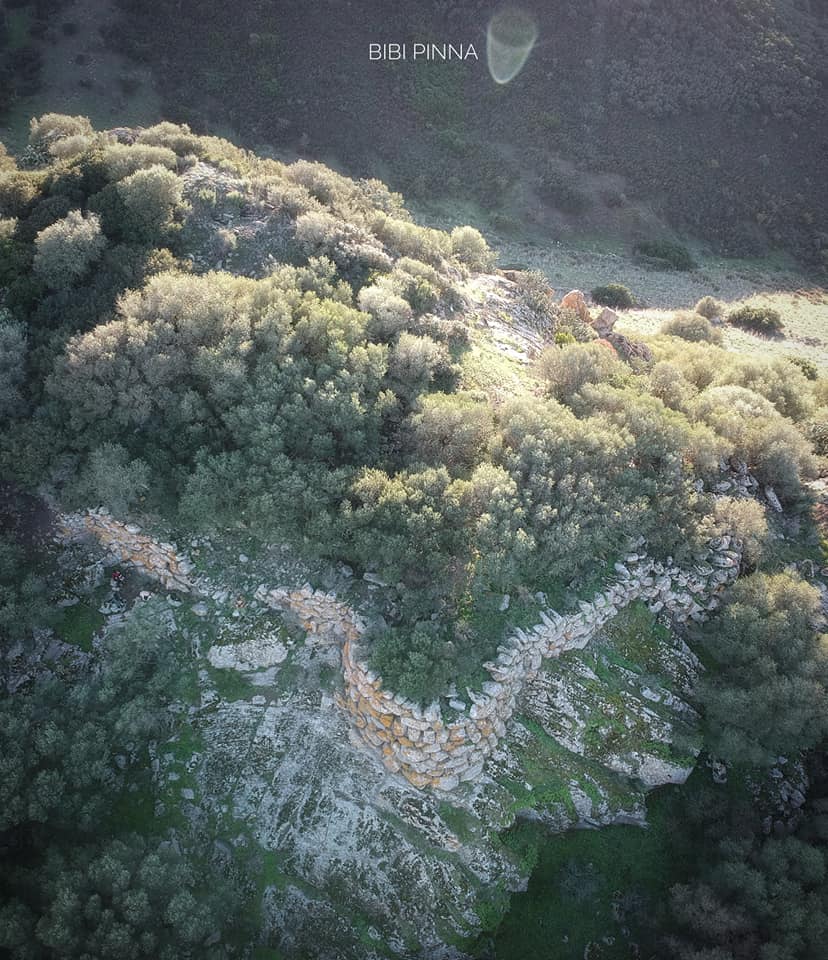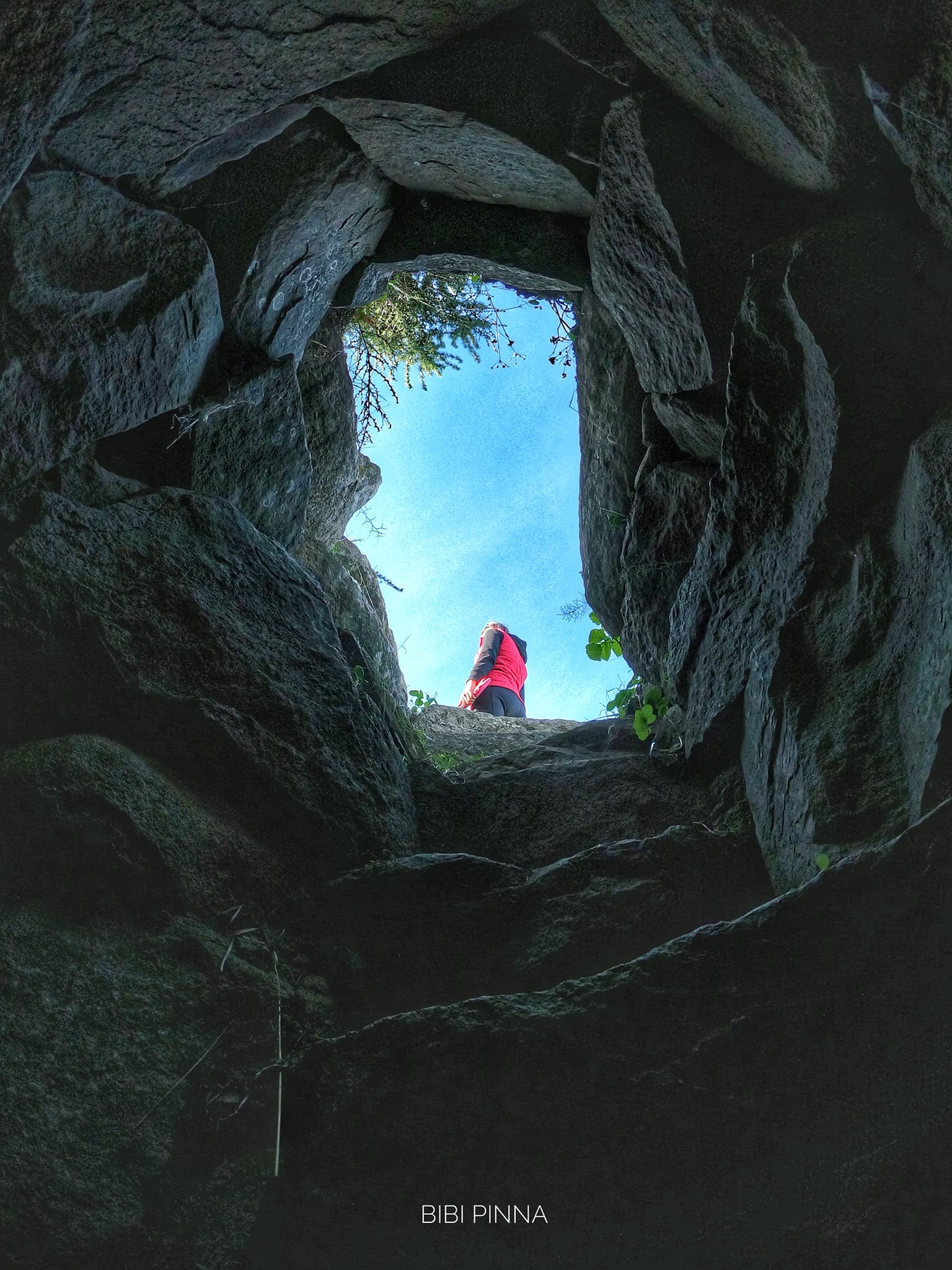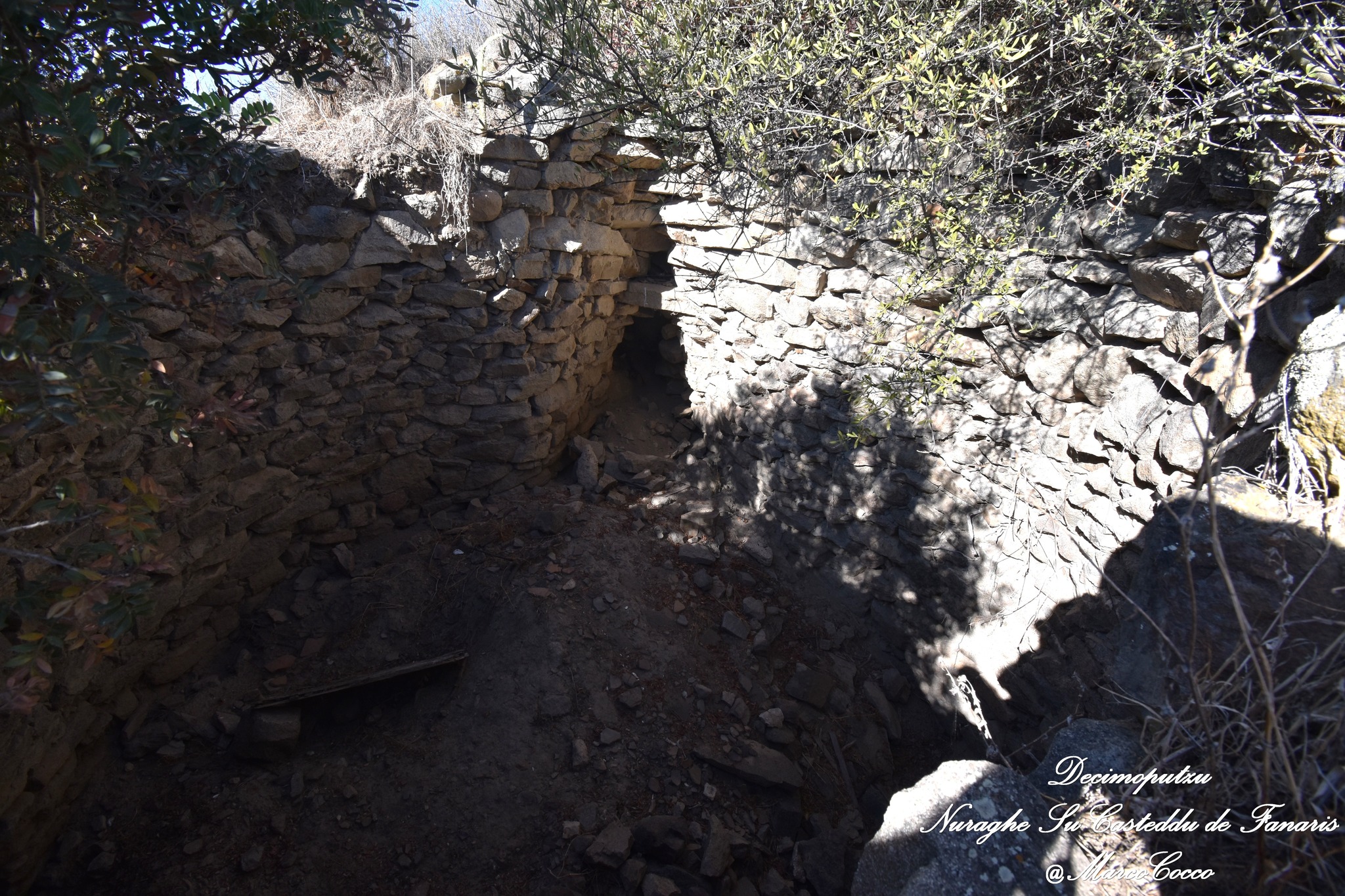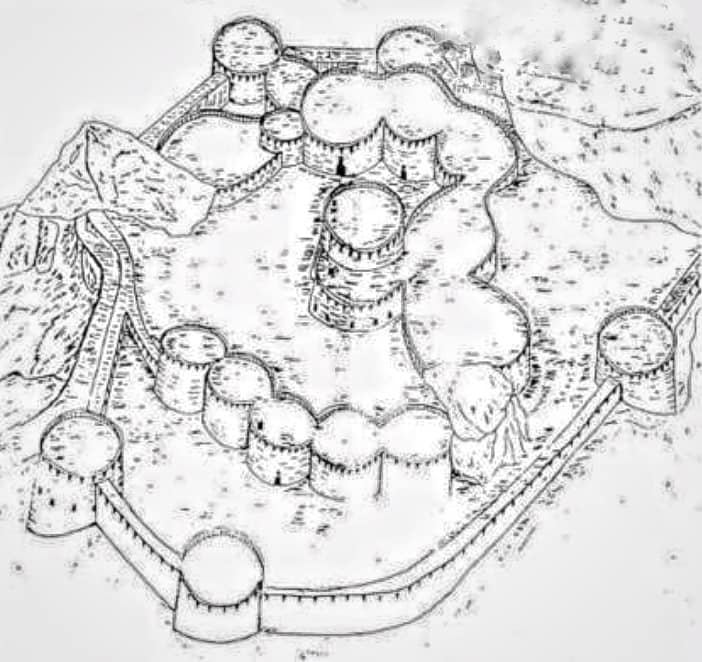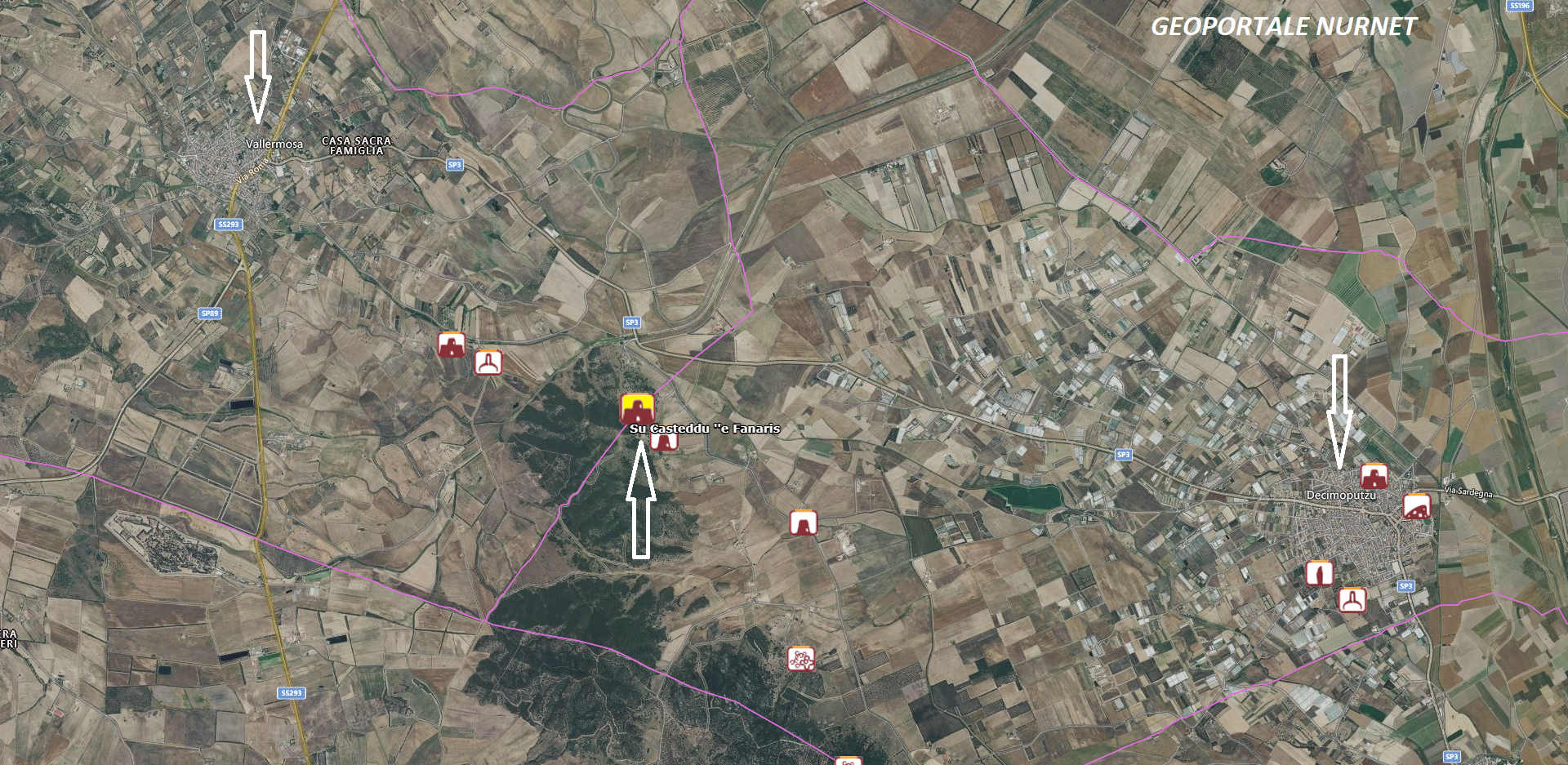
“Su Casteddu ‘e Fanaris”, straddling the territories of Decimoputzu and Vallermosa and dating back to the Late Bronze Age (1300-1000 B.C.), is a Nuragic complex consisting of a central tower to which eight other towers were subsequently attached to form a bastion, in turn surrounded by a megalithic wall with five towers equipped with loopholes.
While the outer wall is built using typical megalithic techniques and is reminiscent of the better-known bastions scattered throughout Sardinia, the walls of the inner towers are made of relatively small clasts. This is presumably due to the difficulty of transporting bulkier material to higher altitudes. The western part of the outer wall may have fallen, either naturally or deliberately, into the cliff below, some 70 metres deep.
Another curiosity that is difficult to answer is the burying of the towers, in a totally rocky natural environment, at the apex of a hill where the transport of the filling earth could only be of interest to those who wanted to fill in and make the building unusable. In this regard, excavations by grave robbers show that the filling material of the tholoi is all backfill, rich in pottery from the Nuragic period and minute pebbles.
The photos of the nuragic complex of ‘Su Casteddu ‘e Fanaris’ are by Marco Cocco and Bibi Pinna.