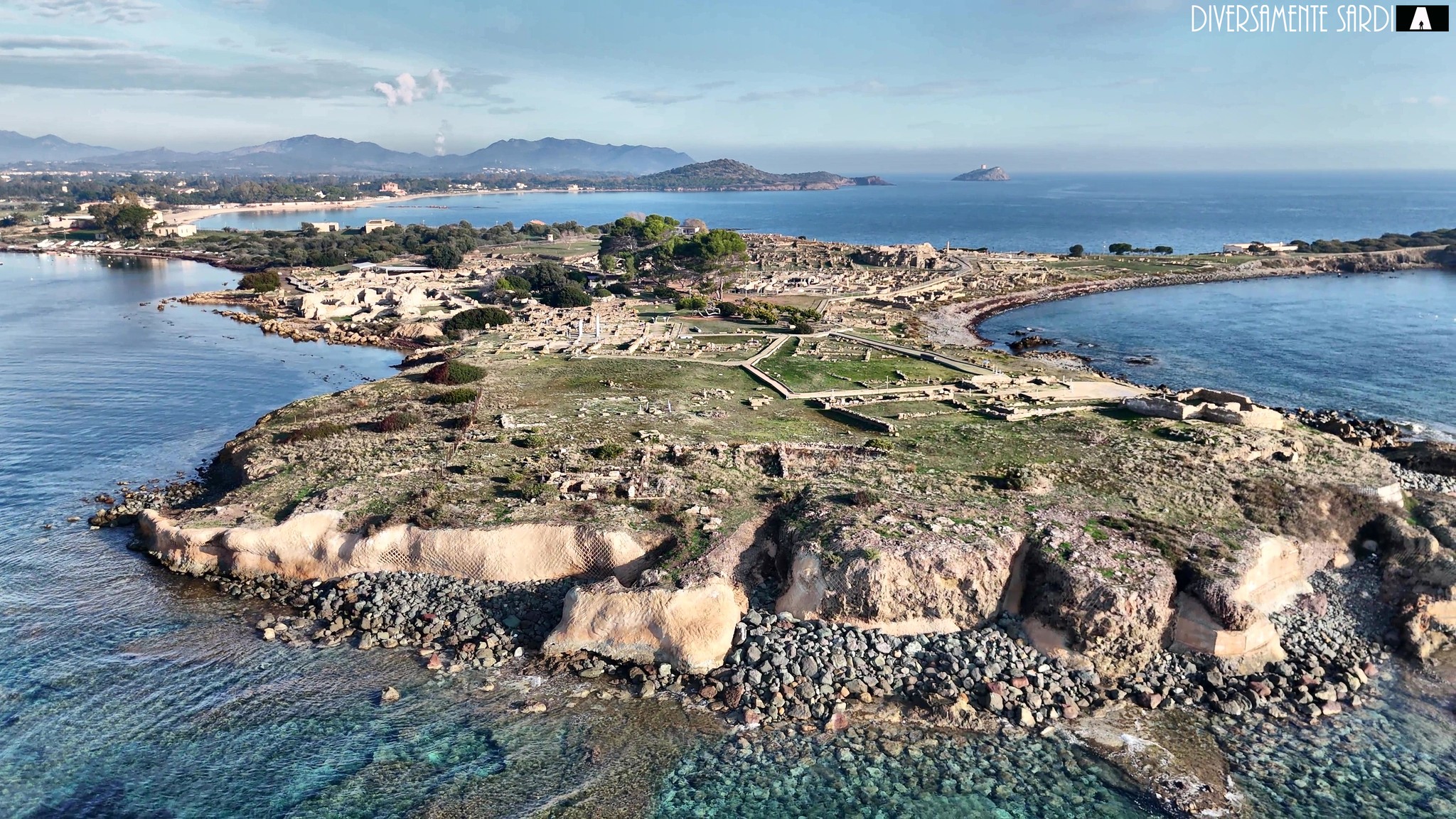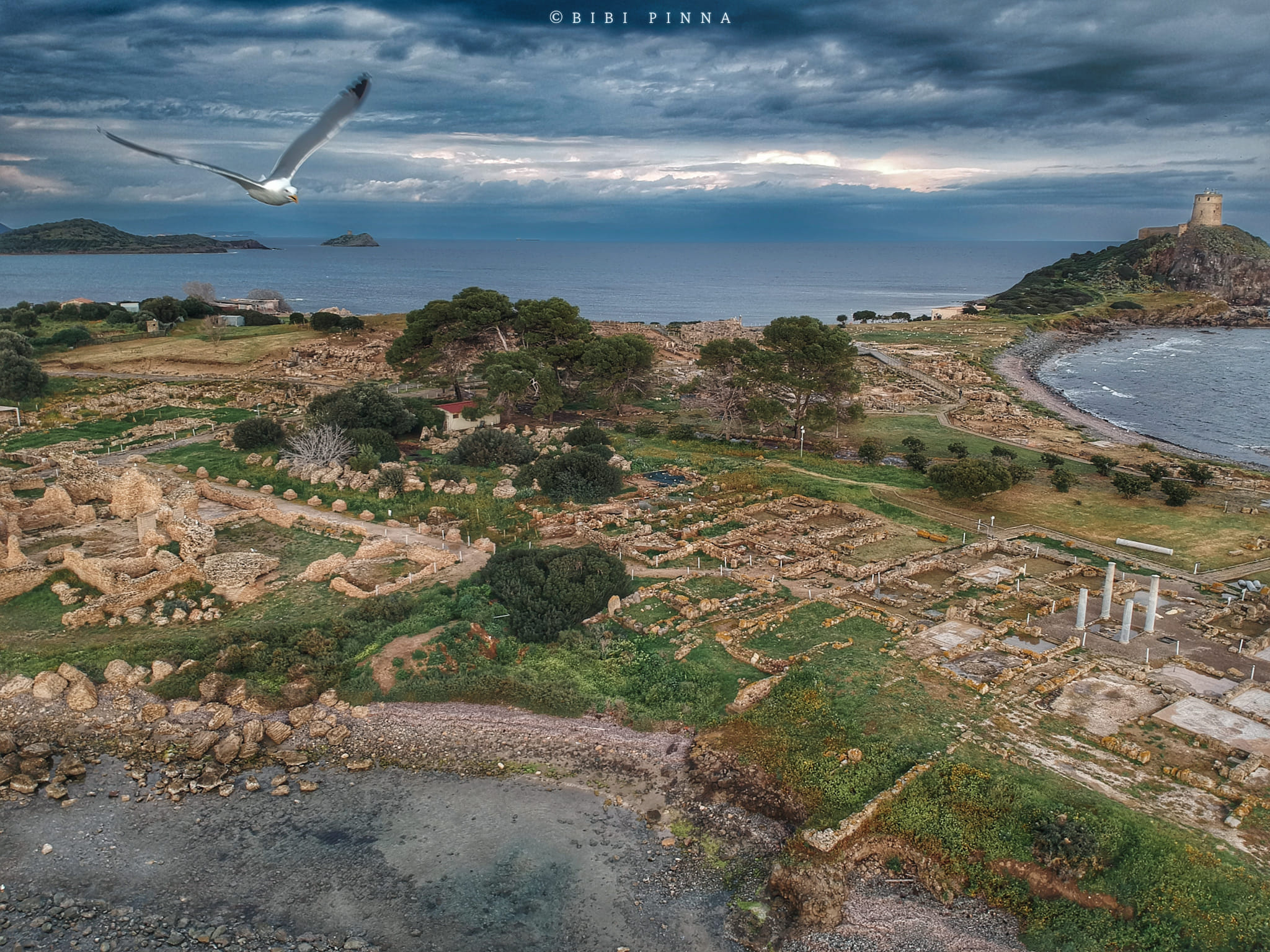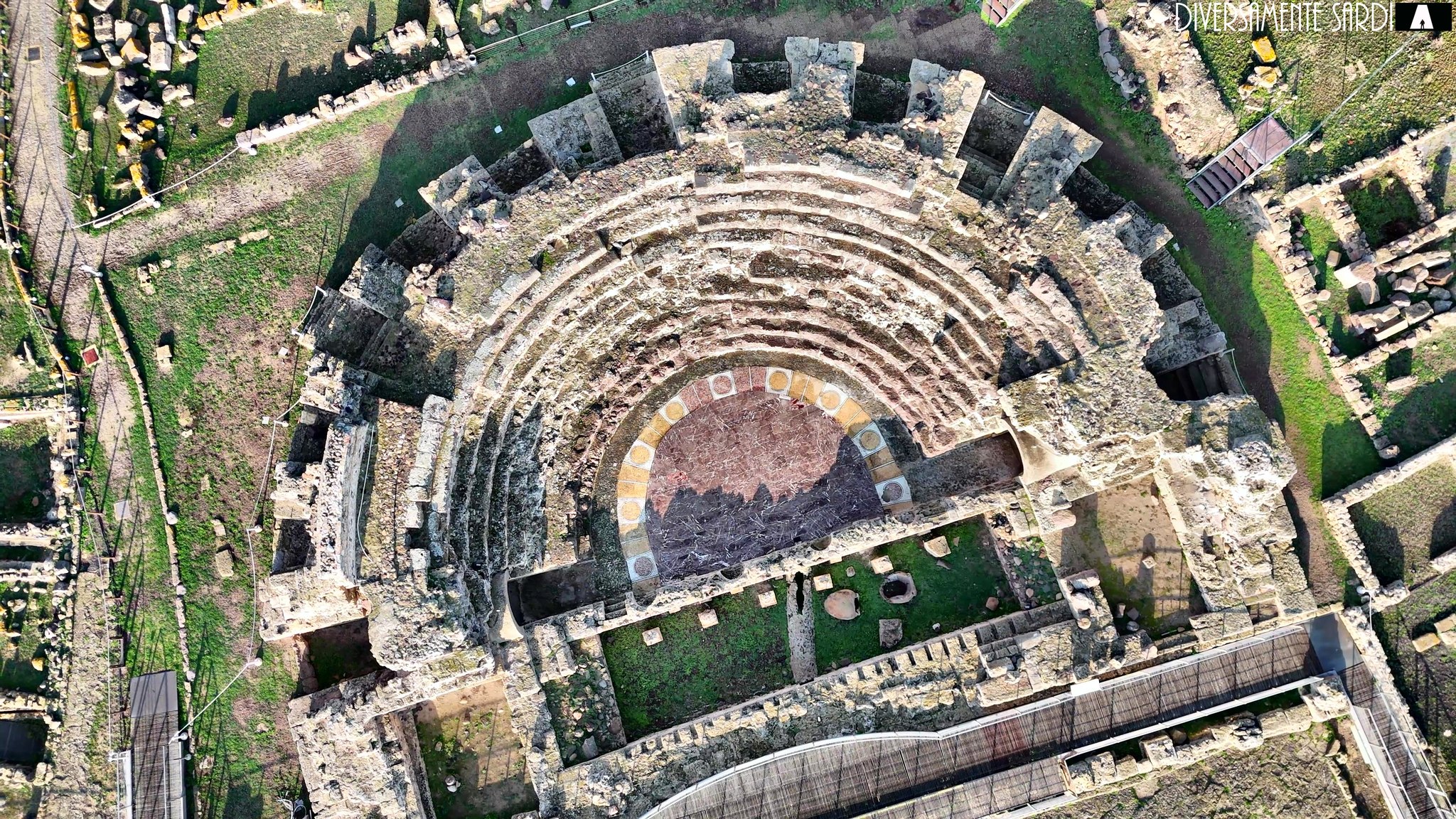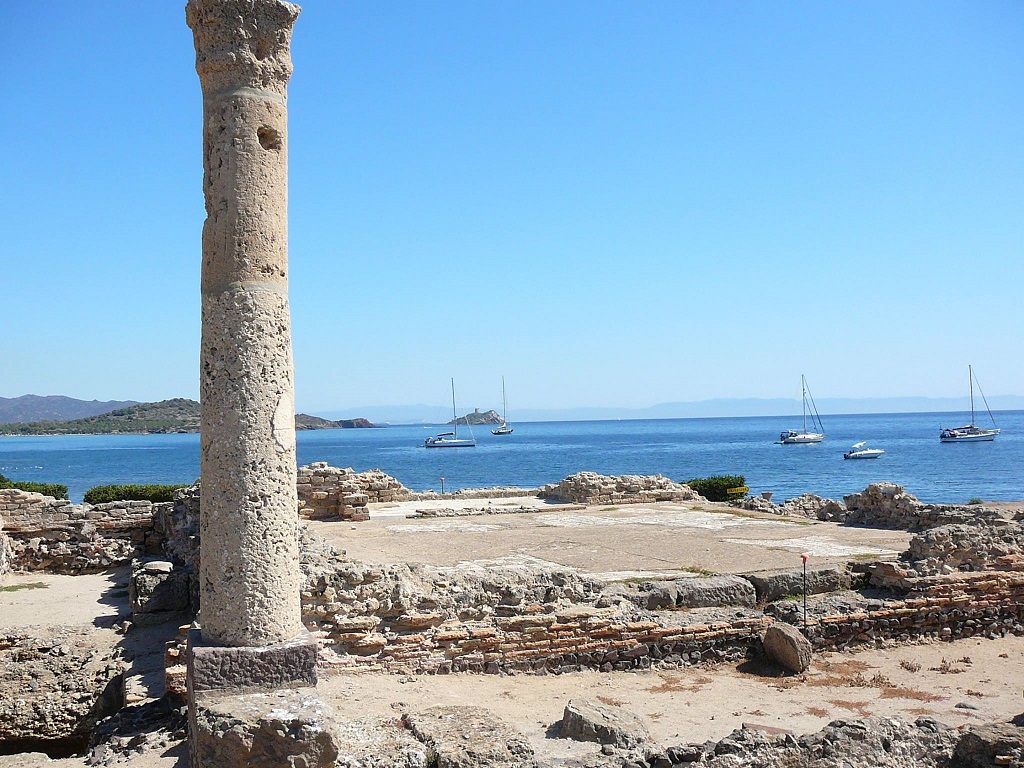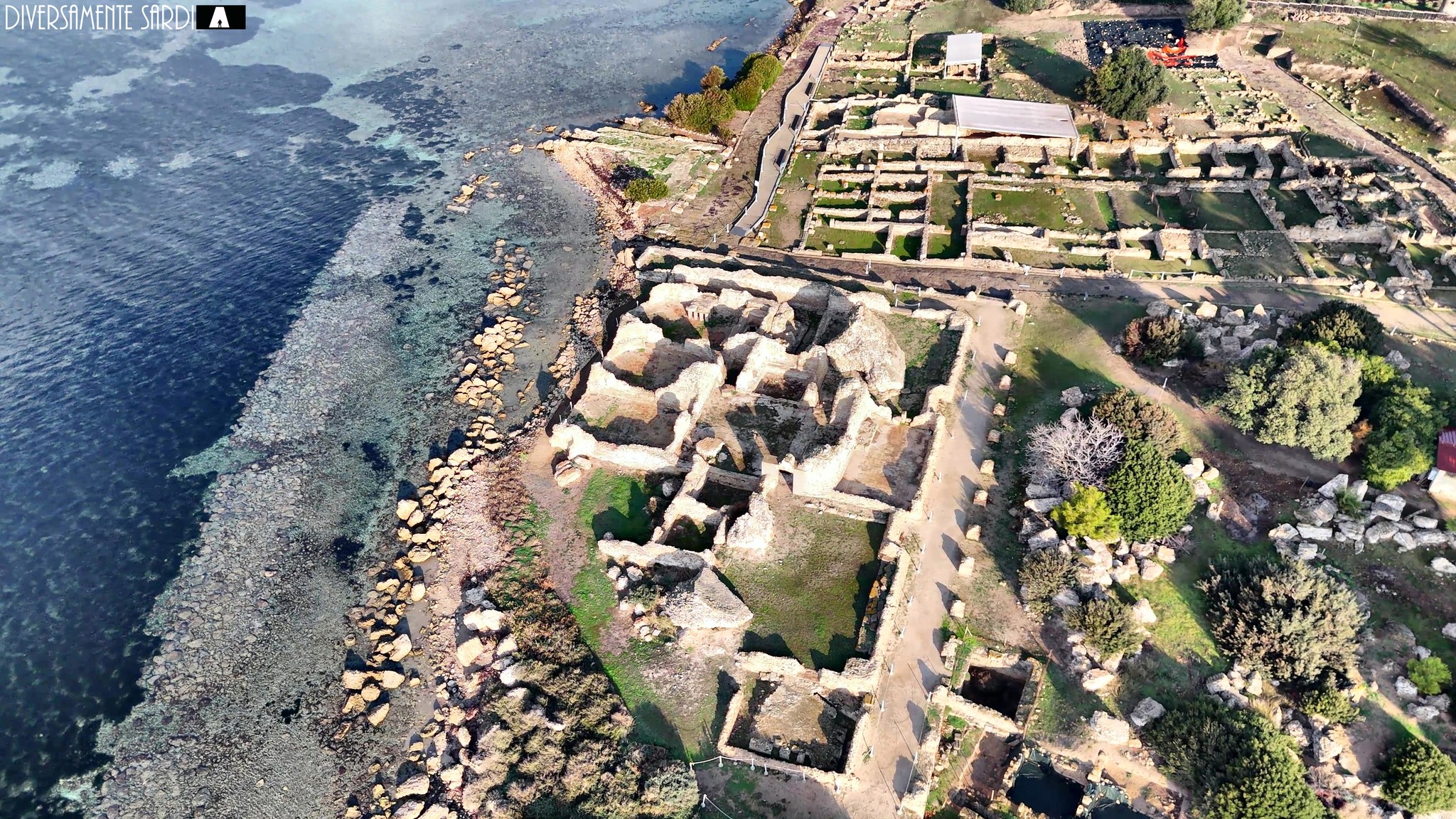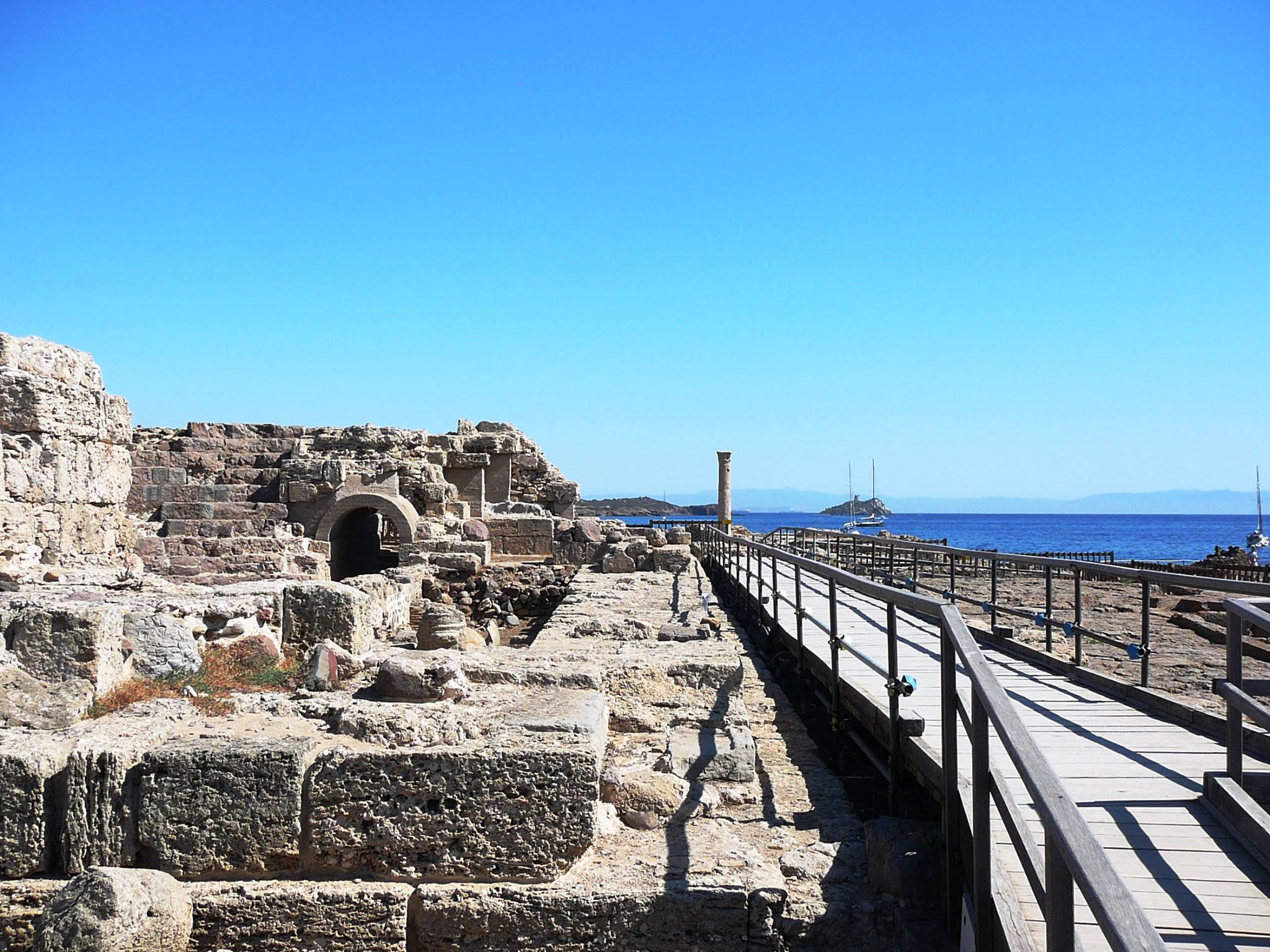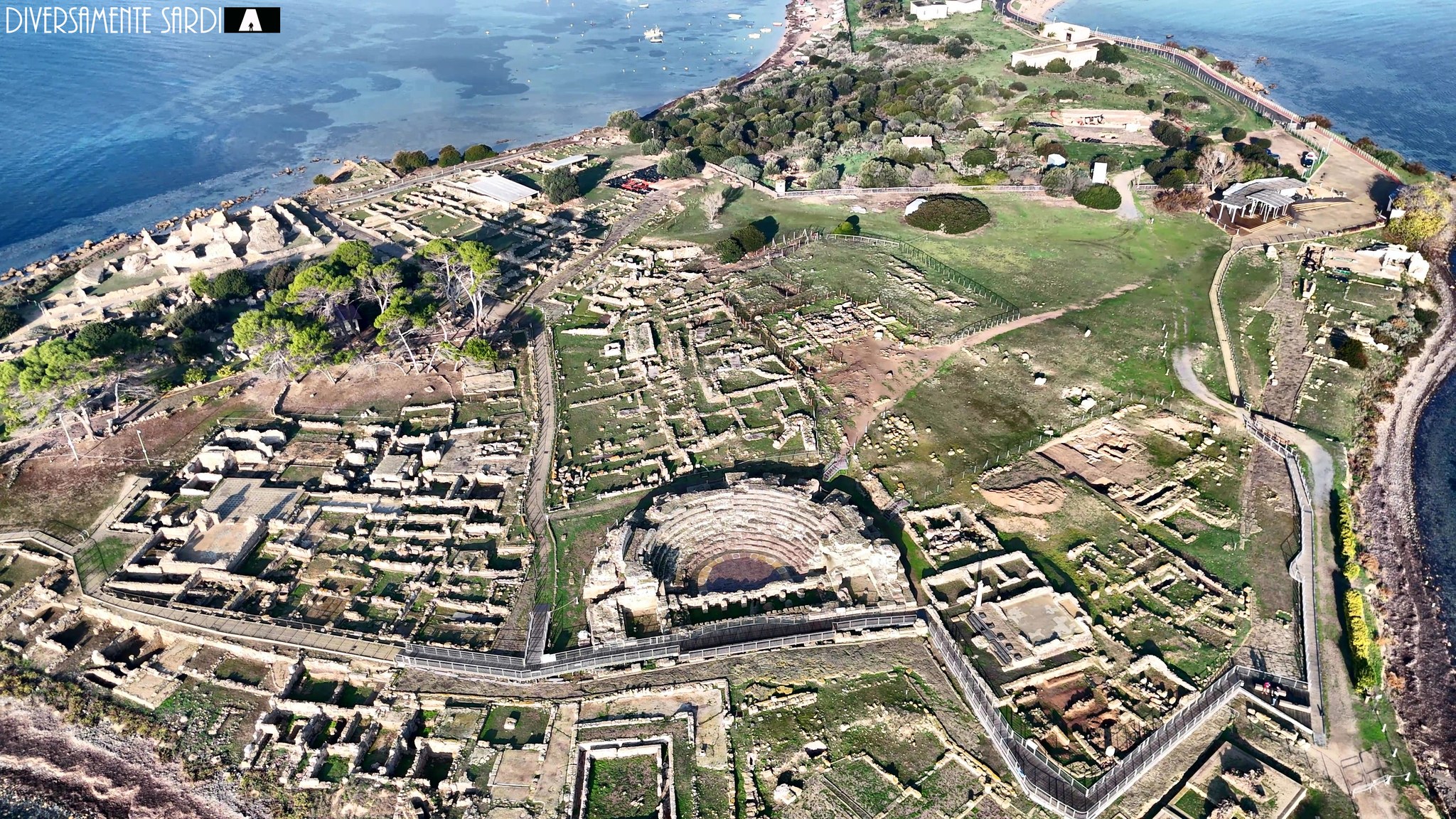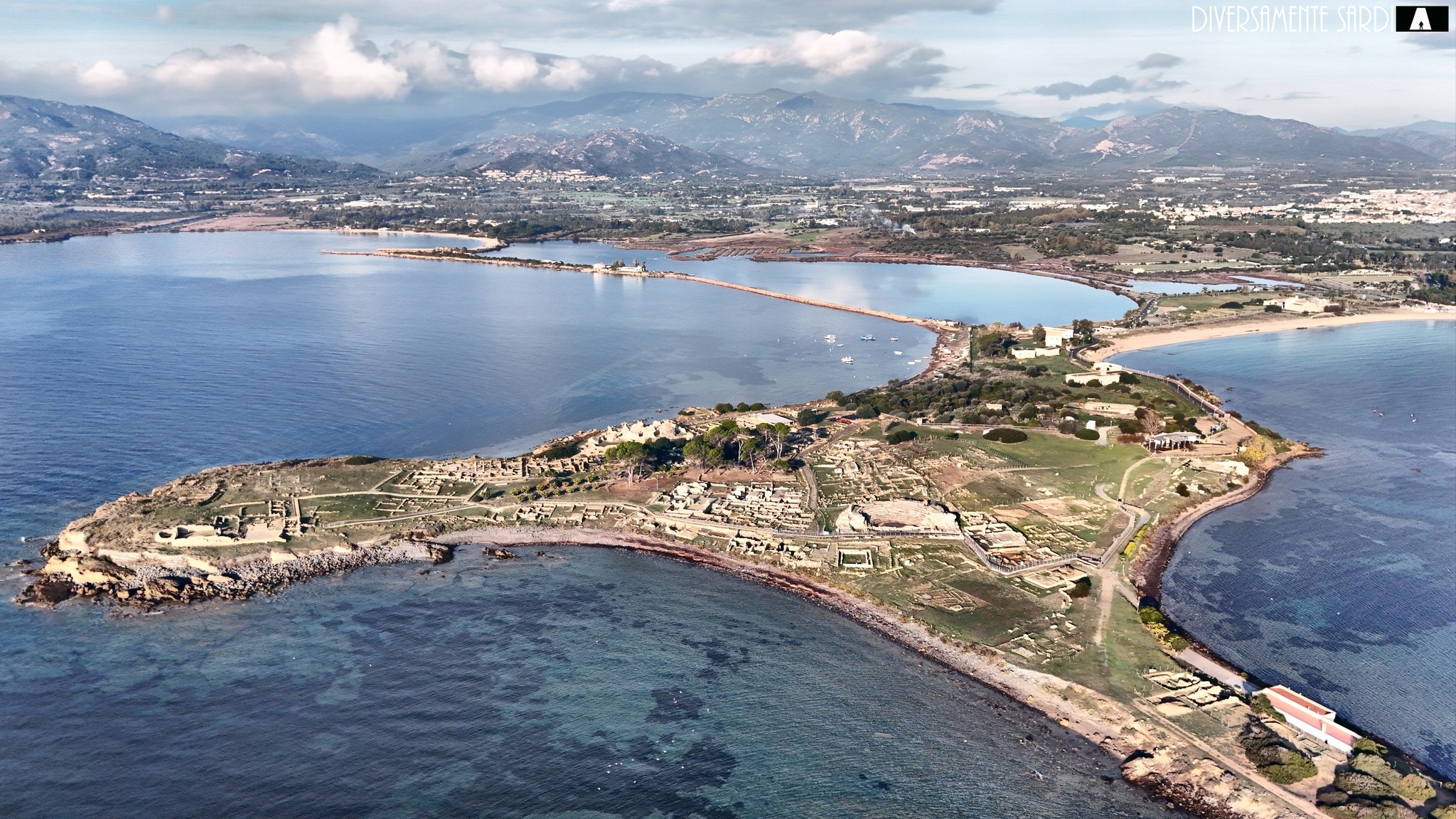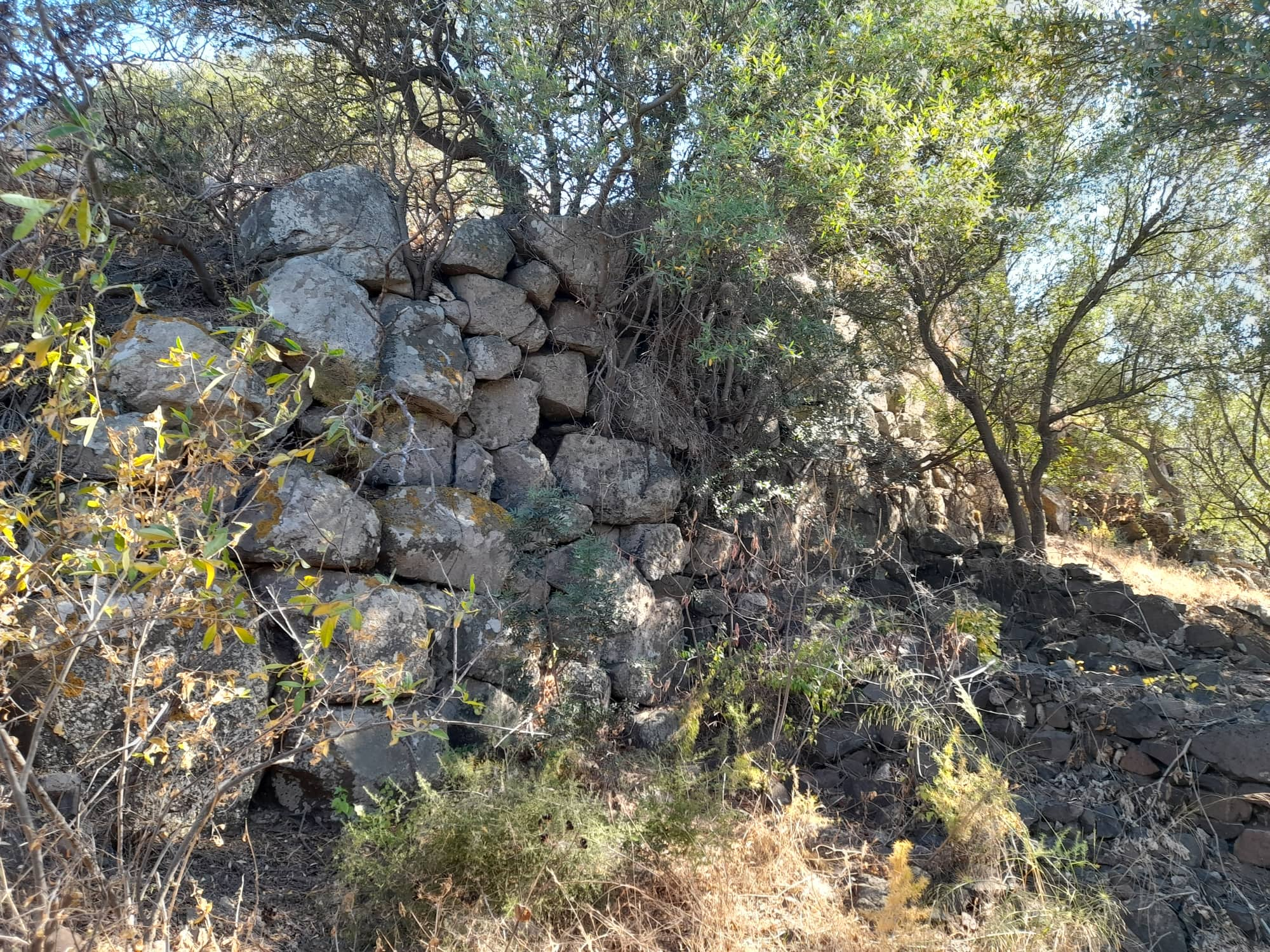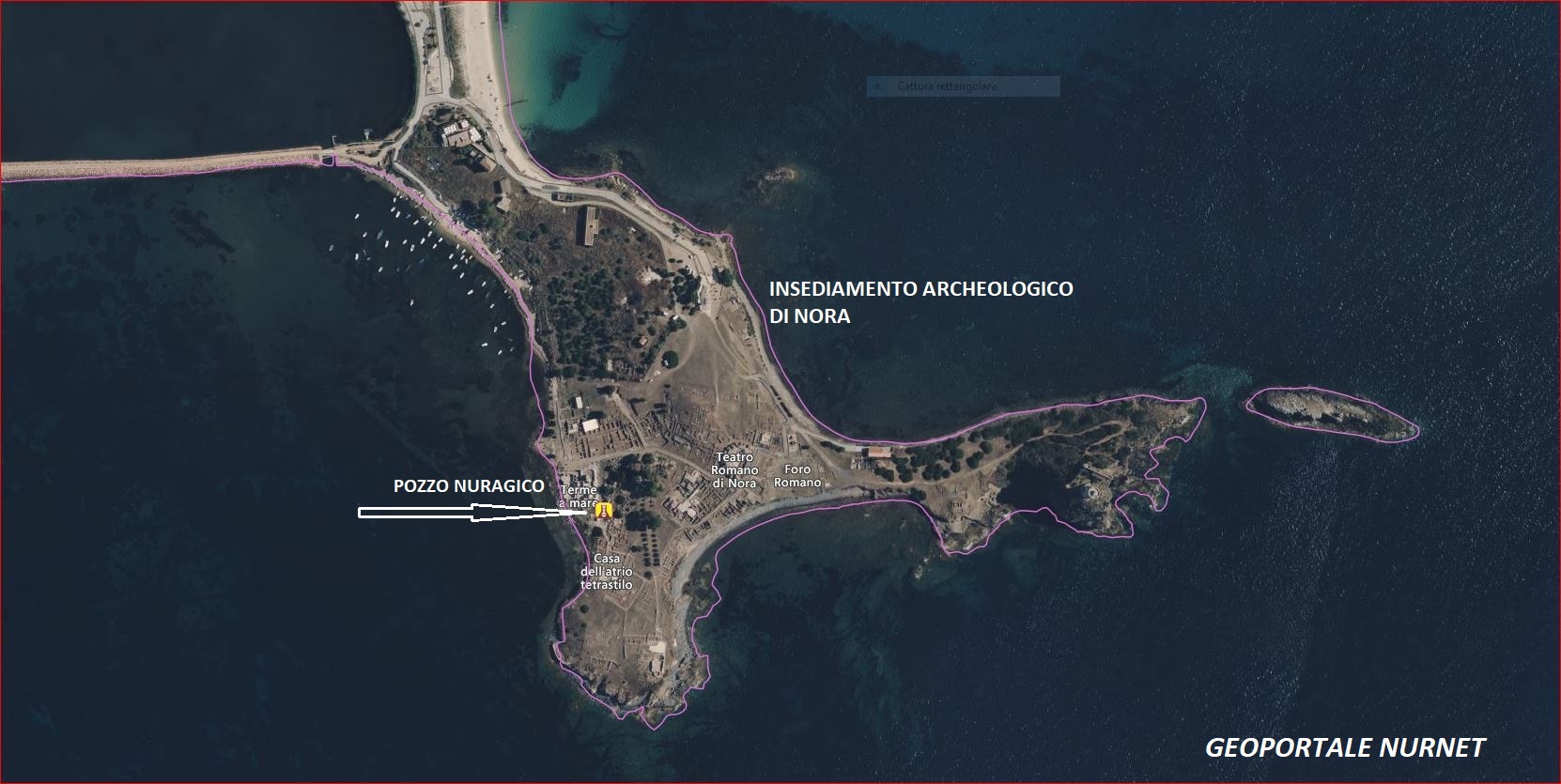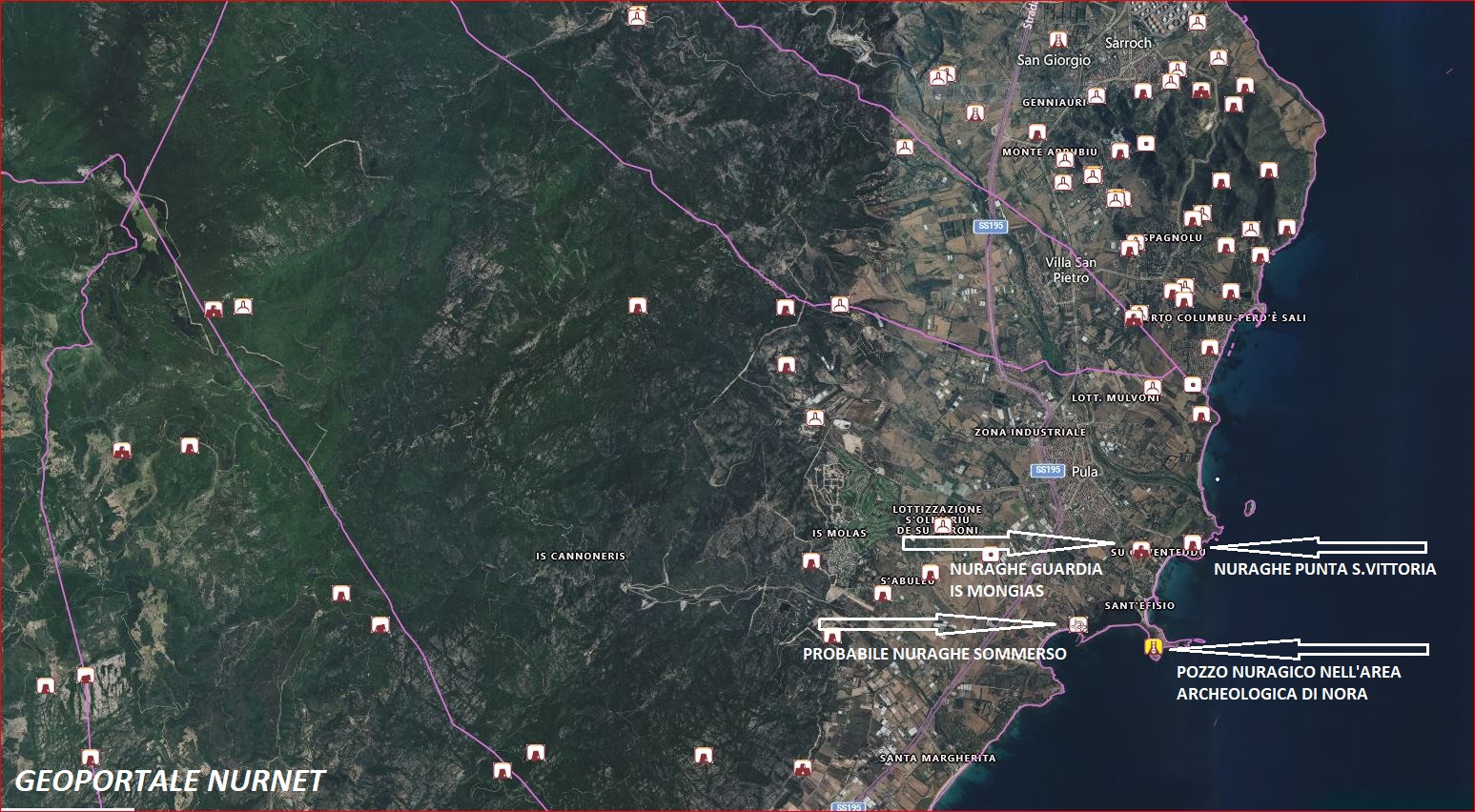
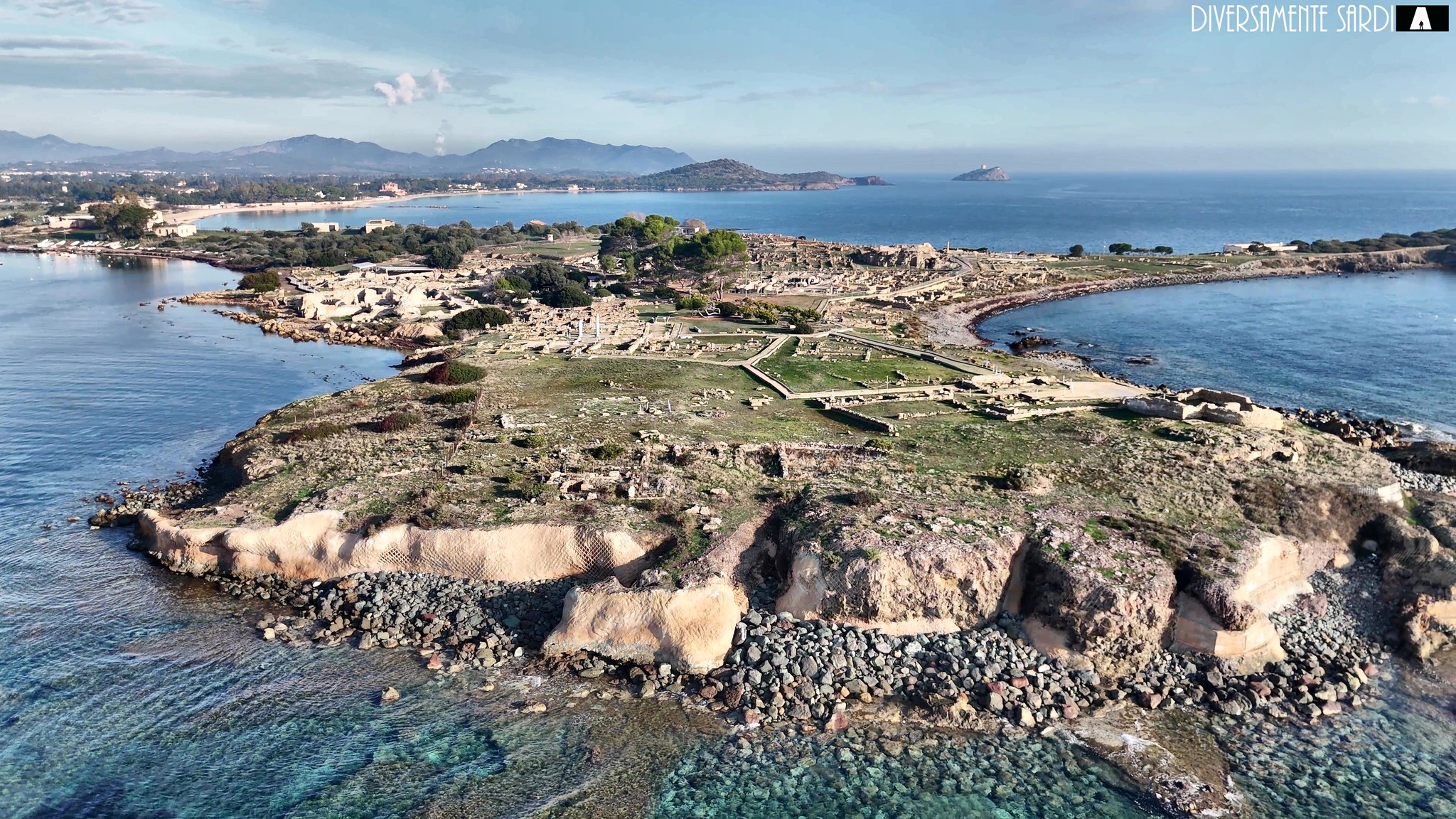
The archaeological area of Nora is located in an area with numerous Nuragic remains, including the sacred well depicted in the photo by Antonello Gregorini.
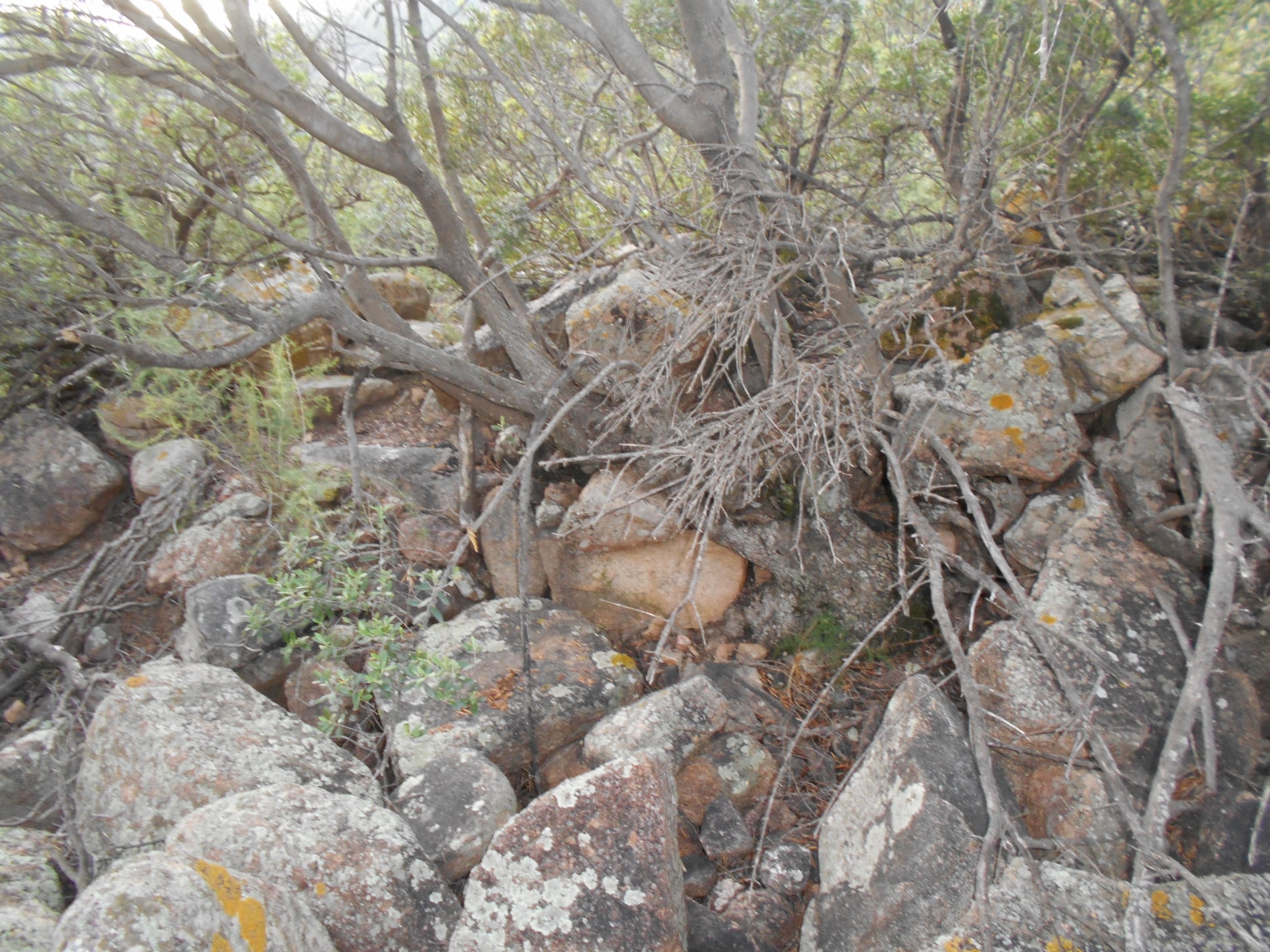
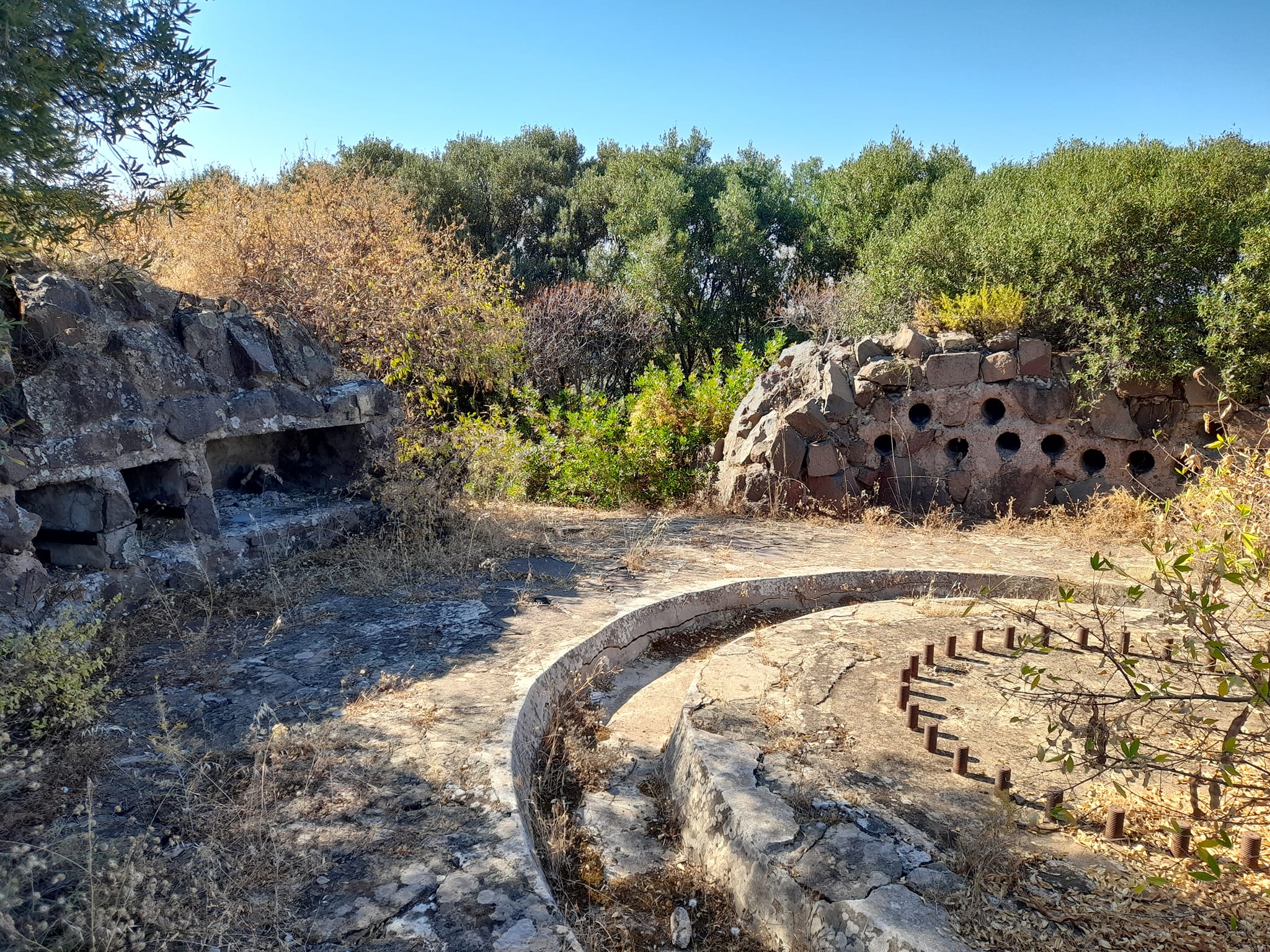
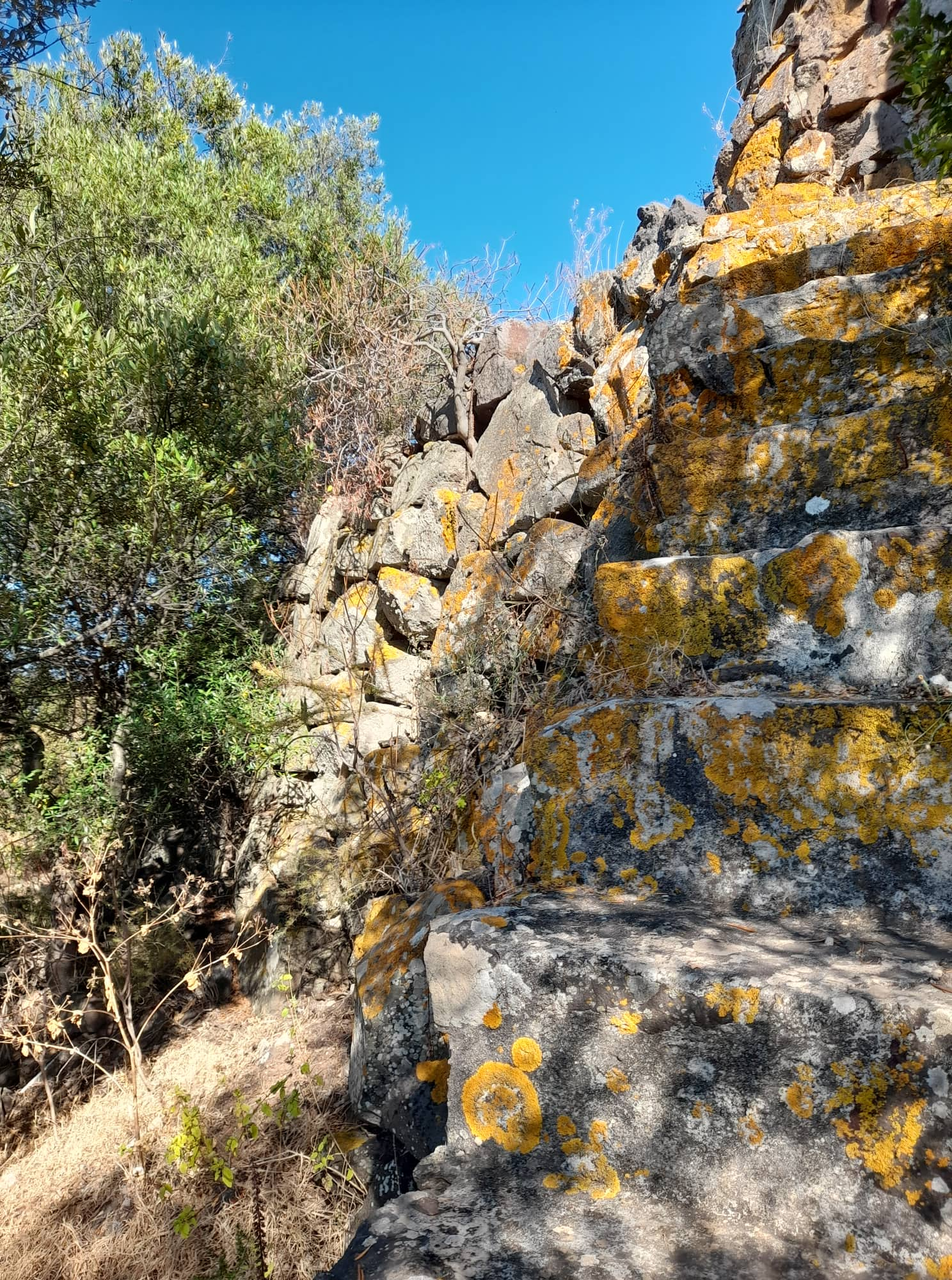
In the vicinity of the settlement, at ‘Punta Santa Vittoria’, there is what appears to be a complex nuraghe, on top of which the buildings of the Boggio anti-ship battery were superimposed during the Second World War. From the outside, the face of the probable main tower is clearly visible. (Source: Antonello Gregorini)
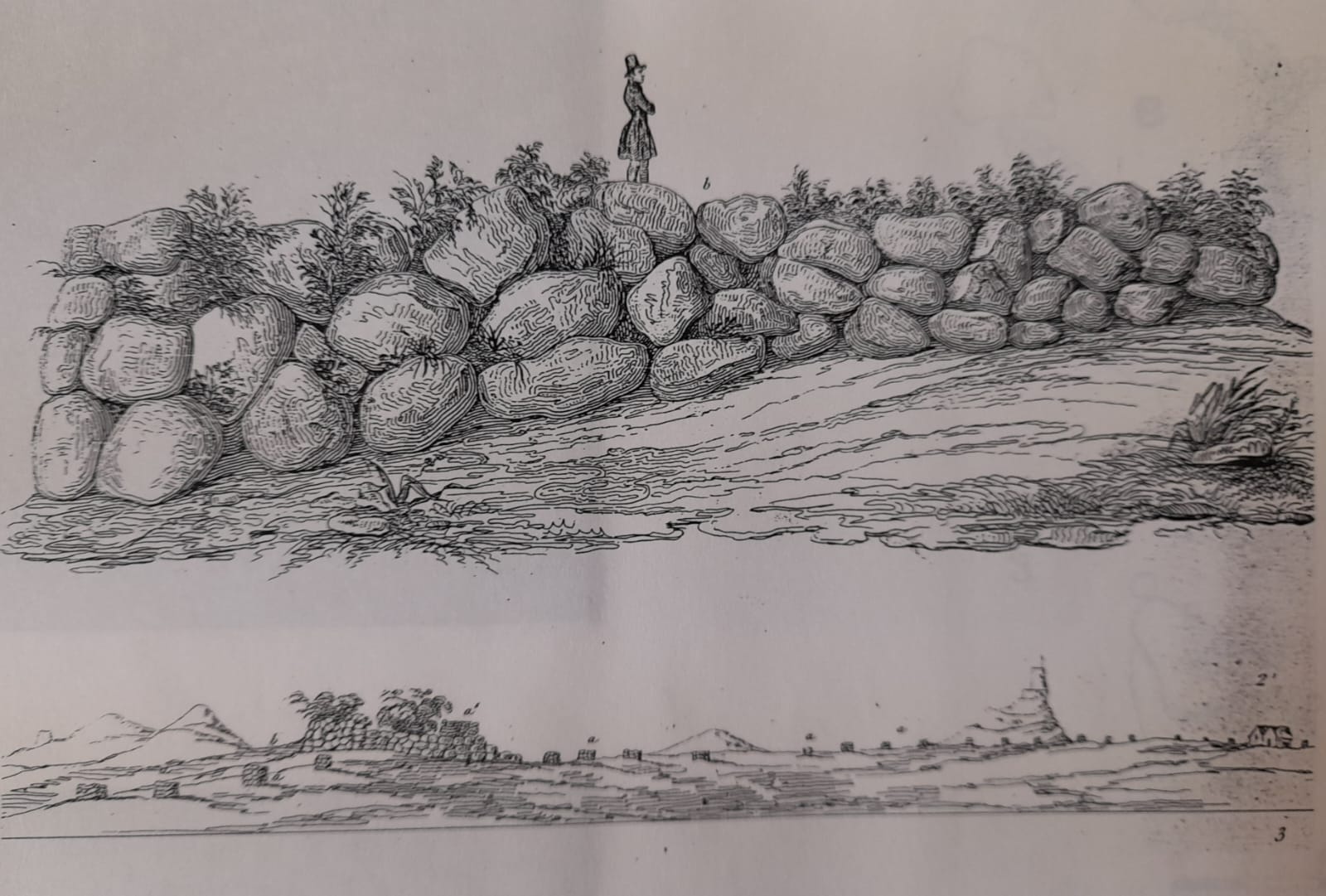
Also in the vicinity of the archaeological compendium of Nora are the remains of the ‘Guardia Is Mongias’, a four-lobed nuraghe, unfortunately destroyed for the construction of the Navy base on the same site. It was mentioned in the 19th century by Lamarmora and Cugia. Lamarmora surveyed the nuraghe and made monographs of it in which the septa of the Roman aqueduct, passing exactly over the nuraghe, are also evident. Around it, there were at least two nuragic wells (source: Annalisa Uccheddu’s degree thesis).
Another submerged nuraghe could presumably be found to the west of Nora.
Speaking of Nora, according to legend (allow me the mythological digression), its founder was Norax, son of Erithia and Hermes. Erithia was the daughter of Geryon, the first mythological king of Tartessus, who was born from the union of Chrysochor with the nymph Calliroe. Chrysaor was in turn born from the neck, severed by Perseus, of the gorgon Medusa, whose father, again according to mythology, was Forco, a marine divinity who ruled over Sardinia and Corsica.
Attached: the archaeological site of Nora (ph. Diversamente Sardi, Bibi Pinna and Giorgio Valdès); the remains of the Guardia Is Mongias nuraghe in Alfredo Ibba’s photo and Lamarmora’s graphic rendering. The Punta Santa Vittoria nuraghe (ph. Antonello Gregorini).