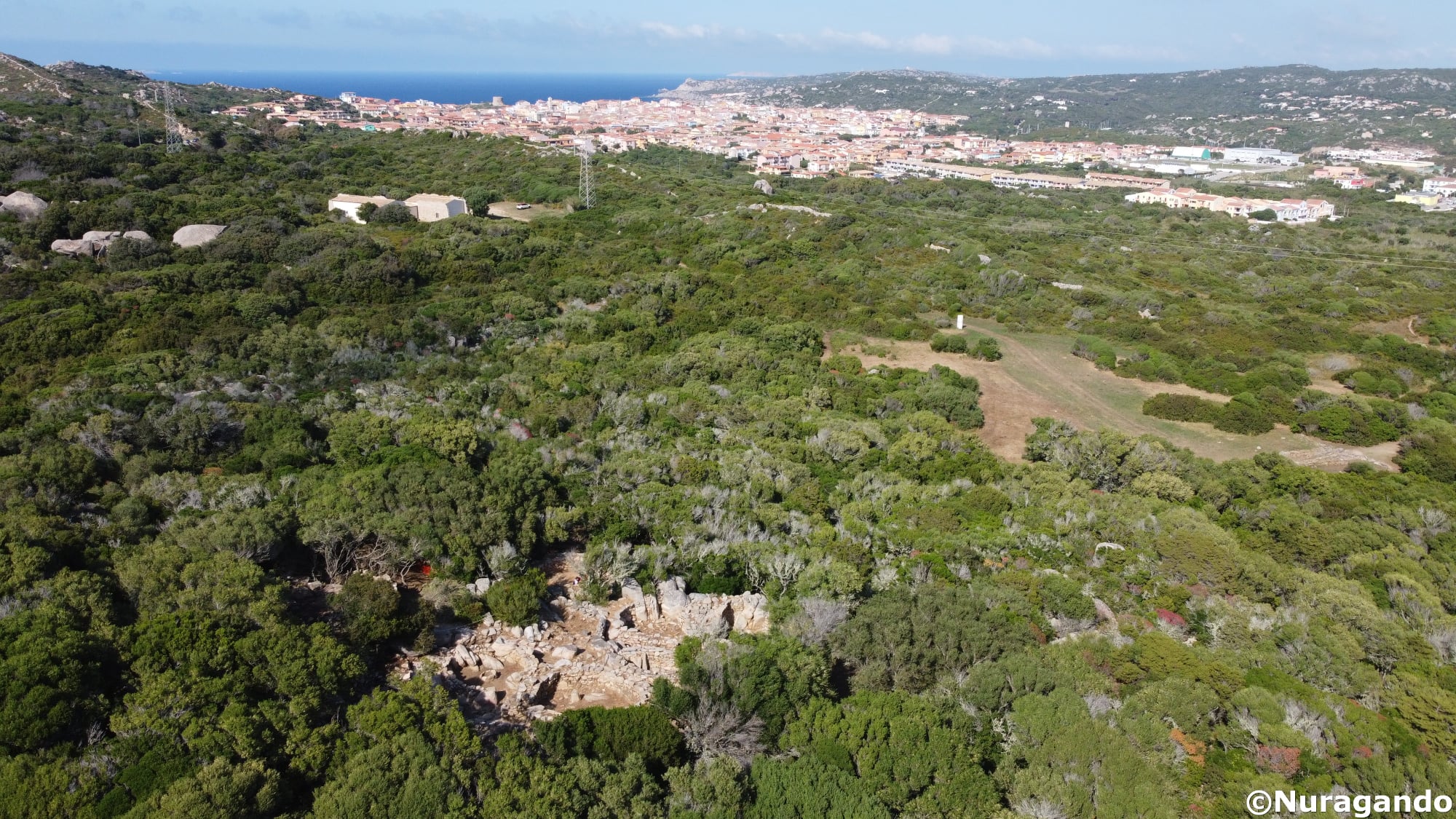
6a 2: The archaeological area of Lu Brandali, in Santa Teresa di Gallura, extends over the slopes of a granite promontory and the surrounding plain, near the bay of Santa Reparata, on the north coast of Gallura.
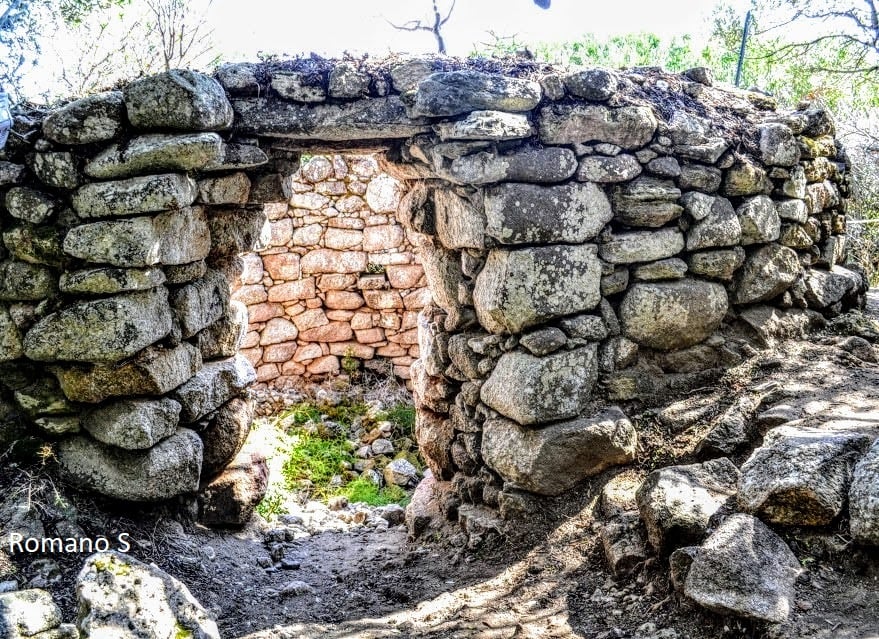
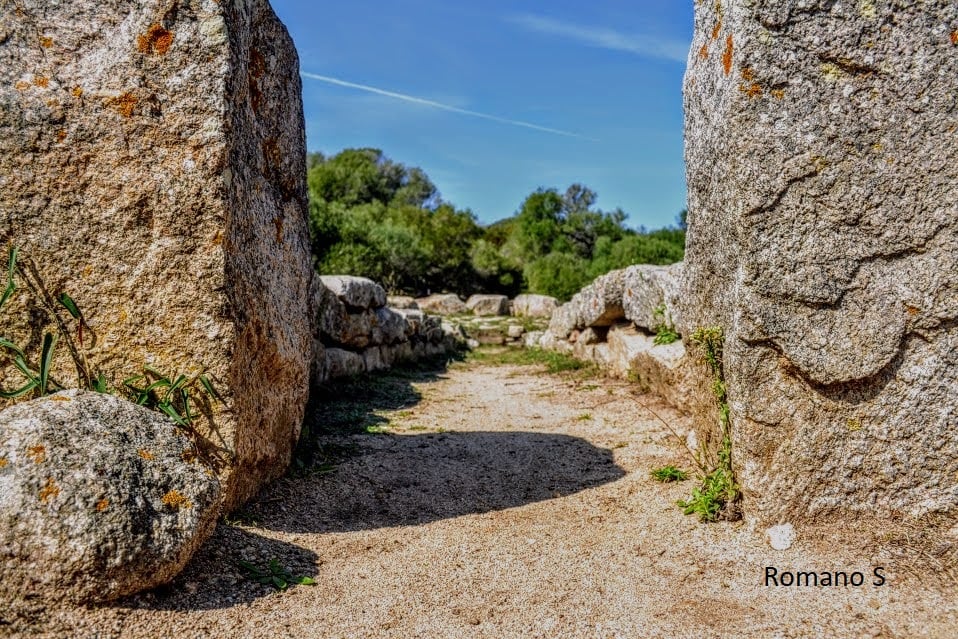
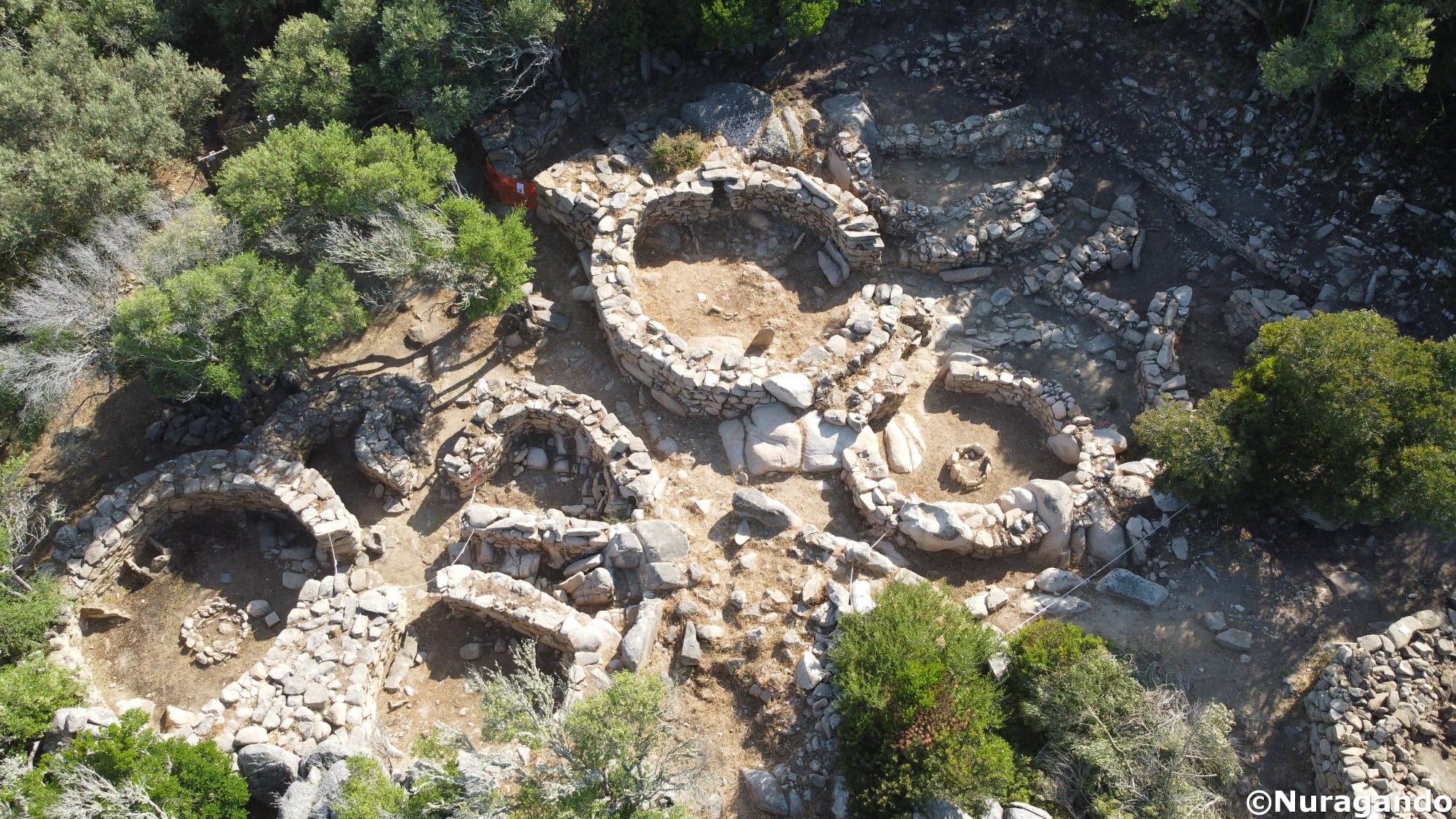
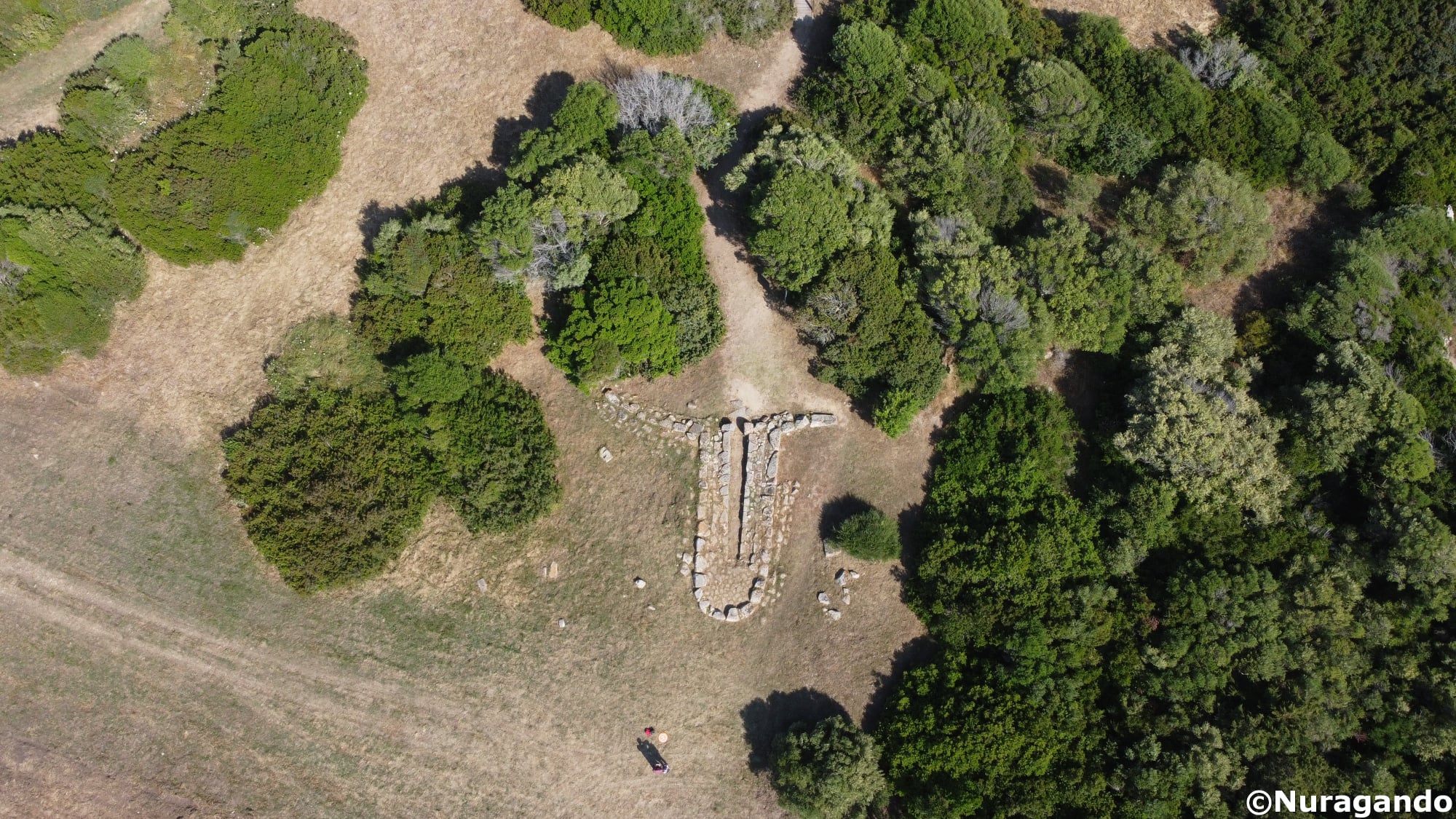
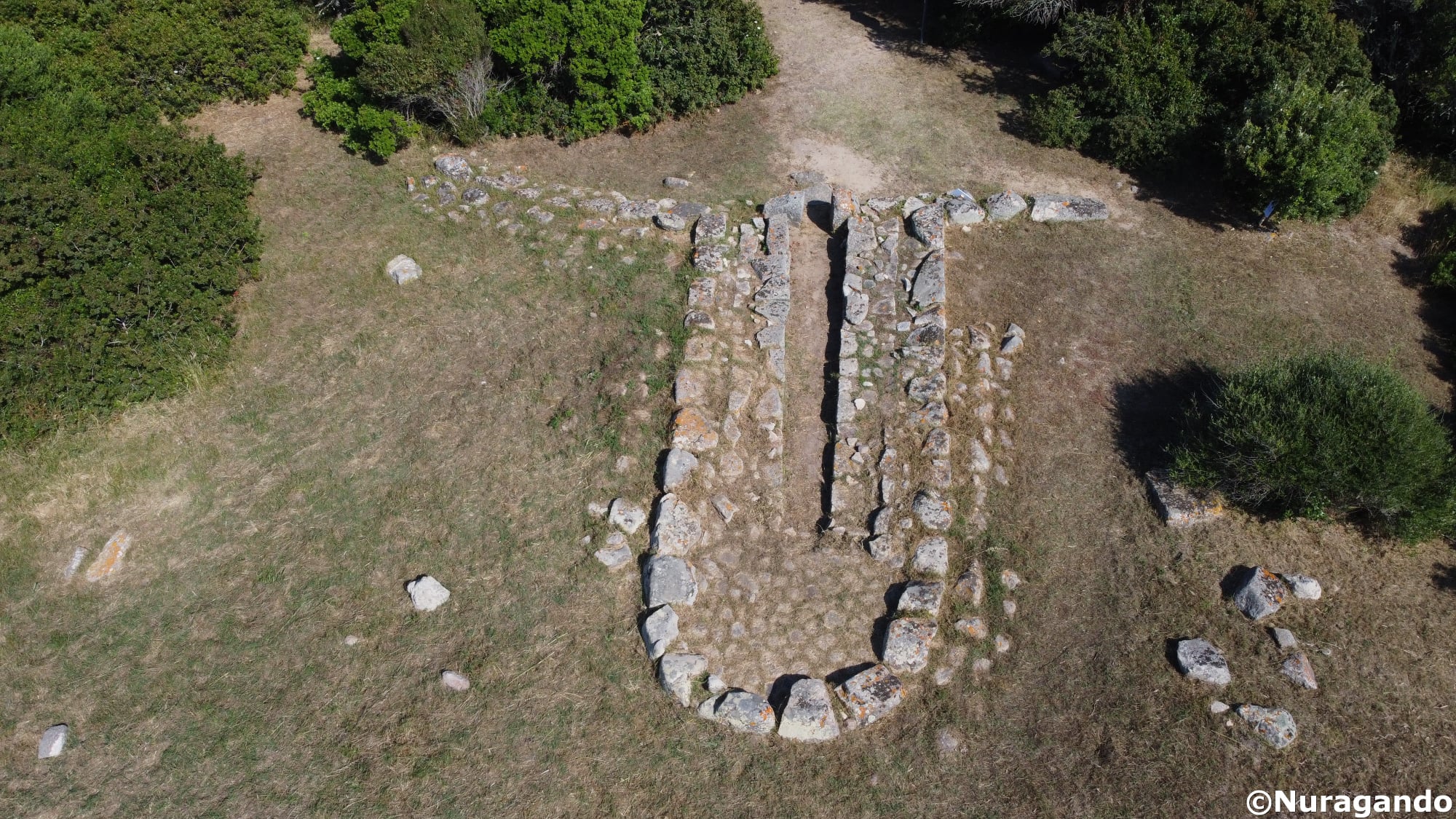
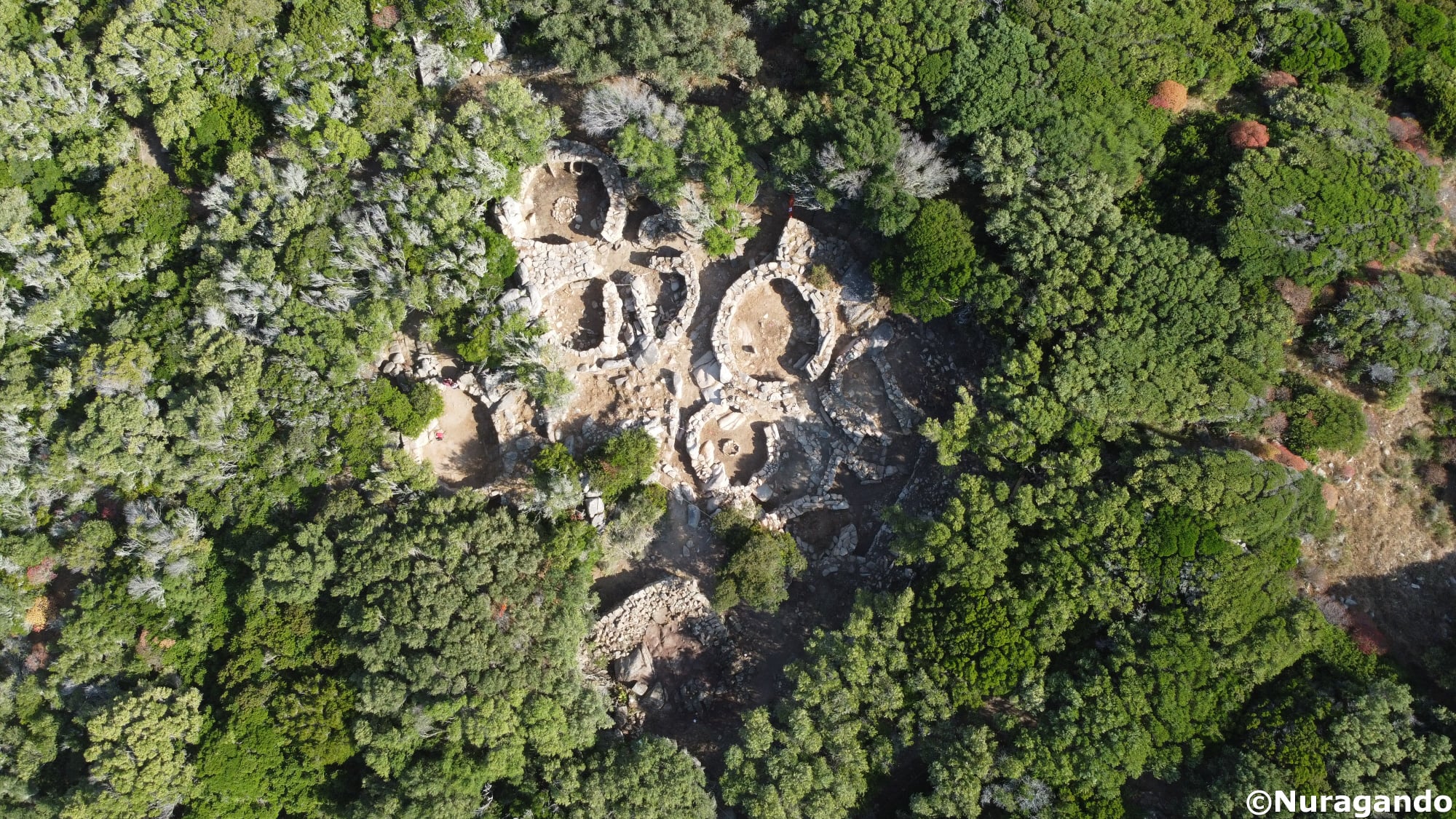
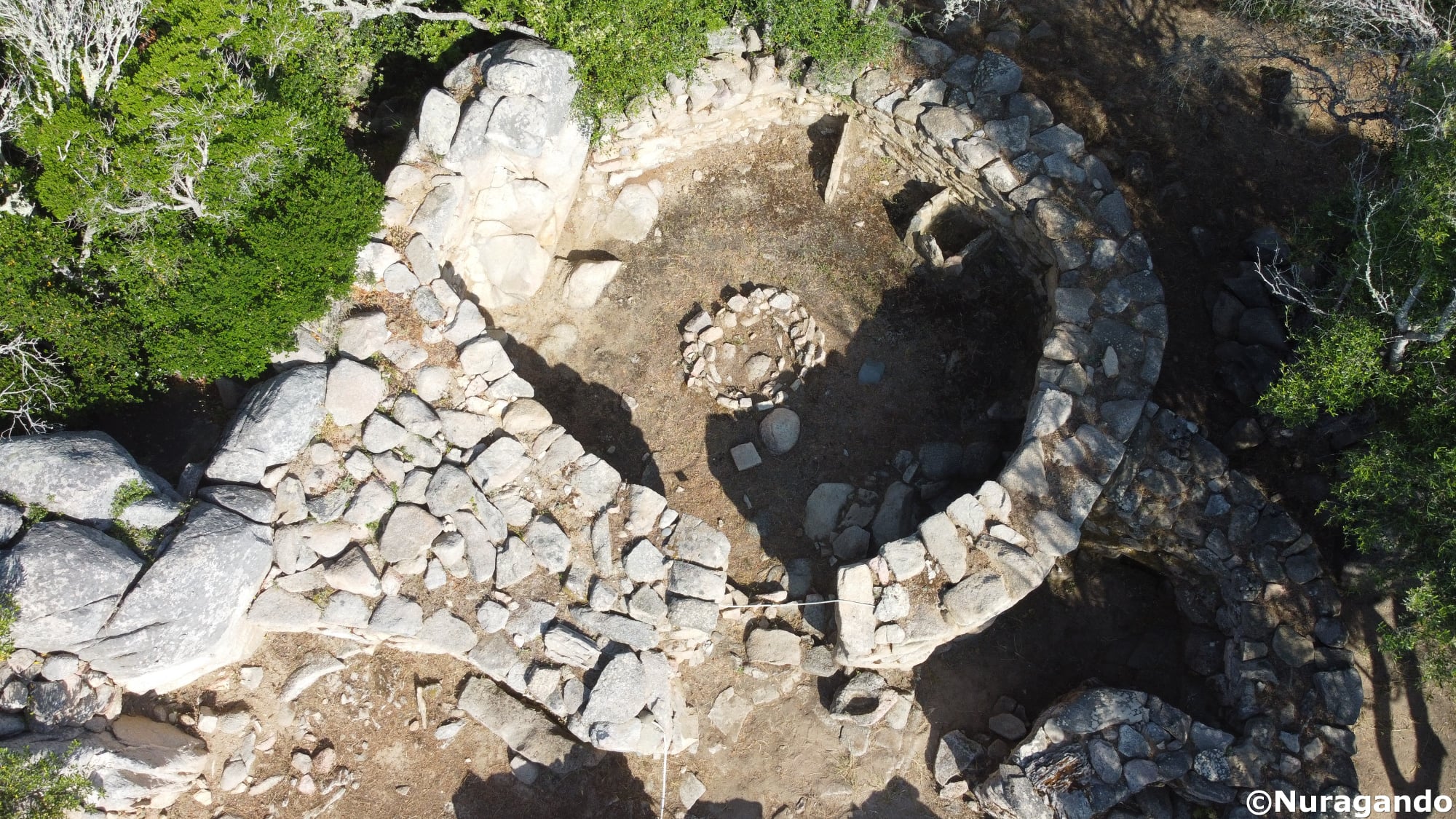
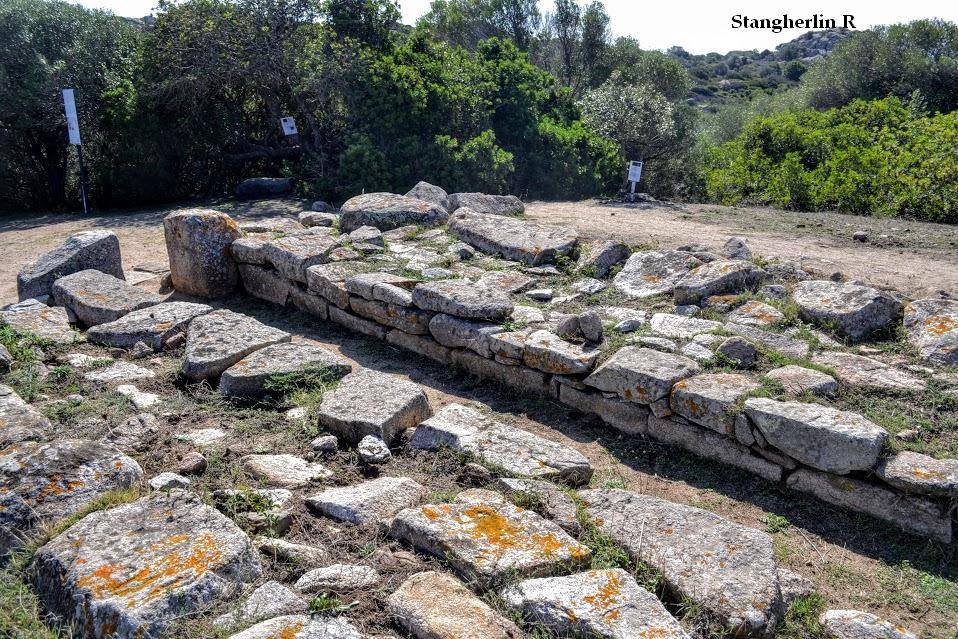
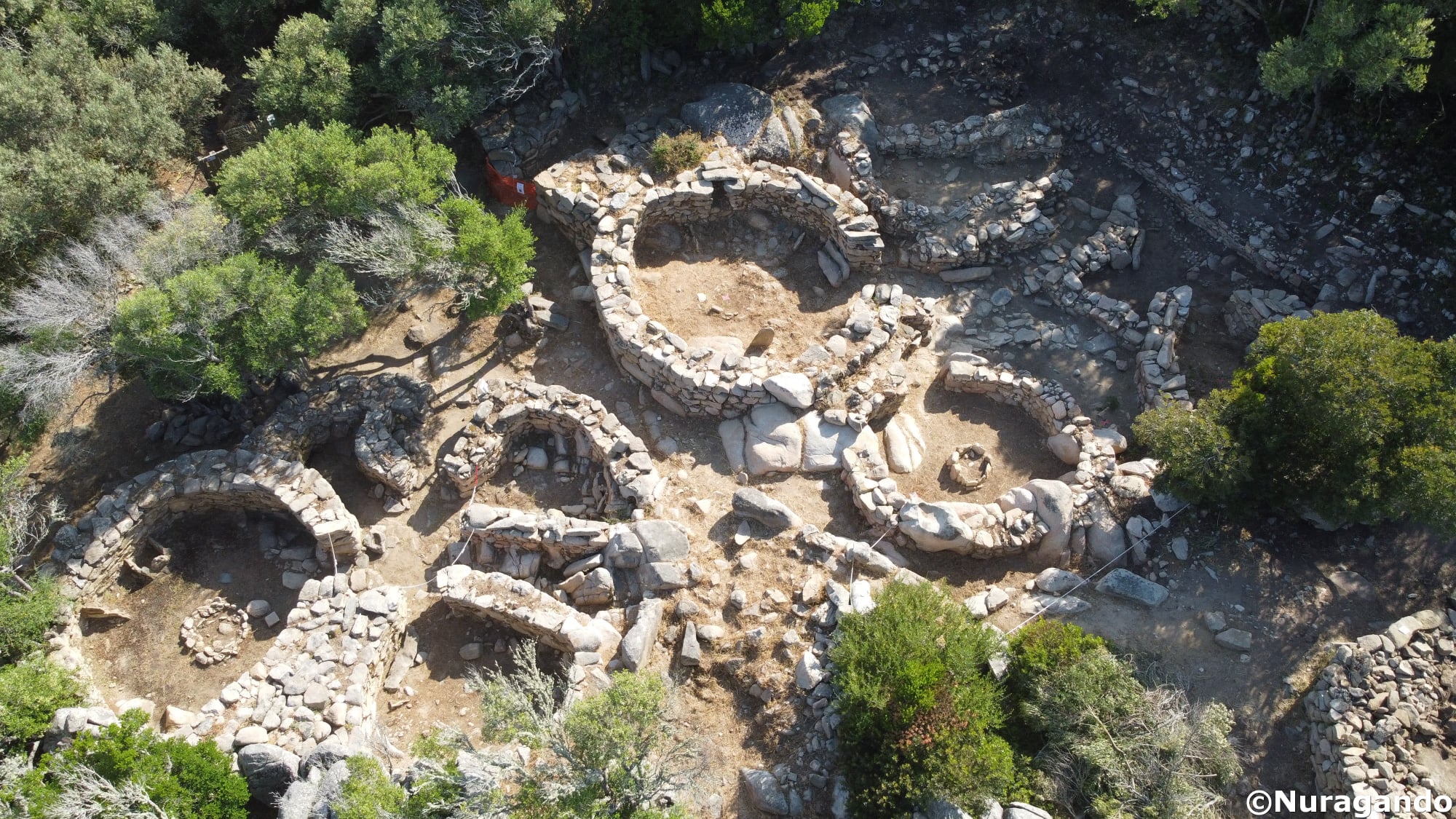
The complex includes a nuraghe with antemurale, a village, a giant’s tomb, tafoni and rock shelters. The nuraghe, located at the point of maximum elevation, exploits the rocky planes to develop on staggered levels. The village, which numbered 36 huts in 1967, some of which are still visible today, stretches along the slope and across the plain to the E and S of the nuraghe. The huts, generally curved, are adapted to the rock morphology, often incorporating outcrops, and have double walls; the blocks, freshly cut or rough, are arranged in regular rows and bound with earth mortar. The conical roofs are supported by beams and rafters to which other wooden cross-members are attached. These supported a network of bundles of marsh reeds converging towards the centre and covered with a layer of clay mortar to provide insulation. Other plant bundles were then superimposed and blocked by small limestone slabs. The tomb of the giants, of which only the foundations remain, is located to the SE of the village, on the edge of the slope. Once majestic, it consists of an elongated tomb with an apsidal end and a semi-circular exedra. The masonry was probably built in rows. Around 60 km to the south-east is a circular structure, possibly linked to the ritual that preceded burial in the tomb of the giants. The tafoni and ravines in the granite blocks on the western and south-western slopes of the promontory were used in the Nuraghic era as shelters, dwellings and burial places.
The photos of the Nuraghic complex of Lu Brandali, in the territory of Santa Teresa di Gallura, are by Romano Stangherlin and Andrea Mura- Nuragando Sardegna.