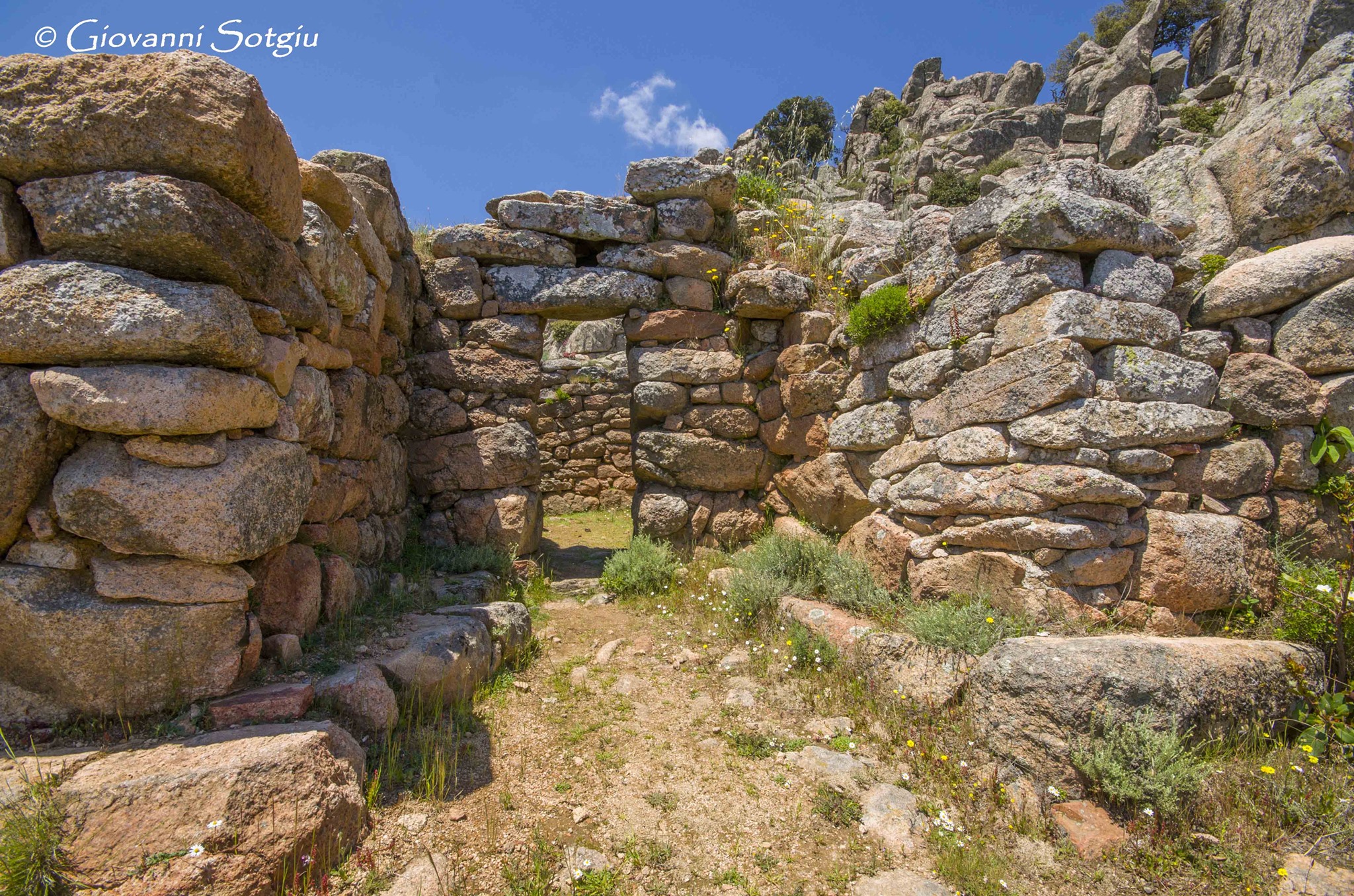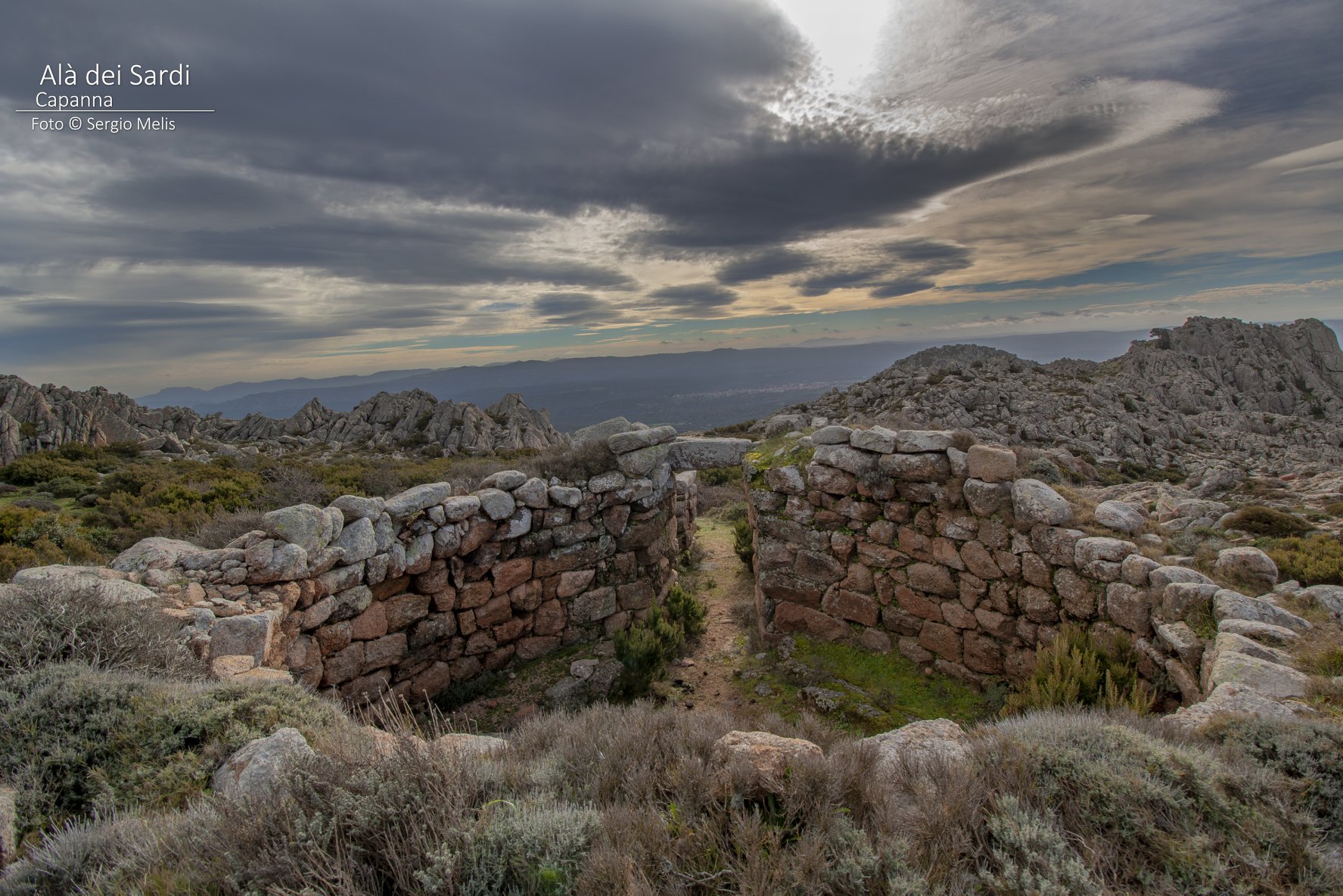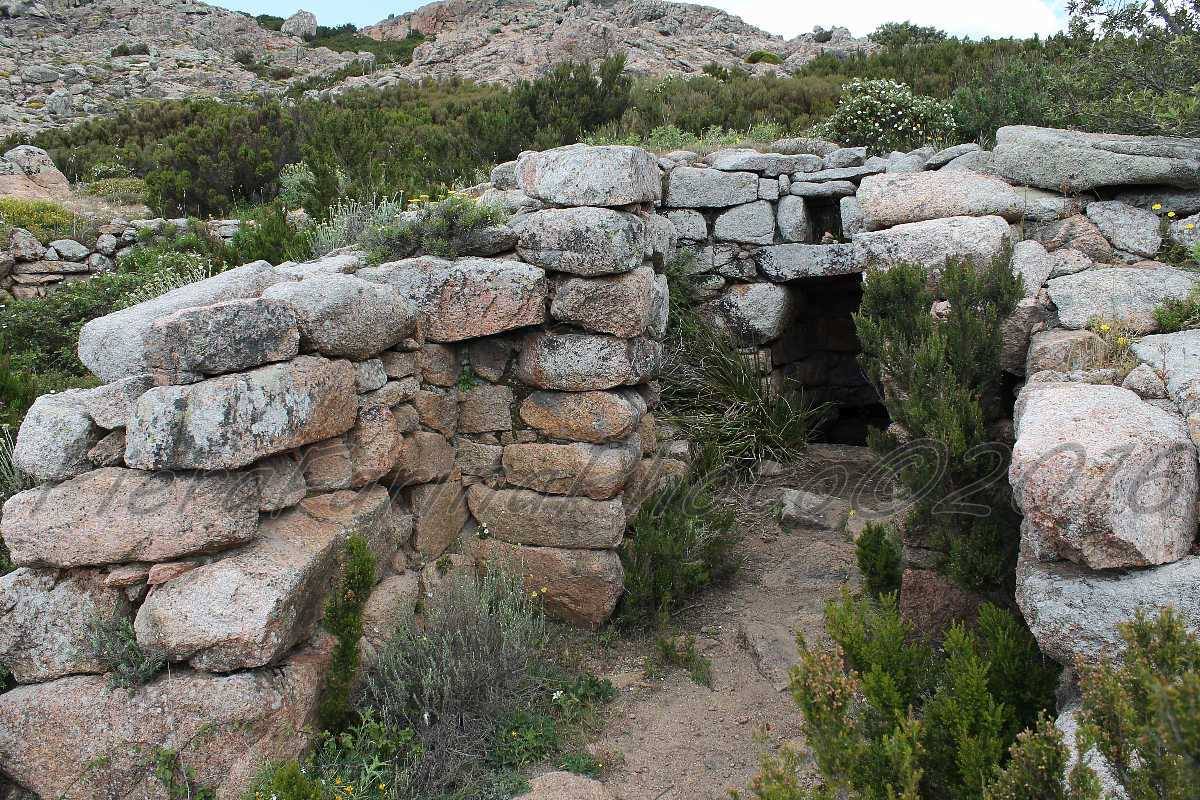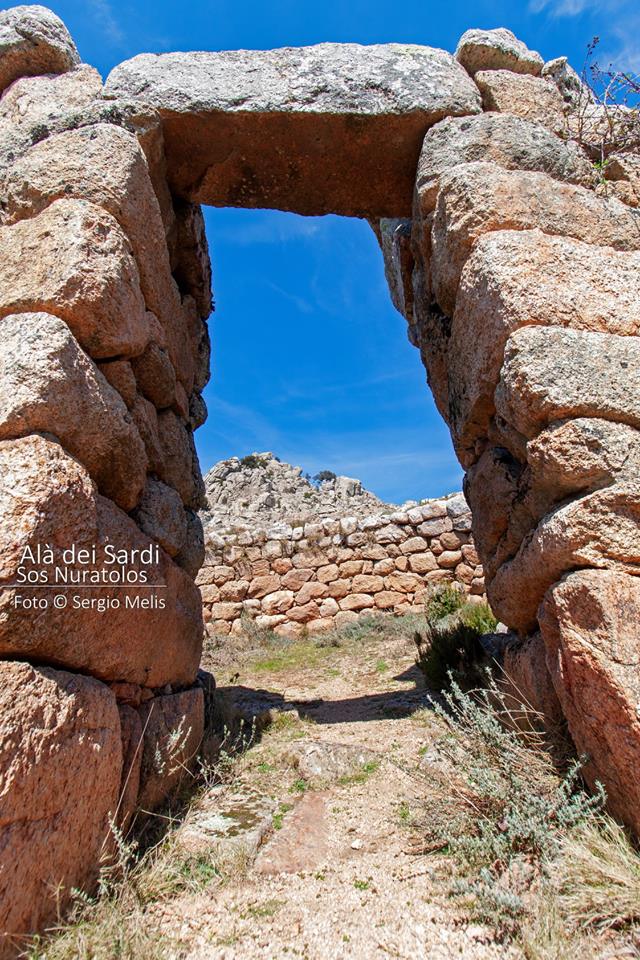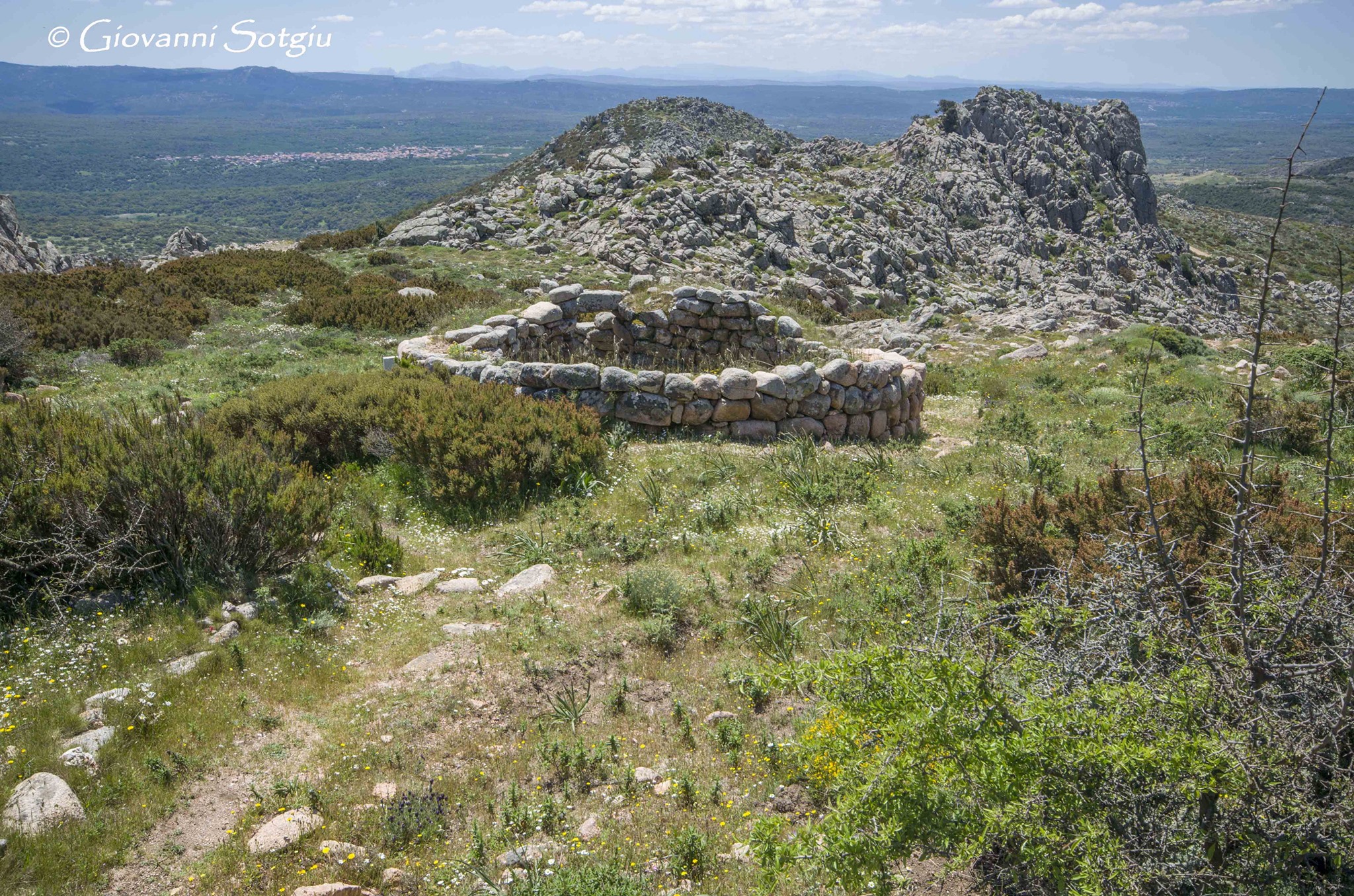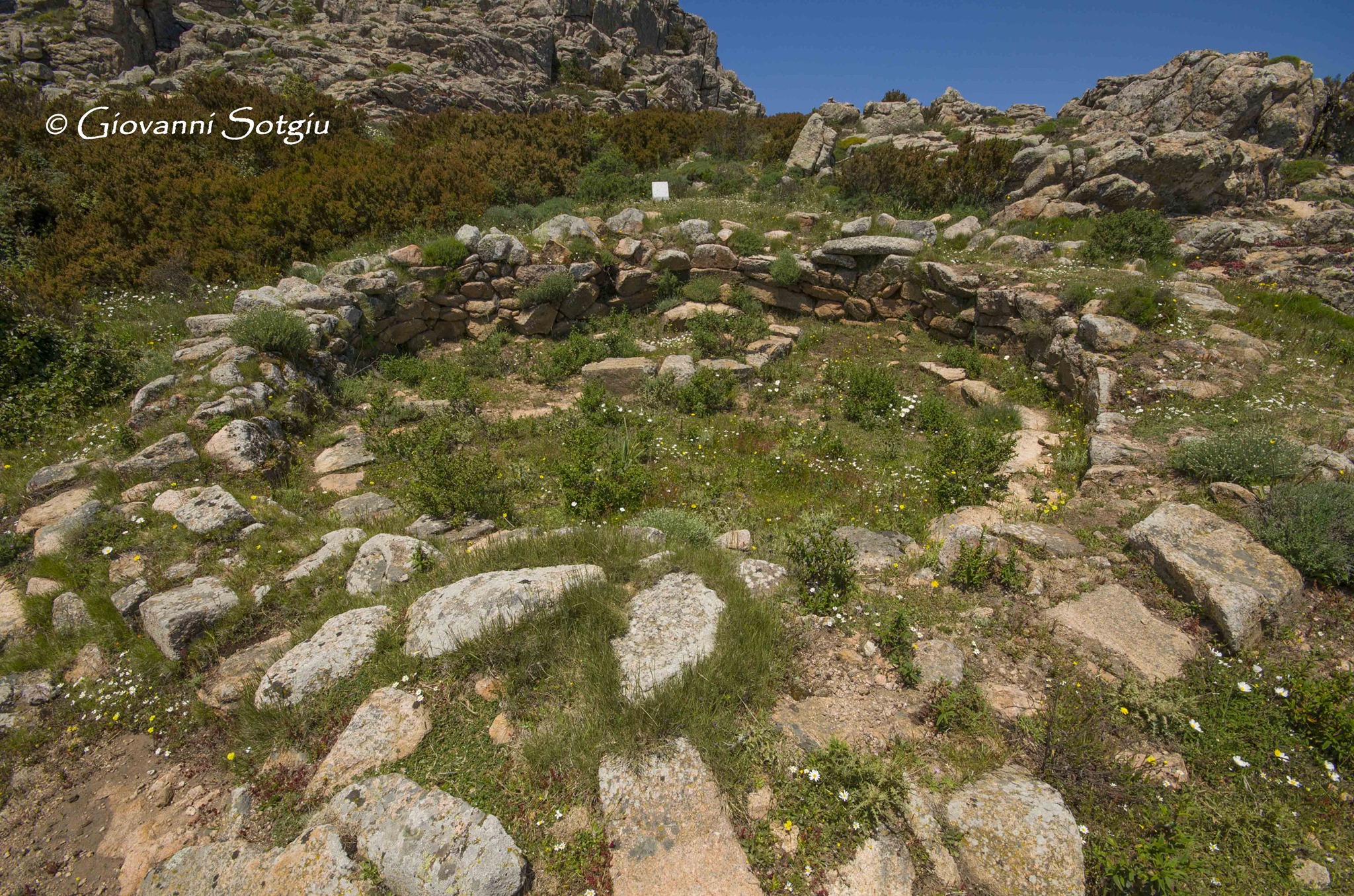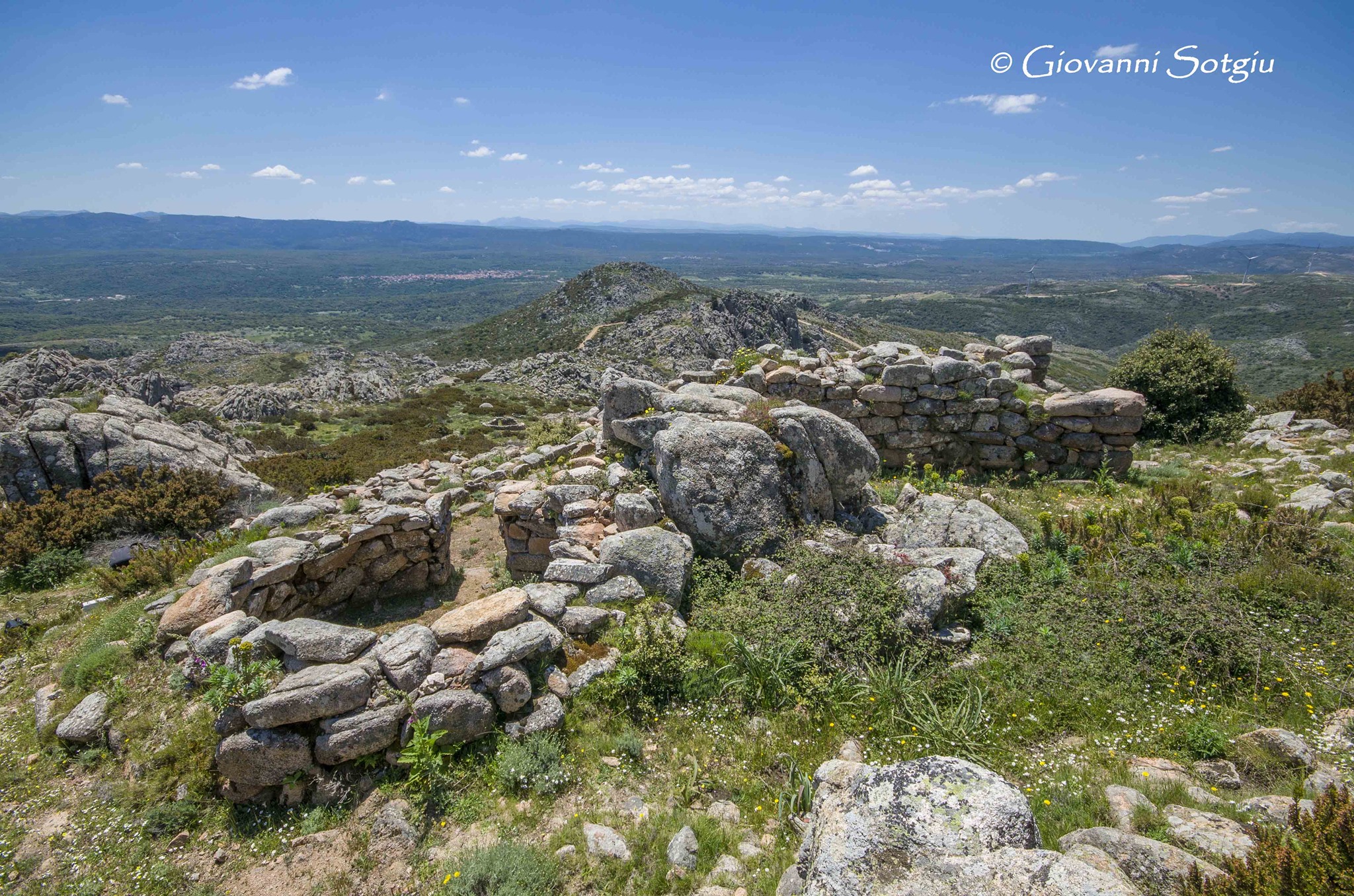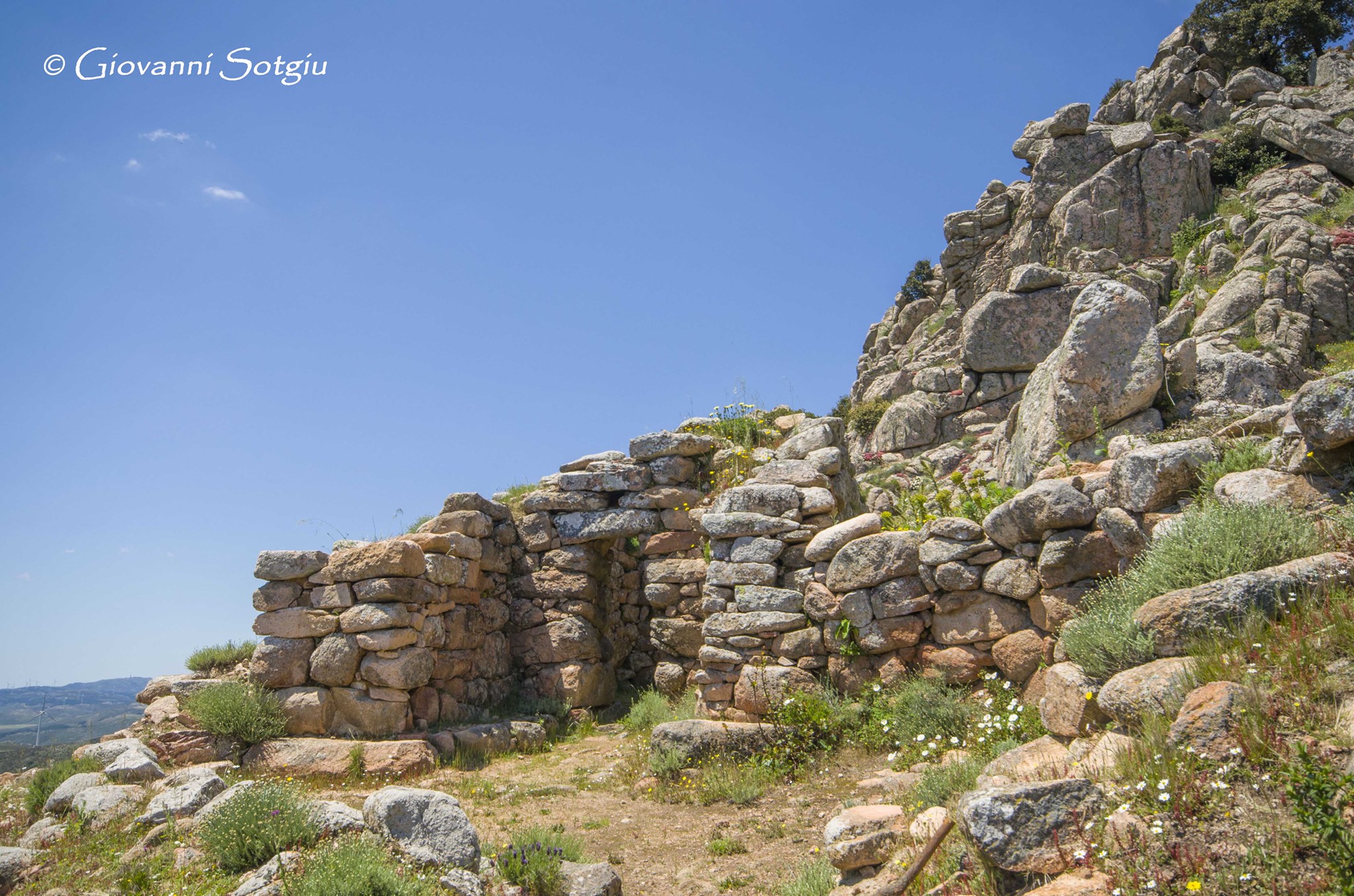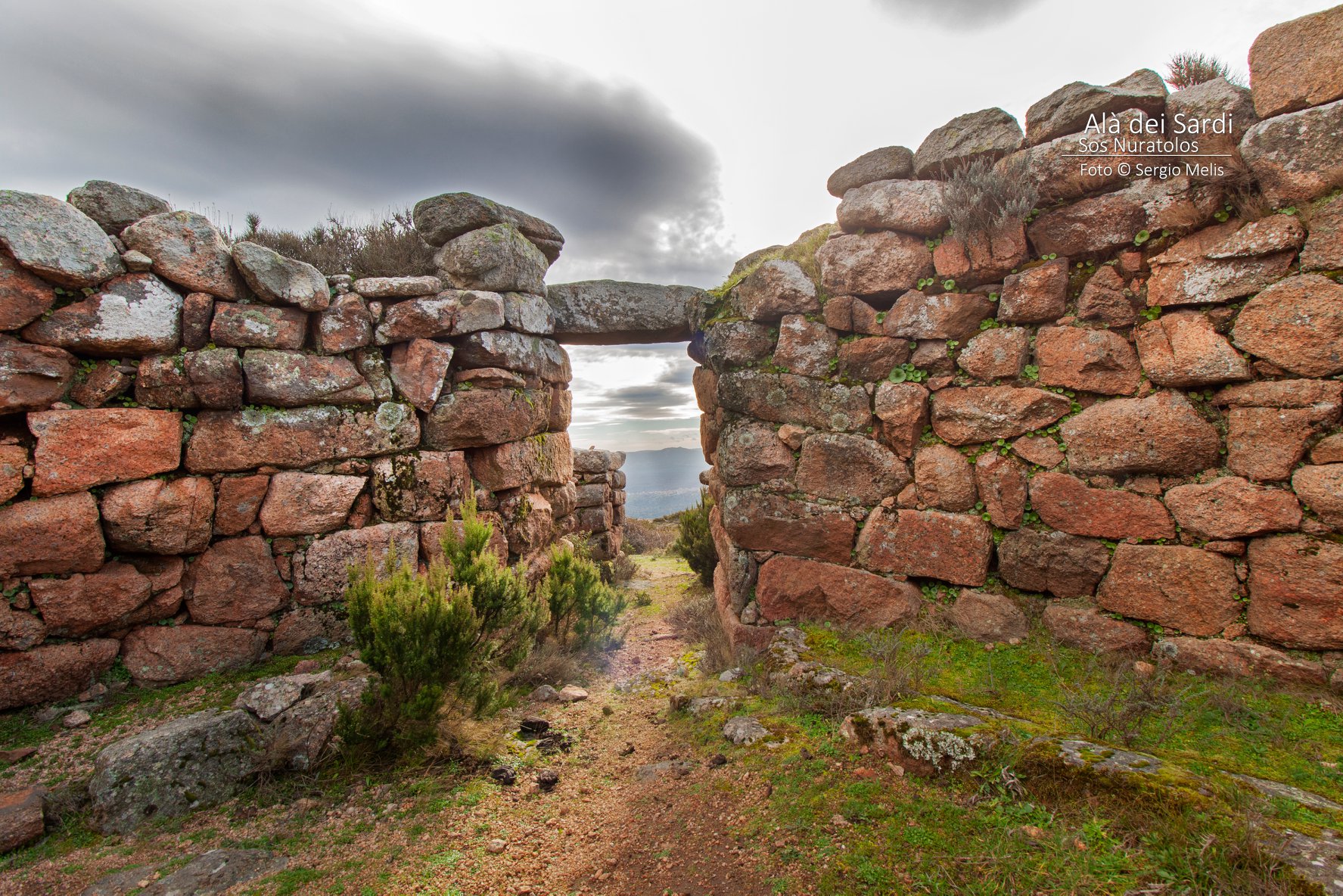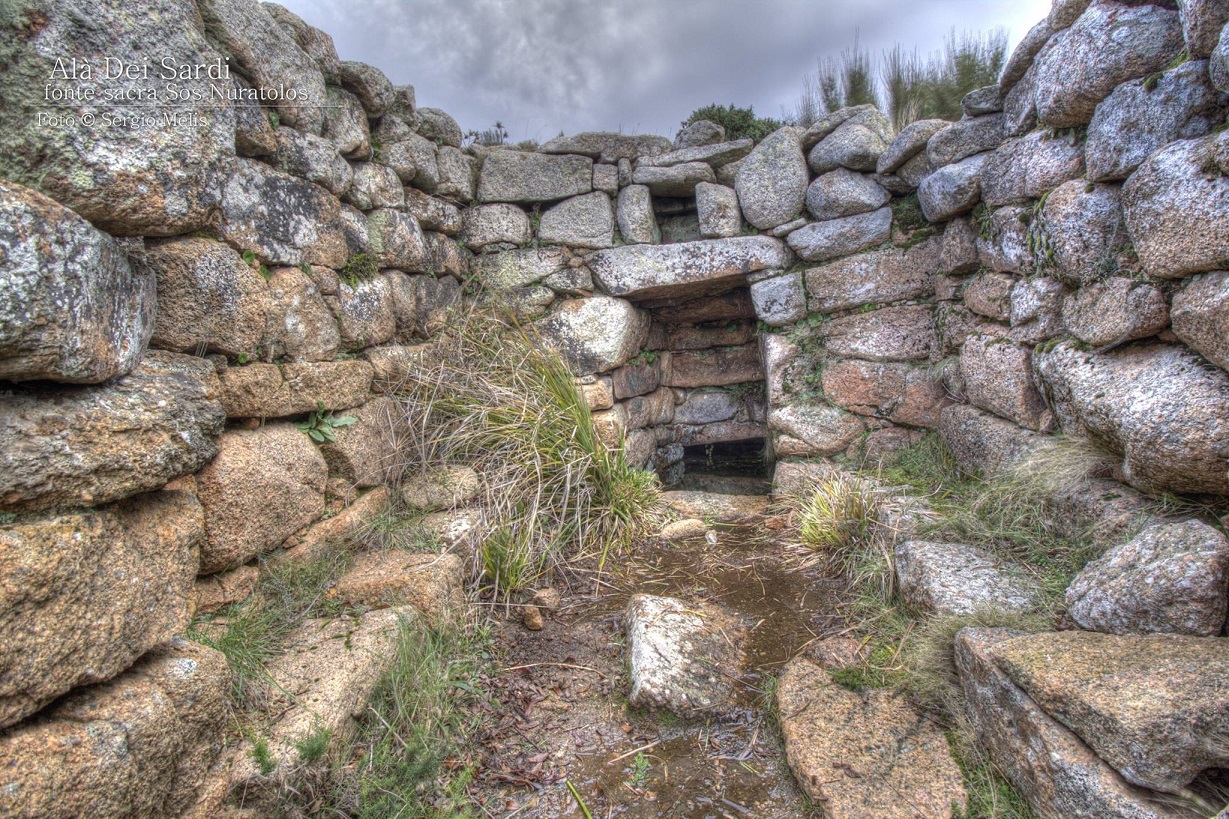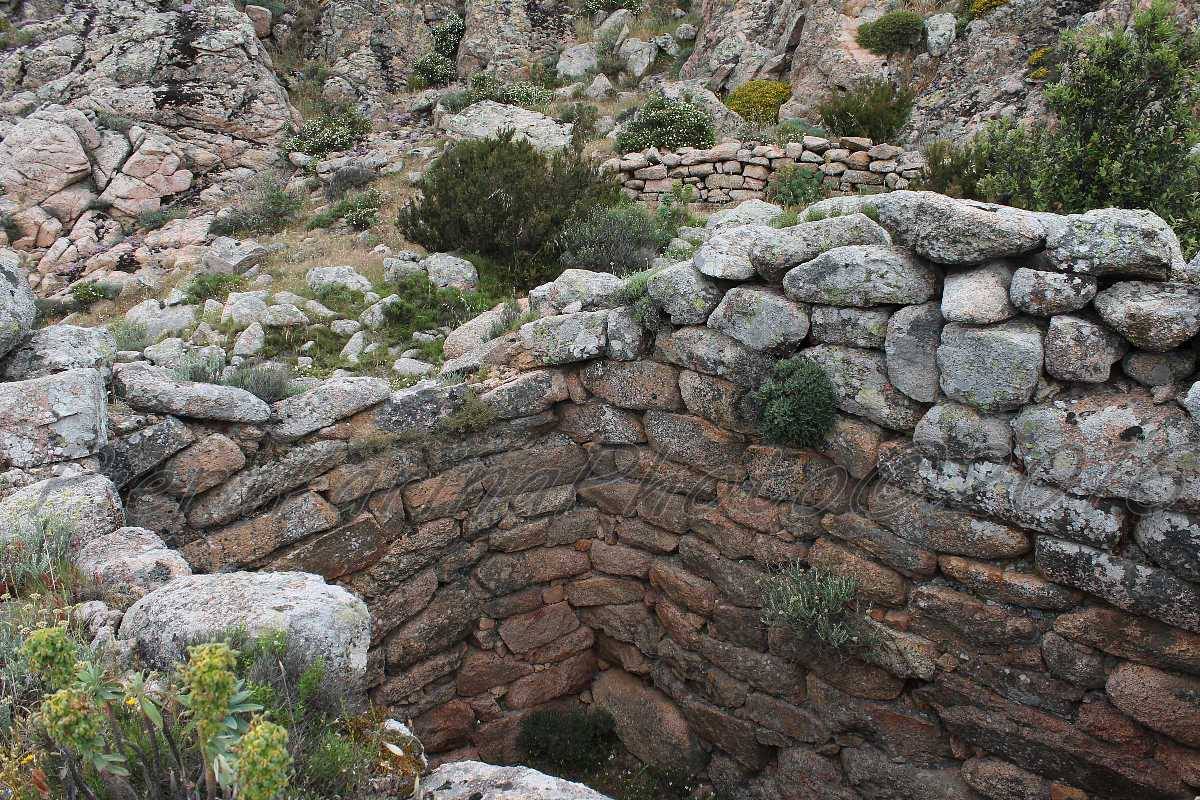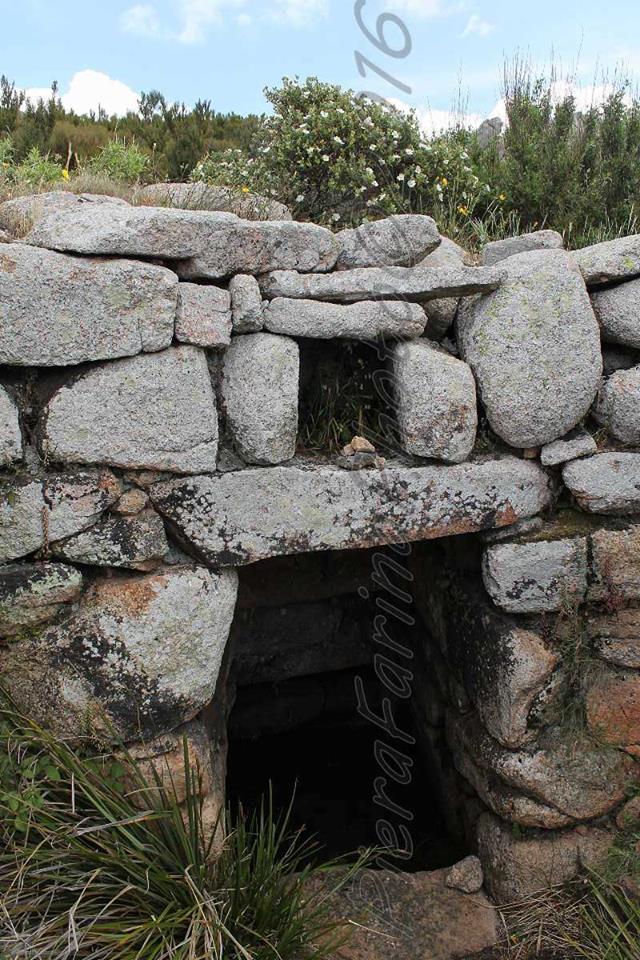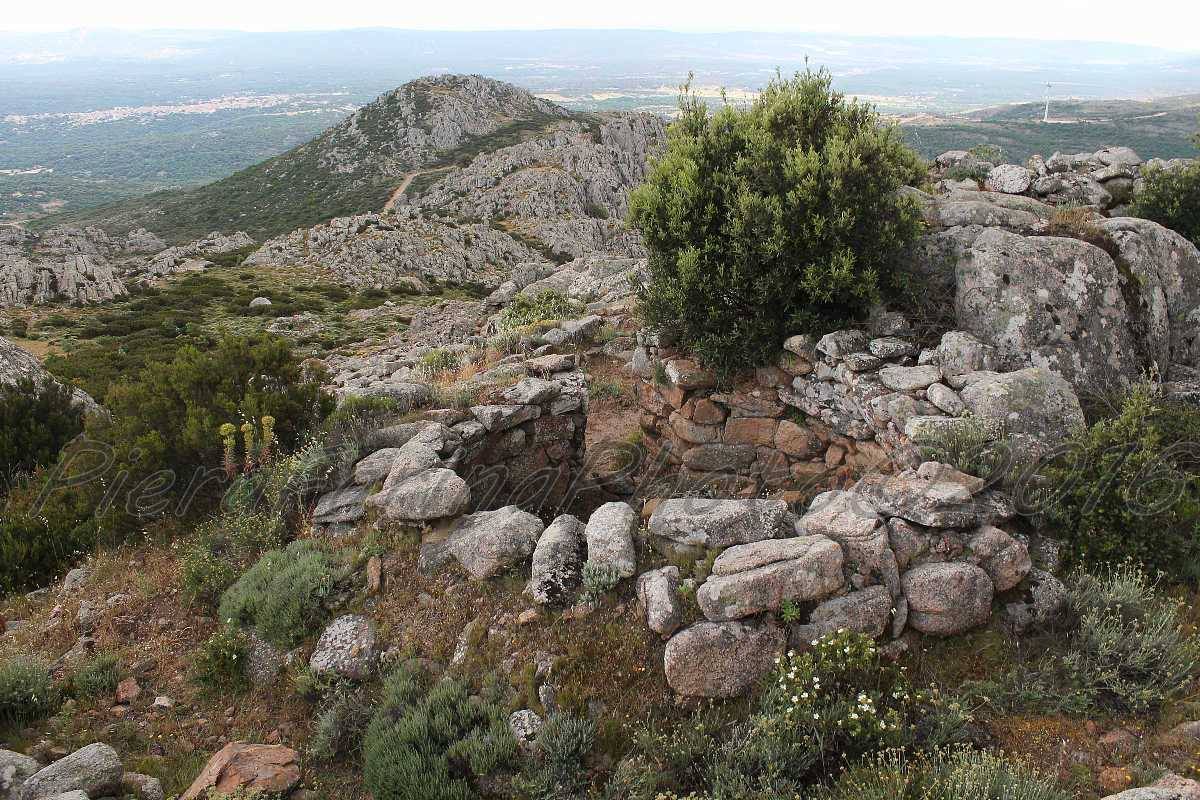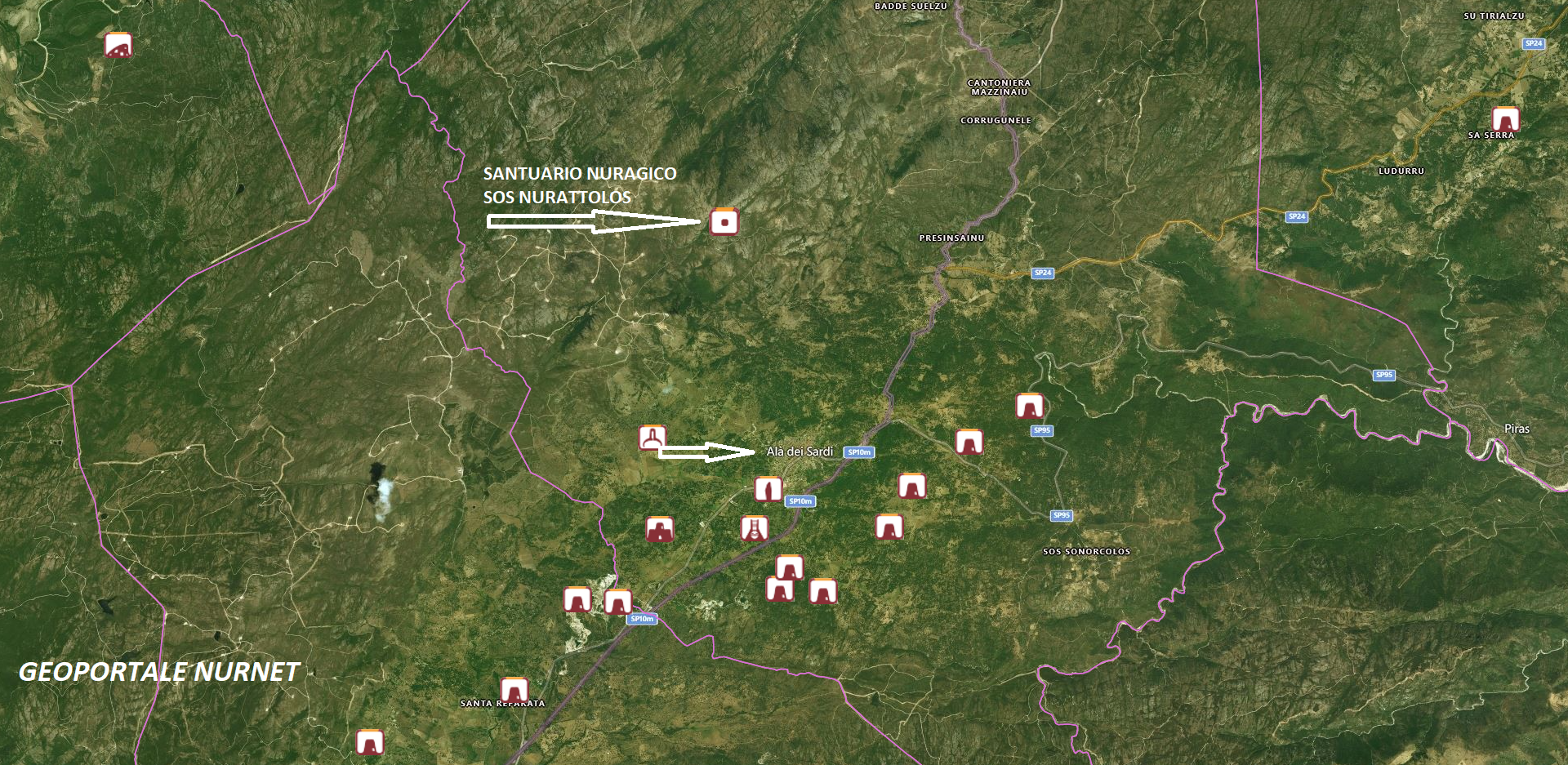
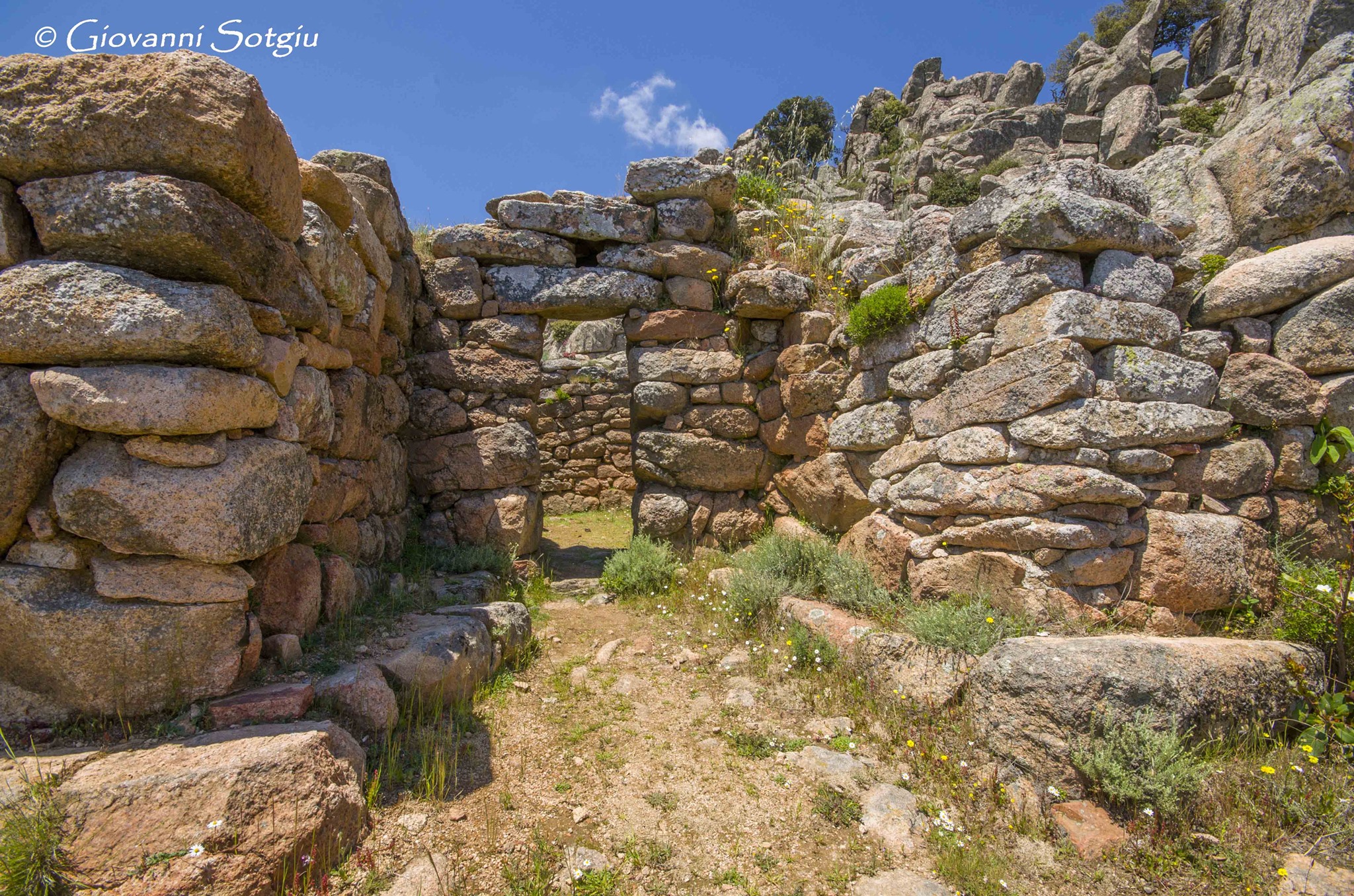
20.2: Steep, silent granite reliefs, shaped by the wind into strange sculptures, valleys with stretches of holm oak and oak trees “cutting” the horizon, streams forming small lakes. This is the splendid landscape of Punta Senalonga, a promontory that dominates the Buddusò plateau, home to a splendid example of a Nuragic sanctuary:“sos Nurattolos“. The highest archaeological expression of theAlà dei Sardi territory, dedicated to the cult of water, was discovered in the second half of the twentieth century and can be dated to between 1600 and 900 B.C. To reach it, cross the small granite village on the border between Gallura and Nuorese. After parking, take a gently sloping path of cobblestones and steps through the dense vegetation to the summit of Senalonga, a thousand-metre-high peak where the spectacle of nature gives way to precious prehistoric remains. Signs of the passage of Nuraghic man can be seen at the summit: a sacred spring located inside an irregular courtyard, where a circular masonry hut, probably dedicated to cult activities, “covers” the well of the perennial spring that allowed devotees to purify themselves. After immersion, you can continue along the “sacred path” by discovering a“megaron” temple , surrounded by an elliptical enclosure. The structure is made up of two concentric circular rooms: it is a characteristic and mysterious place, where animals were probably kept for sacrifice or where oracles were consulted. The rituals may have been addressed to a deity who dispensed life from the bowels of the earth: the Nuraghic people referred to it to invoke fertility and health. Not far from here is another large hut, also circular, with an entrance room and a bedroom. This was a “communal” place, a “meeting hut”, typical of Nuragic villages. Pilgrims usually stopped here, perhaps to talk to the priests (Tourism Sardinia).
The photos of the “Sos Nurattolos” nuragic sanctuary in Alà dei Sardi are by Giovanni Sotgiu, Sergio Melis and Piera Farina Sechi.